Patch quotes and proofs use a small set of trade terms: the construction (such as embroidered or woven), the edge (merrowed or heat cut), the backing (such as sew-on or heat seal), the coverage, and setup words like digitizing. This glossary explains each term in plain English, grouped the way they appear on a quote, so you can read yours line by line and know exactly what you are approving.
Use the headings to jump to the part of the quote you are looking at. Terms are in bold.
Construction terms: what the patch is made of
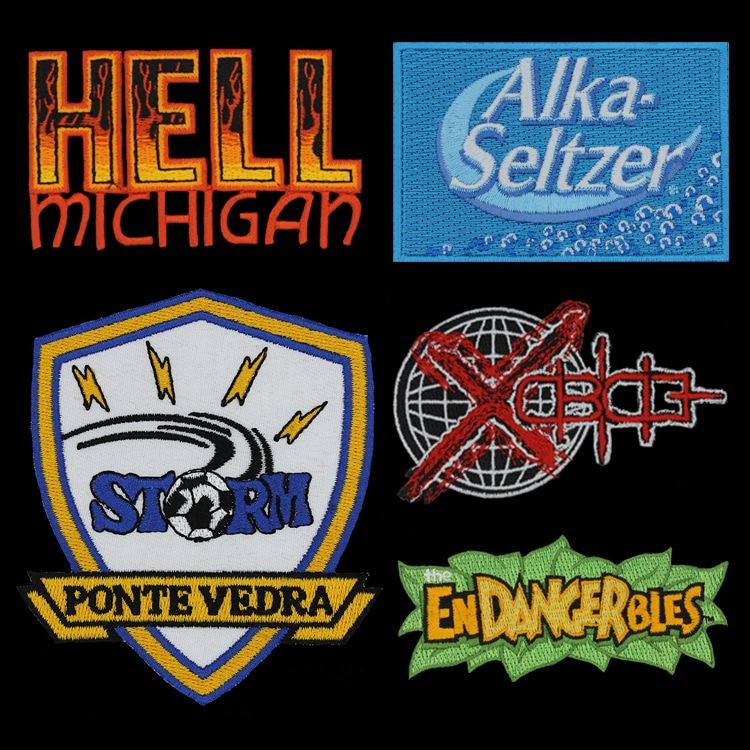
Embroidered patch: thread stitched by machine onto a fabric base, giving a raised, textured surface. The most common patch type. See embroidered patches.
Woven patch: made on a loom from fine thread, with the design woven into the fabric rather than stitched on top. Flat and thin, and holds smaller detail than embroidery.
Chenille: a looped, fuzzy yarn surface, the classic varsity letter look, usually on a felt base with embroidered detail around it.
Satin tackle twill: shapes cut from twill fabric, layered and stitched down with a zigzag edge. Common for team letters, numbers and jersey crests. Also called applique twill.
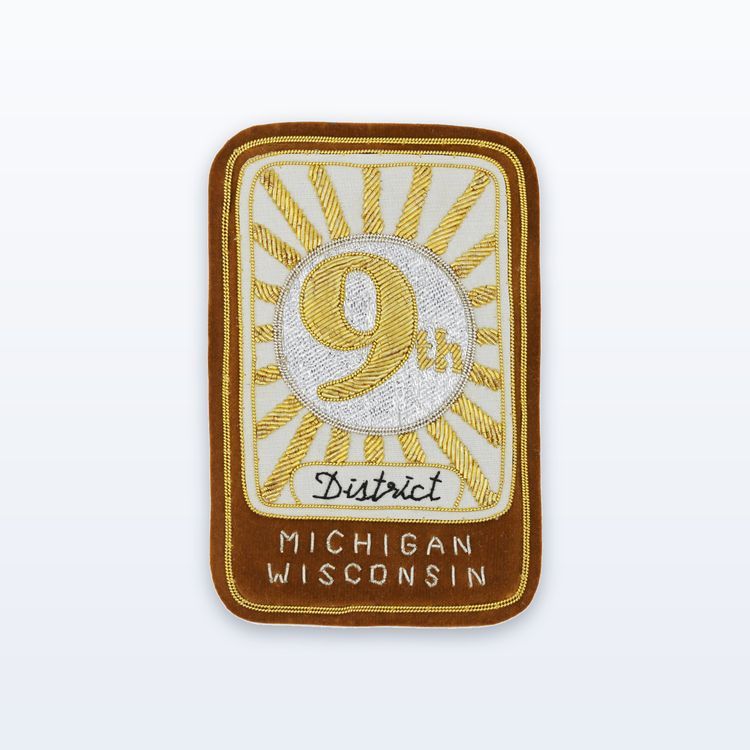
Hand embroidered bullion: metallic wire and thread worked by hand, often in gold or silver, for crests, blazer badges and ceremonial insignia.
Applique: any design where a piece of fabric is stitched down as part of the artwork, rather than filled in with thread. Tackle twill is the best known example.
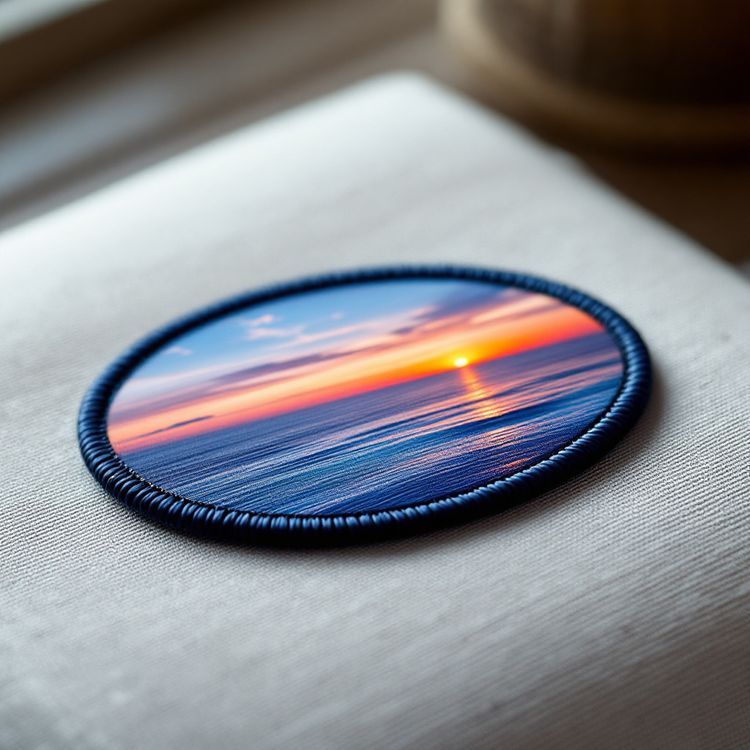
Sublimated patch: the design is dye printed into a fabric surface, so it can show photos, gradients and fine shading that thread cannot.
Base fabric and coverage
Twill: the tightly woven fabric most embroidered patches are stitched on. It comes in many colours.
Felt: a thicker, non-woven base, used mostly under chenille.
Coverage: how much of the patch surface is stitched. At 100% coverage, thread covers the whole patch and no base fabric shows. At 50% or 75%, part of the twill shows through and acts as the background colour. More coverage means more stitches. Our guide to embroidery coverage shows examples.
Background colour: on a patch with less than full coverage, this is the twill colour. On a fully stitched patch, it is a thread colour.
Edges, borders and shapes
Merrowed border: a raised, wrapped stitch around the outside edge, made on a special overlock machine. It suits circles, ovals, rectangles, shields and other simple shapes.
Heat cut edge: the patch is cut and sealed right along its outline, often with a narrow satin stitch border. It suits complex shapes with points and inside corners. Also called a hot cut or laser cut edge by some suppliers.
Die-cut: a patch cut to the outline of the design, such as a mascot or a state shape, instead of a standard geometric shape.
Border colour: listed separately on the proof. It does not have to match any colour inside the design.
Rocker: a curved, banner shaped patch that sits above or below a center patch, common in motorcycle club and military sets.
For the choice between edges, see merrowed vs heat cut borders.
Backing and attachment terms
Sew-on: no adhesive, just a finished back for stitching on by hand or machine. The most secure attachment.
Iron-on or heat seal: a heat activated adhesive layer on the back, applied with an iron or a heat press. Best on cotton and poly-cotton.
Hook-and-loop: the hook side is sewn to the patch so it can attach to a loop panel and be removed. Often called Velcro, which is a brand name. See custom Velcro patches.
Rigid plastic backing: a stiff backing that keeps the patch flat and firm, useful for patches that will be displayed or handled.
Across our wider catalog, other items use pin back, magnet or keyring attachments. Our backing types guide compares the patch options.
Artwork, digitizing and setup
Vector artwork: a file made of shapes rather than pixels, usually AI, EPS or PDF. It scales cleanly to any size. A raster file, such as PNG or JPG, is made of pixels. Both are accepted. See vector vs raster artwork.
Digitizing: turning artwork into a stitch file that tells the embroidery machine where every stitch goes, in what direction and in what order. It is skilled work, done once per design.
Stitch count: the number of stitches in the design. It rises with size and coverage.
Setup: the one-time preparation for a new design, including digitizing and machine setup. Reorders skip setup because the file stays on record.
Underlay: a layer of stitches laid down first, under the visible stitches, to stabilize the fabric and give the top stitches a smooth base.
Jump stitch: a short length of thread that travels between two areas of the same colour. Jump stitches are trimmed on a finished patch.
Pull compensation: a small adjustment the digitizer makes because stitches pull the fabric inward as they are sewn. It is one reason letters in a stitch file can look slightly wider than in your artwork.
Satin stitch and fill stitch: satin stitches are long, shiny stitches used for lettering and borders. Fill stitches are shorter, laid in rows to cover larger areas.
Colour terms
PMS or Pantone: a standard colour reference system. If you give PMS numbers, the factory matches each one to the closest thread colour.
Thread chart: the factory's range of thread colours, each with a number. Your proof lists the thread numbers chosen.
Metallic thread: thread with a metallic finish, usually gold or silver, used for accents.
Colour count: the number of separate thread colours in the design. Each colour is a separate thread change on the machine.
Ordering and timeline terms
| Term | What it means | Typical at Patchworks USA |
|---|---|---|
| Quote | The priced specification for your job | 2 to 3 business days |
| Proof | The drawing you approve before production | 1 to 3 business days after artwork |
| Production time | Making the patches after approval | About 3 to 4 weeks |
| Rush | Production moved ahead in the schedule | Around 10 business days when available |
| Minimum | The smallest quantity per design | From 100 pieces, varies by product |
| In-hands date | The day you need the patches delivered | Given by you at the start |
All figures are typical and confirmed on your quote. Reorder means the same design made again from the file on record, and split means one order divided across sizes, colourways or backings.