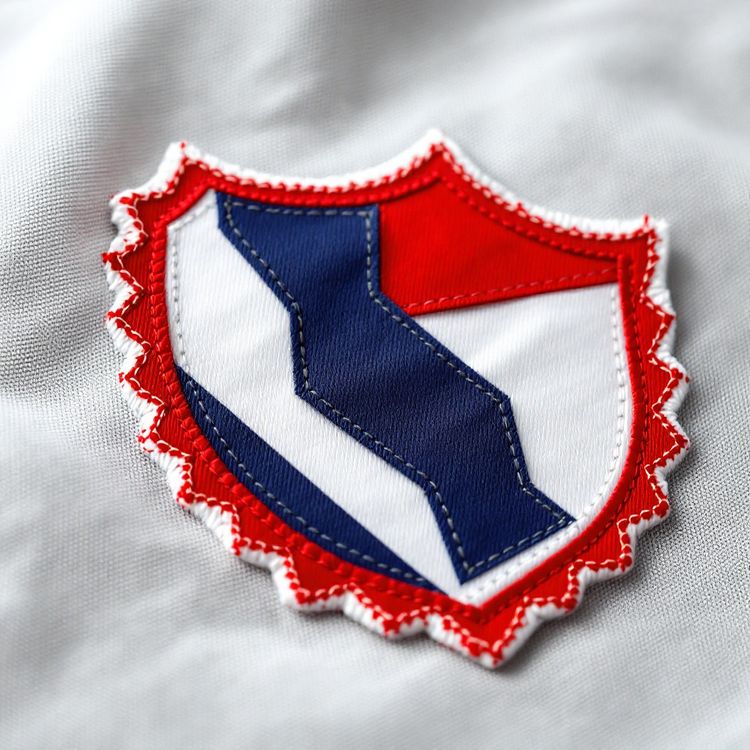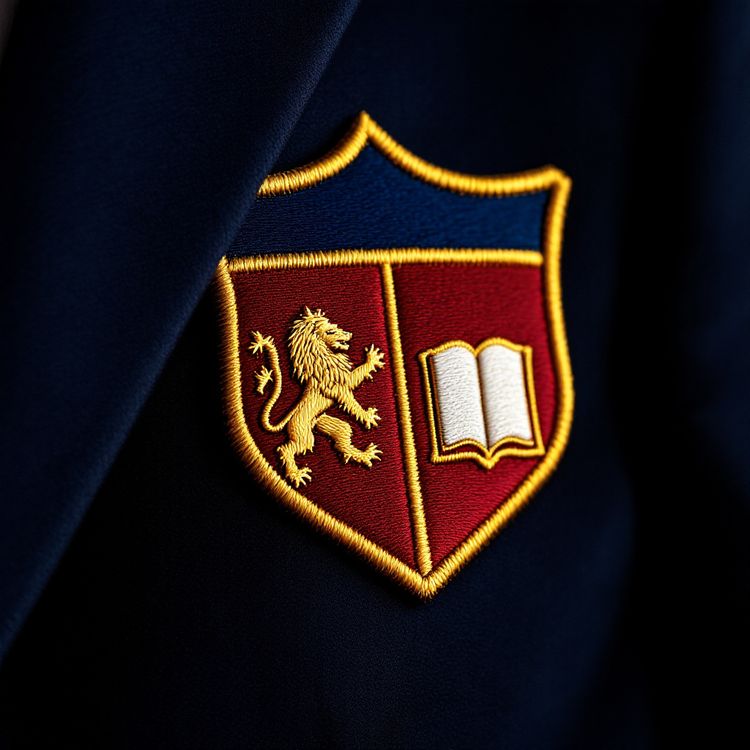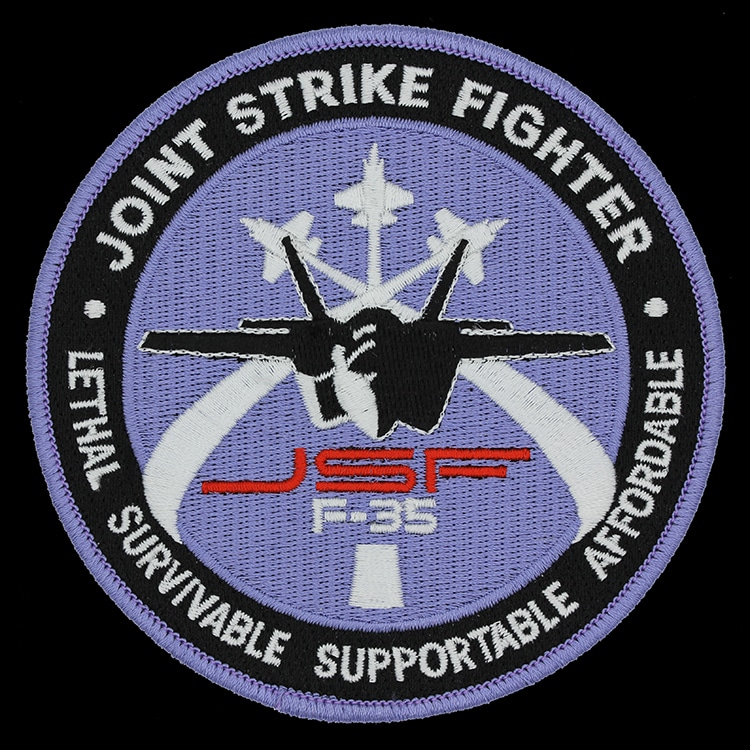
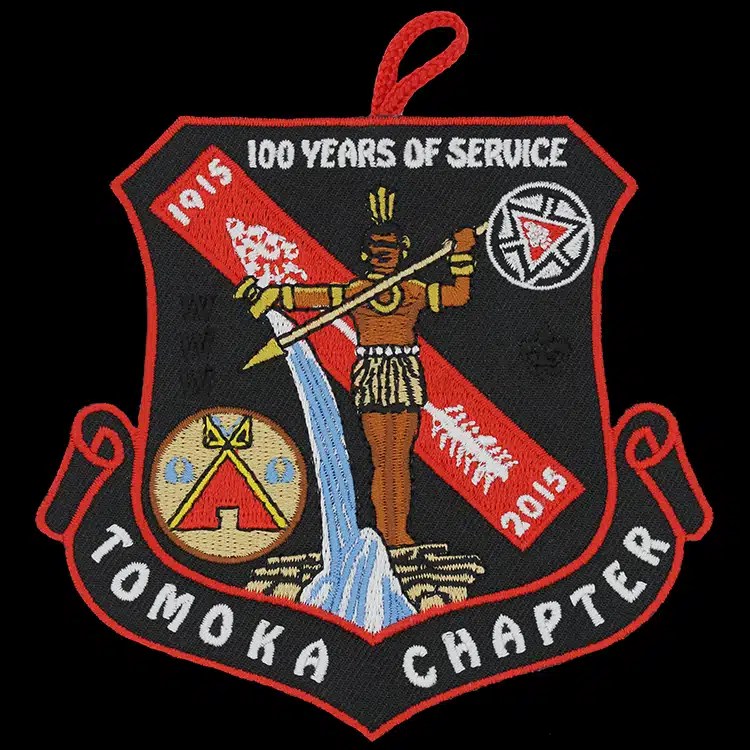
Embroidery coverage describes how much of a patch's surface is stitched. At 100% coverage, thread covers the whole face of the patch. At 75% or 50%, part of the twill fabric underneath is left showing, usually as the background. More coverage means more stitches, which generally makes the patch denser, stiffer and more expensive. Less coverage can look just as good when the design and twill colour are planned for it.
Below we explain what each level looks like, what it changes, and how to choose.
What embroidery coverage means
An embroidered patch starts as a piece of twill fabric. Thread is stitched on top of it to form the design. Coverage is the share of that twill surface hidden under thread.
The figures 50%, 75% and 100% are shorthand used across the patch trade. They are approximate bands, not exact measurements. A design described as 75% might in practice be a little more or less, depending on the artwork.
The key question is simple: is the background of your design thread, or fabric? If it is fabric, you are looking at partial coverage. If it is thread, you need full coverage.
What 50%, 75% and 100% look like
50% coverage
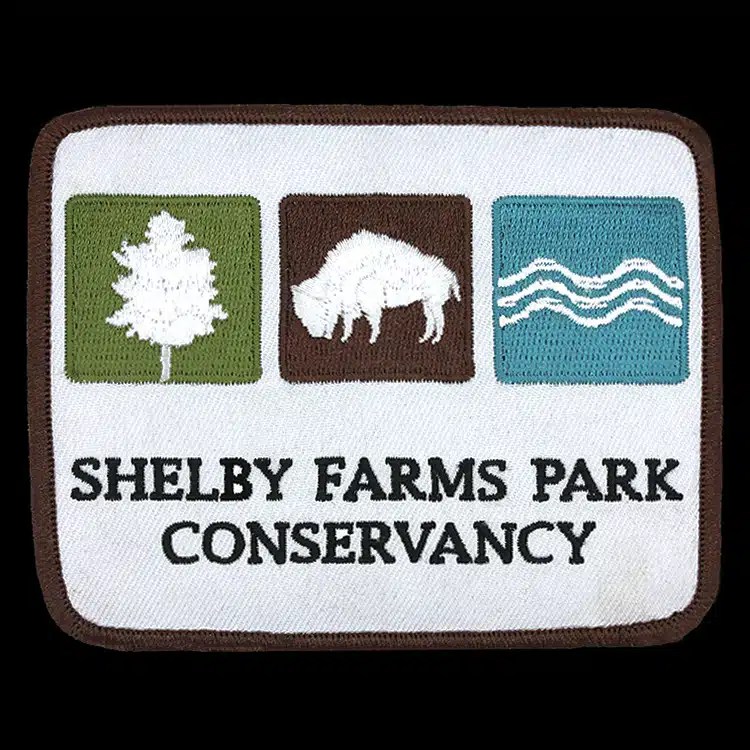
About half the surface is stitched. The twill shows through as the background, and the design sits on it as lettering, shapes and outlines. The patch is light, flexible and flat between the stitched elements. This suits open designs: a name, a simple logo, a few shapes on a plain field.
75% coverage
Most of the surface is stitched, with twill showing in smaller areas, often behind lettering or in gaps within the design. It is a common middle ground for logos that have a few large coloured areas but do not need a stitched background.
100% coverage
The whole face is stitched, background included. The patch has a rich, dense texture from edge to edge and feels thicker and firmer. This is the traditional look for uniform emblems, crests and patches where the background colour must be exact.
Coverage levels compared
| 50% | 75% | 100% | |
|---|---|---|---|
| Twill showing | About half the surface | Smaller areas | None |
| Stitch count | Lowest | Medium | Highest |
| Feel | Light and flexible | Firmer | Dense and stiff |
| Relative cost | Generally lowest | In between | Generally highest |
| Best for | Open designs, names, simple logos on a plain field | Logos with several colour areas | Uniform emblems, crests, coloured backgrounds |
What coverage changes
Stitch count and cost
Every extra area of thread adds stitches, and stitches take machine time. That makes coverage one of the main drivers of price on an embroidered patch, alongside size, quantity and colour count. Our guide to what drives custom patch cost explains how these factors interact.
Stiffness and feel
A fully stitched patch is thicker and stiffer. That is good on a uniform sleeve, where you want the patch to sit flat and hold its shape. It is less ideal on a soft cap, a thin shirt or a curved surface, where a lighter patch drapes better.
Durability
Dense stitching protects the surface well and hides the twill completely, which helps uniforms that are washed often keep a uniform look. Partial coverage is still durable for most uses. The exposed twill is the same tough fabric the patch is built on, and the merrowed or heat cut edge seals it.
Detail
Coverage does not change the detail limits of embroidery. Lettering still needs about 1/4 in cap height and lines about 1 mm thick, whichever level you choose. Our guide to preparing artwork for embroidery covers those limits.
When 100% coverage is worth it
- The background is a colour of its own. If the design has a coloured field or a pattern behind the main emblem, it needs to be stitched.
- Uniform and service patches. Police, fire, military and corporate uniform patches are commonly fully stitched for a dense, formal finish that matches from one order to the next.
- Exact colour matching. Twill comes in a limited range. If no twill matches your background colour, thread can.
- Heavy wear. On jackets, bags and gear that take abrasion, a fully stitched surface holds up well.
When 50% to 75% is the smarter choice
Partial coverage is not a compromise when the design suits it. It is often the better result.
- Open designs. A logo with lots of empty space between elements looks cleaner when that space is plain twill.
- A twill colour can be the background. If your background is white, black, navy or another common twill colour, let the fabric do that job. The patch is lighter and the design looks crisper.
- Caps and lightweight garments. Less stitching keeps the patch flexible so it follows a curve.
- Large patches. On a back patch, stitching the whole surface adds a lot of thread and weight. Partial coverage keeps it manageable.
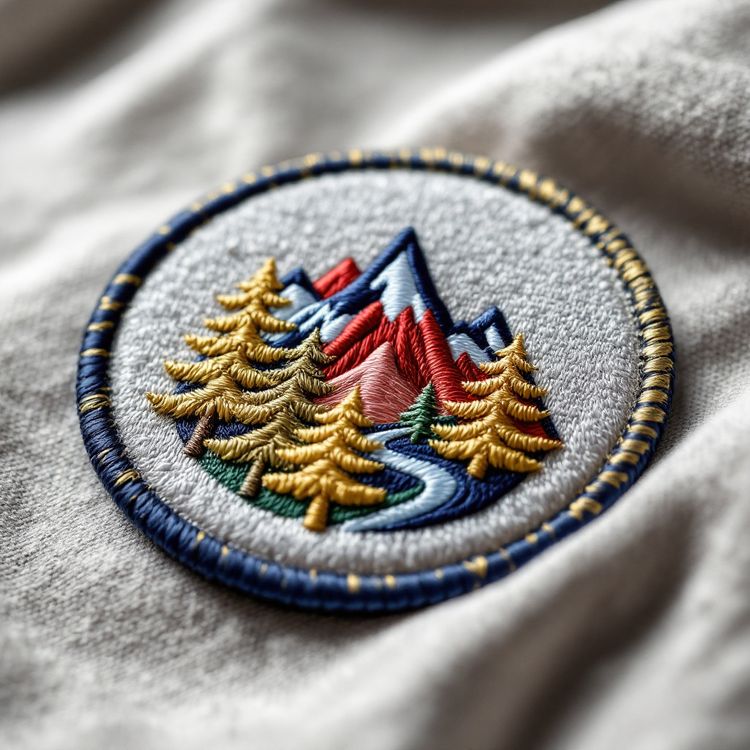
If your design needs both a detailed image and a light, thin patch, woven construction is another route. See our comparison of embroidered and woven patches.
Checking coverage on your proof
Coverage is easy to overlook on a proof, because the artwork can look the same whether the background is stitched or left as fabric. Before you approve, look for a note on the proof about the twill colour and which areas are thread.
- Confirm the twill colour named on the proof matches the background you expect.
- Check which areas are stitched and which show fabric, especially behind lettering.
- Make sure small text still sits on a background with enough contrast.
- Ask how coverage affects the feel if the patch is going on a cap or a thin garment.
- If you are reordering, confirm the coverage matches your earlier run.
If something looks wrong, ask for a revised proof. Changes are simple at this stage and nothing is made until you approve in writing. Once you do, the digitizing stays on file, so a reorder keeps the same coverage without new setup.
Choosing coverage on your quote
You do not need to pick a percentage before you ask for a price. Send your artwork and tell us whether the background should be thread or fabric, and we will suggest a coverage level. If you are unsure, ask for two levels at the same size and quantity on one quote, such as 75% and 100%, and compare.
The free Patch Studio lets you upload your logo, choose embroidered construction and preview the patch in 3D on a jacket or cap. It is a rendering, and the proof is where you see exactly which areas are stitched. When you are ready, send your request through the quote form, and we will return one quote within 2 to 3 business days.