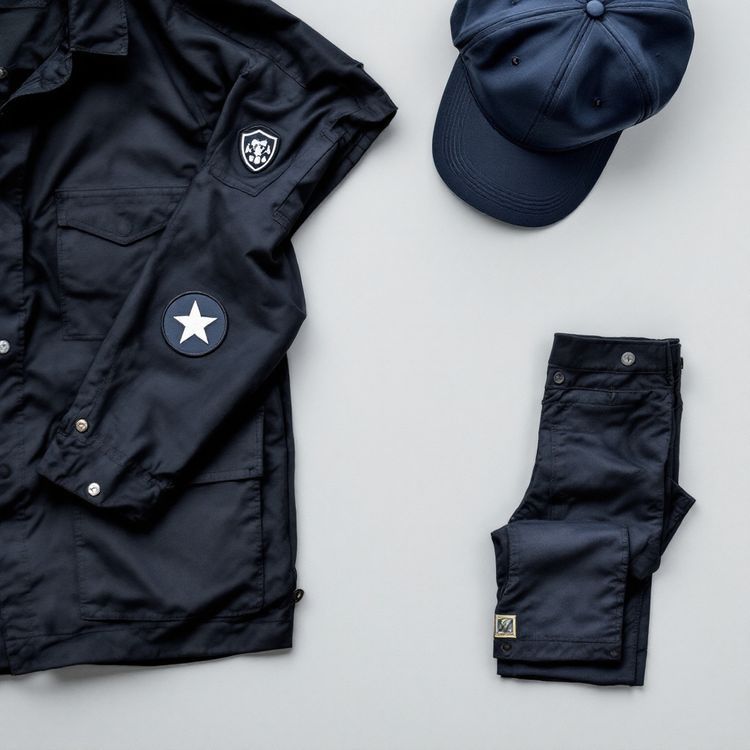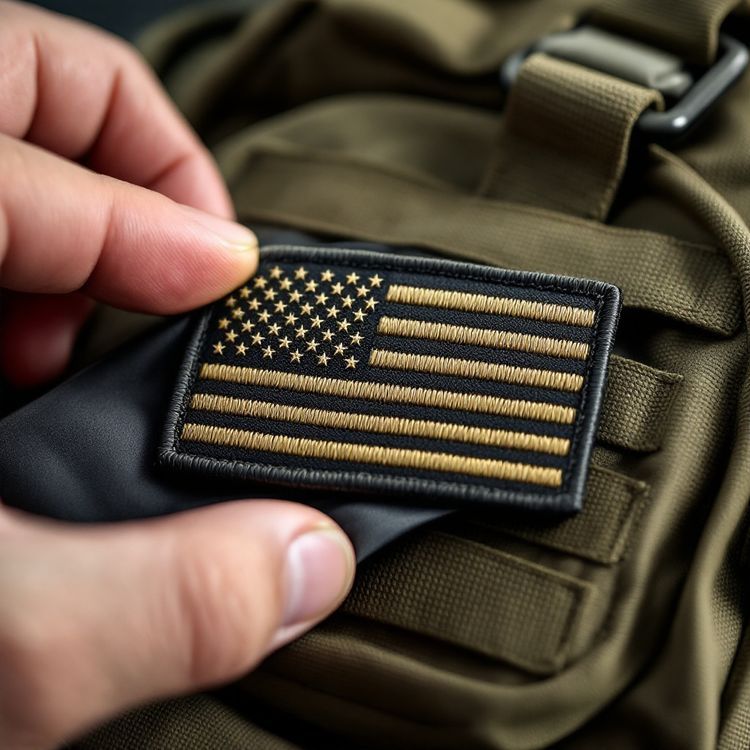
Custom Velcro patches are patches with a hook-and-loop fastener sewn to the back, so they press onto a matching panel and peel off again whenever you need to swap them. Velcro is a brand name. The generic term is hook-and-loop, which is what you will see on our site and on most spec sheets, but it is the same backing either way.
This guide covers how the fastener works, which side goes where, the sizes that fit common gear, how to look after the patches, and what to put on your quote so the backing is right the first time.
Velcro or hook-and-loop: what the name means
Velcro is a trademark of the company that first sold the fastener. Over time the name came to stand for the whole category, which is why most people search for Velcro patches. Manufacturers, uniform suppliers and factories use the generic name, hook-and-loop, for the same fastener made by any maker.
So when you ask us for a Velcro patch, a hook-and-loop backing is what you are asking for. It works the same way, attaches to the same loop panels already fitted to most tactical gear, and is listed as hook-and-loop on your quote and proof.
How hook-and-loop patches work
The fastener has two halves. The hook side is covered in small, stiff hooks. The loop side is a soft pile of tiny loops. Press them together and the hooks catch in the loops. Peel from one corner and they let go, ready to go back on.
On a patch, the hook side is sewn to the back. The loop side goes on the garment or gear, either as a panel built in by the maker or as a piece sewn on afterwards. That arrangement keeps the soft side on the uniform, so a jacket with no patch on it does not have exposed hooks catching on everything it touches.
- Hook side: on the back of the patch, stitched around the edge.
- Loop side: on the jacket, vest, cap, bag or plate carrier.
- The rule: a hook-backed patch only attaches to loop. It will not hold on plain fabric.
Because nothing is glued or sewn to the garment itself, one patch can move between a work jacket, a range bag and a backpack. That is the whole point of the backing. Our guide to patch backing types compares it with sew-on, iron-on and plastic.
Where people use custom Velcro patches
Hook-and-loop suits any patch that has to come off. The most common uses are:
- Tactical gear: plate carriers, packs and range bags, which usually come with loop panels already fitted.
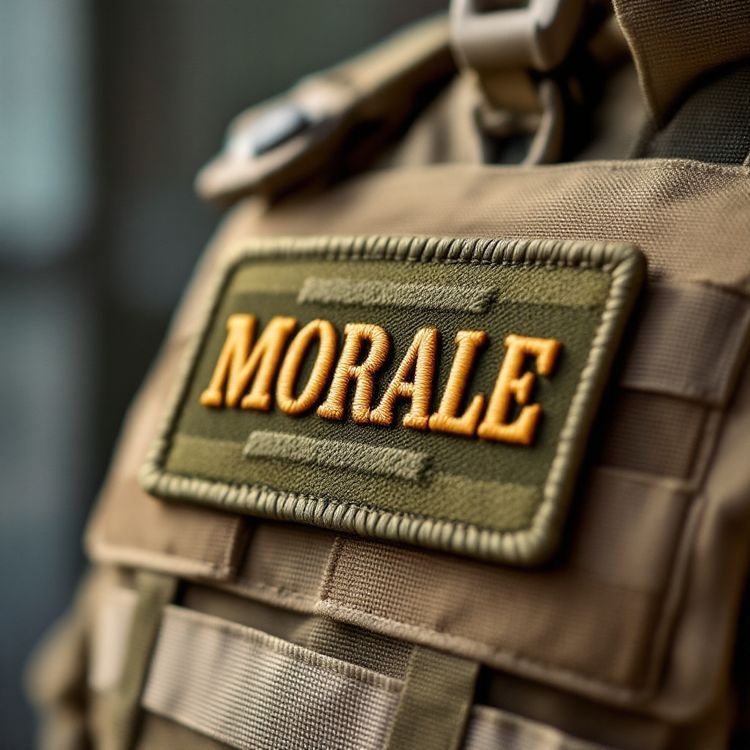
- Military and veterans: unit, morale and name patches that change between roles or deployments. Our military morale and unit patches guide covers these in depth.
- Uniforms shared across garments: one patch that moves from a jacket to a vest without sewing.
- Backpacks and bags: a front panel that takes a team, club or event patch and can be changed later.
- Swappable IDs: name or role patches that need to change when the wearer does.
Sizes for custom Velcro patches
A hook-and-loop patch should match the loop panel it goes on. If the patch is bigger than the panel, the edges hang loose and catch. If it is much smaller, it can sit crooked and is easy to knock off. Measure the loop panel on your actual gear before you choose a size.
| Placement | Common starting size | Notes |
|---|---|---|
| Hook-and-loop panel on plate carriers, packs and range bags | 2 x 3 or 3 x 5 in | Match the loop panel already on the gear |
| Shoulder or upper sleeve | 3 to 4.5 in | Check the size of the sleeve loop panel |
| Name tape | 4 to 5 in wide | Usually a straight rectangle above a pocket or panel |
| Backpack front | 3 to 4 in | Sewn or on a hook-and-loop panel |
These are common starting sizes, not limits. Any size can be quoted, and the exact size is confirmed on your proof. The patch size guide lists starting sizes for every placement, and our article on how to choose a patch size explains how patches are measured.
Shape and edge
Rectangles fit standard loop panels most cleanly, and a merrowed border gives the hook backing a firm edge to be stitched to. A heat cut edge that follows a custom outline also works, as long as the outline still sits inside the loop panel. Very thin points and spikes are the parts most likely to curl away from the panel over time.
Which patch types take a hook-and-loop backing
The backing is a separate choice from the construction. Embroidered patches are the most familiar hook-backed patch: the raised thread and twill base stand up well to being pulled off and pressed on again. Woven patches are thinner and flatter and suit fine lettering, such as a name in small type. Sublimated patches, printed in full colour, suit artwork with photos or gradients.
Thick, decorative constructions such as chenille or hand embroidered bullion are normally sewn on rather than swapped. If you are not sure, tell us where the patch goes and we will recommend a construction on your quote. Our comparison of embroidered vs woven patches helps if you are deciding between the two most common types.
Care, washing and wear
Hook-and-loop is tough, but the hooks collect lint and the loops flatten with heavy use. A little care keeps the grip strong.
- Take the patch off before washing the garment if you can.
- If a hook-backed patch goes in the wash, press it onto a loop panel first so the hooks cannot snag other clothes.
- Pick lint and threads out of the hook side with a fine comb or a stiff brush.
- Peel from a corner rather than pulling the patch off flat, which strains the stitching.
- Keep spare patches pressed onto a loop panel or board so the hooks stay clean.
If a loop panel on old gear has worn flat and no longer holds, the panel is usually the part to replace. The patch itself rarely wears out first.
What to put on your quote
Hook-and-loop is one of four backings we offer, alongside sew-on, iron-on and a rigid plastic backing. To price your patches accurately, send:
- Size: width and height, matched to your loop panels.
- Quantity: how many per design. Custom patch runs start from 100 pieces, confirmed on your quote.
- Construction and colours: embroidered, woven or another type, and how many colours the design uses.
- Backing: hook-and-loop, and tell us on the quote if you need the matching loop pieces.
- Artwork: a vector file (AI, EPS or PDF) gives the cleanest result. PNG is accepted too.
- In-hands date: custom orders typically run 3 to 4 weeks after you approve the art proof.
One design can be split across backings on the same order, for example hook-and-loop for gear and sew-on for uniforms. List the quantity for each.
Mock up your Velcro patch and request a quote
Upload your logo to the free Patch Studio, set the width and height to match your loop panel, and choose the backing. When you are ready, request a quote with the artwork, quantity and the date you need the patches in hand. You will have a quote from the factory price within 2 to 3 business days, and nothing is made until you approve the proof in writing.