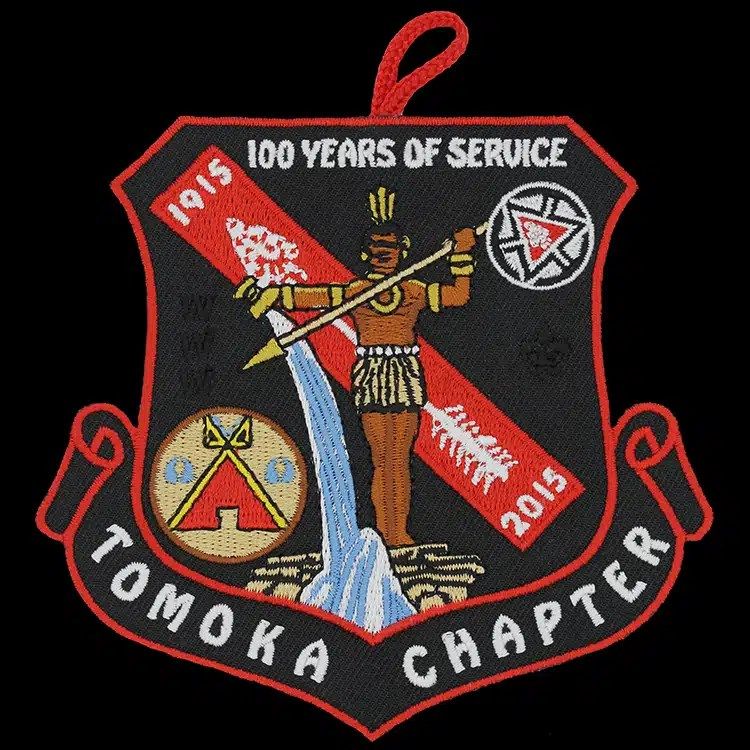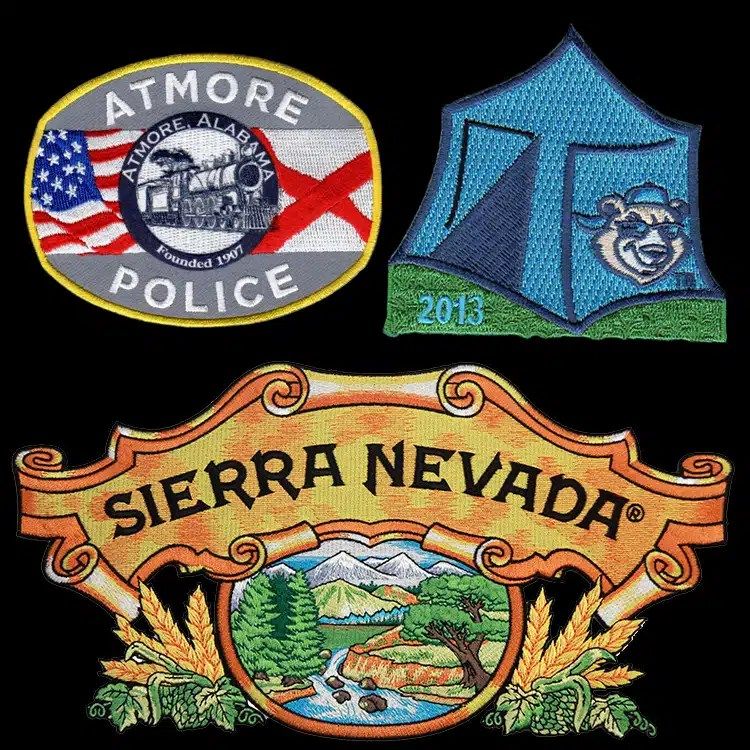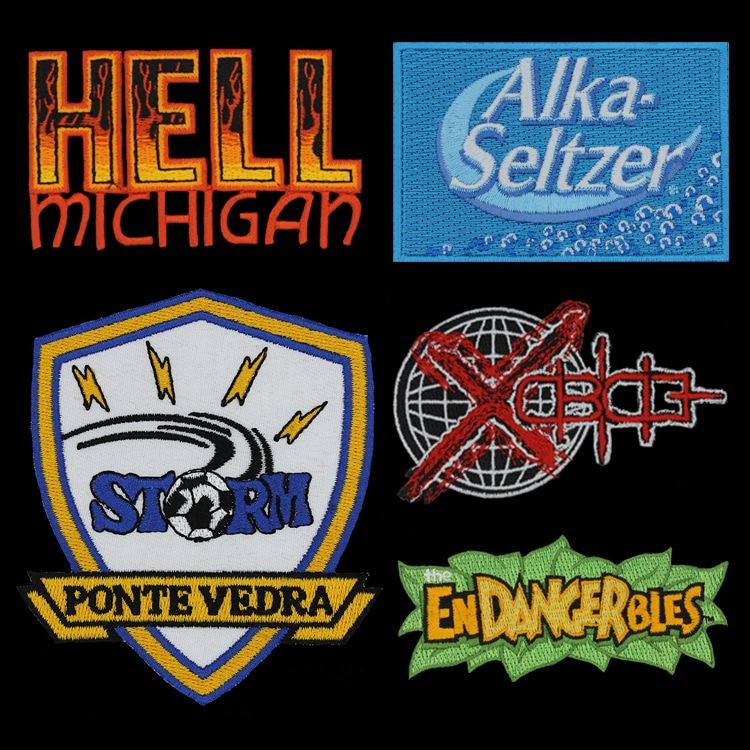
A patch proof is the drawing of your patch that the factory will build from: shape, size, thread colours, border, backing and quantity. To approve it, check every one of those against what you need, read every word letter by letter, confirm the size in inches, and then reply in writing. Nothing runs until you do, so take ten careful minutes now rather than living with a typo on 300 patches.
This guide explains what a proof is, what it can and cannot show you, and gives you a checklist you can work through with the proof open on your screen.
What a patch proof is (and is not)
After you send artwork and the quote is agreed, the factory redraws your design as a production file. For an embroidered patch that means digitizing: turning the artwork into a stitch plan. The proof is a picture of that plan, usually a flat image of the patch with notes beside it listing the size, the thread colours, the border type and colour, the backing and the order quantity. At Patchworks USA the proof usually comes back 1 to 3 business days after we have final artwork, and production starts only after you approve it in writing.
A proof is a rendering, not a photo of a finished patch. Screens show colour differently, and thread has texture and sheen that a flat image cannot reproduce. Treat the proof as the specification. It tells you what will be made, where every element sits and which thread colours are used. It does not tell you exactly how the colours will look under your office lights.
The proof approval checklist
Work through these in order. Most mistakes we see on proofs are caught by the first three lines.
- Spelling: read every word, every name and every number one character at a time, ideally out loud. Then ask someone who did not make the artwork to read it too.
- Size: confirm the width and height in inches match what you ordered, and that the size suits where the patch will go.
- Shape and outline: check the shape matches your intent, including any die-cut points, notches or a flat bottom edge.
- Thread colours: compare the listed colours with your brand colours or the reference you sent.
- Border: check the edge type (merrowed or heat cut) and the border colour.
- Backing: confirm sew-on, iron-on, hook-and-loop or plastic, whichever you asked for.
- Quantity: make sure the number matches the quote, including any split across designs.
- Orientation: confirm which way is up, which matters for left and right sleeve flags and for round patches.
- Detail: look for small text or fine lines that have been simplified, and decide whether you can live with the change.
Spelling, dates and names
Text errors are the most common and the most painful, because the patch looks perfect apart from one letter. Check names of people and places, department or station numbers, dates of founding, mottos in other languages and the order of words in a curved banner. Then check punctuation: a missing period after an abbreviation, or an apostrophe that has turned into a straight quote, is easy to miss on screen.
If your artwork came from an old patch or a photo, the factory may have retyped the lettering. Compare it with your original word for word. Also check that the lettering style is close to your original font. Embroidery sometimes needs a slightly heavier letter so it stitches cleanly at small sizes, which is normal, but the letters should still read the way you expect.
Size, detail and what got simplified
Size is the line people skim, and it causes real problems. A shoulder patch quoted at 3.5 in (89 mm) and proofed at 3 in (76 mm) may not cover the same area of sleeve, and the lettering shrinks with it. Measure the patch dimensions on the proof against your quote and against the placement. Our patch size guide gives typical sizes for chests, sleeves and caps, and how to measure a patch explains how width, height and die-cut shapes are measured.
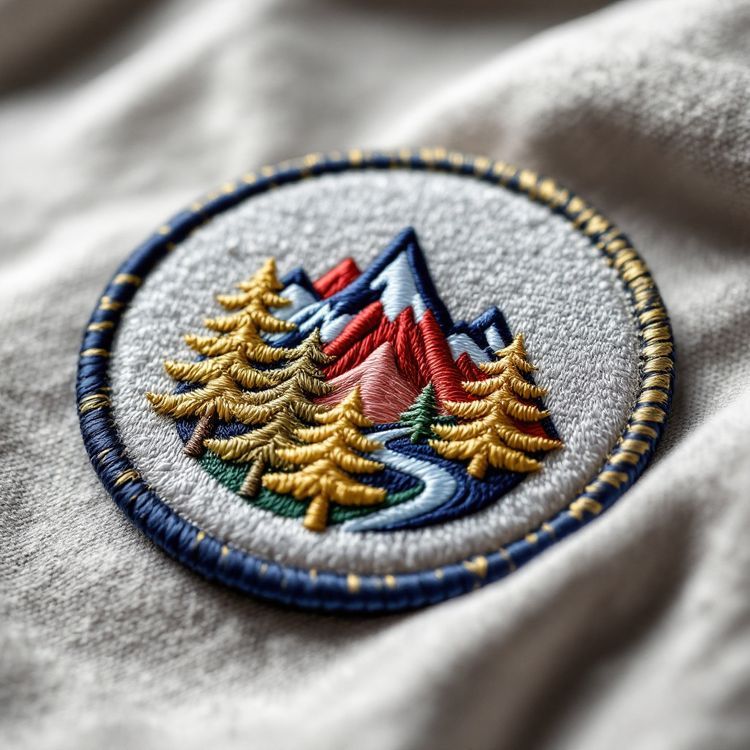
Next, compare detail. As a general guide, embroidered lettering needs about 1/4 in (6 mm) of height to stay readable, and lines thinner than about 1 mm do not stitch cleanly. If your art has smaller elements, the digitizer may have thickened, enlarged or removed them. That is a sensible change, but you should know about it. If a removed detail matters, ask whether the patch can go a little larger, or whether a woven patch would hold it.
Coverage and background
Check whether the background is stitched or whether the base fabric shows through. On a partly stitched patch, the twill colour becomes part of the design, so make sure it is the right one. If you are unsure which you are getting, ask for a note on the proof.
Checking thread colours
Proofs list each thread colour, often with a number from the factory's thread chart, and sometimes with the Pantone (PMS) reference it was matched to. Thread comes in a fixed range of colours, so the factory picks the closest match to each colour in your artwork. If you sent PMS numbers, check that each one has a thread colour beside it. If you sent only a logo file, check the main brand colour closely, because that is the one people will notice.
Do not judge colour only from how the proof looks on a phone. Compare the colour names and numbers. If a brand colour is critical, say so before you approve and ask whether the listed thread is the closest available. If something is clearly wrong, such as navy listed where you asked for royal blue, flag it.
| Proof item | What to compare it against | Common mistake |
|---|---|---|
| Text | Your original artwork, letter by letter | A swapped letter or a wrong number |
| Size | The quote and the placement | Proofed smaller than intended |
| Thread colours | Brand colours or PMS references | A close but wrong shade of blue or red |
| Border | Your request on the quote | Wrong edge type or border colour |
| Backing | How the patch will be attached | Iron-on ordered for nylon or a cap |
| Quantity | The quote and your roster | A split between designs entered wrongly |
Border, backing and quantity
A merrowed border is the raised wrapped edge used on simple shapes. A heat cut edge is sealed close to the outline and suits custom shapes. Check that the proof shows the one you asked for, and that the border colour works against the garment as well as the patch. Our guide to merrowed vs heat cut borders covers which suits which shape.
Then confirm the backing. Iron-on suits cotton and poly-cotton but is a poor choice on nylon, leather-look fabrics or caps, where sewing or hook-and-loop works better. If the patch will move between garments, hook-and-loop may be the right call. Finally, match the quantity on the proof to the quantity on the quote, especially if you are splitting an order across several designs or name versions.
Requesting changes and giving written approval
If anything needs changing, list every change in one reply rather than several. Be specific: "change the second line to read STATION 12" or "border colour to gold, not yellow" is far easier to action than "the text looks off". A revised proof comes back, and you check it again from the top, because a change in one place can shift another.
When everything is right, approve in writing, by email or by the method set out on your proof. A clear line such as "Approved as shown, size 3.5 in, quantity 300" leaves no doubt. Production of about 3 to 4 weeks starts from that approval, so a slow sign-off moves your delivery date. If you are working to a deadline, our timeline guide on how long custom patches take shows where the proof fits.
Ready to start?
You can mock up your design for free in the Patch Studio to settle size and colours before you ask for a quote. When you are ready, send your artwork for a quote with the size, quantity, backing and the date you need the patches in hand. The quote comes back in 2 to 3 business days, and you will see a proof before anything is made.