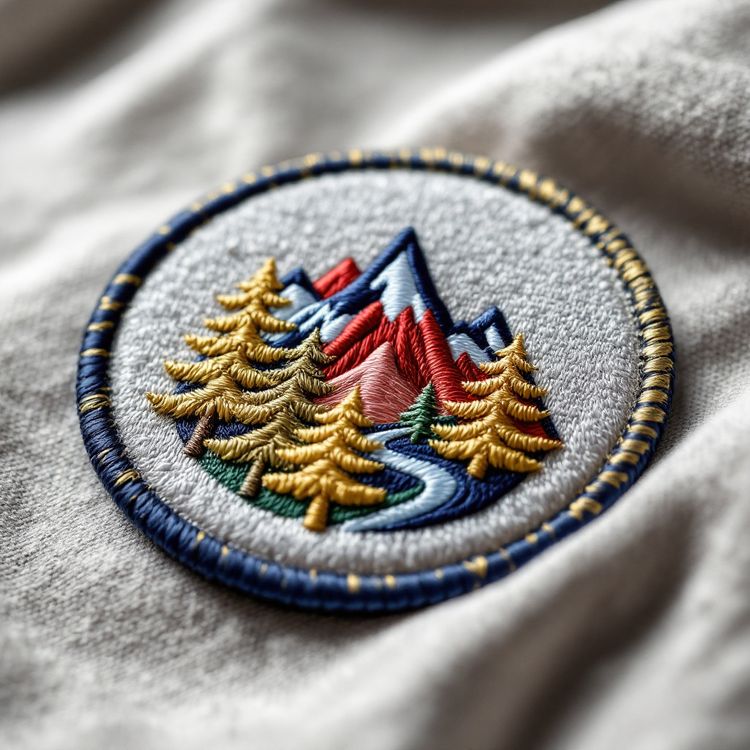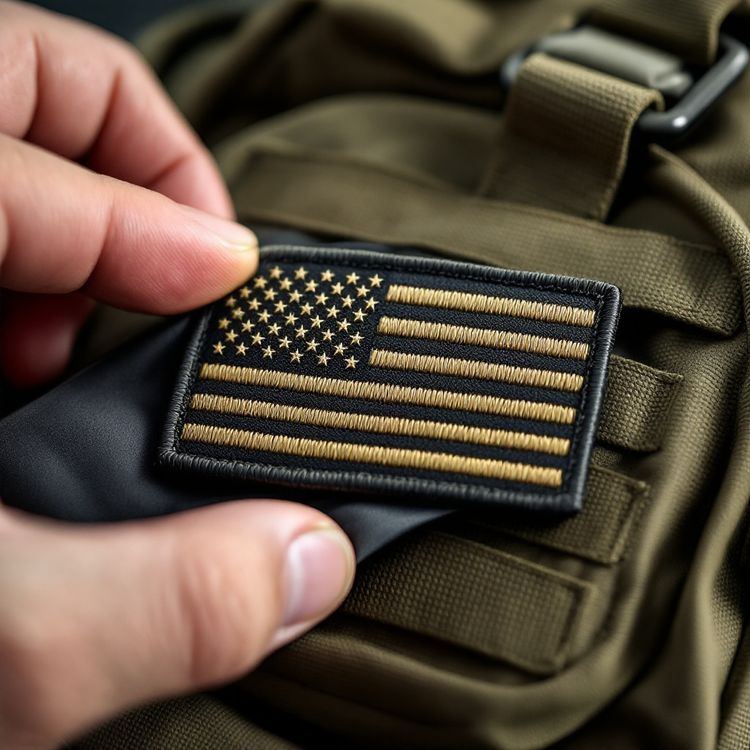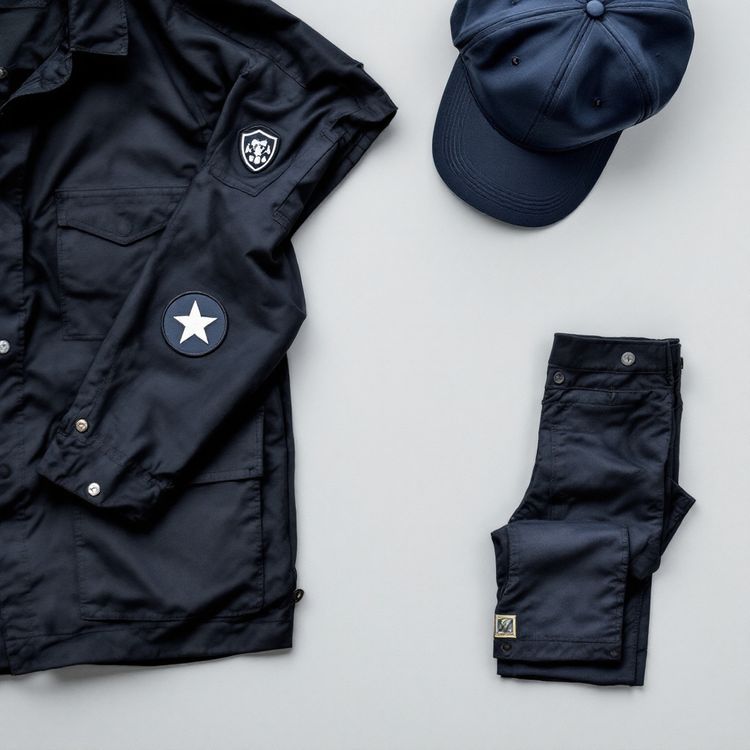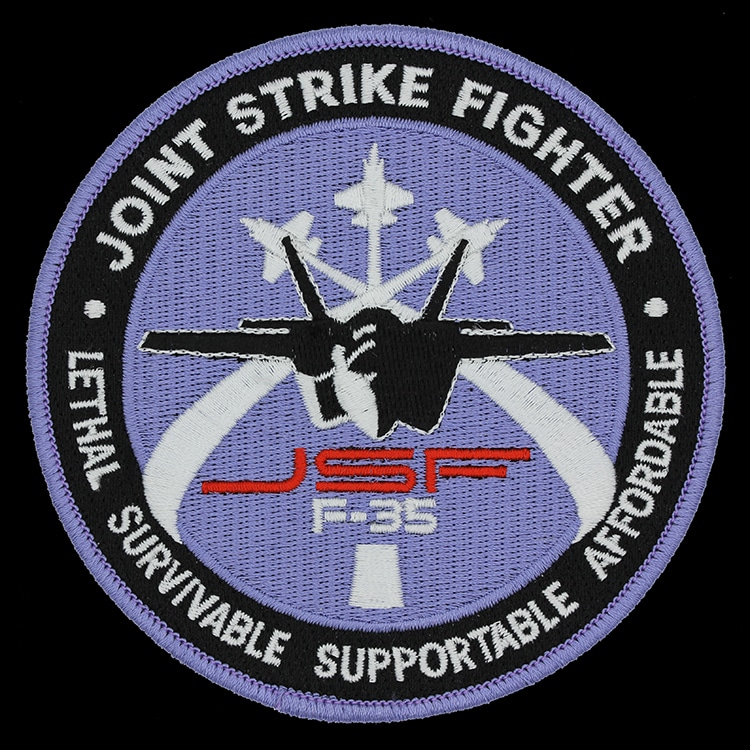
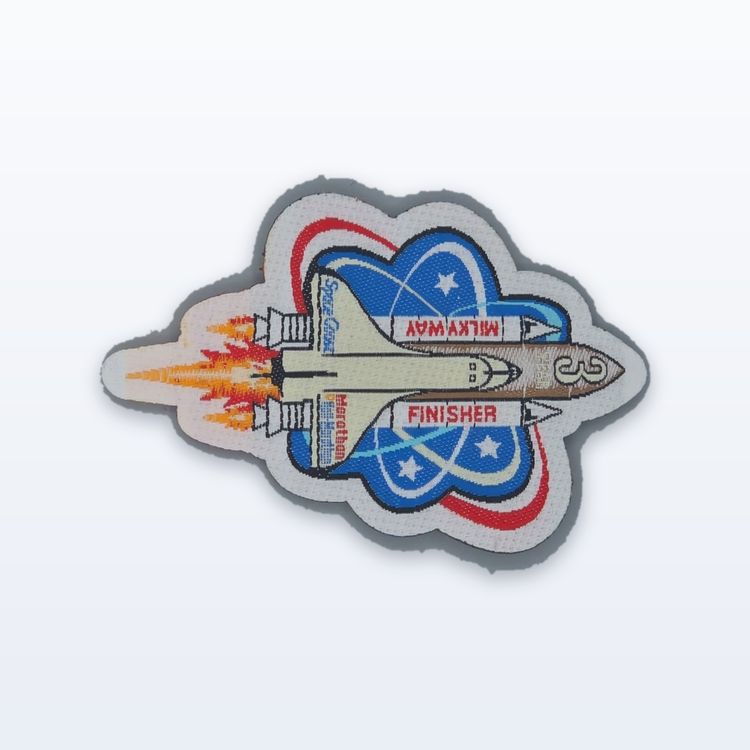
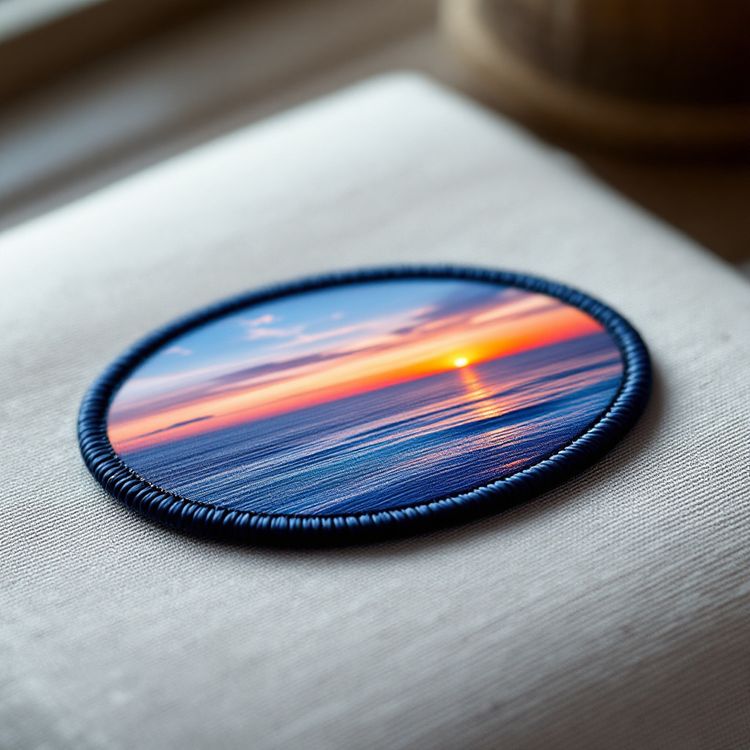
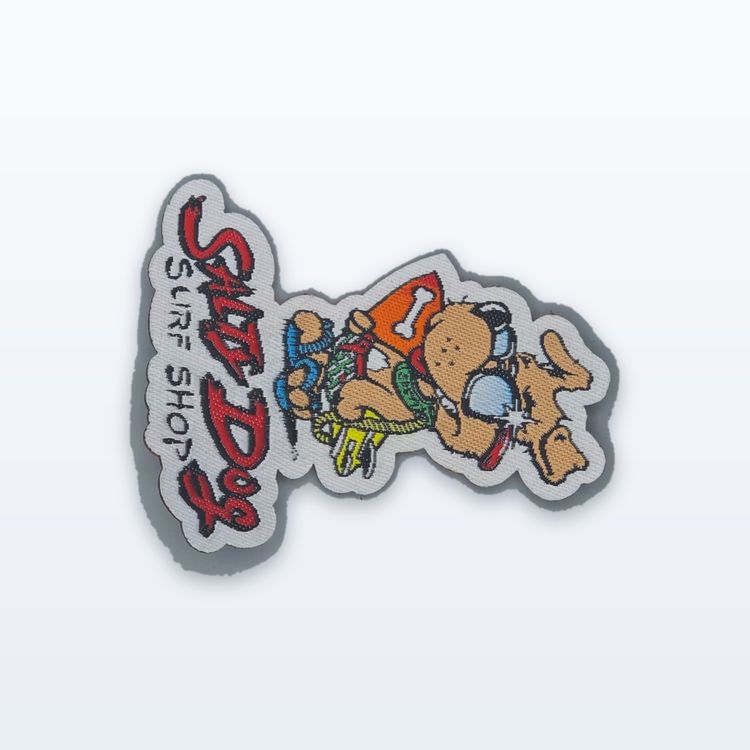
A merrowed border is a raised, wrapped stitch sewn around the edge of a patch. A heat cut border is cut and sealed with heat right along the outline of the design, with no wrapped stitch. Merrowed suits simple outer shapes such as circles, ovals, squares and shields. Heat cut follows custom outlines with sharp points and inside corners that a merrow machine cannot reach.
The edge you choose changes the look of the patch, how much room is left for your design, and which shapes are possible. Here is how to decide.
What a merrowed border is
A merrowed edge is made by an overlock machine that wraps thread tightly over the cut edge of the patch, all the way round. It creates a thick, rounded rim that stands slightly proud of the face. It is the classic patch edge you see on uniform emblems, scout rounds and many club patches.
Because the machine has to travel continuously around the outside, it needs a smooth path. Gentle curves and the soft corners of a rectangle or shield are fine. Tight inside corners, deep notches and sharp points are not, because the machine cannot turn into them cleanly.
What a heat cut border is
A heat cut edge is cut and sealed by heat along the outline of the design. You will also hear it called laser cut or hot cut in the trade. There is no wrapped stitch; the edge of the patch is simply the edge of the design, often finished with a satin stitch outline on embroidered patches or a woven edge on woven patches.
Because the cut can follow any path, heat cut handles custom outlines: mascots, lettering cut to shape, animals, vehicles and logos with points and notches. It gives a flatter, cleaner edge that many people read as more modern.
Which shapes suit each edge
Start with the outline of your patch. If you can trace it with one smooth pen stroke, a merrowed border is usually possible. If the outline has points, notches or a shape that turns back on itself, heat cut is the right finish.
- Circles, ovals and simple squares: merrowed or heat cut.
- Rectangles with rounded corners and standard shields: merrowed or heat cut.
- Stars, badges with points, and Maltese style crosses: heat cut, or a merrowed shape around them.
- Mascots, animals and custom outlines: heat cut.
- Lettering cut to the shape of the words: heat cut.
- Rockers and name tapes: merrowed is common on simple arcs; heat cut on tighter curves.
There is a middle route for detailed designs that want a merrowed look: place the detailed artwork inside a simple shape, such as a circle or shield, and merrow the outside. You keep the detail and the classic edge.
Durability, fraying and border colour
Both edges hold up in normal wear. A merrowed rim is thick and protects the edge of the patch from abrasion, which is one reason it is common on uniforms and workwear. A heat cut edge is sealed by the heat, which helps stop fraying; on patches that take a lot of rubbing, a stitched outline just inside the edge adds strength.
A merrowed border is its own thread colour, so it is a design decision. Matching the border to the background makes the patch look larger and quieter. Contrasting it, a gold rim on navy for example, frames the design and suits formal emblems. Matching the garment colour can make the patch look built in. Heat cut edges usually take the colour of the outline stitched or woven at the edge of the design.
Border width and usable design area
A merrowed rim takes up space on every side of the patch. On a small patch, that matters. The usable area inside a 2.5 in round is noticeably smaller once the border wraps the edge, and text that ran close to the edge in your artwork may need to move inward or shrink.
Heat cut uses almost all of the patch for the design, which helps when you need the most area for text at a given size. If your design is tight on space, this is a point in favour of heat cut, or of ordering the merrowed patch slightly larger. Our patch size guide covers how text sets the smallest workable size.
A quick check helps here. Draw a line around your artwork, set in from the edge by roughly the width of the border you have in mind, and see whether any letters or details fall outside it. Anything that crosses the line will either be covered by the merrow or need to move. On larger patches, such as a 4 in shoulder emblem or a jacket back, the border takes a much smaller share of the area and rarely forces a change.
Mixing edges in one set
You do not have to use one edge across a whole order. A club might merrow its round chest patch and heat cut a matching mascot patch for bags. If you want a set to look related, keep the border colour of the merrowed pieces close to the outline colour of the heat cut ones.
Edge finish by patch type
Embroidered, woven and sublimated patches can all take either edge, with some natural pairings. Embroidered patches are often merrowed for a traditional finish, and heat cut when they follow a logo outline. Woven patches are frequently heat cut because the flat, detailed look suits a clean edge; see embroidered vs woven patches for how those two differ. Sublimated patches take either. You can see all six on our patch types section.
The edge is separate from the backing. A merrowed or heat cut patch can still be sew-on, iron-on, hook-and-loop or plastic backed, as our backings and borders section shows.
Merrowed vs heat cut: decision table
| Question | Merrowed | Heat cut |
|---|---|---|
| Look | Raised, rounded rim; classic | Flat, clean edge; follows the art |
| Shapes | Circles, ovals, squares, shields, simple arcs | Any outline, including points and inside corners |
| Design area | Border uses some of the space on every side | Nearly the full patch is design |
| Edge protection | Thick rim resists abrasion | Heat sealed; add a stitched outline for heavy wear |
| Border colour | Choose any thread colour | Follows the outline colour |
| Typical uses | Uniform emblems, scout rounds, club patches | Mascots, logo outlines, woven brand patches |
Choose your edge and request a quote
You can switch between merrowed and heat cut on your own logo in our free Patch Studio and see the result in 3D. When you request a quote, name the edge you want and, for merrowed, the border colour. If your outline will not merrow cleanly, we tell you before the proof, and the proof shows the edge as it will be made.