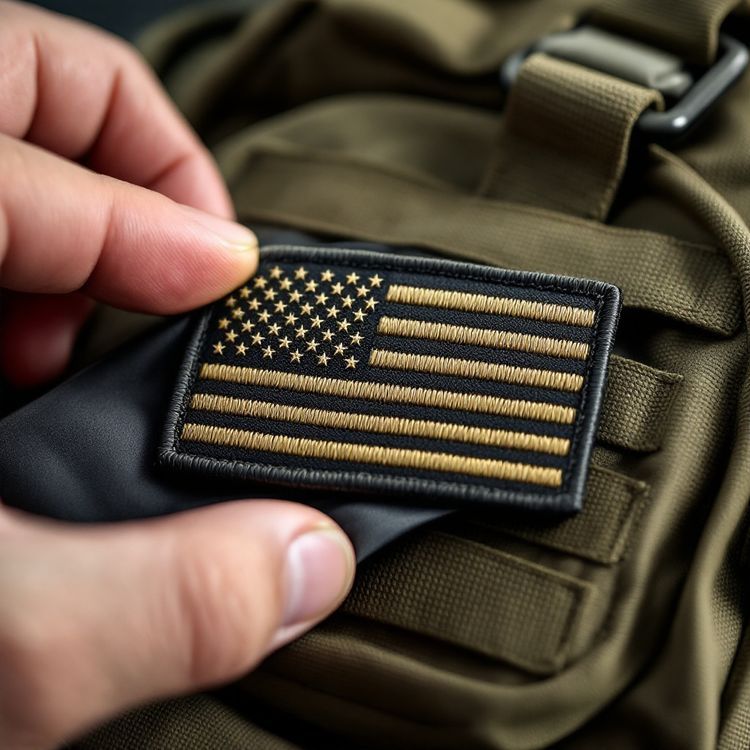
Iron-on patches have a heat-activated adhesive on the back and bond to fabric with an iron or heat press in a minute or two. Sew-on patches have no adhesive and are stitched on by hand or machine. Iron-on is faster and easier for people attaching patches themselves. Sew-on is more secure, survives frequent washing and works on fabrics that cannot take heat. For uniforms and anything washed weekly, choose sew-on. For merch, giveaways and cotton or denim worn casually, iron-on is usually fine. If you want both convenience and strength, order iron-on and add stitching after you press.
Below we compare the two on hold, durability, fabric, appearance and handling, then match each to common uses.
How each backing attaches
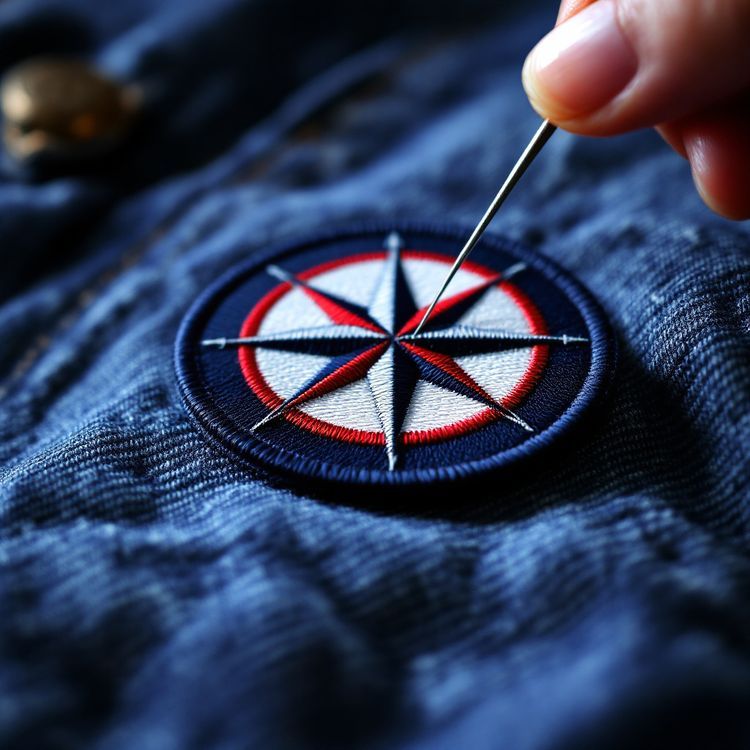
A sew-on patch is finished on the back with no added layer. You place it and stitch through the patch edge, or just inside the merrowed border, into the garment. The thread is what holds it, so the bond is as strong as the stitching.
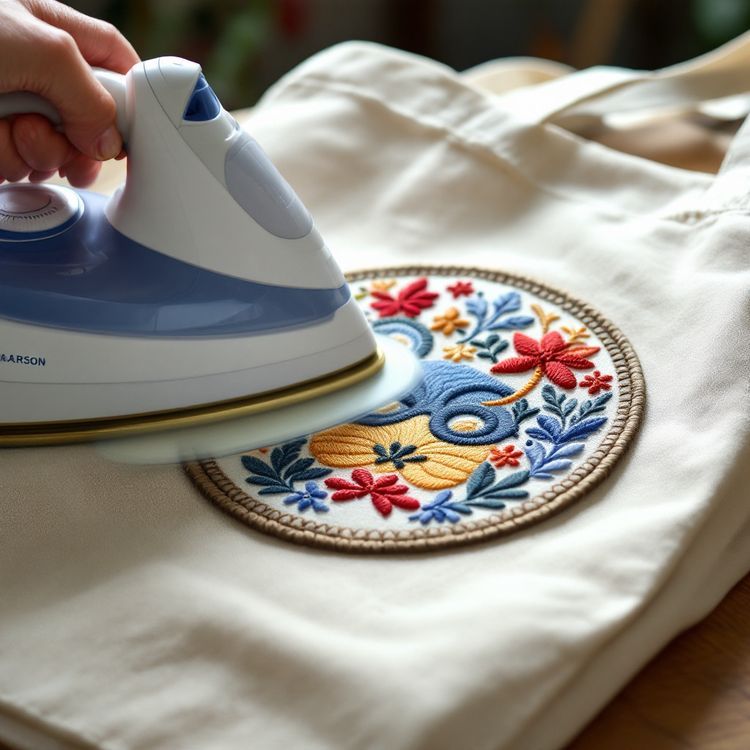
An iron-on patch, also called heat seal, has a thin film of thermoplastic adhesive applied at the factory. Heat melts the film, pressure pushes it into the fabric, and as it cools it sets. The adhesive is what holds it, so the bond depends on getting enough heat, pressure and time, and on the fabric being one the adhesive can grip.
Iron-on vs sew-on at a glance
| Factor | Iron-on | Sew-on |
|---|---|---|
| Attaching | Iron or heat press, no sewing | Needle and thread or sewing machine |
| Time per patch | A minute or two | Longer, depending on skill and size |
| Hold | Good on suitable fabrics | Strongest, close to permanent |
| Frequent washing | Edges can lift over time | Holds through regular laundering |
| Heat-sensitive fabrics | Not suitable | Works on almost anything |
| Stretch fabrics | Tends to lift | Holds better |
| Removing later | Possible with reheating | Unpick the stitches |
| Feel | Slightly stiffer from adhesive | Softer and more flexible |
Durability and washing
This is the biggest difference. A sewn patch is held by thread passing through both layers, so washing, drying and flexing do little to it. It will usually last as long as the garment.
An iron-on patch relies on adhesive that softens again under high heat. Hot washes and especially hot dryers slowly weaken the bond, and the edges are usually the first to go. Gentle washing, inside out, with low dryer heat makes a real difference. Even so, on a work shirt washed every week, expect an iron-on patch to need attention at some point. Our post on why iron-on patches fall off explains what to watch for.
Which fabrics suit each
Iron-on needs fabric that can take the heat and has a weave the adhesive can grip: cotton, denim, canvas, twill and sturdy cotton blends. It struggles on polyester and nylon, which can scorch or melt, and it does not belong on leather, vinyl, coated shells or high-stretch performance knits.
Sew-on works on nearly everything, including leather, nylon, technical outerwear and caps, as long as a needle can pass through. That is why sew-on is the default for jackets, bags and gear. See our guide to ironing patches on polyester, nylon or leather for the fabrics in between.
Which to choose for common uses
Choose sew-on for
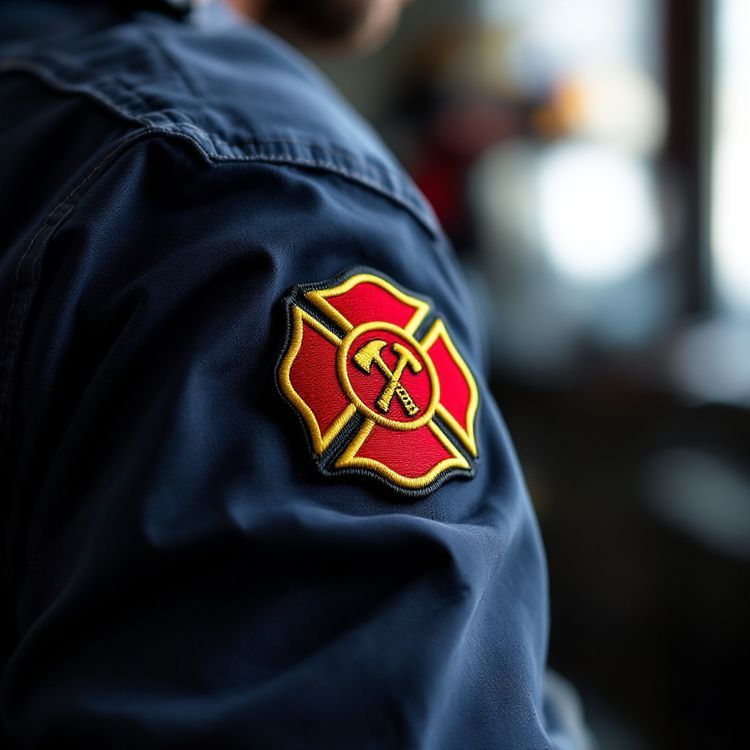
- Police, fire, EMS and security uniforms laundered often.
- Work shirts and company uniforms for staff.
- Leather and nylon jackets, vests and bags.
- Patches meant to last for years, such as club back patches.
Choose iron-on for
- Merch and giveaways customers will attach at home.
- Event and race patches.
- Cotton hoodies, totes and denim.
- Scout, school and club patches families apply themselves.
For uniform programs, our guide to patches for business uniforms covers backing choice alongside sizing and rollout.
Time, effort and who attaches them
The backing choice is partly about who does the work. A sew-on patch takes longer to attach, and for a large order that time adds up. If your staff or members will sew their own, some will do it neatly and some will not, and the difference shows on a uniform. Many departments and companies send sew-on patches to a local tailor or uniform shop, which gives a clean, consistent result.
Iron-on shifts the effort the other way. Attaching is quick, but the bond depends on technique, so a handout with clear steps is worth including. For a one-off giveaway, that is a fair trade. For a uniform that has to look right for years, the extra time of sewing is usually money well spent.
There is also the question of changing your mind. An iron-on patch can usually be removed by reheating the adhesive, though it can leave a residue or a faint mark. A sewn patch comes off cleanly once the stitches are unpicked, which matters on garments that get reissued to new staff.
Appearance
Both look the same from the front once attached. Close up, a sewn patch may show a fine line of stitching just inside the border, which disappears with matching thread. An iron-on patch sits completely flush, with no visible stitching, which some brands prefer on merch.
The best of both: iron on, then stitch
You do not have to choose one or the other. Many buyers order patches with an iron-on backing and stitch around the edge after pressing. The adhesive holds the patch perfectly flat and in position, so it does not shift or pucker under the needle, and the stitches give it the long-term hold of a sewn patch.
- Press the iron-on patch into position following the usual steps.
- Let it cool completely.
- Stitch around the edge by hand or machine, just inside the border.
- Use a thread that matches the border so the stitching disappears.
When neither is right
Two other backings solve problems that iron-on and sew-on cannot. Hook-and-loop backing lets you remove and swap a patch, which suits tactical gear, morale patches and uniforms that change roles. Rigid plastic backing stiffens a patch so it holds its shape for caps and display. Our overview of patch backing types compares all four.
Ordering the right backing
Put your backing choice on the quote request, along with what the patches are going on and how often they will be washed. If you are not sure, tell us the garment and use, and we will recommend one. You can order custom patches with any of the four backings. Quotes typically return in 2 to 3 business days. Request your quote.