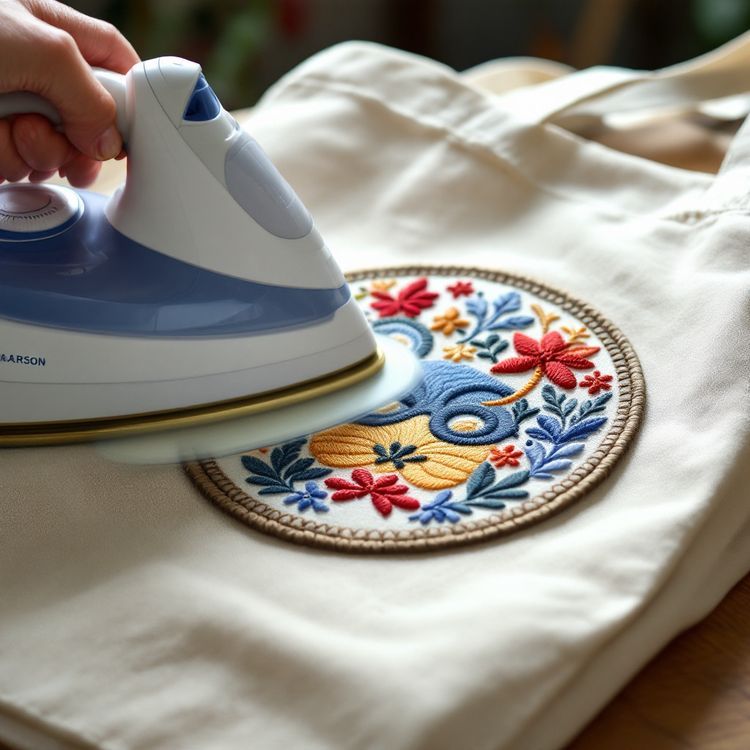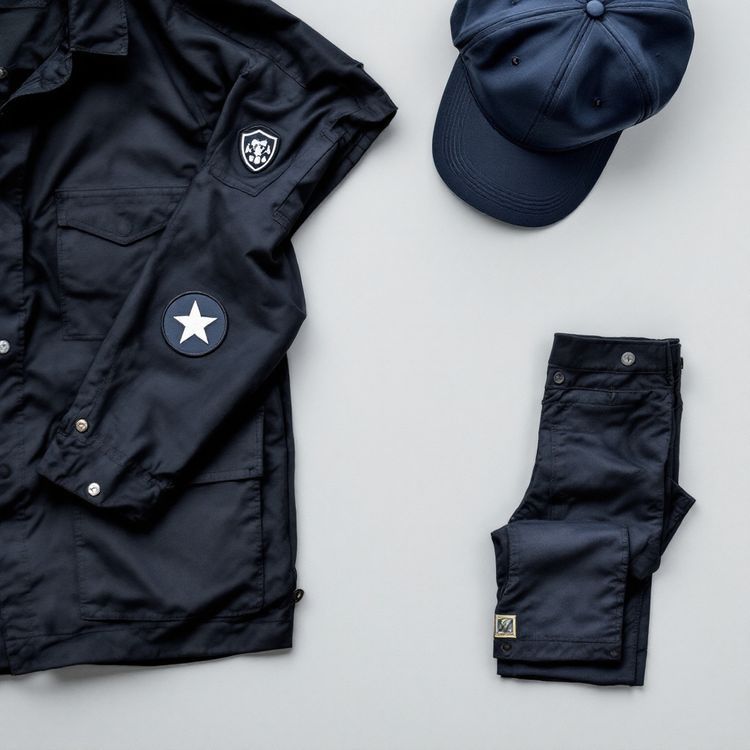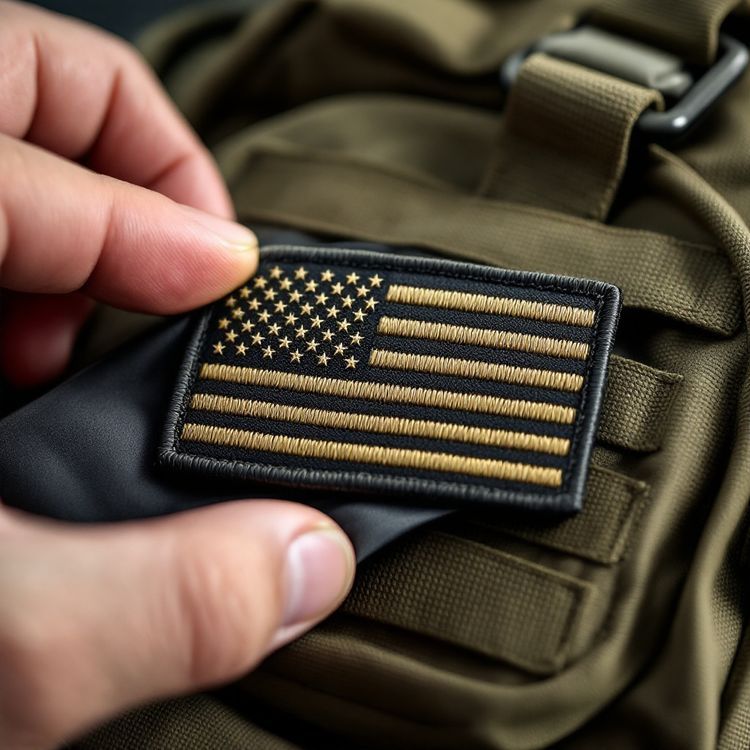
You can usually iron a patch onto polyester, but only with care: use a lower heat setting, a pressing cloth and more press time, and test first, because polyester can shine, scorch or melt at the temperatures a heat seal adhesive likes. Nylon is riskier, since many nylon fabrics melt at lower heat and often carry water-repellent coatings that stop the adhesive bonding. Leather should never be ironed. For nylon, leather and any coated or technical fabric, sewing the patch or choosing a hook-and-loop backing is the reliable answer.
Below we explain why these fabrics are tricky, how to test one, how to iron polyester safely, and what to do for nylon and leather instead.
Why synthetics and leather are tricky
An iron-on patch has a heat seal backing that needs enough heat to melt and enough grip in the fabric to hold. Cotton and denim are ideal: they tolerate high heat, and their open, absorbent weave lets the adhesive flow into the fibers.
Synthetic fabrics are made from plastics. They soften and melt with heat, so the iron setting that bonds the patch well can also damage the garment. Many are also tightly woven and smooth, which gives the adhesive less to grip. Leather is different again: heat dries it out, shrinks it and can leave a permanent mark, and its surface finish resists adhesive.
Fabric by fabric
| Fabric | Iron-on? | Better option |
|---|---|---|
| Cotton, denim, canvas | Yes, high heat | Iron-on works well |
| Cotton-poly blends | Yes, medium heat | Iron-on, stitch for frequent washing |
| Polyester | Often, with low heat and a cloth | Test first, or sew |
| Nylon | Risky | Sew-on or hook-and-loop |
| Coated or water-repellent shells | No, the bond will not hold | Sew-on |
| Fleece and performance knits | Risky, can melt or stretch | Sew-on |
| Leather and faux leather | No | Sew-on, or leather-safe adhesive |
Read the care label first
The care label tells you most of what you need. Look at the fiber content and the iron symbol. An iron with one dot means low heat, two dots medium, three dots high. An iron with a cross through it means do not iron at all, and that rules out an iron-on patch. If the label says 100% nylon, or lists a coating or a water-repellent finish, plan to sew.
For blends, the most heat-sensitive fiber sets the limit. A 60/40 cotton-polyester shirt has to be treated as polyester.
How to test a fabric before you commit
- Find a hidden spot: inside a hem, a facing or a pocket lining in the same fabric.
- Set the iron to the label's maximum, steam off.
- Lay a pressing cloth over the spot and press for about 10 seconds.
- Lift and check for shine, puckering, a change in texture or a smell of melting.
- If it looks unchanged, repeat for longer. If anything changed, do not iron the patch on.
How to iron a patch onto polyester
If the test passes, these steps give the adhesive the best chance without damaging the fabric. Our general guide to attaching iron-on patches covers the basics.
- Wash the garment first without fabric softener, which leaves a film that blocks the bond.
- Use the label's highest safe setting, usually low to medium for polyester, with steam off.
- Always use a pressing cloth, a thin cotton cloth or a sheet of parchment paper between iron and fabric.
- Press firmly on a hard surface. Make up for lower heat with more time, in shorter presses so the fabric never gets too hot in one go.
- Press from the inside of the garment too, which sends heat straight into the adhesive.
- Let it cool fully, then check the edges. Add stitching if any part lifts.
Expect a lower-heat bond on polyester to be less durable than the same patch on cotton. For sportswear and anything washed often, add a few stitches around the edge. If it still will not hold, our post on why iron-on patches fall off walks through the other causes.
Nylon jackets, bags and gear
Nylon is common on windbreakers, backpacks, duffel bags and tactical gear. It is the fabric most likely to melt under an iron, and much of it is coated for water resistance. Even when a patch seems to stick, the bond often fails within weeks.
For nylon, the better choices are:
- Sew-on. A sewn patch holds on nylon indefinitely. On bags, stitch through the outer layer only, or open a lining seam so you can reach inside.
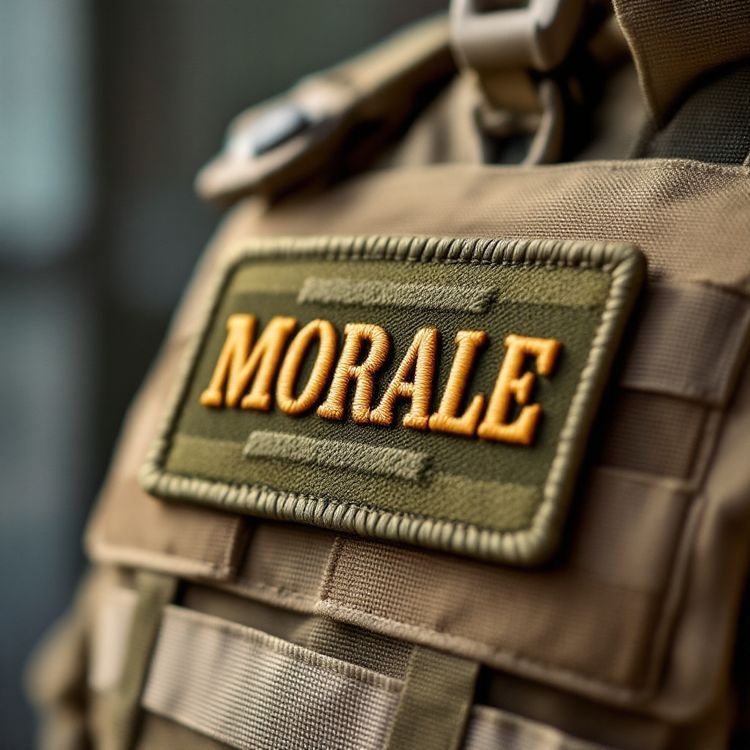
- Hook-and-loop. If the gear already has loop panels, as many tactical packs and plate carriers do, a hook-backed patch attaches in seconds and can be swapped. Our guide to custom Velcro patches explains how it works.
Leather and faux leather
Do not iron leather. The heat can scorch, shrink or stiffen it, and the adhesive will not bond properly to the finished surface. Faux leather and vinyl can melt.
Sewing is the traditional method for leather jackets and vests, and it is how motorcycle club patches are attached. Use a leather needle, a strong polyester or nylon thread and a longer stitch length, since every hole is permanent. A leather repair shop or tailor can stitch large back patches neatly if you prefer. Some people use an adhesive made specifically for leather and fabric, but for anything worn hard, stitching is the dependable route. Our guide to motorcycle club patches covers placement on vests and jackets.
Other fabrics to treat with care
A few more materials come up often:
- Fleece. Most fleece is polyester with a deep pile. Heat crushes the pile and can melt it, and the adhesive grips only the tips of the fibers. Sew it.
- Rayon and silk. Both are delicate and scorch easily. Sew patches on by hand with a fine needle.
- Canvas with a waxed finish. The wax blocks the adhesive. Sew, or use hook-and-loop on a panel.
- Hats. Many caps are polyester or blends, and the curved front is hard to press evenly. Stitching is the usual method. Our hat patch guide covers caps in detail.
When in doubt, treat the fabric as heat sensitive and test before you press. A patch can always be sewn later, but a melted jacket cannot be repaired.
Choosing the backing when you order
Tell us what fabric the patches are going on when you request a quote. We make custom patches with sew-on, iron-on (heat seal), hook-and-loop and rigid plastic backings, and we will suggest the one that suits nylon, polyester or leather. Quotes typically return in 2 to 3 business days. Request your quote.