For most clothing brands the right patch is an embroidered patch for caps, jackets and heavy fabrics, a woven patch for detailed art and lightweight tees, and a sew-on backing for anything your own production team or factory will attach. Iron-on suits patches you sell loose to customers. Settle those three choices per product, plan colourways across your line, and order early enough that patches arrive before your garments are cut and sewn.
Below we work through each decision the way a brand usually meets it: which construction for which garment, how it attaches in production, sizing and placement, colourways, and timing around a drop.
What a patch does for a clothing line
A patch adds texture and a finished, branded detail that screen printing cannot match, and it can move between products. The same cap patch can go on a hat, a tote, a jacket sleeve and a retail display. Brands use patches in three main ways:
- On the garment: a logo patch on a cap front, a chest patch on a work jacket, a small woven tab on a sleeve or hem.
- As a product: loose patches sold on their own or in sets, often at a lower price point than apparel, to fans who add them to their own gear.
- As an add-on: a patch dropped into each order or given at events, which keeps the brand in front of customers.
Each use points to a different backing, so decide early which one each patch is for.
Which construction suits which garment
Patchworks makes six patch constructions. Four of them cover almost every apparel need.
| Construction | Look | Works best on |
|---|---|---|
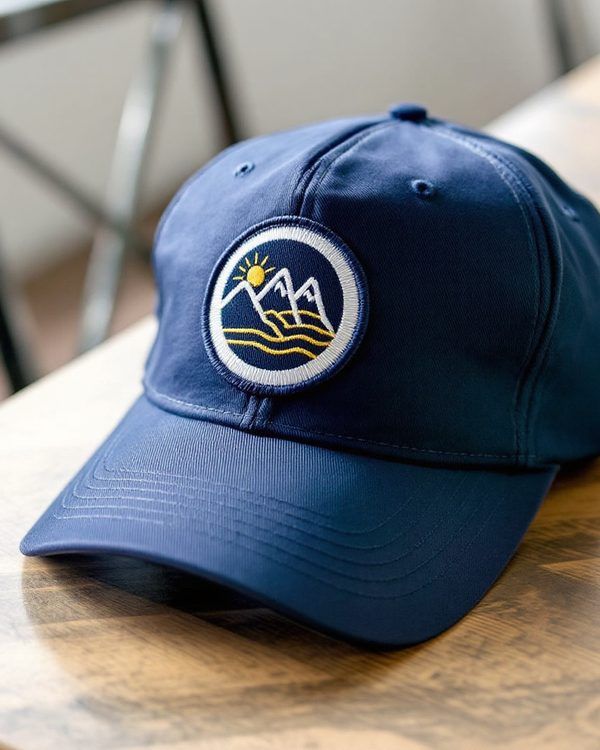
| Embroidered | Raised, textured thread | Caps, work jackets, hoodies, canvas bags |
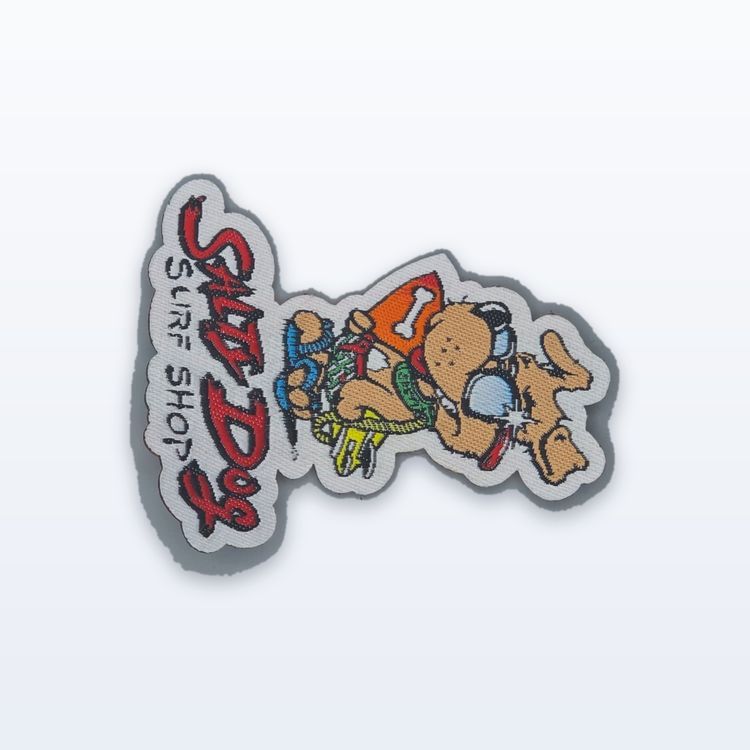
| Woven | Flat, fine detail, thin | Tees, lightweight shirts, sleeve tabs, detailed art |
| Chenille | Soft, tufted, varsity feel | Letterman jackets, sweatshirts, heritage lines |
| Sublimated | Full colour print, gradients | Photographic art, illustration, sunset palettes |
| Satin tackle twill | Layered fabric with stitched edges | Large letters and numbers, athletic styles |
| Hand embroidered bullion | Metallic wire, crest look | Blazer crests, premium limited pieces |
If your art has fine linework or small lettering, read our comparison of embroidered vs woven patches before you choose. If you are not sure, ask for two constructions on the same quote at the same size and quantity. You can see the range on the custom patches page.
Backing: what your production team needs
Backing is where brand orders most often go wrong, because the patch is attached by someone other than the buyer.
- Sew-on for anything a factory, sewing contractor or embroidery shop will attach to finished goods. It survives repeated washing and gives a professional stitched edge.
- Iron-on (heat seal) for loose patches sold to customers. It gives them an easy way to apply the patch at home; most will add a few stitches for wear.
- Hook-and-loop for outdoor and tactical lines where customers expect to swap patches on bags and jackets.
- Rigid plastic for a stiff, flat patch that holds its shape, useful on some cap styles and for patches handed out as collectibles.
Ask your sewing contractor or cap supplier what they prefer before you order. Some cap decorators want a specific backing or a slightly smaller size than the panel so they can stitch around it. Our backing types guide goes into each option in more detail.
Size and placement across a line
Decide where each patch goes before you size it, then measure the real garment. As a rough guide, a cap front patch is commonly about 2 to 3 in (51 to 76 mm) wide, a left chest patch about 3 to 3.5 in (76 to 89 mm), and a jacket back panel anywhere from 8 in (203 mm) up to 12 in (305 mm) or so. Small woven tabs on sleeves and hems can be 2 in (51 mm) wide or less.
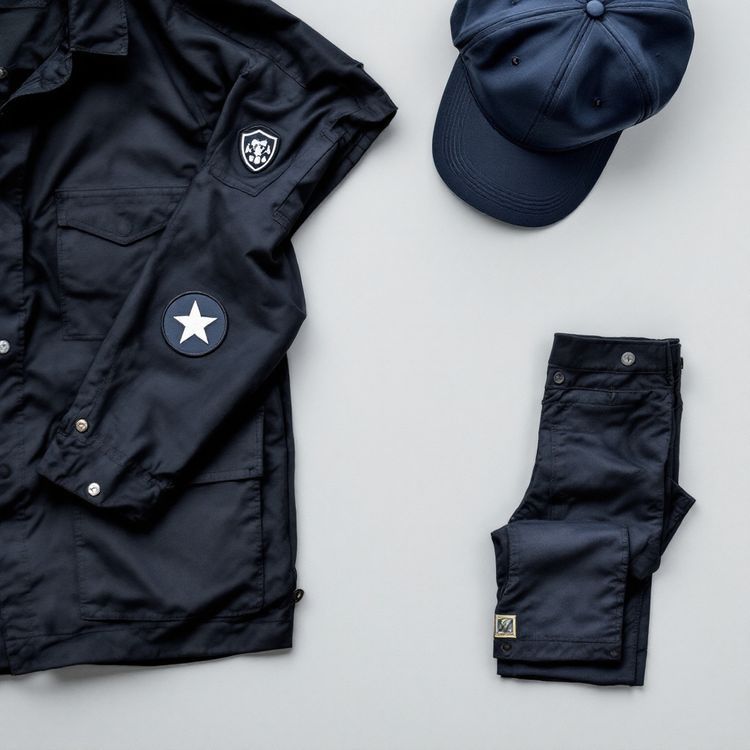
Keep the logo proportions the same across sizes but check that the small version still reads. Detail that looks good at 4 in may fill in at 2 in. Many brands make a simplified mark just for the smallest patches. Our guide to jacket patch placement covers the common positions in detail.
Colourways and consistency
A clothing line usually needs the same patch in several colourways: cream on navy for one cap, black on khaki for another. Each colourway is a separate version on the quote, so list them all up front with quantities for each. That way they are digitized and proofed together and look like a family.
Send a colour reference for every thread and base colour. Thread is matched as closely as possible to your references, and the proof shows the exact pairing. If you already use set colours for printing, include them. Keep the colour count sensible: three to five colours usually look cleaner in thread than eight.
Consistency over time matters as much as consistency across a line. When you reorder, the digitizing stays on file and reorders skip setup, which is how a restock matches the first batch. See how to reorder custom patches for what to send.
Timing patches around a launch
Patches are usually needed before the garments are finished, so plan backward from the date your contractor needs them in hand. Typical timing is:
- Quote returned in 2 to 3 business days.
- Proof about 1 to 3 business days after artwork.
- Production of about 3 to 4 weeks after you approve the proof in writing.
- Shipping by UPS from Holly Hill, Florida.
Rush of around 10 business days is sometimes possible when the factory can hold it. All timing is confirmed on your quote, and each step can move a little depending on the factory schedule. Build in a margin for proof changes, especially on a first order when you are still settling sizes.
Quantities and requesting a quote
Custom minimums start from 100 pieces, varying by product and confirmed on the quote. For a small first drop, a single design across a couple of colourways is a sensible start. Because there is no published price list, every job is quoted from the factory price for your size, construction, colour count, border and backing.
Upload your logo to the free Patch Studio to see it as a patch on a cap or jacket, then send the details for a quote: artwork, size, construction, colourways, backing, quantity per version and the date you need them. Nothing runs until you approve the proof.