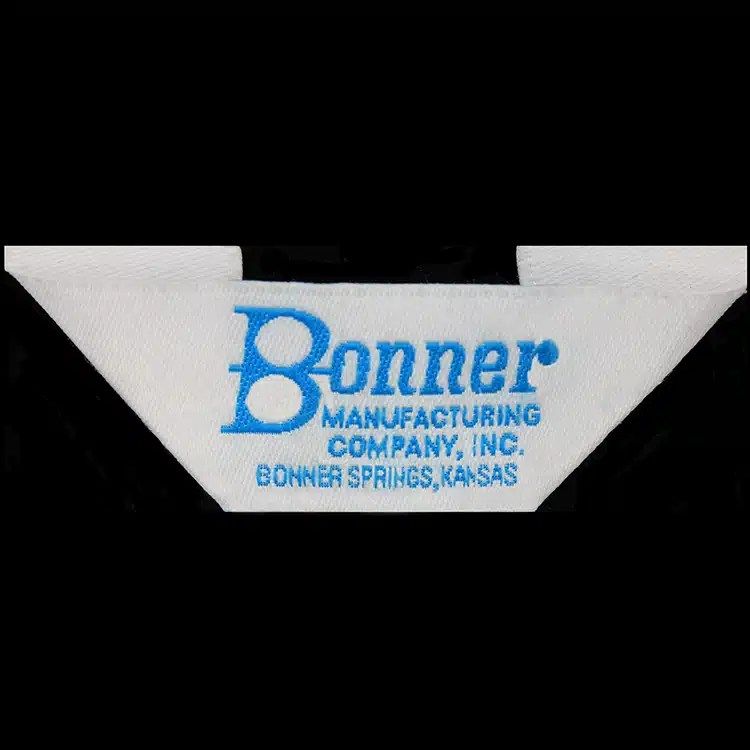
Custom woven clothing labels are the small brand marks sewn into a neckline, a side seam or a hem, with your logo woven into the label itself rather than printed on top. For a clothing brand they are one of the least expensive ways to make every piece look finished. The choices come down to four things: the size, the colours, the cut and how the label is attached.
This guide is for clothing brands, makers and anyone putting a name into garments, bags or accessories. It covers why woven labels hold up, the cuts and what each one does, where labels usually go, how to design for a small size, and what to send for a quote.
Why woven clothing labels, not printed tags
A woven label is made on a loom. The threads that form your logo are the same threads that form the label, so there is no ink sitting on the surface to crack, fade or wash off. That is why a woven label holds up to the wash and the years better than a printed tag does.
- Durable: the mark is part of the fabric of the label.
- Sharp at small sizes: fine type stays crisp because it is woven into the label rather than printed on top.
- No setup or digitizing fees to start a run.
- Low minimums: woven labels start from 100 pieces, confirmed on your quote.
Woven labels also feel like part of the garment. A smooth, flat label sits against the skin at the neck far better than a stiff tag, which matters for anything worn all day.
Choosing a cut for custom woven clothing labels
The cut decides how the label is finished and how it sits in the seam. We offer four named cuts, each sewn in or heat sealed depending on the cut.
| Cut | How it is finished | Application |
|---|---|---|
| Straight cut | Sewn on all four sides, no folds | Sew-in or heat seal |
| End cut / end fold | Laser cut to the shape of the design | Sew-in or heat seal |
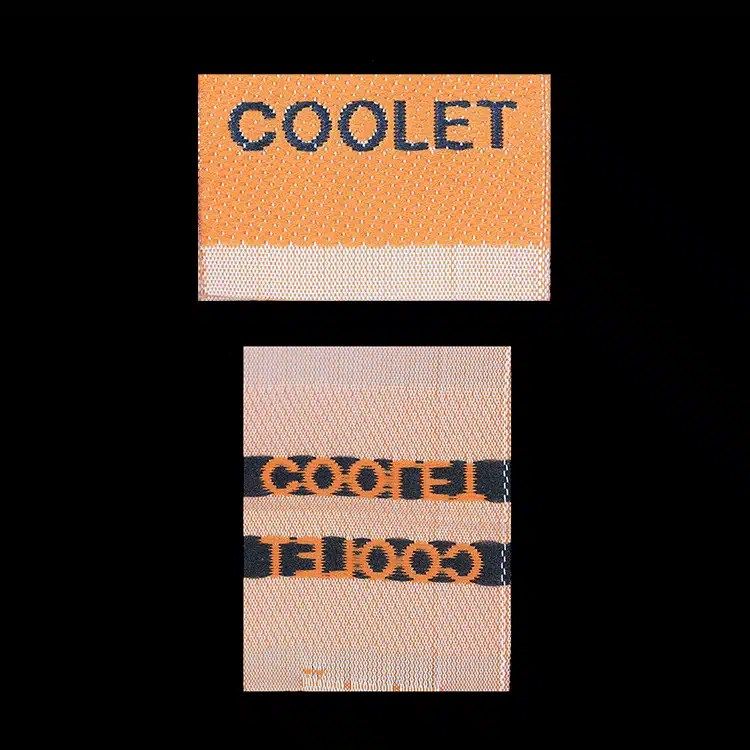
| Manhattan cut | Folded in the middle, ends sewn into the garment, so a design can run on both sides | Sew-in |
| Mitre cut | Ends folded under and up, creating a tab that sews straight into the seam | Sew-in |
Two further folds are listed on our woven label cuts section, including one where the top part folds over the bottom fold for a finished look, typically used when sewing onto a sleeve hem. If you are not sure which cut suits your garment, tell us what it is and we will recommend one.
Where the label goes on the garment
Placement and cut work together. These are the common positions on clothing and what usually suits each one.
- Centre back neck: the classic brand position on tees, sweatshirts and shirts. A folded label such as a mitre cut sews straight into the neck seam.
- Side seam: a folded label caught in the seam shows as a small flag on the outside. A Manhattan cut lets the design read on both sides.
- Hem or sleeve hem: an outside label at the hem is visible when the garment is worn, a good spot for a small logo.
- Inside a jacket, bag or hat: a straight cut, sewn on all four sides, lies flat on a lining or panel.
Think about how each garment is made before you choose. A label that has to go into a seam needs to be in hand before that seam is sewn, so labels are usually ordered against the same run as the product they go into.
Sew-in or heat seal
Straight cut and end cut or end fold labels can go on either way. Manhattan cut and mitre cut labels are sew-in only, because the fold itself is what holds the label in the seam.
Sewing in is the most permanent attachment and the usual choice when the label goes into a seam during production. Heat seal applies the label with a press rather than a needle, which can suit finished pieces where you would rather not stitch through to the outside. Test a heat seal label on your actual fabric before a full run, since fabrics react to heat differently.
Designing a woven label that reads at a small size
A label is small, so the design has to work at the size it will actually be. A few rules keep it clean.
Simplify the mark
A wordmark or a simple logotype works best. Detailed illustrations and long taglines crowd a small label. If your logo has a full and a short version, use the short one.
Watch the colour count
Every colour in a woven label is a thread. More colours add detail, while fewer keep fine type sharp at small sizes. The background is woven in thread too, so choose it as part of the palette rather than an afterthought.
Measure the finished size
Give the finished width and height, plus the shape if it is not a plain rectangle. Hold a ruler against a similar garment to check that the label fits the seam or the space you have in mind.
Use both sides when you can
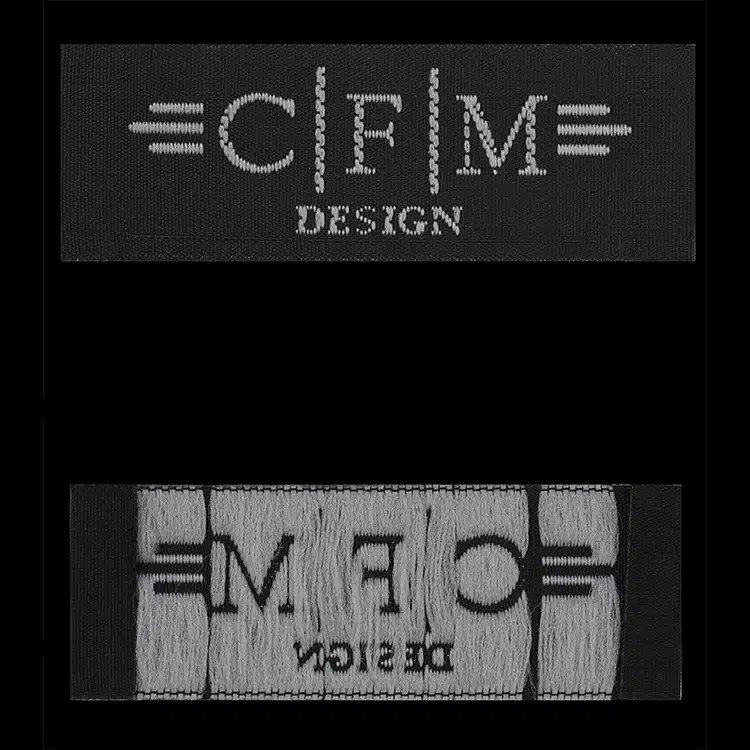
A Manhattan cut shows both faces of the label. Brands often put the logo on one side and a second mark, a website or a line of text on the other.
Vector artwork (AI, EPS or PDF) gives the cleanest weave file. A PNG or a clear photo of an existing label is enough to start a quote. Our guide to vector vs raster artwork explains the difference.
Brand labels and care labels are different jobs
This guide is about brand labels: your name or logo, made to your artwork. Garments sold in the US generally also need fibre content and care information, and the rules on what has to appear depend on the product. Check what applies to your range before you finalise your label set, so the brand label and the care information are planned together rather than squeezed in at the end.
Quantities and timing
Woven labels start from 100 pieces, confirmed on your quote. A woven label order typically takes 3 to 4 weeks after you approve the proof, with rush service available, confirmed on your quote.
- Count labels against your production plan, not just the first run.
- If one label goes into several styles, order it as one design and one run.
- Add spares for samples, seconds and repairs.
- Work back from your cut and sew date, not your launch date.
If your brand also needs a patch for the outside of a cap or jacket, a woven patch carries the same fine detail at a larger size. Our guide to custom patches for business uniforms covers that side.
Request a quote for your woven labels
Send six details and we can price the job at the factory: the finished size, the quantity, the number of colours, the cut and application, your artwork and your in-hands date. Request a quote and you will have a firm number within two or three days. Nothing is woven until you approve the proof.