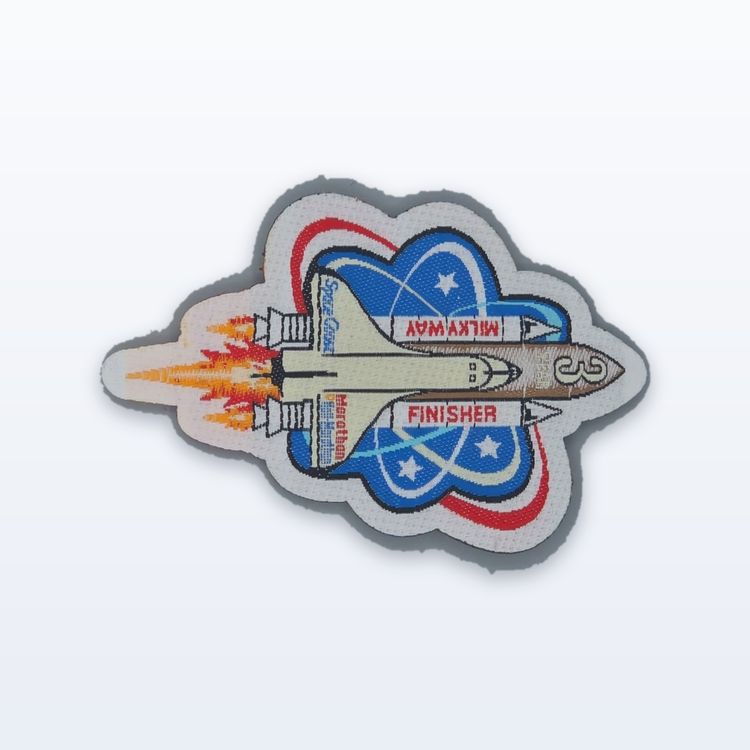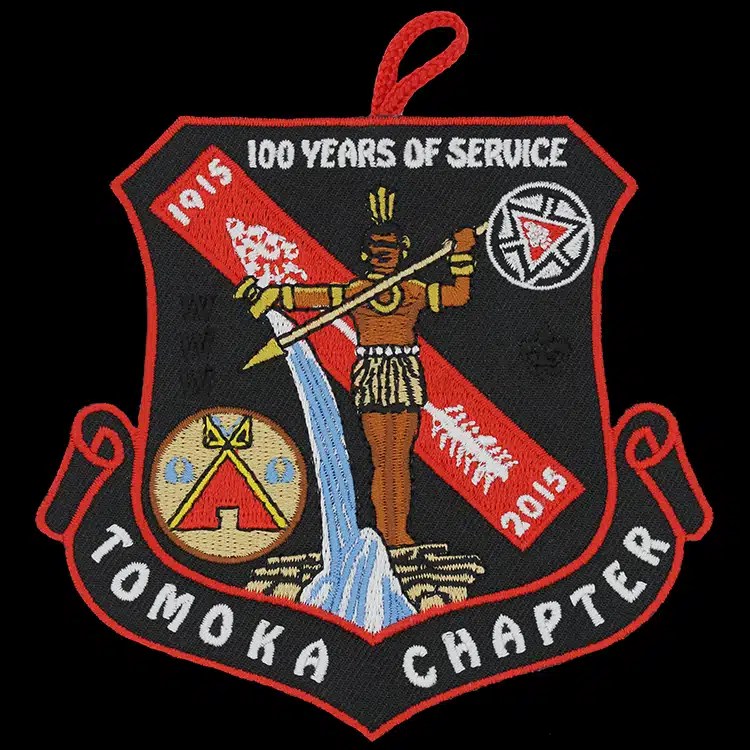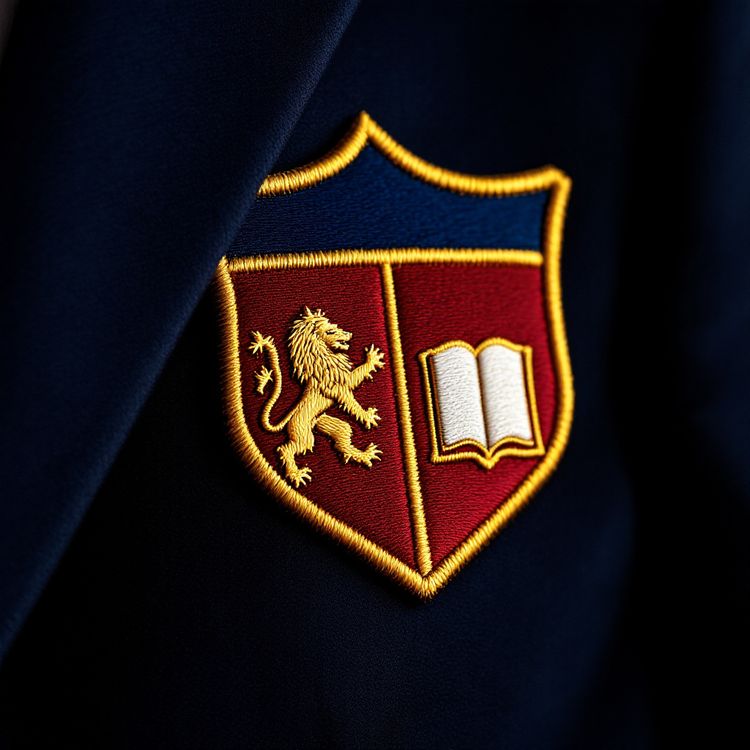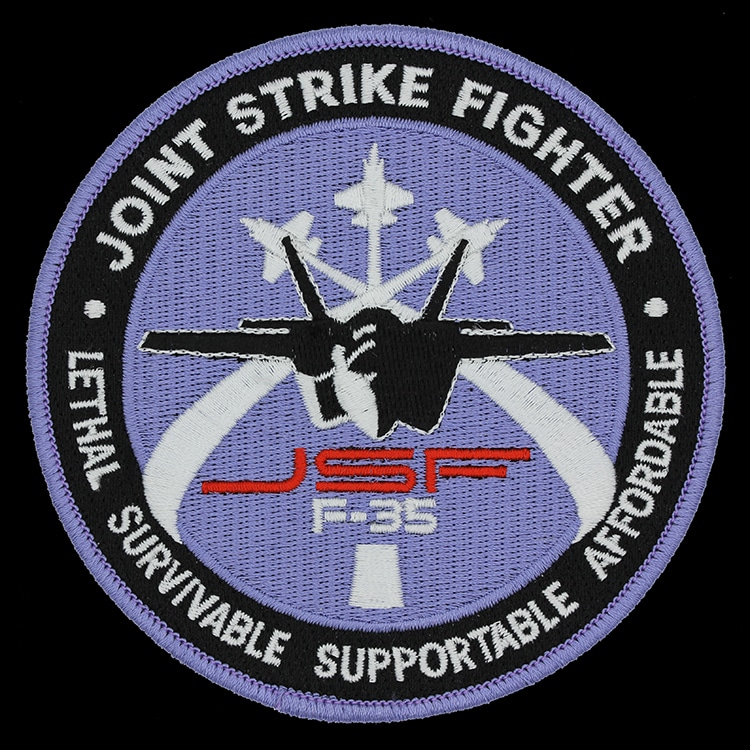
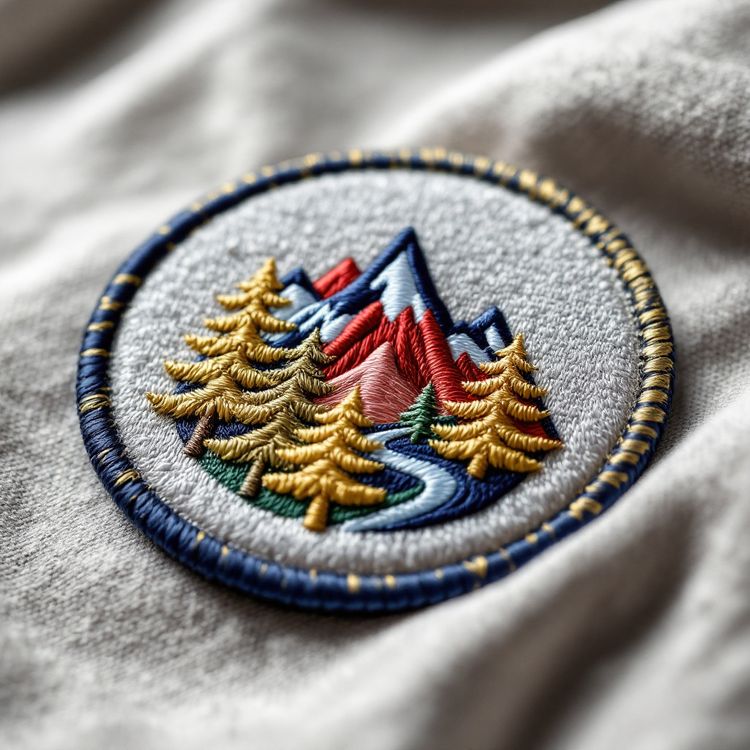
Embroidered patches are stitched on top of a fabric base, so they have raised, textured thread you can feel. Woven patches are made on a loom from fine thread, so they are flat, thin and hold much smaller detail. If your design is bold and simple, embroidery usually looks best. If it has small text, thin lines or a detailed seal, woven usually reads better.
Below we walk through how each is made, where each one wins, and what to put on your quote request so you get the right construction the first time.
How each patch is made
An embroidered patch starts as a piece of twill or felt. A machine sews satin stitches and fill stitches over it, layer by layer, following a stitch file built from your artwork. The thread sits on top of the base, which is why embroidery has height and texture.
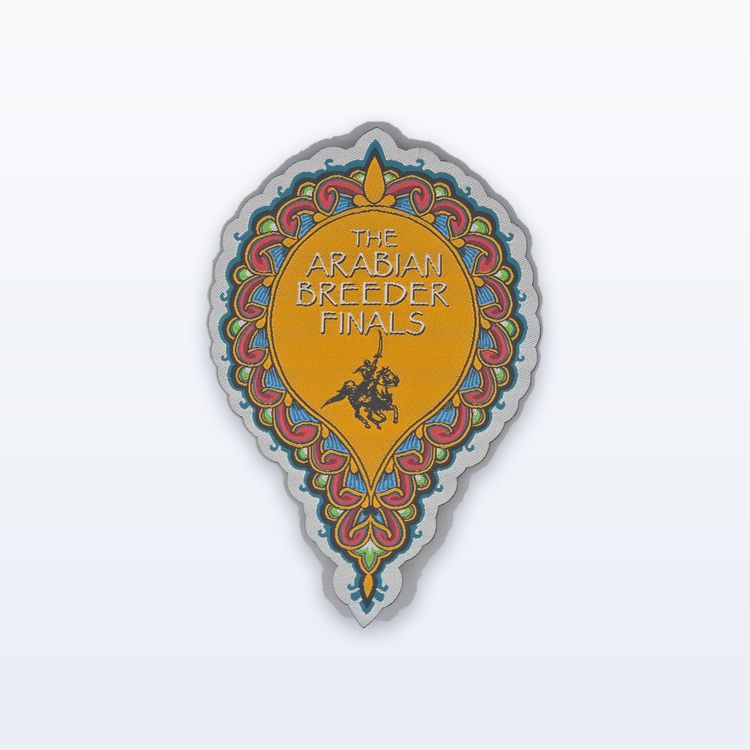
A woven patch has no separate base. Fine polyester threads are woven together on a loom, the same way a clothing label is made, and the design forms inside the weave. The result is one thin, flat piece of fabric with the artwork built into it.
That single difference, stitched on top versus woven in, drives almost everything else in this comparison.
Look, texture and detail limits
Embroidery has a classic, tactile look. Light catches the satin stitches, and solid areas have a slight sheen and depth. It is the look most people picture when they hear the word patch, and it suits logos, crests, uniform emblems and cap fronts.
The trade-off is detail. As a general guide, embroidered lettering needs a cap height of about 1/4 in (6 mm) to stay readable, and lines thinner than about 1 mm do not stitch cleanly. Small shapes placed close together tend to merge into one.
Woven thread is much finer, so a woven patch can hold text noticeably smaller than embroidery, along with hairline borders, small icons and the fine scrollwork found in seals and crests. The surface is smooth rather than raised, which gives a cleaner, more graphic look.
Colour handling
Both constructions use solid thread colours, matched as closely as possible to your references. Embroidery shows each colour as a clear block of stitches. Woven blends colours tightly within the weave, so small areas of colour sit side by side without bleeding into each other. Neither can reproduce a true photograph or a smooth gradient.
Thickness, flexibility and durability
Embroidered patches are thicker and stiffer, especially at higher embroidery coverage where most of the surface is stitched. That stiffness gives a structured, premium feel on jackets, bags and caps.
Woven patches are thin and flexible. They sit flatter on lightweight shirts, curve more easily around sleeves, and add very little bulk. They are often the better choice where a stiff badge would feel awkward against the body.
Both are durable when attached properly. Embroidery stands up well to abrasion on bags and outerwear. Woven keeps its small detail sharp through repeated washing because there are no long loose stitches to snag.
Borders and edges
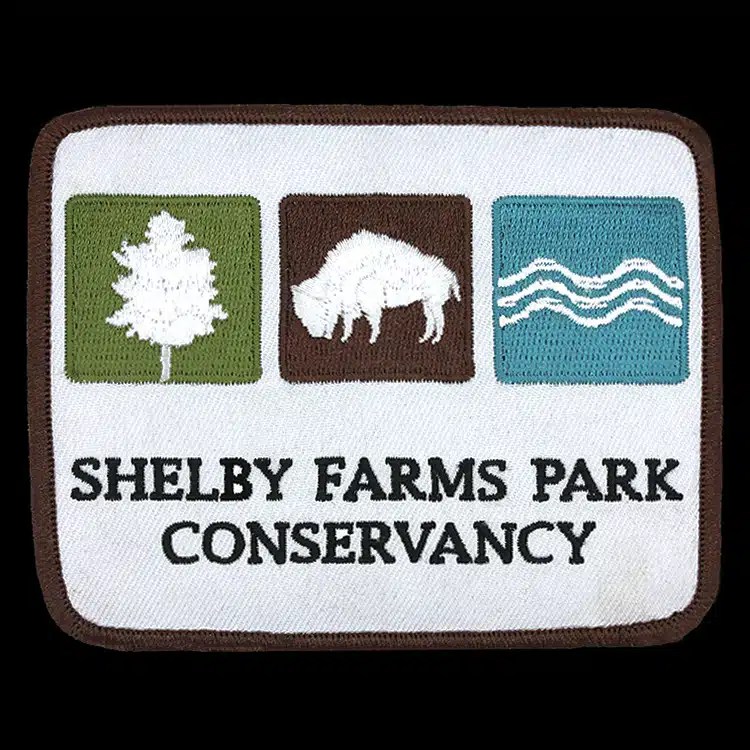
Either construction can take a merrowed border, the raised wrapped stitch around the edge, or a heat cut edge sealed right to the outline of the design. Merrowed suits simple shapes such as circles, ovals, squares and shields. Heat cut follows custom outlines with points and inside corners.
Woven patches are frequently heat cut because the flat, detailed look suits a clean edge that follows the artwork. Embroidered patches are often merrowed for that classic finished rim. Our guide to merrowed vs heat cut borders covers the choice in more depth.
Embroidered vs woven at a glance
| Factor | Embroidered | Woven |
|---|---|---|
| Construction | Thread stitched over twill or felt | Fine thread woven into one piece |
| Surface | Raised, textured, slight sheen | Flat, smooth, graphic |
| Small text | About 1/4 in cap height as a general minimum | Holds noticeably smaller text |
| Thin lines | Under about 1 mm do not stitch cleanly | Fine lines and outlines hold well |
| Thickness | Thicker, stiffer | Thin, flexible |
| Common edge | Merrowed or heat cut | Heat cut or merrowed |
| Best for | Bold logos, crests, caps, jackets, uniforms | Detailed seals, small lettering, lightweight shirts |
When neither fits: sublimated patches
If your artwork depends on a photograph, a sunset, a soft gradient or shading, thread of any kind will flatten it into solid bands. A sublimated patch is dye printed in full colour onto a fabric surface, so it can reproduce those tones. It is finished with a merrowed or heat cut edge like the other types.
Sublimated patches are flat like woven, without the texture of embroidery. They are a good fit for event art, photographic designs and logos built around a gradient. If only one part of your design needs a gradient, it is worth asking whether that part can be redrawn in solid colours, so you keep the option of thread.
How to choose for your design
Start with the smallest element in your artwork at the size you need. If the smallest letters are larger than about 1/4 in and the thinnest lines are thicker than about 1 mm, embroidery will work, and you get the raised look. If not, either simplify the artwork or choose woven.
- Choose embroidered when the design is bold, the text is short and large, and you want texture and a premium feel.
- Choose woven when you have a detailed seal, a long name, small lettering or fine outlines.
- Choose woven for lightweight shirts or places where a stiff patch would feel bulky.
- Choose embroidered for caps, jackets, bags and gear that take abrasion.
- Choose sublimated when the art relies on photos, gradients or shading.
- Not sure? Ask for both constructions on the same quote at the same size and quantity.
Clean artwork helps either way. Our guide to preparing artwork for embroidery explains which file types to send and how to simplify fine detail before you quote.
Preview your logo, then request a quote
You can upload your logo to our free Patch Studio, switch between embroidered and woven, set the width and height, and turn the patch round in 3D on a jacket or a cap. The optional stitch check gives a quick read on how the logo will stitch at that size. It is a rendering, and we still review detail and size ourselves when we quote.
When you are ready, send us your artwork with the size, quantity, colours, backing and in-hands date. We price the job at two or three factories that make that construction and send back one quote within 2 to 3 business days. Nothing is made until you approve the proof in writing.