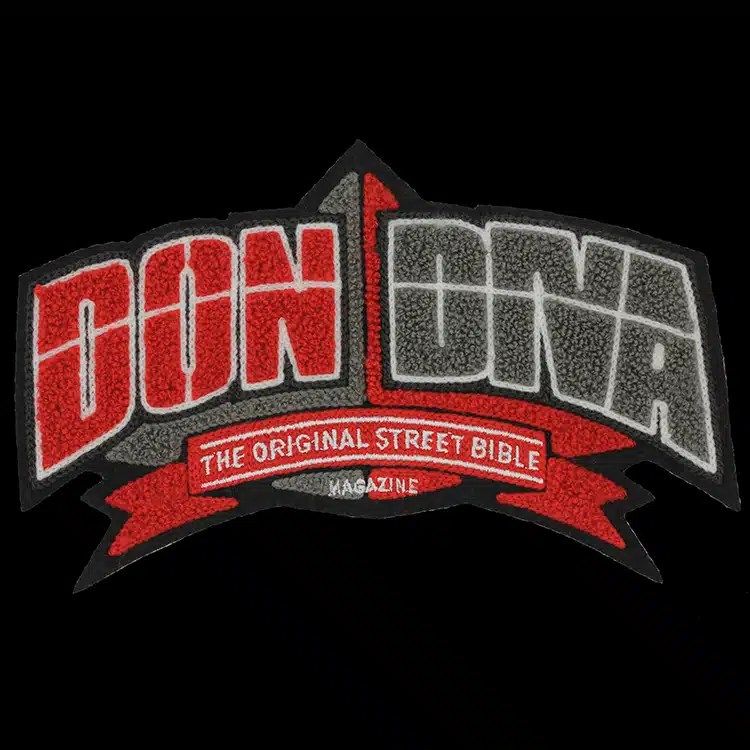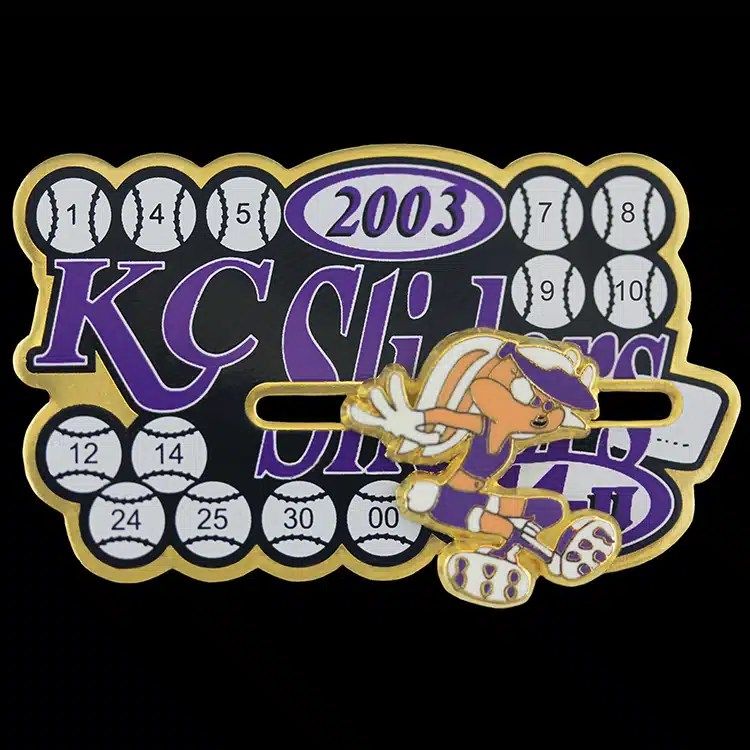
Trading pins are custom pins a youth baseball or softball team brings to a tournament to swap with players from other teams. A good trading pin shows the team name, the city and state, the year and a mascot, usually as a soft enamel pin about 1.75 to 2.5 in (44 to 64 mm), often with an add-on such as a spinner or a dangler. Order early: with the quote, proof and about 3 to 4 weeks of production, plan on roughly eight weeks before the tournament.
This guide covers what goes on a trading pin, the size and construction choices, specialty add-ons, how many to order and the timeline to work back from.
What goes on a trading pin
Players trade for pins they can identify, so the pin needs to say clearly who you are and where you are from. Most trading pins include:
- The team name, as large as the layout allows.
- The city and state, or the state outline, since players often collect pins by state.
- The year, and often the tournament name if you are ordering for one event.
- The mascot or team logo as the main image.
- Sport details: a ball, bats, a diamond, a home plate shape or a scoreboard.
Some teams add player names or numbers. That works on a larger pin, but every line of text competes for space. If you want individual player names, a dangler or a separate small pin per player is easier to read than a crowded main pin. Check the tournament's own rules too: some events publish guidance on pin trading, such as where and when trading happens.
Size and shape
Trading pins are larger than lapel pins because they carry more information and need to stand out on a trading table. As a rule of thumb:
| Size | What it suits |
|---|---|
| About 1.5 in (38 mm) | Simple designs, younger age groups, small budgets |
| About 1.75 to 2 in (44 to 51 mm) | The common range: team name, state, year and mascot |
| About 2.25 to 2.5 in (57 to 64 mm) | Detailed designs and pins with add-ons |
| Larger than 2.5 in (64 mm) | Showpiece pins; heavier, so check how they will be worn |
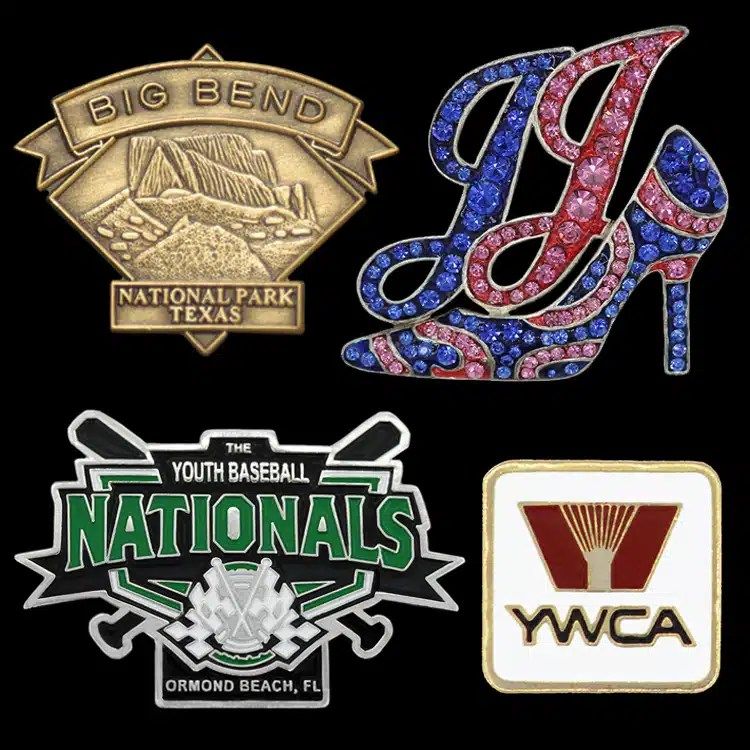
A custom outline makes a pin more tradeable: a baseball diamond, a jersey, a home plate, a state shape or the mascot itself. Keep thin points to a minimum, because they bend in a crowded pin bag. Pins this size usually take two posts so they hang straight. Our pin size guide explains how size is measured.
Construction and colour
Most trading pins are die struck soft enamel. It carries bold team colours, the raised metal lines give the design depth, and it suits the size and quantity teams order. Hard enamel gives a smoother, more polished finish if the team wants a premium look. If your design relies on a photo or a gradient, an offset printed pin under a clear epoxy dome can carry it.
Bright, saturated team colours read best from across a table. Give the team name a strong contrast against its background, and choose a plating, gold, silver or nickel, that separates your darkest colours. Our comparison of soft and hard enamel covers the construction choice, and our guide on how to design an enamel pin covers line widths and text size.
Spinners, blinkers and danglers
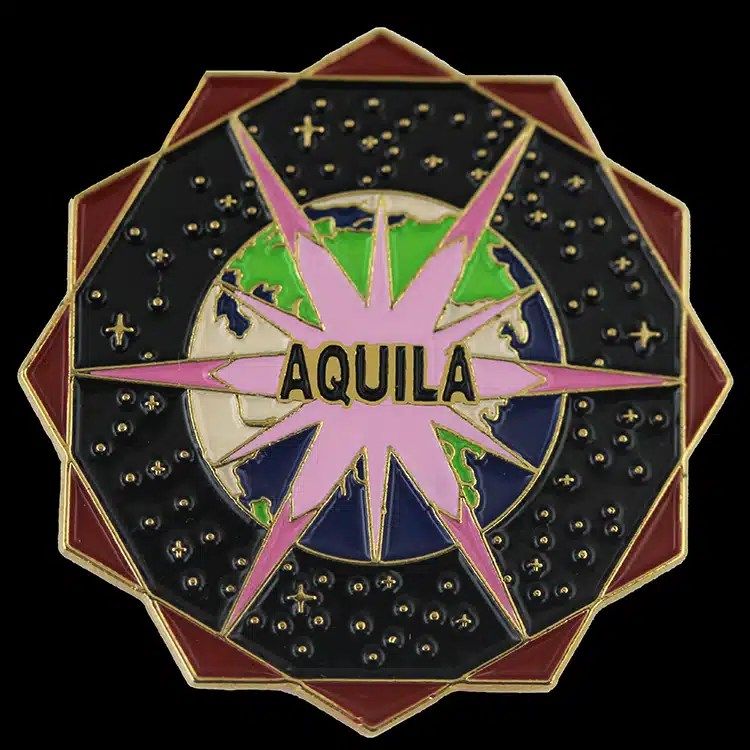
Add-ons make a pin more desirable at the trading table, and they are a big part of trading pin culture. We make specialty pins including:
- Spinners: a part of the pin, such as a baseball, that rotates.
- Blinkers: a small light built into the pin that flashes.
- Danglers: a small piece hanging from the main pin, often the year, a player number or a coach tag.
- Other built up constructions: layered pieces or moving parts. Tell us what you have in mind and we price it at the factory.
Each add-on changes the cost and can add to production time, so ask for the pin with and without the add-on on the same quote. One add-on done well usually beats several crowded together.
Moving parts also need a little more room. A spinner needs a clear area around it so it can turn freely, and a dangler needs a small loop or jump ring at the bottom of the main pin. Plan for both in the layout rather than adding them at the end, and expect the proof to show how each part attaches.
Pin backs for young players
Rubber clutches are a common choice for trading pins because they are easy for small fingers to remove and refit, and they grip the post firmly. Metal butterfly clutches are fine too. For a premium pin that players will keep, a locking clutch is less likely to get lost. Our guide to lapel pin backs compares them.
Many players carry their pins on a lanyard, a towel or a pin bag, and some teams order a matching team lanyard. Our guide on how to display enamel pins covers the options after the tournament.
How many to order and when
Quantity
There is no fixed number of pins per player. It depends on the size of the tournament, how many teams attend and how keen your players are to trade. The most reliable guide is the tournament organizer and parents from teams that have attended before. Add some for coaches, sponsors, families and keepsakes. Custom minimums start from 100 pieces and are confirmed on your quote.
Timing
Tournament dates do not move, so work backward. Typical figures, each confirmed on your quote:
- Quote within 2 to 3 business days of sending the details.
- Proof usually 1 to 3 business days after artwork.
- Production about 3 to 4 weeks after the proof is approved in writing.
- UPS shipping from Holly Hill, Florida.
That makes about eight weeks before the tournament a comfortable order date, longer if the design is still being finalized by the team. Rush production of around 10 business days is sometimes possible when the factory can hold it, but add-ons can make rush harder. Collect the design, the names and the approval from one team contact so the proof is not held up.
Get a quote for your team's pins
See the constructions we run on our custom lapel pins page, then request a quote with your artwork or sketch, the size, quantity, add-ons, back and the tournament date. A rough sketch or a photo of last year's pin is enough to start; AI, EPS or PDF is cleanest. Nothing is made until you approve the proof in writing.