
The best pin display depends on whether the pins will stay put or travel. For pins at home or in an office, a cork board, a felt banner or a shadow box works best: push the post through the fabric and lock it with the clutch. For pins on the move, a pin book, a lanyard, a cap or a bag strap keeps them visible. Whatever you choose, keep pins from rubbing against each other, keep them dry, and use locking clutches on any pin you would hate to lose.
Below we go through the main pin display options, how to plan a layout, how to protect enamel and plating, and what to think about if you are ordering pins that will be displayed as a set.
Pin display options compared
| Display | Best for | Watch out for |
|---|---|---|
| Cork board | Large, changing collections at home or work | Thin cork lets long posts poke through the back |
| Felt pennant or banner | Themed sets, team and event pins | Heavy pins can make thin felt sag |
| Shadow box | Finished sets, awards and keepsakes | Needs enough depth for posts and clutches |
| Pin book or binder | Traveling, trading and storing | Pins can rub if pages are not padded |
| Lanyard | Trading events, conferences, staff pins | Weight pulls on the neck with many large pins |
| Cap, jacket or bag | Wearing a few favorites | Pins can fall off without locking clutches |
Cork boards and felt banners
A cork board is the simplest pin display and the easiest to change. Choose cork at least about 1/2 in (13 mm) thick, or back thinner cork with foam board, so the post and clutch sit inside the board rather than poking out of the back. Covering the cork with linen, felt or canvas gives a cleaner look and hides the holes when you move pins around.
Felt pennants and banners suit a themed set, such as a season of tournament pins or a run of event pins. Push the post through, then fit the clutch from behind. If the banner is thin, a strip of felt or interfacing behind the pins helps it carry the weight without sagging.
- Lay the pins out on a table first and photograph the layout before you push any posts through.
- Leave a small gap between pins so the edges do not touch.
- Group by theme, year or colour so the display reads as a set.
- Hang boards out of direct sunlight, which can fade printed pins and fabric over time.
Shadow boxes for keepsakes and awards
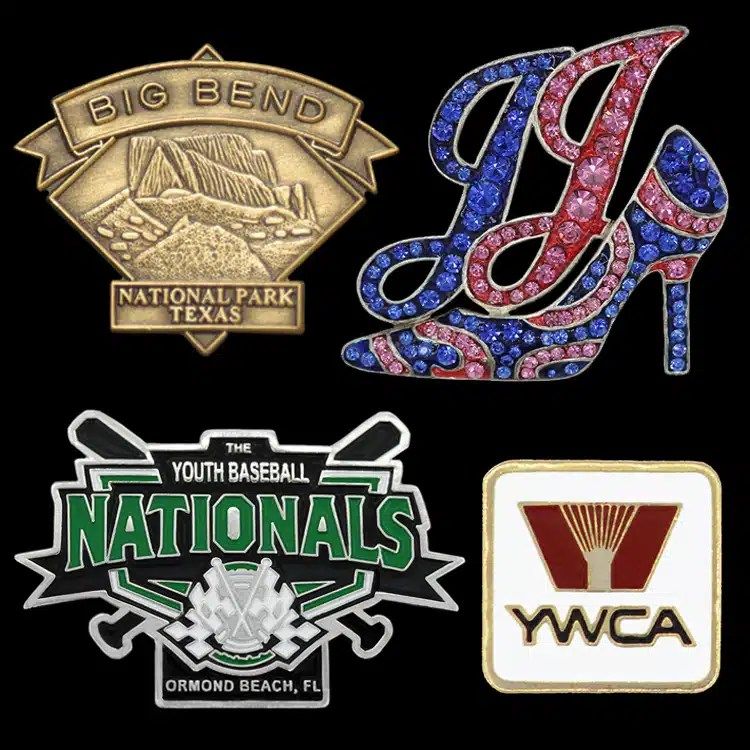
A shadow box suits pins that will not change: a set of service pins, a retired team's trading pins, a nursing pin with a graduation photo, or a collection that marks a career. The glass keeps dust off and stops people handling the pins.
Check the internal depth before you buy. The post and the clutch need room behind the backing board, so a box with a fabric covered foam or cork backing at least about 1/2 in (13 mm) thick is easier to work with. Mount the pins through the backing and lock them behind it, and add a small printed label for each pin if the set tells a story.
For an office or a lobby, a framed set of company pins, such as every anniversary pin a long serving employee has received, makes a strong retirement gift. Plan the layout so there is room to add the final pin at the presentation, and choose a frame colour that suits the plating: dark wood or black for gold pins, gray or white for silver and nickel.
Pin books, lanyards and wearing your pins
Pin books and binders
A pin book has padded pages that pins push into, which makes it the usual choice for traders and collectors who travel. Make sure facing pages do not press pins together when the book closes, because enamel and plating can scratch where they rub.
Lanyards
At trading events, conferences and theme parks, a lanyard is a wearable pin display. A wide, flat polyester lanyard gives the post something solid to go through. Keep heavy pins near the bottom so the weight sits low, and use a lanyard with a safety breakaway if children are wearing it. Our custom lanyards page shows the strap widths and attachments we make, and our lanyard materials guide compares them.
Caps, jackets and bags
A few pins on a denim jacket, a cap or a backpack strap is the simplest display of all. Thick fabric holds the post better than thin knits, which can stretch and let the pin droop. Avoid putting pins on the front of a cap where the post would press into the forehead.
Protecting enamel and plating
- Keep pins dry. Moisture can tarnish plating, especially on antique and copper finishes.
- Do not stack loose pins in a jar or box, where the edges rub against each other.
- Wipe pins with a soft dry cloth. Avoid polish and abrasive cleaners, which can strip plating and dull enamel.
- Remove pins from clothes before washing.
- Store spare clutches with the collection, since they are the part most often lost.
Hard enamel is the most scratch resistant surface because the colour is polished flush with the metal. Soft enamel is protected by its raised metal lines but can show wear on the high points over time. Our comparison of soft and hard enamel pins explains the difference.
Ordering pins that will be displayed as a set
If you are designing pins that people will collect and display, such as a yearly event series, a staff recognition ladder or a team's trading pins, a few choices at the design stage make the display look better later.
- Keep the same size, or a small set of sizes, across the series so the pins line up on a board.
- Keep one design element constant: the outline, the border or the plating colour.
- Put the year or the number in the same place on every pin.
- Choose locking clutches for pins with sentimental value.
Our guide to enamel pin sizes helps set a consistent size, and the custom lapel pin buying guide covers constructions, plating and backs. When you have a design, request a quote with the size, quantity, construction, plating, back and in-hands date. Quotes come back within 2 to 3 business days, and nothing is made until you approve the proof in writing.