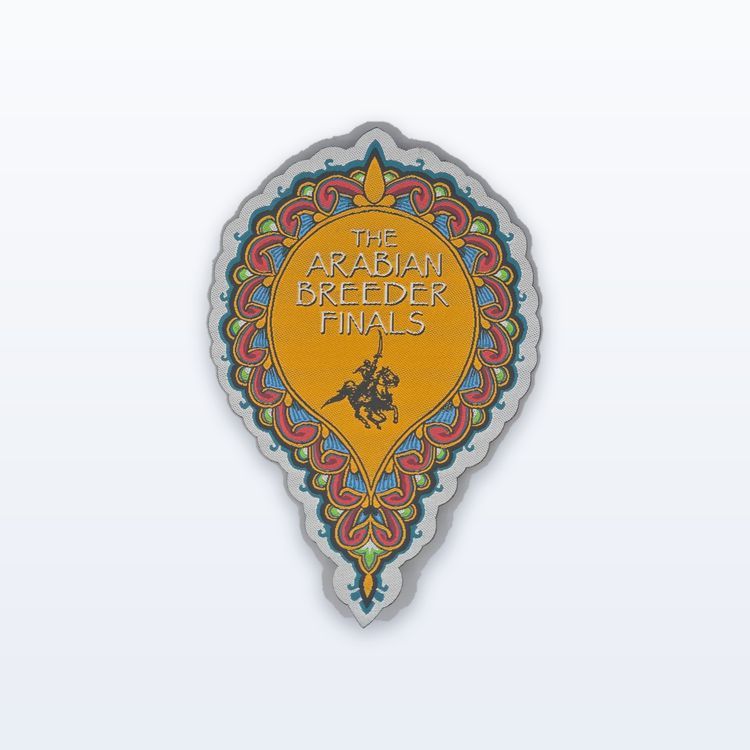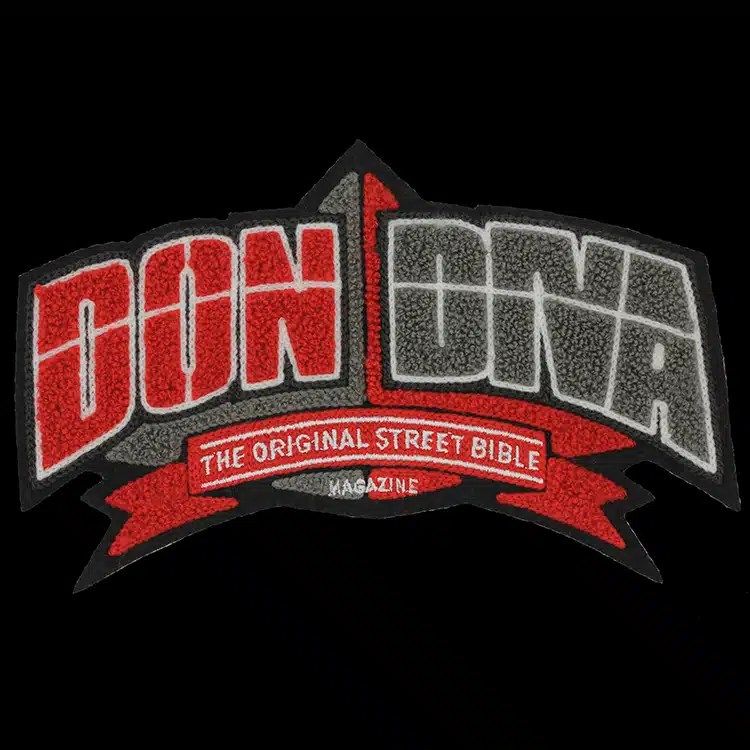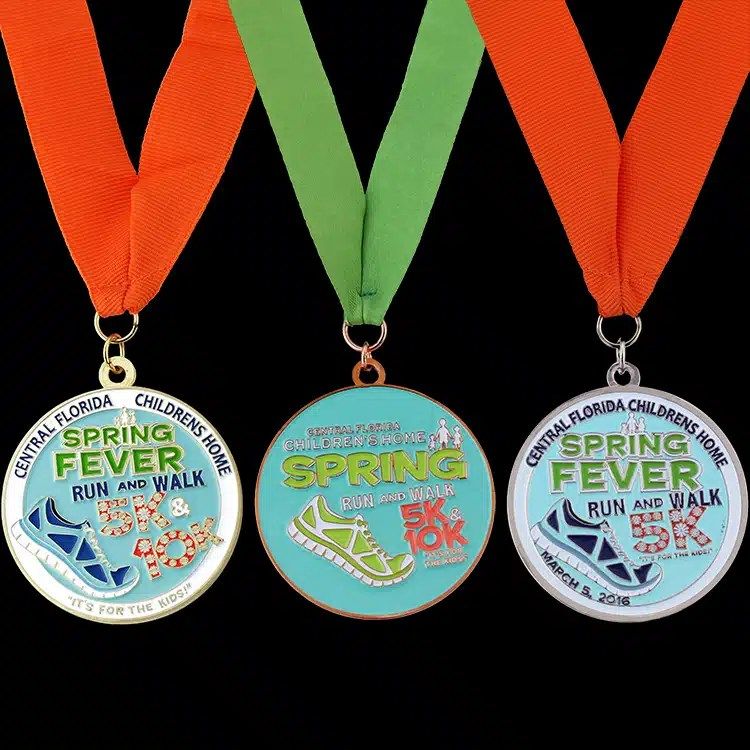
Marathon patches give finishers something they can wear, not just hang on a wall. Most races and run clubs order a finisher patch about 3 to 3.5 in (76 to 89 mm) across, embroidered or woven, with an iron-on backing for jackets and bags or a sew-on backing for technical gear. Run clubs add member emblems and mileage milestone patches, and many races pair the patch with a finisher medal.
This guide covers the kinds of patches races and clubs order, how to design one that reads at a glance, the right backing for running gear, quantities and timing against a race date.
The patches races and run clubs order
For races
- Finisher patches for every runner who crosses the line, often matched to the medal design.
- Distance patches for multi-distance events: 5K, 10K, half marathon and full marathon versions of one design.
- Series or challenge patches for runners who complete two or more races in a series or a weekend.
- Volunteer and crew patches, a thank you for the people who staff aid stations and the finish chute.
For run clubs
- A member emblem worn on singlets, caps, jackets and bags.
- Mileage milestone patches: 100, 500 or 1,000 miles logged with the club.
- First race and personal best patches for newer runners.
- Pacer and coach patches so members can spot group leaders on a crowded start line.
A club member emblem is ordered once and reordered for years. Race patches change every year, so they are the place to put the date, the edition number and the distance.
Finisher patch, medal or both
Medals are the tradition at the finish line, and many runners expect one. A patch adds something they can wear on a race jacket, a backpack or a cap long after the medal goes in a drawer. It also packs flat, which helps for destination races where runners fly home.
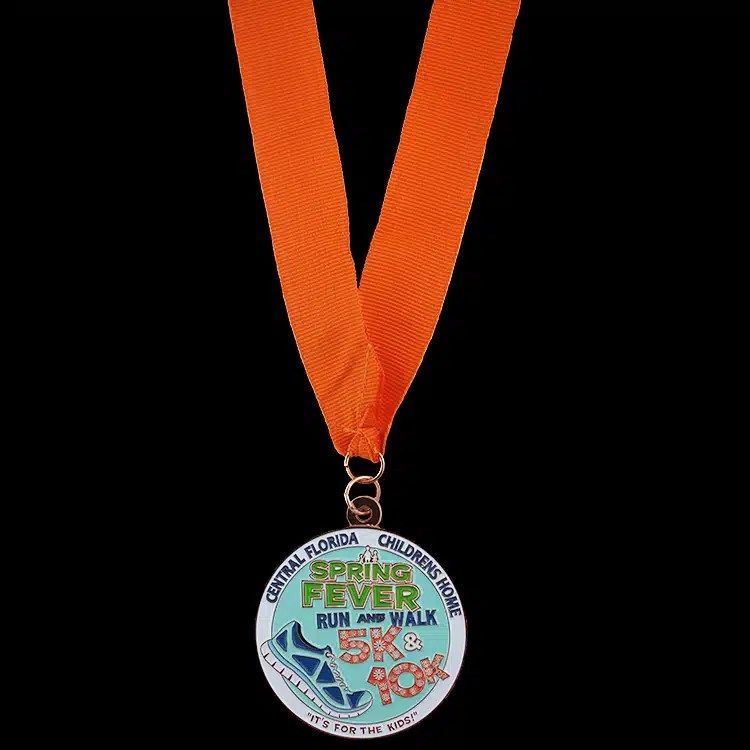
Some races give both, with the patch repeating the medal art. Others use a patch in place of a medal for shorter distances or virtual races, or as an add-on runners can buy at registration. If you are planning medals too, our guide to race and tournament medals covers sizes, ribbons and finishes, and you can see options on our medals and awards page.
Designing a finisher patch that reads
Race art is often built for a shirt or a poster, with a skyline, a course map, sponsor logos and a lot of text. On a 3 in patch most of that will not survive. A few rules of thumb help:
- Lead with the distance or the word finisher. It is what the runner wants people to see.
- Keep the race name, the year and the distance. Leave sponsor logos for the shirt.
- Use one strong image: a landmark, the race mascot or a simple skyline silhouette.
- Limit the colours. Each thread colour is a block of stitching, and fewer colours read more clearly.
- Keep text at about 1/4 in (6 mm) cap height or larger for embroidery.
If the design depends on a course map or fine lettering, a woven patch holds much smaller detail than embroidery. If it depends on a sunrise gradient or a photograph, a sublimated patch prints it in full colour. Our guide to designing a patch covers shapes, borders and colour count step by step.
Backings for running gear
Running gear is a mix of fabrics, and not all of them take every backing.
| Where it goes | Suggested backing | Why |
|---|---|---|
| Cotton or canvas bag, cotton hoodie | Iron-on | Bonds well and runners can attach it at home |
| Technical running jacket or singlet | Sew-on | Lightweight synthetics can be damaged by iron-on heat |
| Running cap | Sew-on | Curved, thin crowns need stitching to hold |
| Hydration pack or bag with a loop panel | Hook-and-loop | Moves between packs |
| Shadow box or display board | Sew-on or iron-on | Either works when the patch is not worn |
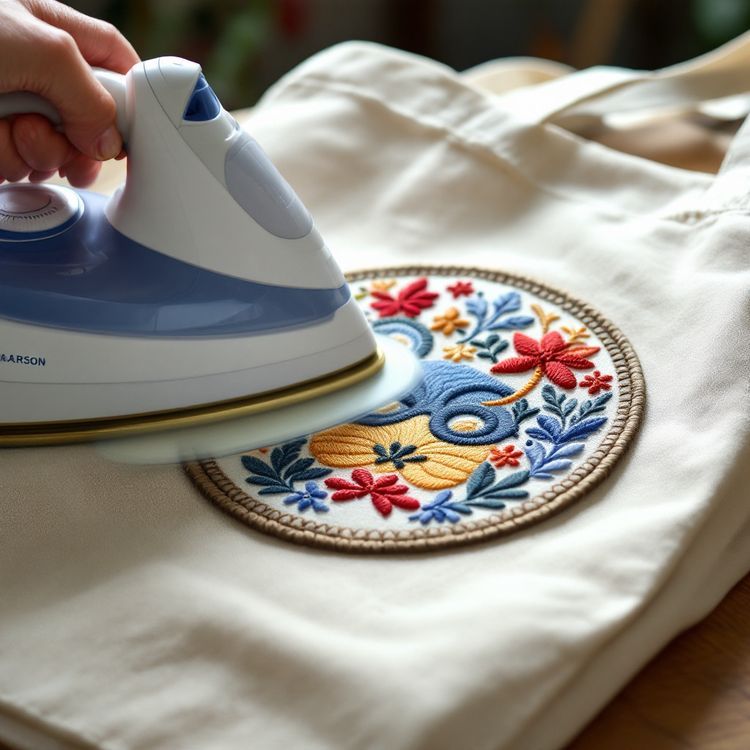
Many races choose iron-on for finisher patches because most runners will put them on a bag or hoodie and want to attach them without sewing. Include a short care note in the race packet or post-race email: iron-on works best on cotton and blends, and sewing is the safer route on technical fabric. Our guide on attaching iron-on patches is a good link to share with runners.
Quantities and timing against race day
How many to order
For finisher patches, start from your registration numbers and your usual finish rate from past years, then add a margin for late registrants, damaged pieces and runners who ask for a replacement. Leftover patches with the year on them are hard to use, so lean on past data rather than ordering every registered runner plus a large buffer. For club milestone patches, order enough to cover a year or two of members reaching each level. Custom runs start from 100 pieces, varying by product, and the minimum is confirmed on your quote.
When to order
Race day does not move, so work backward. Every figure below is typical and confirmed on your quote:
- Quote: 2 to 3 business days after you send the details.
- Proof: usually 1 to 3 business days after we have artwork.
- Production: about 3 to 4 weeks after you approve the proof in writing.
- Shipping: UPS from Holly Hill, Florida, to your packet pickup or office.
That puts a safe order date around eight weeks before the race, earlier if your art is still being finalized with sponsors. Rush production of around 10 business days is sometimes possible when the factory can hold it, but it is better used as a fallback than a plan. Our patch timeline guide breaks each step down.
Building a run club patch program
A milestone program keeps members coming back. A simple structure works best:
- Pick a base design for the club emblem and keep it on every patch.
- Change one element per level: the mileage number, the border colour or a small tab underneath.
- Keep every level the same size so the patches line up on a jacket sleeve or a bag.
- Decide who tracks the miles and how a member claims a patch before you order.
Because reorders skip setup and the digitizing stays on file, a club can reorder a level when stock runs low without starting over.
Preview and request a quote
Try your race or club art in the free Patch Studio to see it at size before you commit. When you are ready, send us the details: artwork, size, quantity per design, backing and the race date. AI, EPS or PDF artwork is cleanest; a PNG or a photo of last year's patch is enough to start. We quote from the factory price and nothing is made until you approve the proof in writing.