Custom event patches work best when you plan them backward from the day they are handed out or go on sale. The decisions are the same as for any patch: size, construction, border, backing and quantity. An event adds three more: a date that cannot move, artwork that tends to collect too much text, and the question of how many people will actually want one.
This guide is for anyone planning patches for a race, a festival, a tournament, a reunion, an anniversary or a merch table. It covers what the patch is for, how to design it, which construction and backing suit it, how many to order and how to keep the date safe.
What custom event patches are for
Event patches fall into a few groups, and each one changes the order in a small way.
- Commemorative patches given to every participant, finisher or attendee, usually with the event name, the place and the year.
- Merch patches sold at a booth, in a shop or online, where the design has to sell itself next to shirts, hats and stickers.
- Staff and volunteer patches that mark who is working the event.
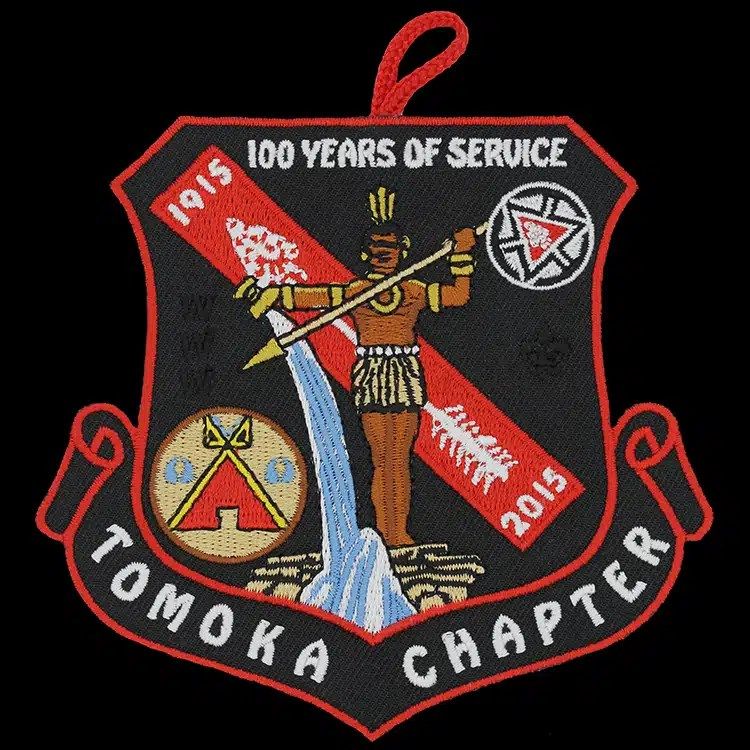
- Anniversary patches for a club, a business or a department marking a milestone year.
A give-away patch has a known headcount. A merch patch has a sales estimate. A staff patch may be worn for several seasons. Knowing which one you are ordering decides the quantity, the backing and sometimes the construction, so settle it before you brief the artwork.
Designing an event patch people want to keep
An event patch is a souvenir. It has to read clearly from a short distance on the day, and still look good on a jacket or a bag years later.
Keep the text short
Event artwork collects text: the event name, the location, the dates, a sponsor, a slogan, a website. Pick the two or three lines that matter. The name and the year are usually enough, and the year is the detail collectors look for. If the remaining text really has to stay, it may push you toward a woven patch or a larger size.
Lead with one strong image
A single central mark, such as a mascot, a landmark, a route outline or a logo, reads better than several small ones competing for space. Two to five well chosen colours usually do more than nine. Our guide on how to design a patch covers simplifying artwork in more detail.
Size it for where it will go
Think about where people will put the patch. Common starting sizes are 3 to 5 in for tote and duffel give-aways, 2 to 2.5 in tall for a cap front and 8 to 12 in for a jacket back. A 3 to 4 in patch suits most commemorative designs and fits a jacket sleeve, a backpack or a hat panel. The patch size guide lists sizes by placement, and the proof shows the exact size before anything is made.
Choosing a construction for event artwork
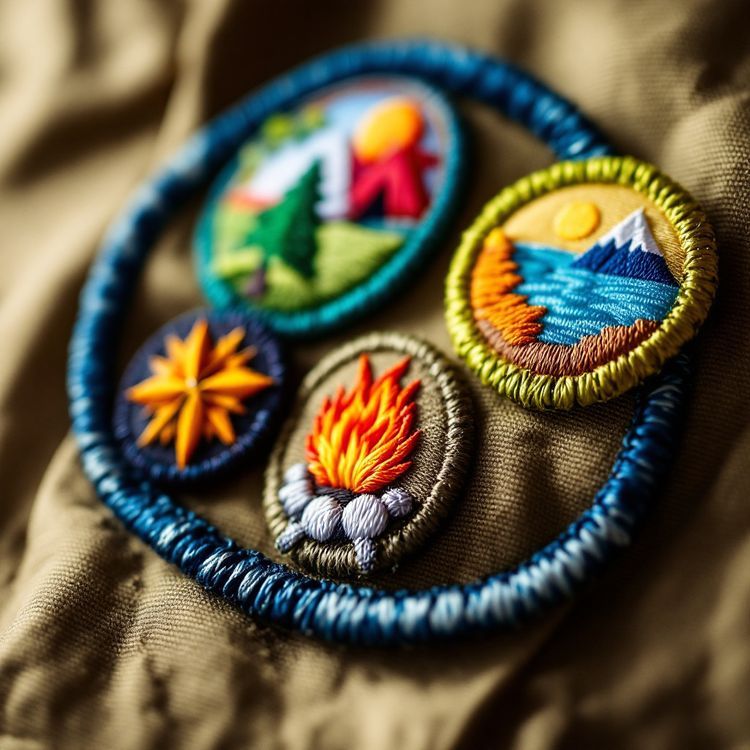
Most custom event patches are embroidered or woven, with sublimated and chenille patches used for particular designs. Start from the artwork, not the construction.
| Your event artwork | Usually best as | Why |
|---|---|---|
| Bold logo, short name and a year | Embroidered | Raised, textured thread and strong colour, the classic patch look |
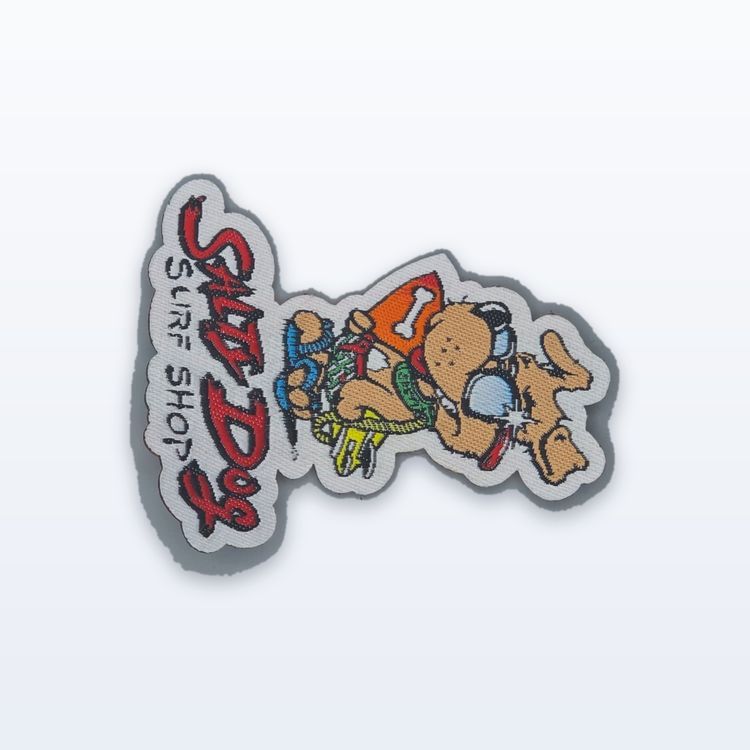
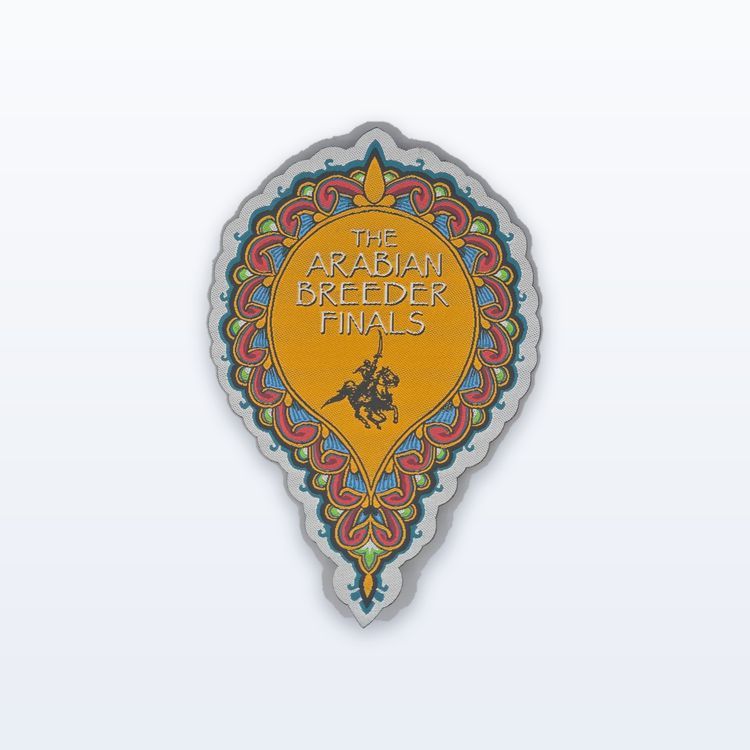
| Event name, dates and location around the rim | Woven | Holds small text and thin lines that embroidery cannot |
| Photo, gradient sky or detailed illustration | Sublimated | Full colour printed into the fabric, which thread cannot reproduce |
| Big letters or a mascot for a team or reunion jacket | Chenille | Soft raised pile, suited to bold, simple shapes |
The border matters too. Rounds, ovals, squares and shields usually take a merrowed border, the raised wrapped stitch around the edge. A custom outline, such as a guitar, a state shape or a race bib, usually needs a heat cut edge that follows the design. Our comparison of embroidered vs woven patches goes deeper into the first choice.
Backings for give-aways and merch
Ask who will put the patch on. For a give-away or a merch patch, it is usually the person who takes it home, without a sewing machine.
- Iron-on is the most convenient for the public. It is applied with a home iron or a heat press and suits cotton and canvas.
- Sew-on is the most permanent. It suits staff jackets, vests and anything washed often.
- Hook-and-loop suits bags, packs and gear with a loop panel, and lets the patch move between items.
- Plastic backing keeps a patch flat and stiff, for a patch that has to hold its shape.
Iron-on adhesive can lift at the edges after many washes. If you include a care card with merch patches, suggest pressing the patch on, then adding a few stitches around the border.
How many custom event patches to order
Custom patch runs start from 100 pieces, confirmed on your quote. Above that, the right number depends on what kind of event patch it is.
- Start from registrations or expected attendance for a give-away patch.
- Add staff, volunteers, sponsors and organisers.
- Add late sign-ups, day-of entries and replacements.
- For merch, estimate realistic sales rather than a hopeful number.
- Keep a few for your own records and next year's planning.
Ask for two or three quantities on one quote, for example 100, 200 and 500. Larger runs generally lower the per-piece cost because setup is spread over more pieces, so seeing the numbers side by side makes the decision easier. If the event repeats every year, your digitizing stays on file, and a reorder of the same artwork carries no setup line. A version with a new year or new artwork is a change to the design, so ask on your quote what that means for setup. Our guide to reordering custom patches covers what to send.
Working back from the event date
The event date is the one thing that cannot move, so count backward from the day the patches need to be on site.
- Quote: 2 to 3 business days once we have your size, quantity, colours, backing and artwork.
- Proof: usually 1 to 3 business days after artwork, approved by you in writing.
- Time for one or two rounds of proof changes.
- Production: about 3 to 4 weeks after proof approval, confirmed on your quote.
- Shipping by UPS from Holly Hill, Florida, plus time to sort and bag the patches.
- A buffer before the event, in case anything needs a second look.
Rush production of around 10 business days is possible when the factory can hold it, but it is never assumed. Give us your in-hands date on the quote and we will say plainly whether it works. Our how it works page sets out each stage in the same order.
Other event items from the same desk
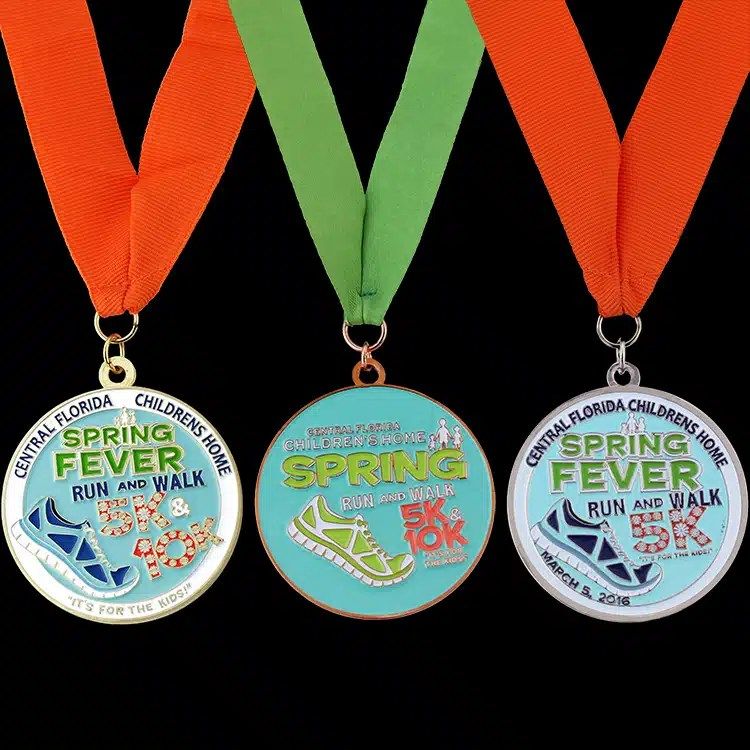
Many events order more than patches. Lanyards carry staff and volunteer credentials, lapel pins work as sponsor or volunteer gifts, die cast medals on a printed neck ribbon go to finishers, and embroidered luggage tags make a give-away that gets used. Each is made to your artwork and quoted from the factory price, so one request can cover the whole event. If medals are part of your plan, see our guide to custom race medals.
Get a quote for your custom event patches
Upload your logo to the free Patch Studio to try sizes, shapes, borders and backings, and download a mockup to share with your committee. Then request a quote with your artwork, size, quantities, backing and in-hands date. You will have one quote within 2 to 3 business days, and nothing is made until you approve the proof in writing.