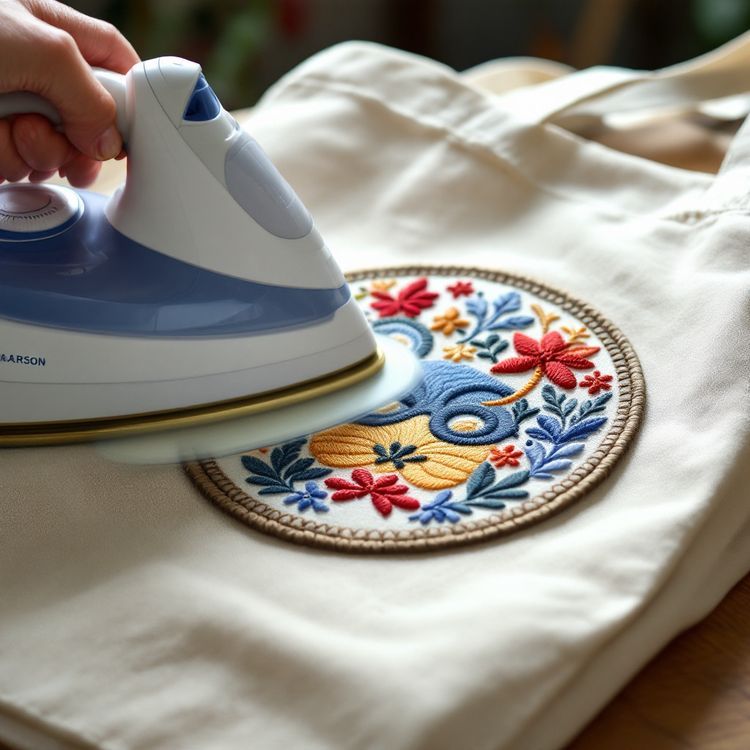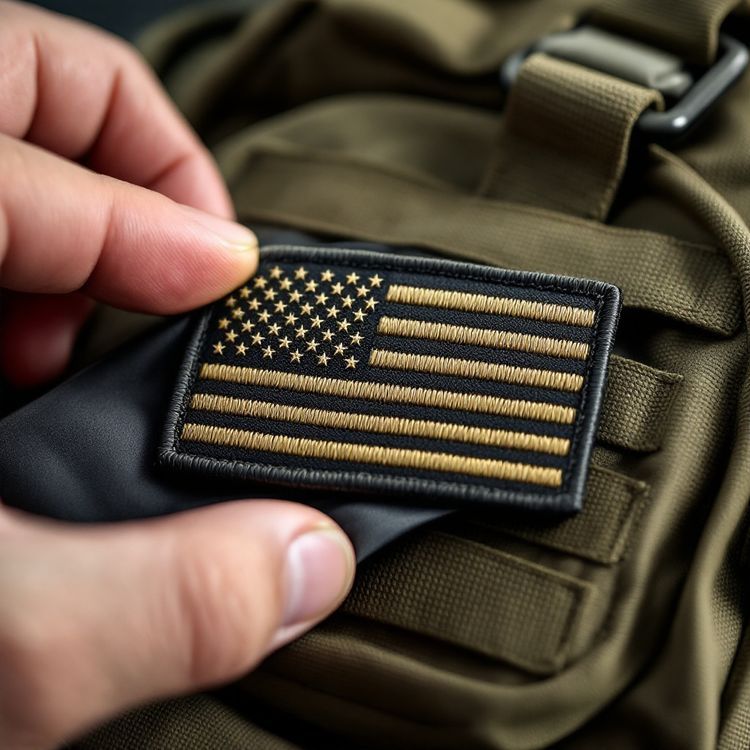
To wash patches without damaging them, turn the garment inside out, wash it on a gentle cycle in cold water with a mild detergent and no bleach, then air dry or tumble dry on low. Heat and friction are what wear patches out: hot water and hot dryers soften iron-on adhesive and fade thread, and rough cycles fray edges. Embroidered, woven, twill and sublimated patches handle that routine well. Chenille is better hand washed, and hand embroidered bullion should not go in water at all.
Below is the routine step by step, then the differences by patch type and backing, and what to do when a patch starts to lift or pucker.
Machine washing, step by step
- Check the garment's care label first. The garment sets the outer limit. If it says cold wash only, that applies whether there is a patch on it or not.
- Turn it inside out. This keeps the face of the patch from rubbing against zippers, buttons and other clothes, which is what roughs up satin stitches.
- Close zippers and hook-and-loop. Open hook tape is the single biggest snag risk in a load. Press any loose hook-and-loop patches onto their panel or take them off.
- Use cold water and a gentle or delicate cycle. Cold water protects thread colour and adhesive. A gentle spin reduces twisting at the patch edge.
- Use a mild liquid detergent. Skip chlorine bleach, which can strip and yellow polyester thread. Oxygen-based brighteners are gentler, but test them on a hidden area.
- Wash a small load. Overloading increases friction. A mesh laundry bag helps for hats, small items and anything with a large patch.
Drying, pressing and the heat question
Air drying is the safest choice for anything patched. Lay the garment flat or hang it, and smooth the patch with your hand while it is damp so it dries flat. If you need the dryer, use low heat and take the garment out while it is still slightly damp.
High dryer heat matters most for iron-on patches. The adhesive that holds a heat seal backing is designed to soften with heat, so repeated hot cycles can loosen the edges. Sewn patches are not affected by the adhesive question, but high heat can still shrink a cotton garment around a polyester patch and cause puckering.
To press a patched garment, iron from the inside or put a cloth over the patch. A hot iron straight onto the face can flatten embroidery and leave a shine on the stitches.
How to wash each type of patch
The construction of the patch changes the care. The table below is a general guide for the six constructions we make. The garment label still comes first.
| Patch type | Machine wash | Dryer | Notes |
|---|---|---|---|
| Embroidered | Yes, cold, gentle, inside out | Low, or air dry | Very tolerant; high heat and rough cycles fuzz the stitches |
| Woven | Yes, cold, gentle | Low, or air dry | Thin and flat, keeps fine detail well through washing |
| Satin tackle twill | Yes, cold, inside out | Low, or air dry | Made for jerseys; watch the zigzag edge on rough cycles |
| Sublimated | Yes, cold, inside out | Low, or air dry | Print is dyed into the fabric; avoid bleach to keep colour |
| Chenille | Hand wash or spot clean preferred | Air dry only | Loops can mat or pill in a machine; brush gently when dry |
| Hand embroidered bullion | No | No | Metal wire can tarnish and crush; spot clean or use a specialist dry cleaner |
Chenille on letterman jackets
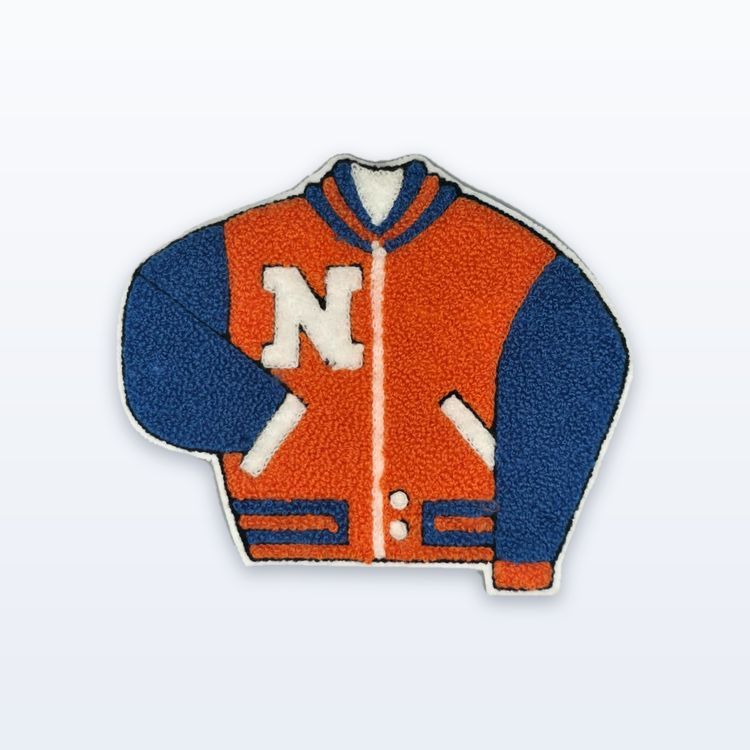
Chenille is a pile of looped yarn on a felt base, and agitation tangles and flattens those loops. Most letterman jackets are wool and leather and are not machine washable anyway. Spot clean the chenille with cool water and a drop of mild soap, blot rather than rub, and let it air dry. A soft brush lifts the pile once it is dry. Our guide to chenille patches for letterman jackets covers how those letters are made.
Bullion on blazers
Bullion crests are hand worked in metallic wire over padding, often on a velvet or wool base. Water and detergent can tarnish the wire and crush the shape. Remove the blazer crest before cleaning if it is attached with pins or a clutch, or ask a dry cleaner who handles embellished garments. For a dusty crest, a soft dry brush is usually enough.
How the backing changes the routine
- Sew-on. The most wash-proof attachment. Check the stitching after a few washes on high-wear garments, and re-stitch any loose section before it spreads.
- Iron-on (heat seal). Cold water, low dryer heat, and inside out. If an edge lifts, press it again from the back with a cloth. Our guide to attaching iron-on patches explains how to press one so it stays down.
- Hook-and-loop. Take the patch off before washing when you can, and close the loop panel with a blank patch so the hook side does not snag the load. Clean lint out of the hook with a stiff brush.
- Rigid plastic. Used on items that keep their shape, like caps and display pieces. Do not machine wash; spot clean only.
If you want to compare backings before you order, see patch backing types explained.
Hats, uniforms and work shirts
Structured caps with a patch on the front are best hand washed or spot cleaned. A dishwasher or a full machine cycle can warp the brim and crease the crown behind the patch. Use cool water and a soft brush, and let the cap dry on a rounded form so the front keeps its curve.
Uniforms are the opposite case: they are washed every week, sometimes commercially. For police, fire, EMS and work shirts that go through industrial laundry, a sewn patch is the reliable choice. Heat seal alone usually does not survive repeated high-temperature commercial cycles. If you are ordering for a crew, our guide to patches for business uniforms covers backing choices for a roster.
Fixing common problems after washing
- Edge lifting on an iron-on: press from the back with a cloth, firm pressure, then let it cool flat. Add a few stitches at the corners if it keeps lifting.
- Puckering around the patch: usually the garment shrank. Press from the inside while the garment is slightly damp to relax the fabric.
- Fuzzy stitches: trim loose fibers with small scissors; do not pull threads. Washing inside out prevents it next time.
- Colour bleeding onto the patch: rewash in cold water right away with a colour catcher sheet, before the garment dries.
- Patch too worn to save: remove it carefully and replace it. Our guide on removing an iron-on patch shows how without damaging the fabric.
Order patches for how they will be washed
When you request a quote, tell us how the garment will be cleaned: home wash, weekly uniform laundry, or rarely if ever. That helps us suggest the right construction and backing for custom patches that will see a lot of wash cycles. Send your artwork and details on the quote form and we reply within about 2 to 3 business days.