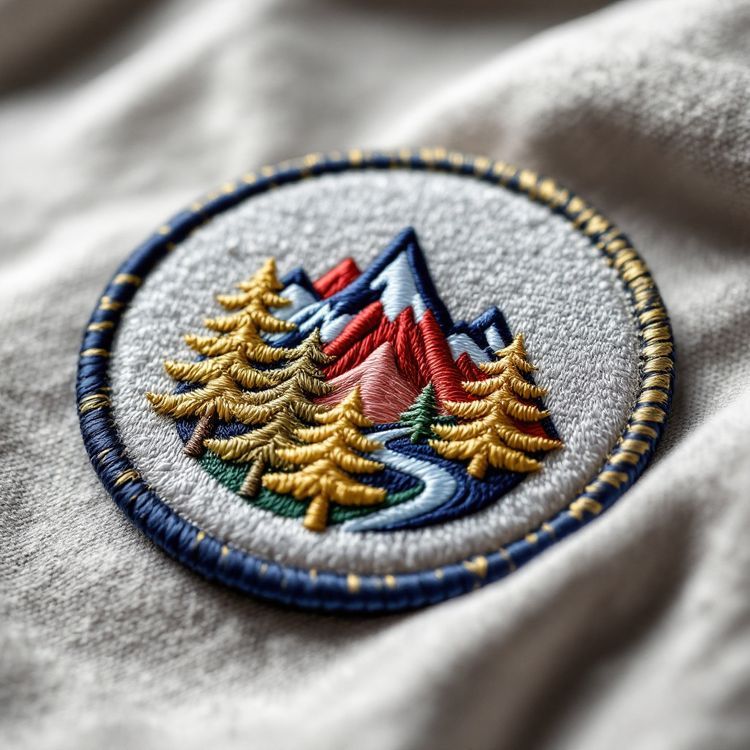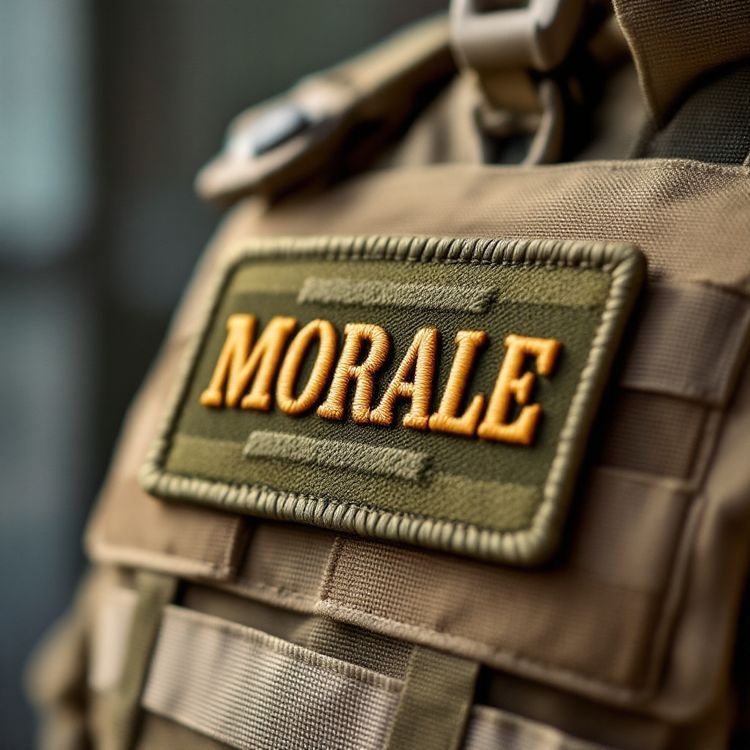
Gun club patches are custom emblems a shooting club or range orders for its members, range safety officers, instructors and competitors. Most clubs start with a member patch about 3 in (76 mm) across with a hook-and-loop backing for range bags and caps, then add a staff patch that identifies safety officers at a glance and a small run of match or event patches. Embroidered patches suit bold club logos, and woven patches handle detailed crests and small lettering.
Below we cover the patch types most clubs end up needing, what makes a range staff patch readable, how to choose sizes and backings for range gear, and how to plan a yearly order without overbuying.
The patches a club usually needs
A club or range rarely needs just one design. Thinking about the full set up front helps you keep a consistent look and combine several designs on one quote.
| Patch | Who gets it | Typical size and backing |
|---|---|---|
| Member patch | Every member, often at sign-up or renewal | 3 to 3.5 in, hook-and-loop or iron-on |
| Range safety officer patch | Range staff on duty | 3.5 to 4 in, hook-and-loop or sew-on |
| Instructor patch | Certified instructors on staff | 3 to 3.5 in, sew-on for shirts |
| Match or event patch | Competitors and volunteers at a match | 3 in, hook-and-loop |
| Name tape | Staff and long-time members | About 4 by 1 in, hook-and-loop |
Name tapes pair well with a hook-and-loop member patch on a range bag or vest. Our guide to name tapes covers sizes and lettering.
Designing the club member patch
The member patch is the one people wear most, so it should be the strongest version of the club identity. Common elements include the club name, the founding year, the state outline or a local landmark, and a central image such as a target, crosshair, crossed rifles, a clay pigeon, or a game animal for clubs that also hunt.
- Keep the club name large enough to read on a cap, about 1/4 in (6 mm) cap height or more in embroidery.
- Limit fine detail in the central image; crosshairs with hairline reticles need thickening or a woven construction.
- Choose colours with strong contrast so the patch reads outdoors in bright sun.
- Decide whether the patch carries the year; undated patches can be reordered for years.
- Avoid using a governing body's or manufacturer's logo unless you have permission to use it.
Clubs that also run hunting or fishing programs sometimes want a second, outdoors-themed patch. Our guide to hunting club patches covers those designs.
Range safety officer and staff patches
A staff patch has a job: on a busy firing line, shooters need to spot who is in charge of the line. That makes legibility more important than artwork. Most ranges use a simple shape with large text such as RANGE SAFETY OFFICER, RSO or RANGE STAFF in a high-contrast colour pair, for example white or yellow on red, or black on bright orange.
Keep the wording short and the letters big. A rectangle about 4 by 2 in (102 by 51 mm) with a two-word title reads further away than a round crest with the same words curved around the rim. Many ranges order the staff title as a separate tab so the same club crest can be worn by everyone, with the tab marking the role.
Instructor patches follow the same rule. If the instructor holds a certification from an outside organization, the patch can say Certified Instructor in the club's own design; use the certifying body's marks only as that body allows.
Match, league and event patches
Clubs that host matches, leagues or charity shoots often give competitors a patch for the event. A match patch usually carries the match name, the date, the club, and an image of the discipline: a steel plate, a clay, a long-range target or a silhouette. Some clubs add a separate patch for division winners or match staff.
For annual matches, keep the same shape and border every year and change the year and centre image. Shooters collect the series, and you can reuse the outline. Reorders of an identical patch skip the setup, with digitizing kept on file. Our guide to event patches covers more on planning event designs.
For a match's top finishers, a medal or a challenge coin is a heavier award than a patch, and coins are a common gift for long-serving range volunteers.
Construction and backing for range gear
Embroidered patches are the default for club logos. They are thick and textured, and they stand up to range bags being dragged across benches and car trunks. Choose woven when your crest has a long motto, fine scrollwork or small text, since woven holds more detail at the same size.
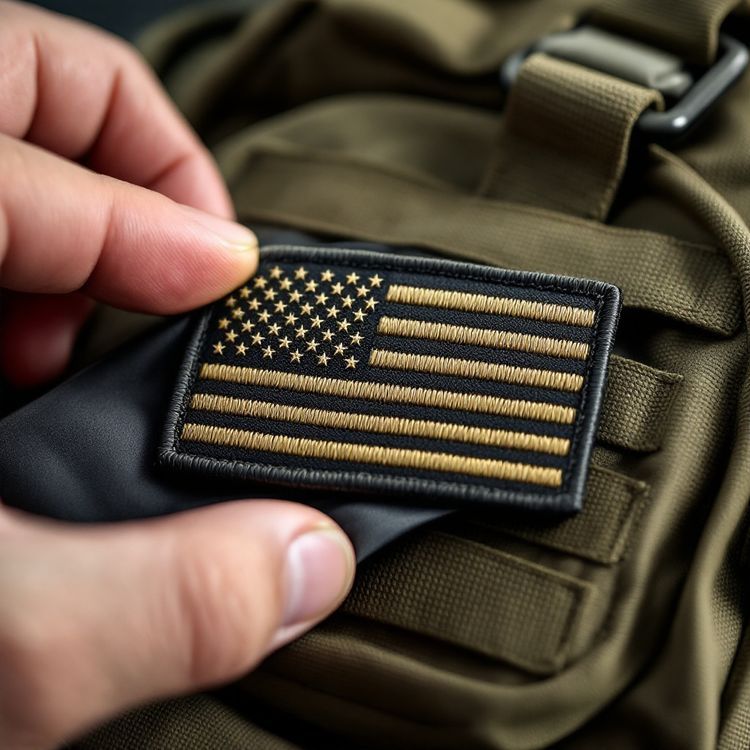
For backings, hook-and-loop is the most popular on range bags, caps with loop panels and tactical vests. Sew-on is the most permanent choice for shirts and jackets. Iron-on works on cotton and canvas, but avoid it on nylon range bags that may not take the heat. Our guide to hook-and-loop patches explains how the two halves work and what to sew where.
Caps, shirts and club apparel
Club caps are often the first apparel item members ask for. A patch on a cap front, around 2 to 2.5 in (51 to 64 mm) tall, lets the club put the same emblem on caps from any supplier, and hook-and-loop caps let members swap a member patch for a match patch on competition days. Our guide to hat patches covers sizes and attachment for different cap styles.
Range staff shirts benefit from a sewn chest crest plus a large back print or patch reading RANGE STAFF, so staff can be spotted from behind on the line. For instructors, a polo with the club crest on the chest and an instructor tab on the sleeve gives a professional look for classes and private lessons.
Some clubs sell caps and patches from the clubhouse counter. A simple patch and cap combination often sells well to new members and visiting shooters, and the income can help fund range improvements or junior programs.
Ordering for a club
Custom minimums start from 100 pieces and vary by product, confirmed on the quote. Many clubs order a year or two of member patches at once and hand them out at sign-up or renewal. A simple sequence:
- Collect the club logo in AI, EPS or PDF; a PNG or a photo of an old patch also works to start.
- List each design you need: member, staff, instructor, event.
- Send sizes, quantities, backings and an in-hands date; the quote comes back in 2 to 3 business days.
- Approve the proof in writing. Production runs about 3 to 4 weeks after approval, then ships by UPS.
When the design is ready, send it for a quote and list every patch the club needs on the same request.