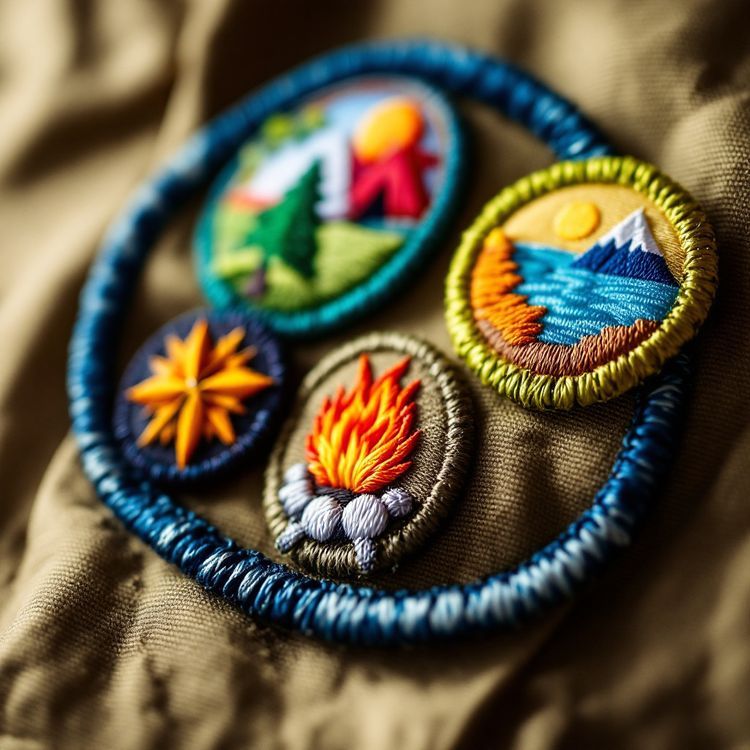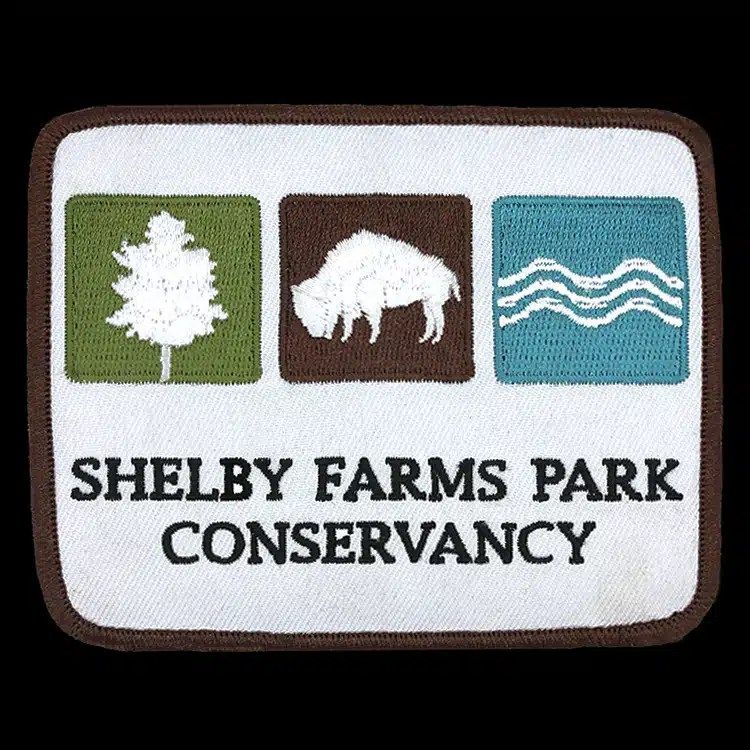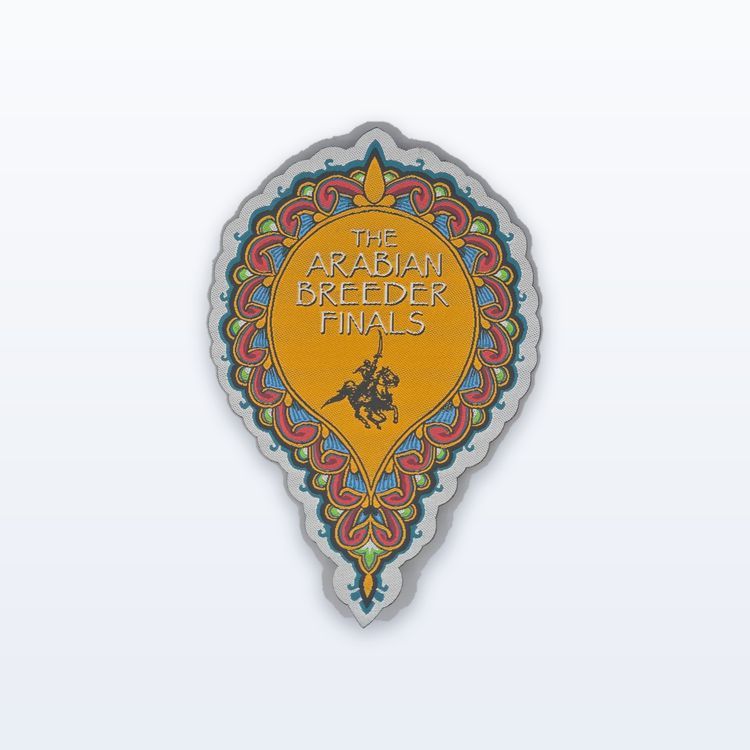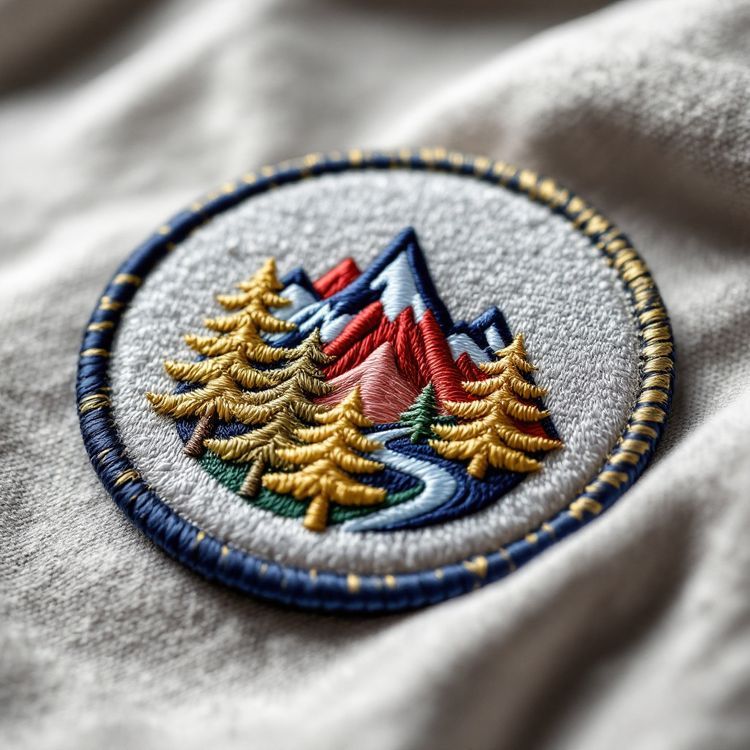
The best fishing patches and hunting club patches are simple enough to read from a few feet away, built in the construction that suits the artwork, and attached in a way that survives water, brush and a lot of washing. For most clubs that means an embroidered patch with a merrowed or heat cut edge, sewn onto caps and jackets, with a hook-and-loop version for packs and vests. Detailed fish or game art may need woven or sublimated instead.
This guide covers the patches clubs usually order, how to pick a construction for fish scales, antlers and feathers, which backing works on field gear, and what to send when you ask for a quote.
The patches fishing and hunting clubs usually order
Most outdoor clubs end up with more than one design over time. It helps to plan them as a set so the colours and lettering stay consistent from one order to the next.
- A member patch with the club name and emblem, worn on caps, shirts and jackets.
- Tournament or derby patches, dated, for anglers who fished a specific event.
- Award patches for the biggest fish, the heaviest bag, a first deer or a season leader.
- Youth program patches for junior anglers, youth hunts and hunter education graduates.
- Officer and lifetime member patches, often a smaller tab or rocker worn under the main emblem.
- Conservation and volunteer patches for habitat work days, stocking events and cleanups.
A member patch is ordered once and reordered for years, so it is worth taking care with the artwork. Event and award patches change every season, which makes them a good place for a date, a species or a location that would date the main emblem.
Choosing a construction for fish and game art
Outdoor art tends to be detailed: scales, fins, feather barbs, antler tines, water ripples and tree lines. Thread handles some of that well and some of it badly, so the construction choice matters more here than it does for a plain text logo.
Embroidered
An embroidered patch is the classic outdoor look, with raised thread you can feel. It suits bold silhouettes: a leaping bass, a mallard in flight, a buck head, crossed rifles or a bobber and hook. As a general guide, lettering needs about 1/4 in (6 mm) of cap height and lines need to be thicker than about 1 mm to stitch cleanly, so fine scale patterns are usually simplified into a few colour blocks.
Woven
A woven patch uses much finer thread, so it holds the small detail embroidery loses: the spots on a brook trout, the barring on a turkey feather or a long club name around a ring. Woven patches are thin and flexible, which suits fishing shirts and light caps.
Sublimated
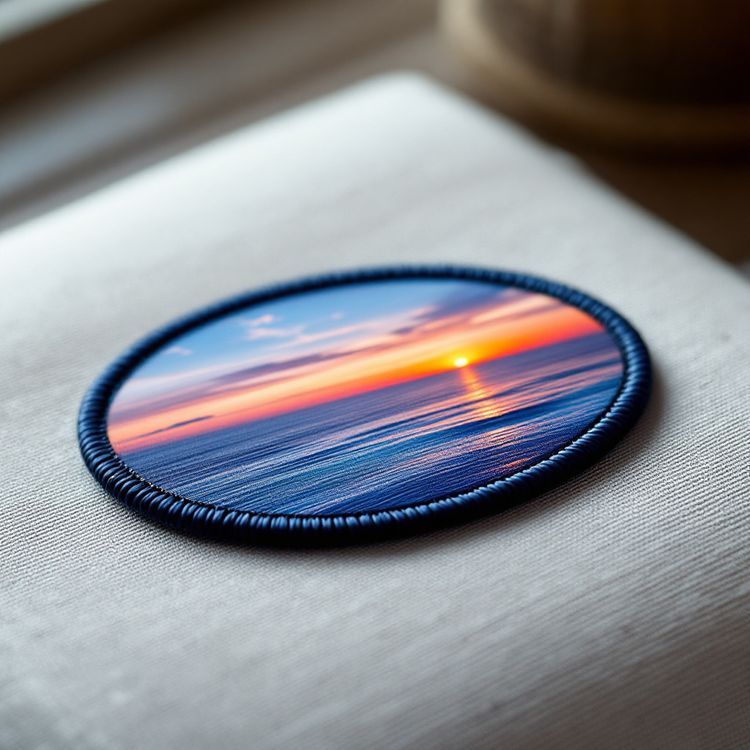
If your art is a painting or a photograph, such as a sunrise over a marsh or a realistic redfish with every colour shift, thread will flatten it into bands. A sublimated patch is dye printed in full colour, so it keeps the shading. It is flat rather than raised.
Our comparison of embroidered and woven patches goes deeper on detail limits if you are torn between the two.
Which construction suits which design
| Design | Usually best | Why |
|---|---|---|
| Bold fish or animal silhouette with short text | Embroidered | Raised texture, reads well at cap size |
| Detailed species art, scales or feather barring | Woven | Finer thread holds small detail |
| Long club name around a ring | Woven | Small lettering stays readable |
| Painted or photographic scene | Sublimated | Keeps gradients and shading |
| Dated tournament or award tab | Embroidered or woven | Simple text, quick to reorder with a new date |
Backings that survive the field
Outdoor gear gets wet, muddy and dragged through brush, so the backing matters as much as the face.
Sew-on is the most secure choice for jackets, canvas vests, caps and anything that goes through the washer often. It is the backing we suggest for a club member patch you expect people to wear for years.
Iron-on (heat seal) is convenient on cotton and cotton blend shirts and on canvas. It is a poor match for many fishing shirts made from lightweight performance polyester, which can be damaged by the heat an iron-on needs. On those, sew the patch, or ask for a sew-on version. Our guide on attaching iron-on patches explains the fabrics that bond and the ones that do not.
Hook-and-loop lets members move a patch between a pack, a range bag, a blind bag and a vest with a loop panel. It is also handy for a tournament patch that gets swapped each season.
Sizes, colours and placement
As a rule of thumb, a cap front patch runs about 2 to 2.5 in (51 to 64 mm) tall, a chest patch about 3 to 3.5 in (76 to 89 mm) wide, a shoulder patch about 3.5 to 4 in (89 to 102 mm), and a back patch on a hunting jacket anywhere from 8 to 11 in (203 to 279 mm). Our patch size guide lists placements in more detail, and the hat patch guide covers cap fronts specifically.
Colour needs some thought for outdoor clubs. Earth tones such as olive, tan, brown and dark green look right on field gear, but they can blend together in thread. Give the emblem one contrasting colour, often a cream, gold or a single bright accent, so the outline still reads. A camouflage pattern rarely translates well to thread at patch size. If you want a camo look, a sublimated patch can carry the pattern, or an embroidered patch can suggest it with a few shapes in two or three greens and browns.
Fly fishing and saltwater clubs often want a lighter look: a white or light blue base with a navy or teal emblem. Those palettes suit woven patches on performance shirts well.
Planning tournament and award patches
Dated patches have a hard deadline, so plan backward from the event. A typical schedule runs like this, with every figure confirmed on your quote:
- Quote back within 2 to 3 business days of sending the details.
- Proof usually 1 to 3 business days after we have your artwork.
- Production about 3 to 4 weeks after you approve the proof in writing.
- Shipping by UPS from Holly Hill, Florida.
That puts a comfortable order date about six to eight weeks before the weigh-in or banquet. Rush production of around 10 business days is sometimes possible when the factory can hold it, but it is safer not to count on it for a fixed event date.
One way to keep costs and lead times down year after year is to design a single event layout and change only the year and the species. Reorders skip setup and the digitizing stays on file, so a reorder with a small text change is simpler than a brand new design. Ask how a text edit affects setup when you quote.
Award patches can sit alongside other pieces. Some clubs pair a big fish patch with a challenge coin or a medal for the top finisher, or give members a lanyard to carry a license holder. Those are quoted separately, and we can put them on one request.
How to order your club patches
Before you request a quote, gather:
- Artwork: AI, EPS or PDF is cleanest; a PNG or a photo of an old patch is enough to start.
- The size you want, measured across the widest point.
- Quantity. Custom runs start from 100 pieces, varying by product, and the minimum is confirmed on the quote.
- Construction, or tell us the look you want and we will suggest one.
- Edge and backing for each garment the patch will go on.
- The in-hands date, especially for a tournament or banquet.
You can try your emblem in our free Patch Studio to see it as a patch on a cap or jacket before you commit. When you are ready, send the details for a quote. We price every job from the factory price, and nothing runs until you approve the proof in writing.