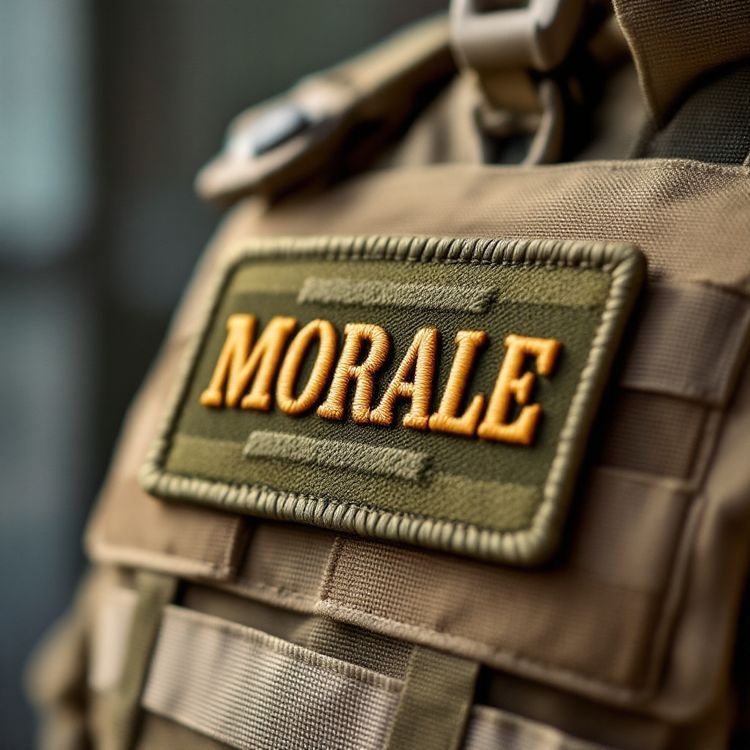
Morale patches are informal patches, usually with hook-and-loop backing, that show a unit's, team's or crew's humor, motto or identity on packs, plate carriers, range bags and jackets. The most common size is about 3 x 2 in (76 x 51 mm), which fits standard loop panels, and the best designs are simple: one bold image, a short line of text, and a few strong colours. Embroidered morale patches with a hook backing are the classic choice, and woven works well for designs with fine detail.
This guide covers design ideas, sizes for common gear, backing, construction, the rules about wearing them, and how to order a run for your group.
What morale patches are for
Morale patches started as an informal tradition in the military: an inside joke, a nickname or a mascot worn on gear rather than on the official uniform. Today they are used by military units, law enforcement teams, fire crews, EMS, search and rescue, shooting clubs, airsoft and paintball teams, outdoor brands and plenty of offices.
They do a few jobs at once. They build identity within a group, mark a deployment, training class or event, make good gifts and fundraisers, and let people personalize their gear. Because they attach with hook-and-loop, they can be swapped in seconds.
Morale patch ideas that work
The best morale patches are instantly readable and a little unexpected. Some reliable directions:
- Unit or team mascot: an animal, character or symbol with attitude, often with the unit name on a banner.
- Inside jokes and nicknames: a call sign, a running joke or a phrase only the group understands. These are often the most treasured.
- Mottos and slogans: a short line in bold block letters, sometimes in Latin for a formal twist.
- Deployment and training class patches: a location, dates and a symbol for the class, deployment or exercise.
- Parody designs: a familiar style reworked with the group's own twist. Avoid copying trademarks or another organization's insignia.
- Flags and regional symbols: a subdued flag, a state outline or a local landmark.
- Job and role patches: medic, dispatcher, K9 handler, range officer, with a humorous or proud spin.
Keep it simple. A morale patch is seen at a few feet, often on a busy background of webbing and pouches. One strong image and three to five words beat a detailed scene.
Sizes that fit common gear
Morale patches are sized to fit the loop panels sewn onto gear. Measure your panel before choosing, as sizes vary by manufacturer.
| Placement | Common size | Notes |
|---|---|---|
| Standard morale or ID panel | About 3 x 2 in (76 x 51 mm) | The most common size, fits most sleeves and packs |
| Sleeve loop panel | Up to about 3.5 x 4.5 in (89 x 114 mm) | Room for a larger emblem or a flag above a patch |
| Plate carrier front panel | Often about 5 x 3 in (127 x 76 mm) or larger | Wide name or unit patches, check the panel |
| Round patch | About 3 in (76 mm) across | Popular for mascots and emblems |
| Cap loop panel | About 2 x 3 in (51 x 76 mm) | Small and simple works best |
| Pack or range bag | 3 to 5 in (76 to 127 mm) | Larger panels allow more detail |
Our patch size guide covers sizing for other placements.
Hook-and-loop backing
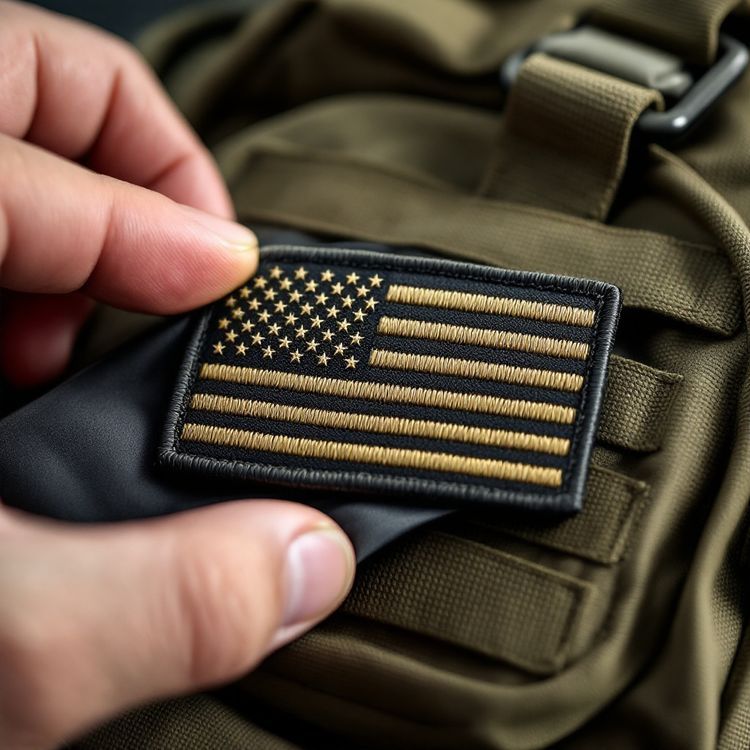
Morale patches almost always use hook-and-loop backing. The patch carries the hook side, the stiff, grippy half, and the gear carries the soft loop panel. That lets you swap patches in seconds and move them between packs, jackets and carriers.
The hook side is attached to the back of the patch. If a jacket or bag has no loop panel, it will need a loop piece sewn on first, so say on your quote request if you want loop pieces with the order. Our hook-and-loop patch guide explains how the backing is attached and how to care for it.
Which construction to choose
Morale patches are often made in PVC, and you will see plenty of rubber patches in the field. Patchworks USA does not make PVC patches, but thread patches are a classic choice and have their own advantages: a traditional look, light weight and a flexible feel.
- Embroidered: the classic morale patch look, with raised thread and texture. Best for bold designs and short text.
- Woven: flat and thin with much finer detail. Good for detailed artwork, small text and subdued designs.
- Sublimated: printed in full colour, so photos and gradients are possible. Good for humorous artwork that relies on detail.
Edges are usually merrowed for rectangles, circles and shields, or heat cut for custom outlines. A merrowed edge also protects the patch from fraying when it is pulled on and off gear.
Subdued and full colour versions
Many groups order the same design in two colourways: a full colour version for bags, jackets and collecting, and a subdued version in tan, olive, coyote, gray or black for field gear. Subdued colours blend with the gear and keep the patch low profile.
If you order both, design the patch so it still reads with low contrast. Bold outlines and simple shapes survive the switch to subdued colours much better than fine detail does.
A note on wearing rules
Morale patches are informal. In the US military they are generally not authorized on the official uniform, and when and where they may be worn on gear is set by each branch's uniform regulations and by unit policy. For the Army, the reference is AR 670-1, and other branches publish their own regulations. Law enforcement and fire departments have their own uniform policies too. Check with your chain of command or your department before wearing a morale patch on duty.
For official unit insignia rather than morale patches, see our military and unit patches guide.
Ordering a morale patch run
Custom minimums start from 100 pieces, vary by product and are confirmed on the quote, which suits a unit, a class or a club with extras for gifts and newcomers. You can try your design in the free Patch Studio first. When you request a quote, include the artwork, the size, the quantity, the construction, any subdued colourway and your in-hands date. Quotes come back in 2 to 3 business days, and production runs about 3 to 4 weeks after proof approval, with rush around 10 business days when the factory can hold it (typical, confirmed on your quote).