A name tape is a narrow rectangular patch, usually about 1 in (25 mm) tall, that carries one surname in block capitals above a uniform pocket or on the front of a plate carrier. A tactical name patch is the same idea built for gear: a hook-and-loop backed strip or panel with a name, and sometimes a blood type, call sign or unit mark. For most orders the decisions are the same: size, lettering, colours, edge and backing, then how the list of names is supplied.
This guide covers each of those choices, explains where official uniform rules come in, and shows how to send a roster so every tape comes back spelled correctly.
Name tape or tactical name patch: what is the difference
The two terms overlap, but they usually describe different jobs.
- Name tapes are the classic uniform strip: a long, low rectangle with a single line of capitals, sewn or attached above the right chest pocket. The look is plain and standardized so a row of people reads the same.
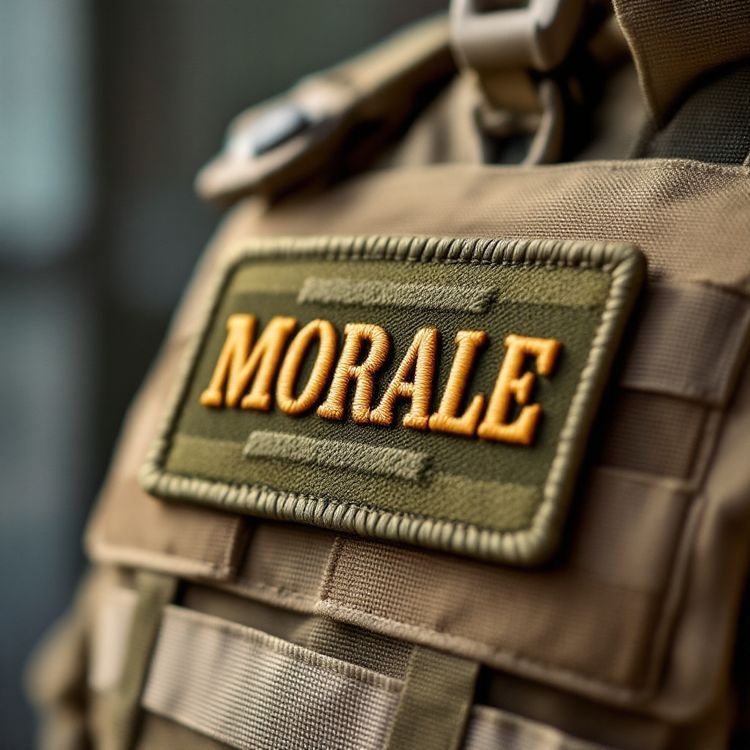
- Tactical name patches go on plate carriers, chest rigs, packs and helmets. They are almost always hook-and-loop backed so they can move between kit, and they often add a second line such as a blood type, an allergy note, a call sign or a small flag.
Security teams, police and fire departments, airsoft and paintball teams, search and rescue groups and range staff all order both kinds. The difference matters mainly for size and backing, which we cover below.
Official uniforms: check the regulation first
If the tapes are for an official military uniform, the service's uniform regulation sets the size, fabric, thread colour and lettering. For the Army, that is AR 670-1 and its companion pamphlet DA Pam 670-1; the other branches publish their own uniform manuals. Those rules change over time and differ between uniform types, so check the current version from the official source before you design anything. Many service members get regulation tapes through official supply channels, and that remains the safe route for inspected uniforms.
Where a custom maker comes in is everything around those rules: agency and department uniforms, contractor and security uniforms, training cadre, veterans groups, morale kit and team gear. If your department or company has its own written uniform standard, send it with the quote request so the tapes match it.
Common sizes and lettering
There is no single standard size outside official regulations, but some proportions come up again and again. Treat the figures below as a starting point and adjust them to your pocket, panel or carrier.
| Placement | Typical size | Notes |
|---|---|---|
| Above a shirt pocket | About 1 x 4 to 5 in (25 x 102 to 127 mm) | Roughly the width of the pocket flap |
| Plate carrier front | About 1 x 3.5 to 5 in (25 x 89 to 127 mm) | Sized to the loop field on the carrier |
| Two-line tactical patch | About 2 x 3.5 in (51 x 89 mm) | Name on top, blood type or call sign below |
| Helmet or small pouch | About 1 x 3 in (25 x 76 mm) | Keep to a short surname or initials |
On a 1 in tall tape, the capitals usually stand about 1/2 in (13 mm) high, which leaves room for a border. That is comfortably above the general minimum for readable embroidered lettering, which is about 1/4 in (6 mm) cap height. Bold block capitals in a plain sans serif read best from a distance. Thin, condensed or decorative fonts close up when stitched, so save them for other patches.
Long names
Decide in advance what happens with long surnames. The usual choices are to keep the letter height and let the tape get wider, to keep the width and condense the spacing slightly, or to set a character limit and abbreviate. Pick one rule for the whole order so the tapes look consistent side by side. Our guide to the smallest text a patch can hold explains how far lettering can shrink before it stops reading.
Colours: high contrast or subdued
Name tapes come in two broad colour styles.
- High contrast, such as white on navy, gold on black or black on khaki, is for uniforms where the name should be read quickly by the public.
- Subdued, such as black or brown thread on tan, coyote, ranger green or olive, is for field gear where a bright patch would stand out. The lettering still needs enough contrast to be read up close, so avoid pairing two shades that are almost the same value.
Match the tape fabric to the garment or carrier, and send a photo or a colour reference for both the base and the thread. Thread colours are matched as closely as possible to your references, and the proof shows the exact pairing before anything is made.
Construction, edge and backing
Most name tapes are embroidered: block capitals in satin stitch on a twill base. If a tape carries very small text, such as a long rank title or a medical note, a woven tape holds finer lettering on a thinner, flatter strip.
For the edge, a merrowed border gives the traditional wrapped rim on a plain rectangle. A heat cut edge gives a crisp, flat finish and suits narrow tapes where a thick border would crowd the letters.
Backing depends on where the tape will live:
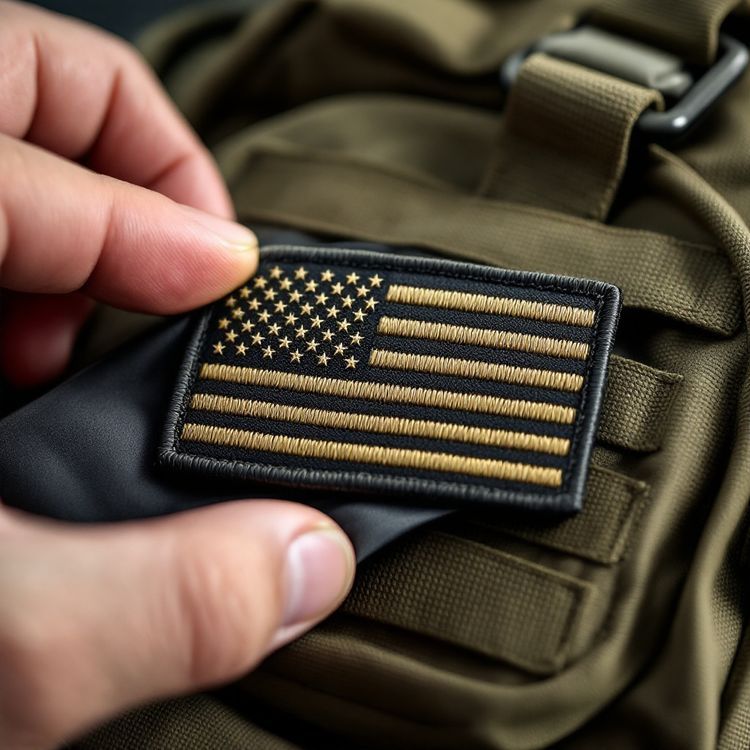
- Hook-and-loop for plate carriers, packs and any gear with a loop field. Say whether you need the hook side, the loop side or both.
- Sew-on for duty shirts and jackets that are washed often, and for uniforms that require tapes to be sewn.
- Iron-on (heat seal) for light cotton work shirts where sewing is not practical. It is a convenience, so add a few stitches at the ends on garments that see hard use.
Our guide to hook-and-loop patches covers how the two halves work and how to size a tape to a loop panel.
Ordering a roster of names
A name tape order is really many small designs sharing one layout. Getting the list right is the most important step.
- Fix the layout once: size, font, letter height, colours, edge and backing.
- Put every name in a spreadsheet, one row each, typed exactly as it should appear, with a quantity column for people who need more than one tape.
- Add a column for any second line, such as blood type or call sign, so nothing is missed.
- Have someone other than the person who typed the list check the spelling against official records.
- Check every name on the proof before you approve it in writing.
Custom minimums start from 100 pieces and vary by product, so how a list of individual names is counted toward the minimum is confirmed on your quote. If a roster is small, it can make sense to combine name tapes with a matching unit or team patch on the same order. Our post on custom name patches covers the oval and rectangle styles used on work shirts, and the military, morale and unit patch guide covers the patches that usually sit beside them.
Timeline and how to request a quote
Typical timing is a quote in 2 to 3 business days, a proof about 1 to 3 business days after we have the artwork and name list, and production of about 3 to 4 weeks after you approve the proof. Rush of around 10 business days is sometimes possible when the factory can hold it. All of these are confirmed on your quote. New members join and people transfer, so keep your layout settings: reorders skip setup, and the digitizing stays on file.
To get started, send the details: the size, colours, edge, backing, quantity per name and the name list itself. If you want to see the layout first, mock up a tape in the free Patch Studio, then send it with your request. Nothing runs until you approve the proof in writing.