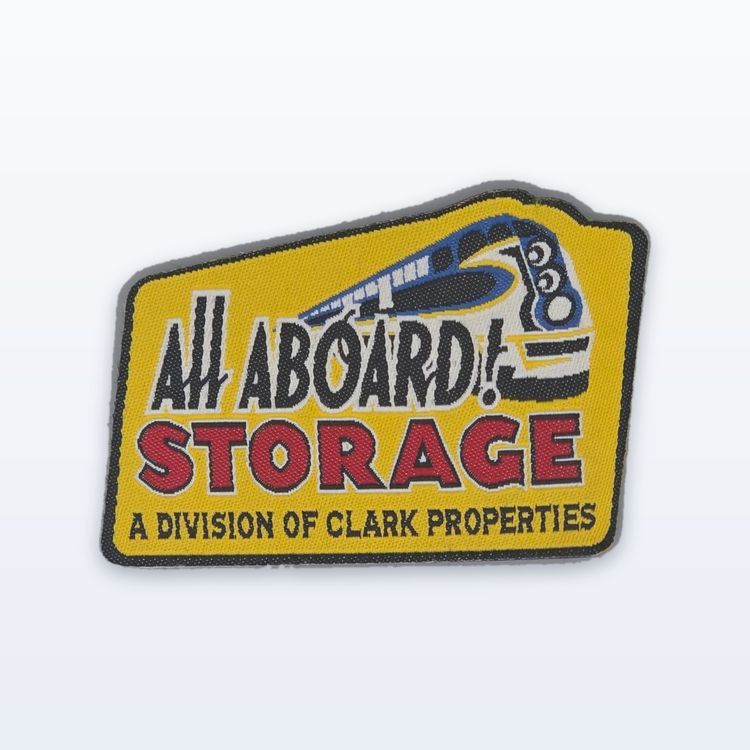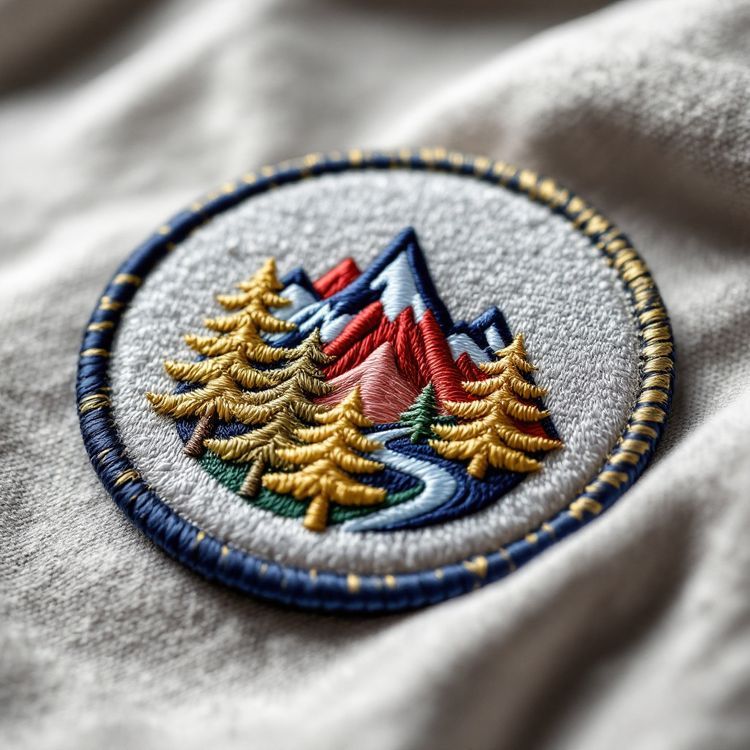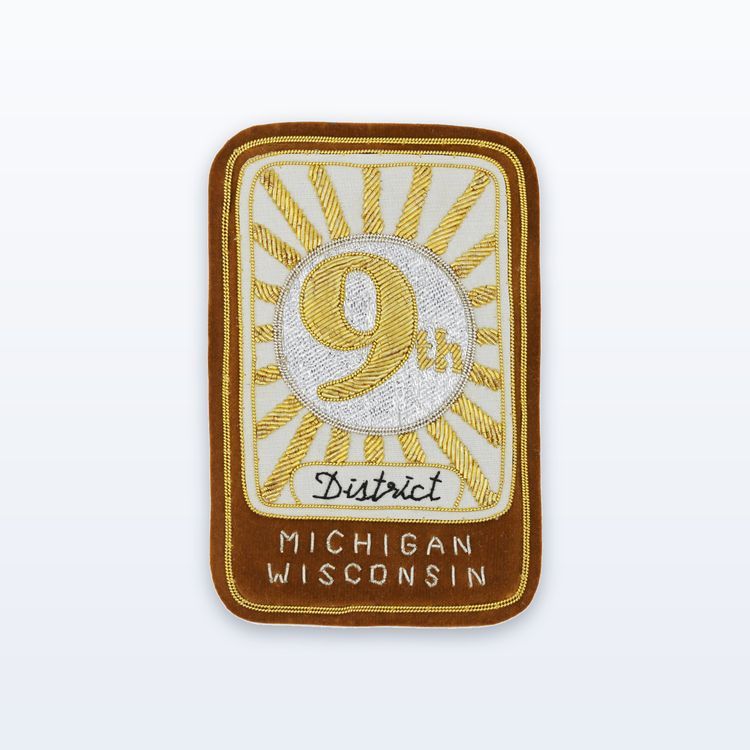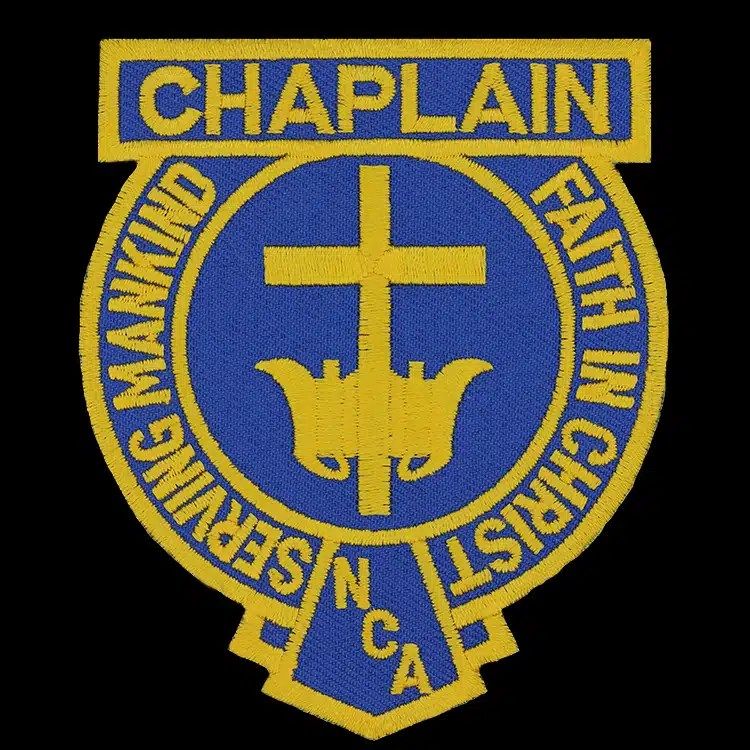
Custom emblems are embroidered patches made to a fixed specification so they can be sewn onto uniforms or built into products, batch after batch, and look the same every time. Ordering them well comes down to writing that specification once: exact size and shape, thread colours, coverage, border, backing and quantity per batch. Get those right on the first proof and every reorder can match it, because the digitizing stays on file and reorders skip setup.
The word emblem is used in two worlds. Uniform buyers use it for the company or agency patch on every shirt and jacket. Manufacturers use it for the branded patch sewn onto a cap, bag, jacket or piece of gear they sell. This guide covers both.
Emblem, patch, badge: is there a difference
In practice the words overlap. Emblem tends to mean an official or branded mark that represents an organization or a product line, produced in volume and applied in a fixed position. Patch is the broader everyday word. Badge is common in scouting and the UK. The construction is the same: thread stitched over a fabric base, cut to shape and finished with an edge. Our patch glossary covers the terms you will see on a quote.
What makes an emblem different is the job. It is not a one-off design for an event. It is a mark that has to match the one sewn on last year, and the one sewn on next year.
Emblems for uniform programs
For businesses, public agencies, clubs and schools, the emblem is usually the main logo patch on shirts, jackets and caps. Typical placements are the left chest, the shoulder and the cap front.
- One master size per placement. A left chest emblem of about 3 in (76 mm) to 3.5 in (89 mm) and a shoulder emblem of about 3.5 in (89 mm) to 4.5 in (114 mm) are common. Decide once and keep it.
- Backing to suit the garment. Sew-on for most work and duty shirts, iron-on (heat seal) where a decorator presses emblems onto cotton garments, hook-and-loop where emblems move between garments.
- Batch planning. Order enough to cover new hires and replacements between runs, so you are not re-ordering every month.
Our rollout guide to patches for business uniforms covers sizing a roster and timing a launch.
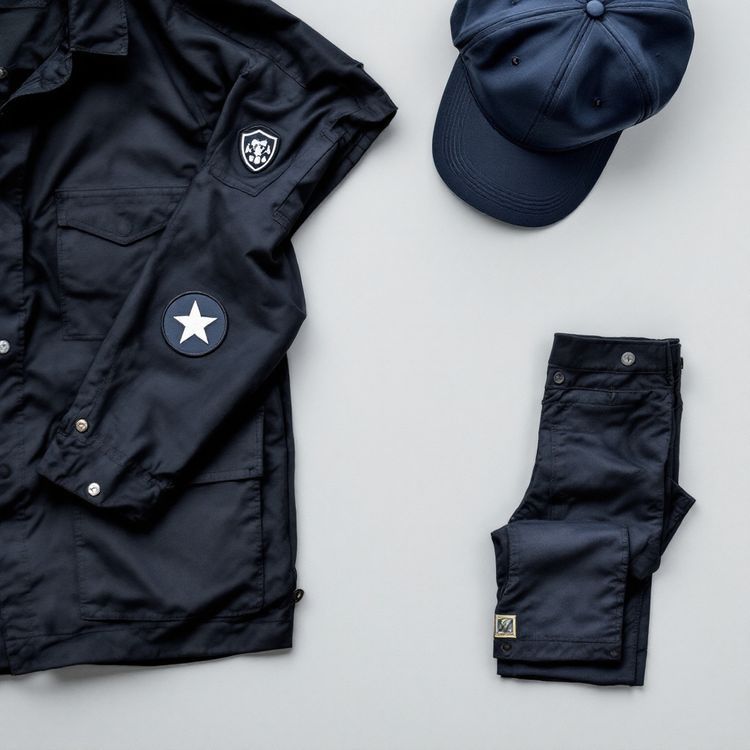
Emblems for products you sell
Apparel brands, outdoor gear makers, bag makers and cap brands use emblems as a finished branding detail, sewn on during production. The planning is a little different from uniforms:
- Sewing method. Production sewing usually means sew-on, often with a plain or lightly stiffened backing. A rigid plastic backing helps an emblem keep its shape when it is sewn onto a cap or a structured bag.
- Edge and seam allowance. If the emblem is sewn into a seam or a hat panel, tell us. The edge style and any margin outside the design affect how cleanly a machinist can stitch it on.
- Thread and fabric colour matching. Product emblems are judged against the product's own colours. Supply colour references for both thread and the base fabric.
- Packaging and counts. Mention if you need emblems packed in counted bundles for different production lines or sizes.
For brand labels inside garments, woven labels are the usual companion to an outside emblem, and our guide to patches for clothing brands covers planning a product drop.
Writing an emblem specification
A short written spec is the single most useful document for an emblem program. It goes with your first quote request and stays on file for every reorder.
| Spec item | What to record | Why it matters |
|---|---|---|
| Size | Width and height in inches | Fixes how the design is digitized |
| Shape | Circle, shield, rectangle or custom outline | Sets the edge options |
| Construction | Embroidered, woven or other | Drives detail and feel |
| Coverage | Percentage of the base that is stitched | Affects stiffness and look |
| Thread colours | Colour references for each colour | Keeps batches matching |
| Base fabric colour | Twill colour, if not fully stitched | Visible on partial coverage |
| Border | Merrowed or heat cut, and colour | Frames the emblem |
| Backing | Sew-on, iron-on, hook-and-loop or plastic | Matches how it is applied |
| Quantity per batch | Pieces per run | Sets cost per piece and stock levels |
Designing a logo that works as an emblem
Most emblems start from an existing logo, and logos are usually drawn for screens and print. A few adjustments often help:
- Check the smallest text at the emblem size. As a general guide, embroidered lettering needs a cap height of about 1/4 in (6 mm) to stay readable.
- Thicken hairline strokes, which do not stitch cleanly below about 1 mm.
- Reduce gradients to solid colours, or consider a sublimated emblem if the gradient is essential.
- Limit the colour count to what the design needs. Fewer colours often read more clearly at a distance.
- If the logo has fine detail that cannot be simplified, a woven emblem holds it better than embroidery.
Our guide to designing a logo for embroidery goes through these in more depth, and you can try your logo as an emblem in the free Patch Studio before you quote.
Managing an emblem program over time
An emblem program usually runs for years, and the problems that come up are about consistency and stock rather than design.
- Name one owner. One person keeps the spec, the approved proof, the physical sample and the order history. When that person changes roles, the file goes to the next one.
- Track usage. Note how many emblems you use per quarter so you can reorder before stock runs out, allowing for production time.
- Control design changes. If the logo is updated, treat it as a new emblem with a new proof, and decide whether old stock is used up or retired, so you do not end up with two versions on the same team.
- Store emblems flat. Keep stock in a dry, dark place, flat in their bags, so backings stay clean and edges stay square.
Programs that also use lapel pins or other branded items benefit from keeping all of the specs in one place, so the same colour references are used across every product.
Ordering and reordering
Send your artwork as AI, EPS or PDF if you have it (PNG is accepted, and a photo of an existing emblem is enough to start), along with the spec above and your quantity. We return a quote typically within 2 to 3 business days and a proof usually 1 to 3 business days after we have artwork. Nothing runs until you approve the proof in writing. Production typically takes about 3 to 4 weeks after approval, confirmed on your quote. Custom minimums start from 100 pieces and are confirmed on the quote.
For later batches, quote the original order or send a photo of the emblem. Reorders skip setup and the digitizing stays on file, so the stitch file that produced the approved emblem is the one that produces the next batch. To start, send your emblem details for a quote.