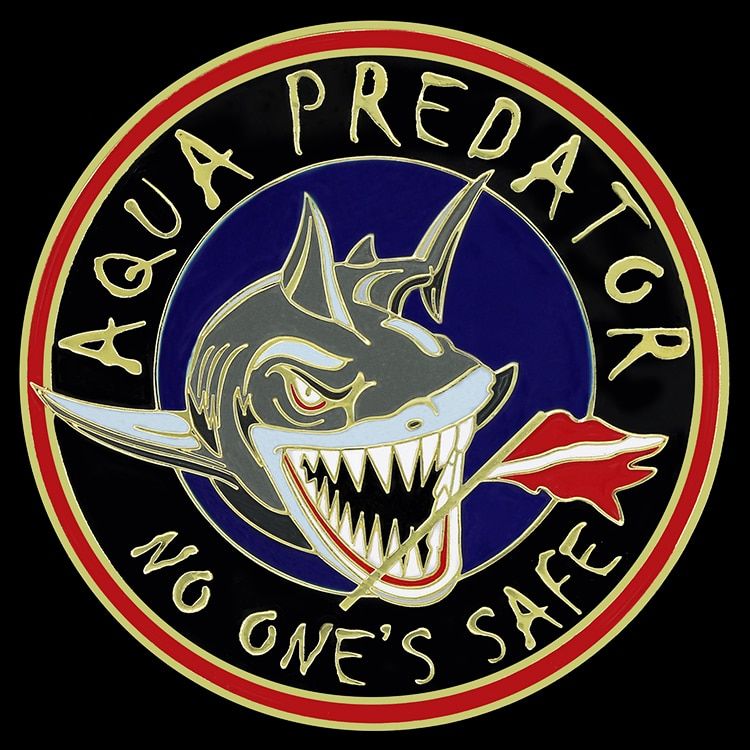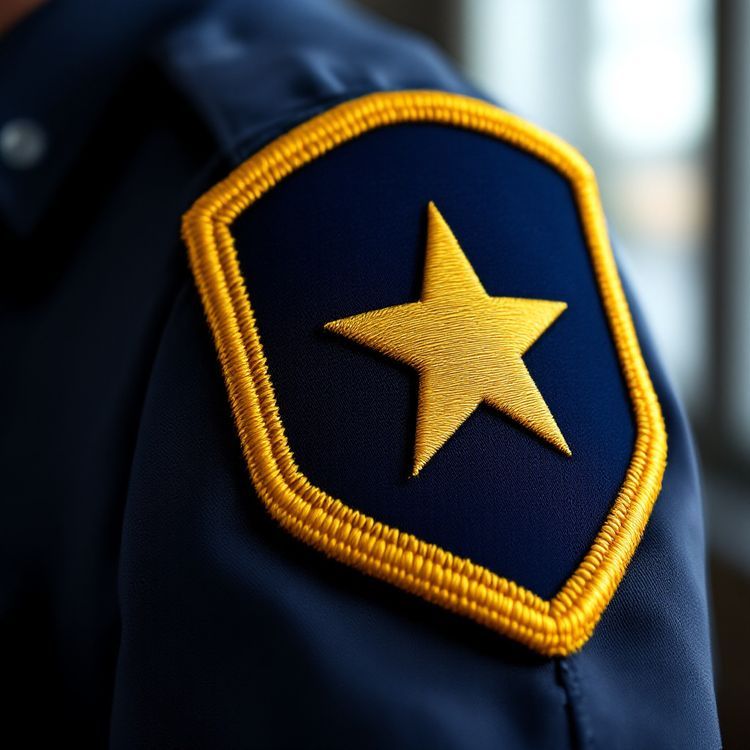
An academy class patch is a one-off emblem a police, fire or EMS recruit class designs to mark its time together, usually showing the class number, the graduation year and a motto or symbol the class chose. Most classes order an embroidered patch about 3 to 3.5 in (76 to 89 mm) across, often paired with a challenge coin handed out at graduation. The key steps are getting the design approved by academy staff early and working back from the graduation date, since production runs about 3 to 4 weeks after proof approval.
This guide covers what usually goes on a class patch and coin, who needs to sign off, which construction and backing to choose, and how a class committee can keep the order on schedule while recruits are busy with training.
What goes on an academy class patch
A class patch is not a duty patch. It is worn on a T-shirt, a gym bag, a challenge coin rack or a shadow box rather than the uniform sleeve, so the class has more freedom than the department does with its official emblem. Even so, most class designs follow a familiar pattern:
- The class number or name, such as Class 24-02 or Recruit Class 117, usually the largest text on the patch.
- The academy or agency name, written out or abbreviated.
- The graduation year, sometimes with the start and finish dates.
- A class motto or Latin phrase, often placed in a banner or around the rim.
- A central symbol: a badge outline, a Maltese cross, a helmet, a hydrant, a halligan, a K9, a local landmark or an animal the class adopted as its mascot.
- Small nods to the class experience, like the number of recruits who started or an inside reference only the class will recognize.
Keep the inside references small and few. A patch that tries to hold every story from the academy becomes hard to read and hard to stitch. Pick one strong central image and let the text carry the rest. Our guide on how to design a patch walks through shape, size and detail if your committee is starting from a blank page.
Who signs off, and what to leave out
Before anyone draws a line, ask the academy coordinator or training officer how class patches are approved. Many academies have a tradition and a process, and some have rules about what a class may put on merchandise. Typical questions to settle up front:
- May the class use the agency seal, shoulder patch or badge image, or only the academy name?
- Does the design need sign-off from the training staff or the chief before it is ordered?
- Are there phrases, images or nicknames the academy does not allow?
- Will the patch or coin be presented at graduation, and does the ceremony program need to mention it?
Official agency insignia, seals and badge designs belong to the agency. Do not copy them onto a class item without permission from the agency itself; a stylized badge outline or a generic Maltese cross is the usual way around this. If a recruit is drawing the art, have them send a sketch to staff before the class falls in love with it.
Choosing the patch construction, size and backing
Most class patches are embroidered, with a twill base and a merrowed or heat cut edge. Embroidery gives the raised, textured look people associate with public safety emblems, and it holds up on bags and jackets. If the design has a long motto in small letters or a detailed seal, a woven patch will hold finer text at the same size.
As a rule of thumb, a class patch reads well at 3 to 4 in (76 to 102 mm) across. Smaller than that and the class number and motto start to compete for space. Larger patches, around 5 in (127 mm), suit the back of a hoodie or a bag panel.
| Use | Typical size | Common backing |
|---|---|---|
| Keepsake for each recruit | 3 to 3.5 in | Sew-on or iron-on |
| Gym bag or duty bag | 3 to 4 in | Hook-and-loop |
| Class hoodie or jacket back | 5 in or larger | Sew-on |
| Shadow box or frame | 3 to 4 in | Rigid plastic or sew-on |
Hook-and-loop backing is popular because recruits can move the patch between a bag, a plate carrier panel or a cap later in their careers. Our backing guide compares the options in more detail.
Designing the class challenge coin
A coin gives the class something heavier to keep, and it is a natural thing to hand out at graduation, to instructors, and to family members who supported a recruit through the academy. Coins have two faces, so a common layout is the class emblem on the front and the academy name, graduation date and motto on the back. Some classes put every graduate's name on the reverse, which works on larger coins if the list is short.
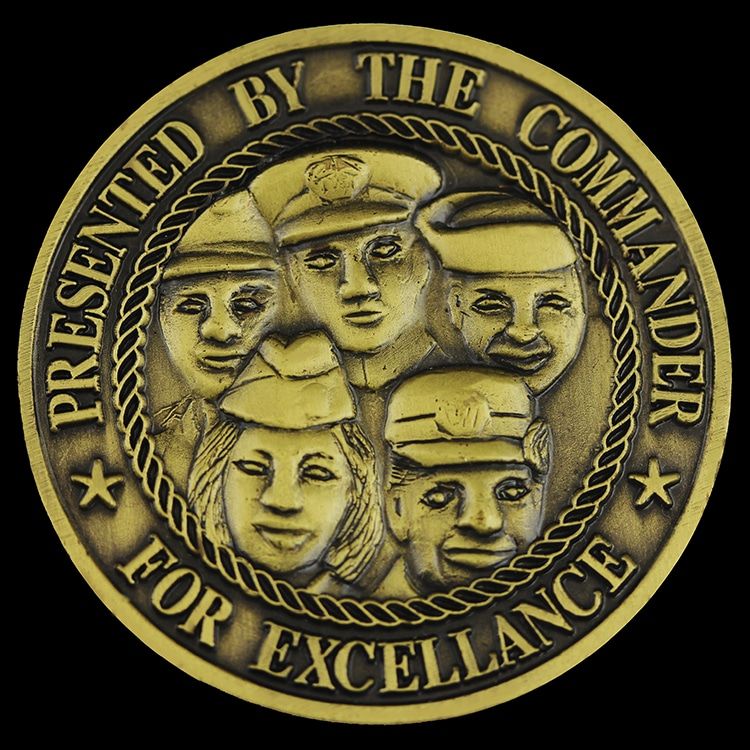
Coins around 1.75 to 2 in (44 to 51 mm) are the common choice for class coins, with room for a full emblem and readable lettering. Antique finishes bring out relief detail, while polished gold or silver with enamel fill gives a brighter look. Our challenge coin design guide covers metals, edges and finishes. You can order the patch and coin from the same artwork, which keeps the class identity consistent and saves the committee from approving two separate designs from scratch.
Police, fire and EMS academy differences
The structure of the order is the same across services, but the imagery tends to differ. Police academy classes often build around a badge outline, a thin line motif, a K9, handcuffs or a state outline. Fire classes lean on the Maltese cross, crossed axes, helmets, ladders and engine numbers. EMS and combined public safety academies often use a star of life alongside the academy name.
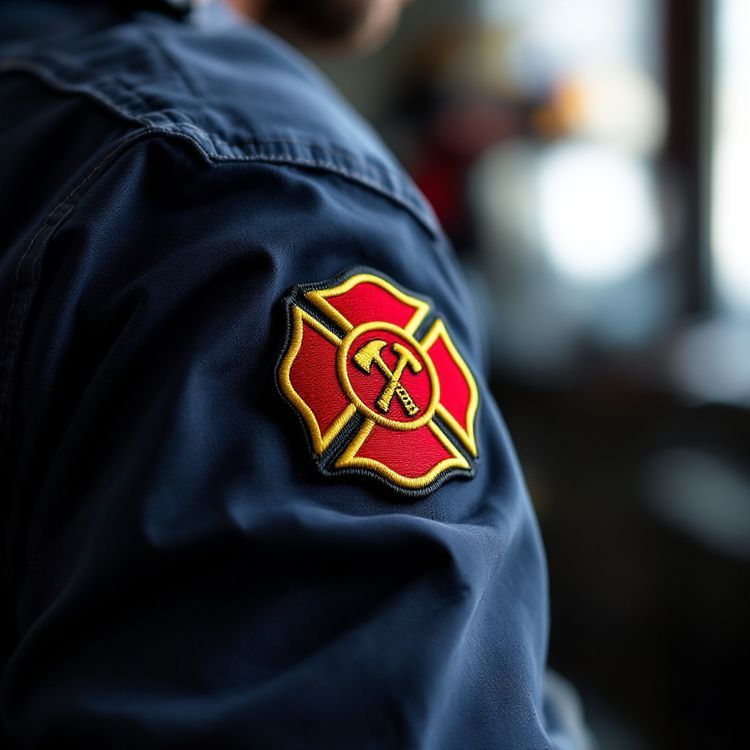
Colour usually follows the department, so a class patch looks like it belongs next to the agency's own emblem without copying it. If your department already has a patch on file with us, tell us when you ask for a quote: the colours and outline can be matched as a starting point.
Timing the order around graduation
Academy schedules are fixed, and graduation day does not move for a late shipment. Work backward from the date you need the items in hand:
- Quote back in 2 to 3 business days once you send the artwork, size and quantity.
- Proof usually 1 to 3 business days after the artwork arrives.
- Production about 3 to 4 weeks after the proof is approved in writing.
- UPS shipping from Holly Hill, Florida, then a few days of margin for distribution.
That puts a comfortable start date about six to eight weeks before graduation. If the class is late, rush production around 10 business days is sometimes possible when the factory can hold it. Every figure here is typical and confirmed on your quote. Our post on how long custom patches take breaks down each stage.
Quantities, funding and extras
Custom minimums start from 100 pieces and vary by product, confirmed on the quote. A recruit class is often smaller than that, so classes usually order extras for instructors, family, future reunions and swaps with other academies. Ordering a little over the head count is also cheaper than a second run if someone loses a patch.
Funding varies. Some classes pool money, some are covered by a union or foundation, and some sell extras to family. Collect the money before you approve the proof so the order is not held up. If a future class wants to reorder the same design, reorders skip the setup, and the digitizing stays on file.
When the design is ready, send us the artwork and graduation date for a quote on the patch, the coin or both.