Good challenge coin design starts with the two faces planned as a pair, a size that leaves room for your smallest text, and the right construction: die struck for crisp lettering and line work, die cast for deep relief and cutouts. Enamel colours, plating and edge finish come next. Get those decisions down before the quote and the proof stage becomes a check, not a redesign.
This guide is written for unit commanders, fire and police chiefs and club leaders who are putting a coin together for a ceremony, an anniversary or a membership program.
Plan the front and back together
A coin has two faces, and each one needs its own job. The front usually carries the identity: the unit crest, department seal or club emblem. The back carries the story: a motto, a deployment or anniversary date, a station number, a mission name or a short line of text that means something to the people receiving it.
Sketch both faces at actual size before you send anything. A common mistake is putting everything on the front and leaving the back as an afterthought, which crowds one face and wastes the other. Another is repeating the same seal on both sides when the back could mark the occasion.
- Keep one focal point per face.
- Run text around the rim and keep the centre for the main image.
- Decide which details must be in colour and which can be plain metal.
Choosing a coin size
As general guidance, many challenge coins land around 1.5 to 2 in across. Smaller coins suit simple emblems and pocket carry; larger coins give room for more lettering, more colours and a second ring of text. Commemorative and presentation coins often go bigger again.
Let your smallest text decide. If the back carries a long motto around the rim, a larger diameter keeps the letters readable. Thickness matters too if the coin will be displayed in a case or carried daily, so mention it on the quote if it is important to your program.
Die struck vs die cast
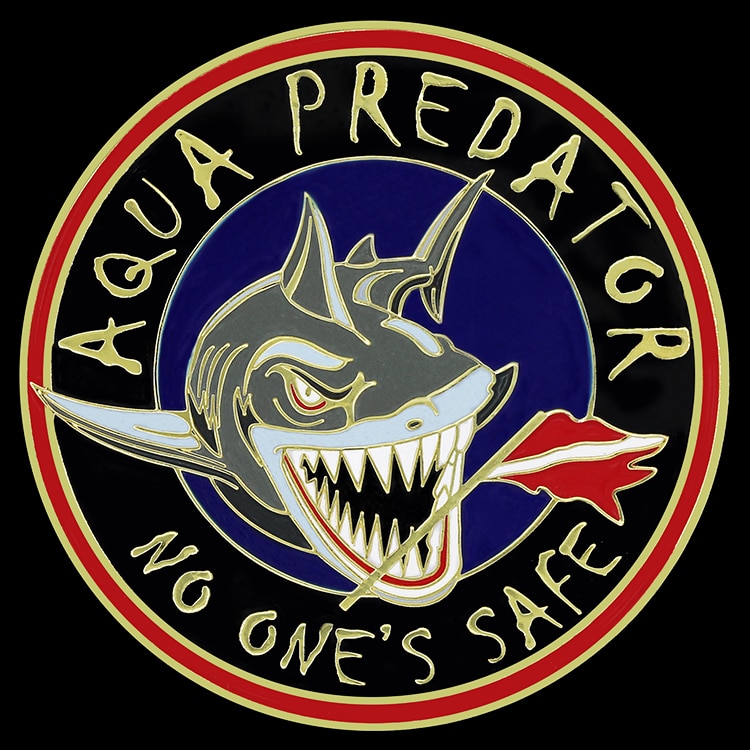
The construction you choose shapes what the artwork can do. A die struck coin is made by striking a metal blank under high pressure between two hardened dies. A die cast coin is made by pouring molten metal into a mould shaped to your design. You can read more about both on our custom challenge coins page.
| Factor | Die struck | Die cast |
|---|---|---|
| How it is made | Blank struck between two hardened dies | Molten metal poured into a mould |
| Strength | Crisp lettering and fine line work | Deeper relief and sculpted detail |
| Relief | Raised and recessed levels, mostly flat planes | Multiple height levels and rounded 3D forms |
| Cutouts | Limited | Suited to cutouts and open areas |
| Best for | Seals, text heavy designs, classic round coins | Sculpted emblems, custom shapes, see-through areas |
If you are unsure, describe the effect you want on the quote request and we will tell you which construction suits it.
Relief, enamel and plating
2D and 3D relief
A 2D design works in flat levels: raised metal, recessed metal and areas filled with colour. A 3D design sculpts surfaces, so a face, an eagle or a helmet can rise out of the coin with rounded form. 3D relief reads beautifully in hand and under light, but it is usually tied to die cast construction and more detailed mould work.
Enamel colours per face
Enamel colour is counted per face, and each colour sits in its own recessed area separated by metal lines. Fewer colours give a bolder, cleaner coin. If a detail does not need colour, leave it as plain metal and let the plating carry it. Sending Pantone references helps us match agency or unit colours.
Plating and antique finishes
Plating sets the tone of the metal. Gold, silver, nickel and copper tones are typical, and an antique finish darkens the recesses so raised detail stands out, which suits seals and older style designs. Polished plating suits bright, enamel heavy coins. Some designs mix two platings across the faces. Plating, enamel colour and edge treatment are confirmed with you at the proof stage.
Edges, cutouts and text
The edge is the part people feel first. A smooth edge is clean and simple. A reeded edge carries fine ridges like a minted coin, and rope or diagonal cut edges add texture that catches light. Some programs run text around the edge itself. Ask about edge options on the quote and we confirm what the factory can do for your construction.
Custom shapes, such as a shield, a badge, a Maltese cross or a state outline, set a coin apart from the standard round. Cutouts, where parts of the coin are open, are possible on suitable designs, generally with die cast.
For text, keep lettering bold and avoid hairline serifs. Small letters placed tightly together fill in when struck, so give each line room and limit the word count on each face. If a seal has fine text inside it, consider enlarging the coin or simplifying the seal for metal.
Numbering, attachments and packaging
A few extras are worth deciding early:
- Serial numbering: useful for limited runs and presentation coins. Ask on the quote and tell us where the numbers sit.
- Attachment: most coins are standalone, but a keyring or another attachment can be added for everyday carry.
- Packaging: presentation coins are often handed over in a case or pouch. Ask on the quote, since packaging affects both cost and the shipping schedule.
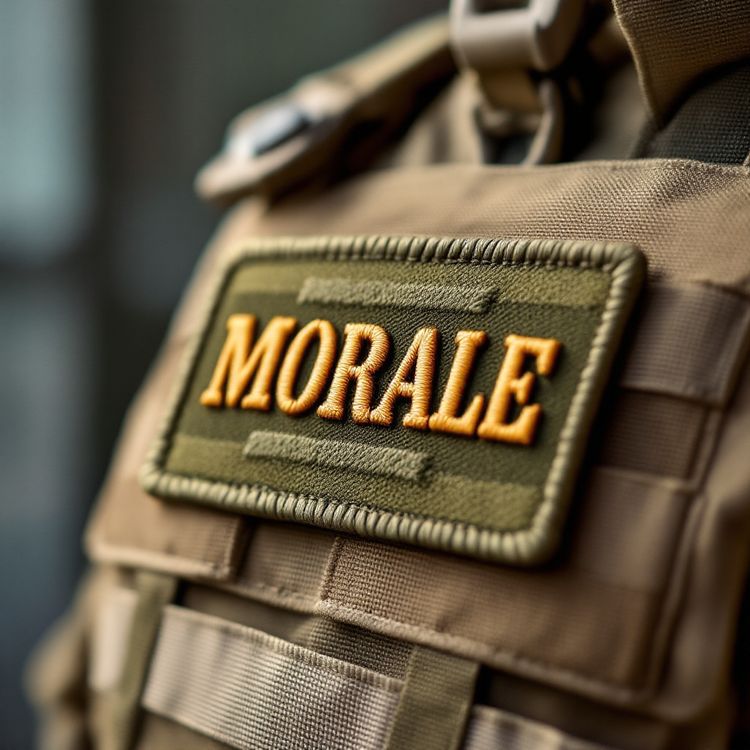
Many programs order coins alongside patches. If you are designing unit insignia too, our military, morale and unit patches guide covers the patch side, and the soft vs hard enamel pins post explains the enamel choices you will also see on coins.
Artwork and working back from the ceremony date
Vector artwork in AI, EPS or PDF gives the cleanest strike or cast. A PNG, a sketch or a photo of an older coin is still enough to start a quote; we redraw the artwork for metal and the proof shows the result. Send both faces, even if one is only a rough layout.
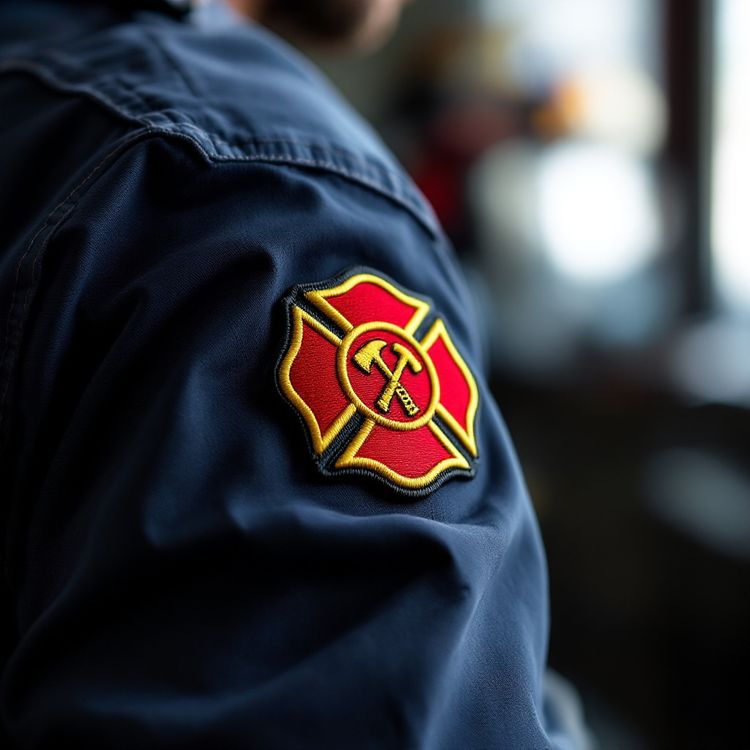
Coins are usually tied to a fixed date, such as a change of command, a retirement, a promotion ceremony or an anniversary. Work back from it: the quote takes 2 to 3 business days, the proof usually 1 to 3 business days after we have artwork, and production typically runs about 3 to 4 weeks after written proof approval. Add UPS transit from Holly Hill, Florida, plus time for any proof revisions. Rush is sometimes possible when the factory can hold it, but it is never something to plan a ceremony around. Fire departments planning an anniversary will find more on matching coins and patches in our fire department patches post.
What to send for a challenge coin quote
- Artwork for the front and the back.
- Diameter, or overall size for a custom shape, and thickness if it matters.
- Quantity, ideally priced at two or three levels such as 100, 200 and 500.
- Die struck or die cast, or a note on the effect you want.
- Number of enamel colours on each face.
- Plating and finish preference, and edge style.
- Attachment, numbering and packaging, if wanted.
- Your in-hands date and the event it is for.
Send it through our quote request form. Brad prices the job at the factories that make that construction and sends back one quote, and nothing is made until you approve the proof in writing. If your program also needs patches, our free Patch Studio lets you preview the same emblem as a patch before you ask.