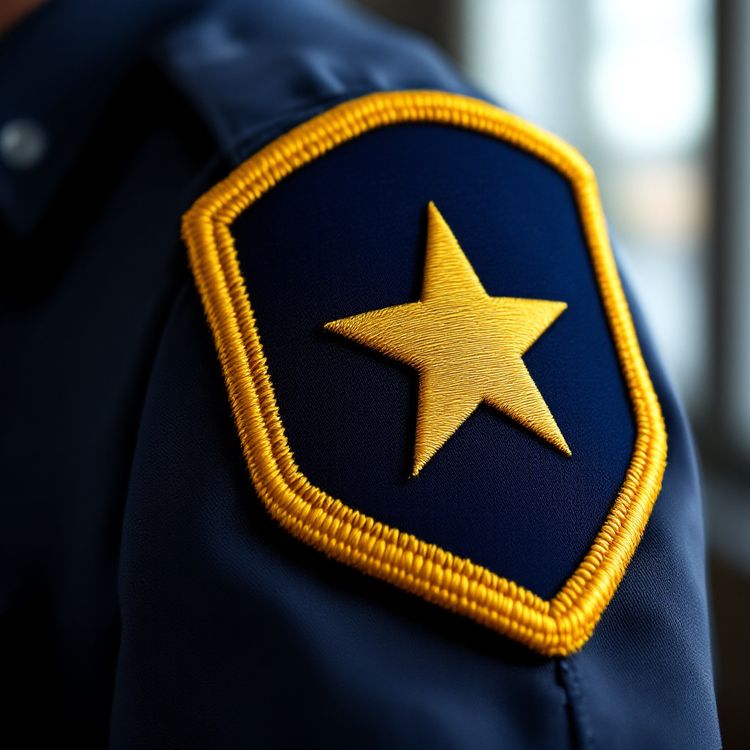
A good police or sheriff patch is designed to be read at arm's length in a second or two: a short agency name in large letters, a jurisdiction line, one clear central emblem and a strong border, at a size that suits the sleeve. Most redesigns fail because they try to fit too much detail into a 4 in shape, so the best place to start is deciding what can be left out.
This guide walks through shoulder patch anatomy, legibility, construction and backings, plus how to keep every reorder identical to the last.
Anatomy of a shoulder patch
Most law enforcement shoulder patches share the same basic parts. Knowing them makes it easier to brief a designer and to read a proof.
- Agency name. "Police," "Sheriff," "Sheriff's Office" or "Department of Public Safety," usually across the top. It should be the largest text on the patch.
- Jurisdiction. The city, county or state, often along the bottom or in a lower banner.
- Central emblem. A city or county seal, a state outline, a star, a badge silhouette, or a local landmark.
- Background and fields. One or two solid colours behind the emblem and text.
- Border. A merrowed or stitched edge that frames the patch and protects it from fraying.
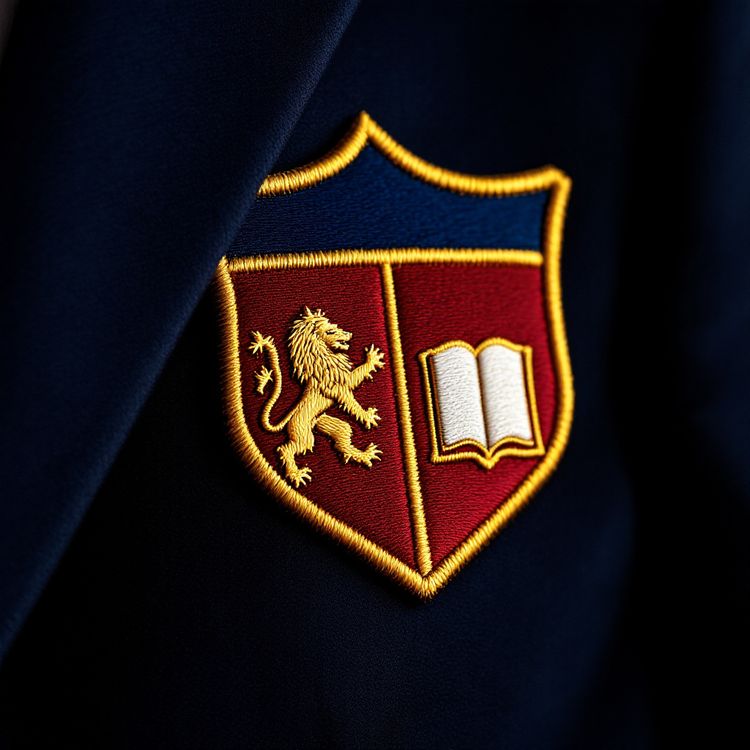
Shields, rounded arches and pentagons are the familiar shapes, and they suit a merrowed border well. Always check your agency's uniform policy before changing an established patch, since it may fix the shape, colours and wording.
Legibility and colour count
Officers are seen from across a street, on body cameras and in photographs. The patch needs to work at all three distances.
Text size
As a general guide, embroidered lettering needs a cap height of about 1/4 in to stay readable, and lines thinner than about 1 mm do not stitch cleanly. A full county name around the edge of a seal often falls below that at sleeve size. Shorten it, move it to its own banner, or consider woven construction for that element.
Colour count
Each thread colour adds work, and too many colours make a patch look busy from a distance. Most strong agency patches use four to six colours with high contrast between the text and its background: gold on navy, white on black, navy on light blue. Keep fine shading out of the design, because thread cannot blend gradients.
Our guide to preparing artwork for embroidery covers line weights and simplification in more detail.
Seals, construction and borders
Embroidered or woven for seals
Embroidered patches have raised thread and a traditional look that suits most shoulder patches. If your emblem is an official seal with tiny lettering, fine rings and small artwork, a woven patch can hold that detail at a smaller size than embroidery. Some agencies keep the main patch embroidered and use woven only where a seal must stay sharp.
Coverage
Uniform patches are usually fully stitched, with no twill background showing. That gives a dense, durable surface that holds its shape through frequent laundering. A partly stitched design with a twill background showing can work for a less formal patch, but full coverage is the norm on duty uniforms.
Border
A merrowed border, the raised wrapped stitch around the edge, is the classic finish on shields and arches. Pick a border colour that matches the outer ring of the design or contrasts strongly with the sleeve fabric, so the shape stays crisp against a dark uniform.
| Element | Typical choice for duty uniforms | Worth considering |
|---|---|---|
| Construction | Embroidered | Woven for detailed seals and small text |
| Coverage | Fully stitched | Partial coverage for informal or event patches |
| Border | Merrowed on shield and arch shapes | Heat cut for detailed custom outlines |
| Backing | Sew-on for uniform shirts and jackets | Hook-and-loop for vests and carriers |
| Colours | Four to six high-contrast colours | Subdued palette for tactical gear |
Matching both sleeves, name tapes and rank
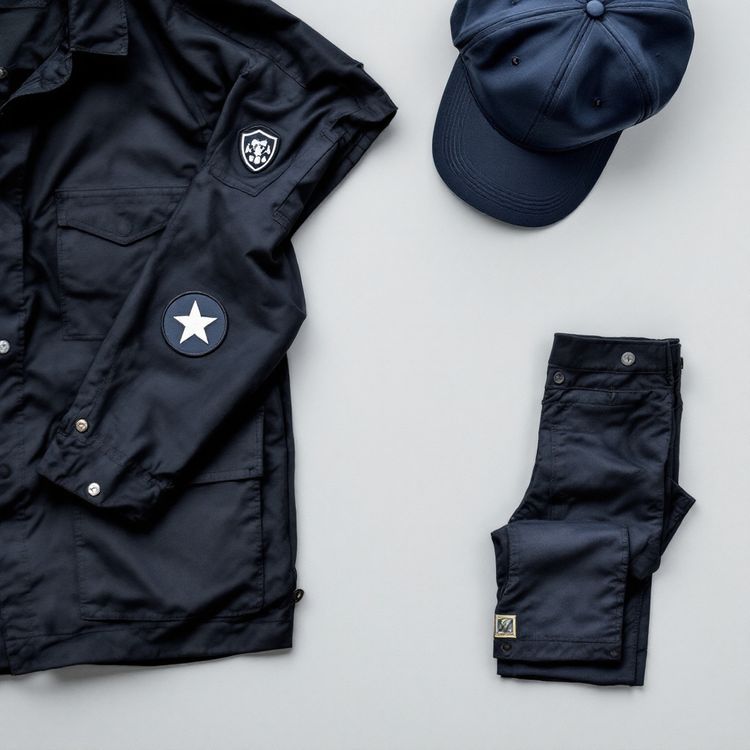
Many agencies wear the same patch on both shoulders, so both should come from the same run. If you also wear a US flag patch, a common convention is a reversed flag on the right sleeve so the stars face forward as the wearer moves. Your uniform policy decides which version goes where, so specify left and right quantities on the quote.
Name tapes, rank insignia, unit tabs and K9 or special team patches are often ordered at the same time. Listing them together lets us quote the set, match thread colours across the pieces, and proof them side by side.
Backings for uniforms and tactical gear
For duty shirts and jackets that are washed often, sew-on backing is the standard. It is the most permanent option and any uniform shop can attach it.
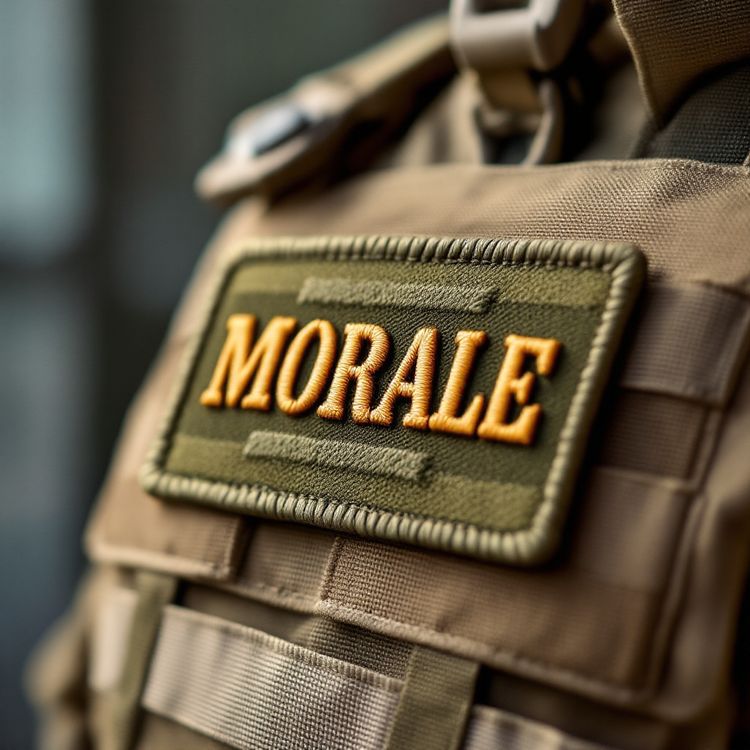
Tactical vests, plate carriers and outer carriers usually take hook-and-loop patches. The loop side is already on most carriers, so the patch just presses on and can be swapped. Many agencies order a subdued version of the shoulder patch for this gear, in muted tones that match the carrier. Iron-on adhesive is less reliable on the polyester and nylon used in duty wear, so if you choose it, sew around the edge as well.
Military units face similar choices for morale and unit patches, covered in our military patch guide.
Keeping every reorder consistent
Agencies hire through the year, uniforms wear out, and nobody wants new officers with a patch that looks slightly different from the rest of the shift. Consistency comes from three habits.
- Approve one master proof and keep a copy with your uniform records.
- Reorder the same design rather than sending a new file; the digitizing stays on file, so reorders skip the setup.
- Keep a physical sample from the first run to compare against any later delivery.
- Note any intentional change, such as a new sheriff's name or an updated seal, so it goes through a fresh proof.
- Order spares for new hires and replacements instead of placing many small orders.
Custom runs start from 100 pieces for most products, and a larger run generally lowers the cost per patch because setup is spread over more pieces. Asking for prices at 100, 200 and 500 on one quote helps you set a sensible stock level.
Badges, coins and other pieces
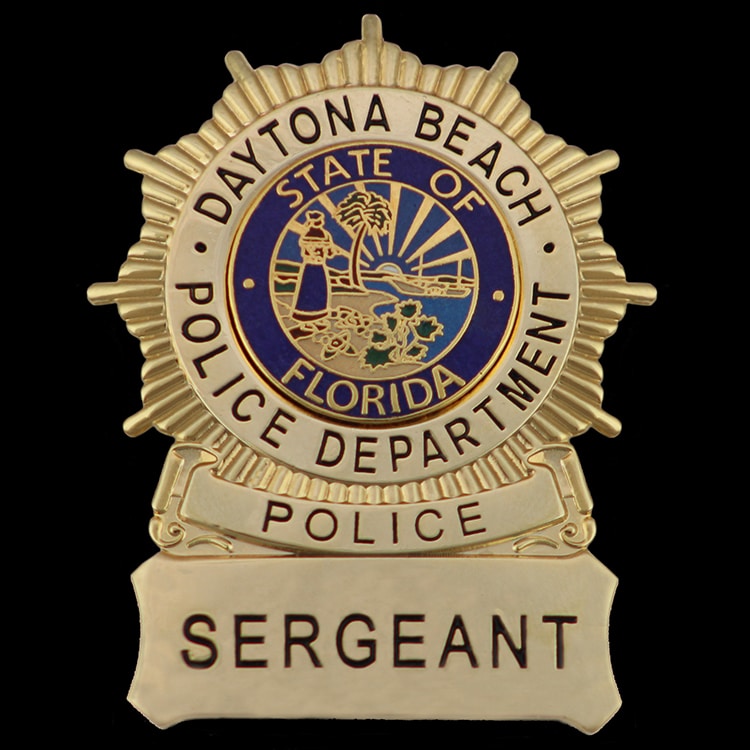
Patches are rarely the only item on a uniform budget. We also make badges, epaulet covers and other uniform pieces, as well as challenge coins for promotions, academy graduations and retirements. Ordering from one source makes it easier to keep emblems and colours consistent across everything.
Fire departments work through many of the same choices, covered in our guide to custom fire department patches.
Requesting a quote for your agency
Send your artwork or a clear photo of the current patch, the size, construction, colours, backing, quantities for each version, and your in-hands date. You can also preview the shape, size and border on a jacket in the free Patch Studio and send the mockup along. See our police and sheriff patches for examples, or go straight to the quote form.
We price the job with 2 or 3 factories and send one quote within 2 to 3 business days. The proof is approved in writing before production, which typically runs about 3 to 4 weeks after approval.