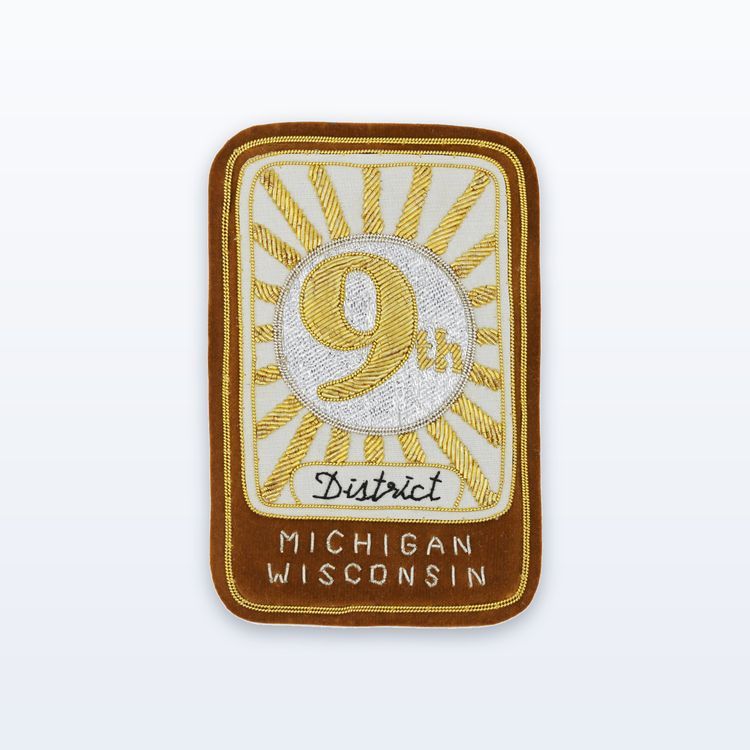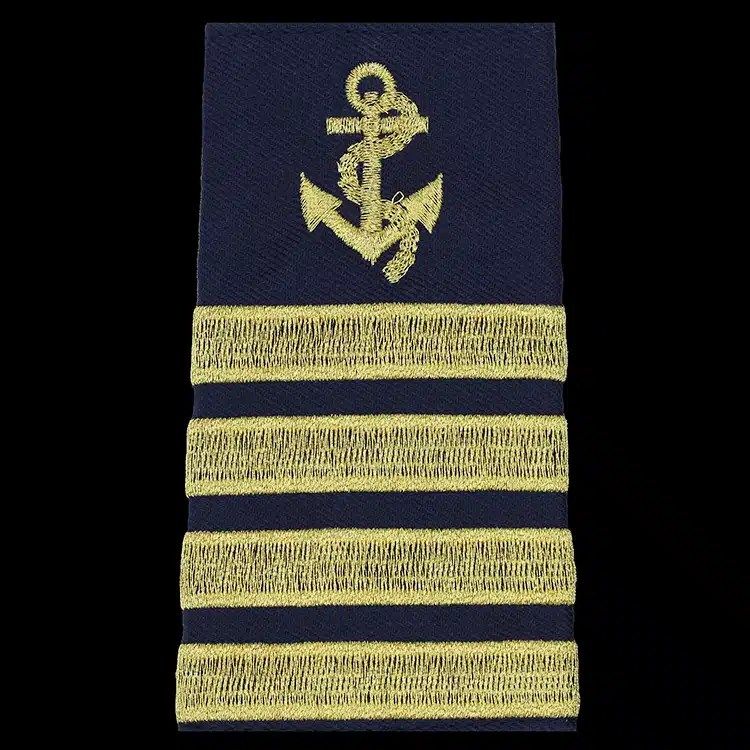
Yacht club patches usually start from the club burgee, the small pennant that identifies a club, and turn it into an emblem for caps, crew shirts, jackets and blazers. A burgee-shaped embroidered patch about 3 in (76 mm) wide suits caps and polos, a hand embroidered bullion crest suits the club blazer, and embroidered epaulet covers mark flag officers on uniform shirts. Keep the burgee's proportions and colours exact, since members know their flag well.
This guide covers sailing clubs, power squadrons, yacht clubs and marina associations: how to adapt a burgee for embroidery, which construction fits each garment, and the other club items that share the same artwork.
Turning a burgee into a patch
A burgee is typically a triangular pennant, sometimes swallow-tailed, carrying the club's colours and a simple device such as a star, anchor, cross or initials. Because it was designed to be recognized from across the water, it usually translates well into thread. The challenges are the shape and the proportions.
- Send the official burgee artwork or specification from the club, not a photo of a faded flag, so colours and proportions match.
- Decide whether the patch is the burgee alone or the burgee on a background, such as a circle or shield with the club name.
- Long, narrow points are hard to finish cleanly; a heat cut edge follows them better than a merrowed one.
- Give the patch enough height. A burgee shape is wide and short, so the device can get small if you size by width alone.
- Add the club name below or around the burgee if the patch will be worn by people outside the club.
Two layouts cover most clubs. The first is a die cut patch in the burgee's outline, which looks like a small flag. The second puts the burgee inside a round or oval patch with the club name and founding year around the edge, which gives more room for lettering and works with a classic merrowed border.
If your club has updated its burgee over the years, settle which version is current before you order. Long-standing members sometimes prefer the older flag, and a club patch that matches the burgee flying from members' boats avoids awkward questions at the next meeting. The flag committee or the club secretary is usually the right person to confirm.
Choosing a construction for each garment
Clubs often need two or three versions of the same emblem for different garments. The table gives a starting point.
| Garment | Construction | Typical size |
|---|---|---|
| Club blazer pocket | Hand embroidered bullion | About 3 to 3.5 in tall |
| Cap front | Embroidered or woven | About 2 to 3 in wide |
| Polo or crew shirt chest | Woven or embroidered | About 3 in wide |
| Foul weather jacket | Embroidered, sew-on | 3 to 4 in wide |
| Regatta souvenir | Embroidered or sublimated | 3 to 4 in wide |
The bullion blazer crest is the traditional choice for formal club events. Metallic gold and silver wire is worked by hand over padding, giving a raised, rich crest that reads as formal. Our bullion patches guide covers how they are made and how to wear them. For everyday caps and shirts, an embroidered patch is durable and less formal, and woven suits fine detail on lightweight crew shirts.
Patches that survive salt, sun and spray
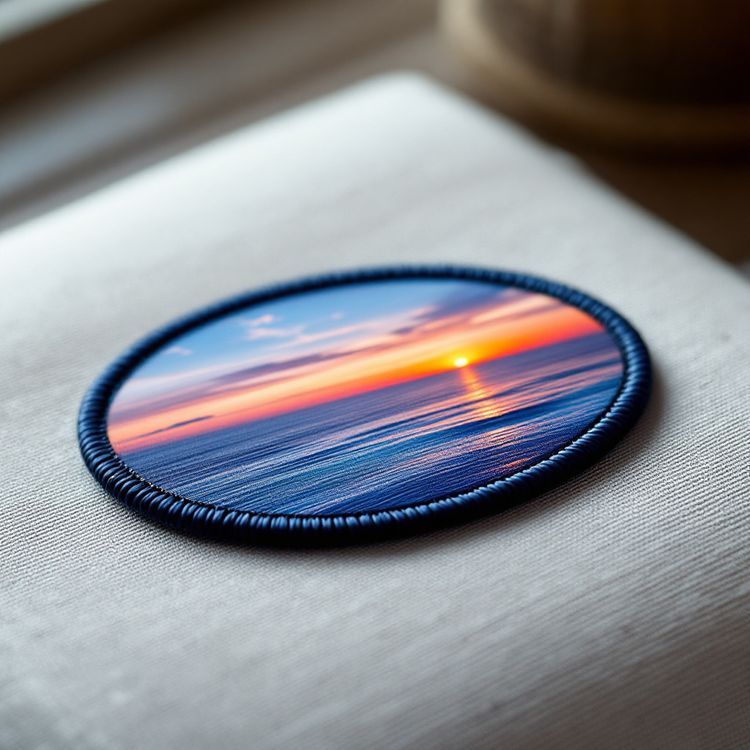
On the water, patches face UV, salt spray and repeated washing. A few choices help them last:
- Sew-on backing on anything that gets wet often. Heat-activated adhesive can loosen with repeated soaking.
- Hook-and-loop on foul weather gear, so the patch comes off before the jacket goes through a rinse cycle.
- Rinse in fresh water after a salty day, and dry out of direct sun when possible.
- Bullion crests are for blazers, not boat shoes and deck work; metallic wire tarnishes if left damp.
Crew shirts and regatta patches
For racing crews, the club patch is often joined by a boat or crew patch. A crew patch usually shows the boat name, sail number or a simple graphic of the hull, and it sits on the chest or sleeve of matching crew shirts. Woven construction suits these well: crew shirts are lightweight technical fabrics, and a thin woven patch sits flatter than heavy embroidery.
Regattas and series are a natural fit for event patches. A regatta patch commonly carries the event name, the year, the host club burgee and a stylized sail or mark buoy. Competitors and volunteers collect them, and an annual regatta that keeps the same shape each year builds a series that sailors look for. Our guide to event patches covers planning dated designs.
Junior sailing programs often add a patch for each level a young sailor completes, which works much like scout badges and gives instructors a simple way to mark progress through the summer.
Flag officer epaulets and pins
Many yacht clubs recognize their flag officers, such as the commodore, vice commodore and rear commodore, with insignia on uniform shirts and blazers. Customs vary from club to club, so follow your own club's tradition and any guidance from the association it belongs to. Common items include:
- Embroidered epaulet covers that slide over the shoulder straps of a white uniform shirt, with stripes, stars or the club device in gold thread. Epaulet covers carry no setup or digitizing fees.
- Lapel pins of the burgee for members and guests, often given at the start of the season.
- Challenge coins or medals for outgoing commodores and race committee volunteers.
Our guide to epaulet covers explains sizing and how covers fit over shoulder boards.
Bag tags, pins and regatta awards
The same burgee artwork can carry across most of a club's merchandise, keeping the identity consistent:
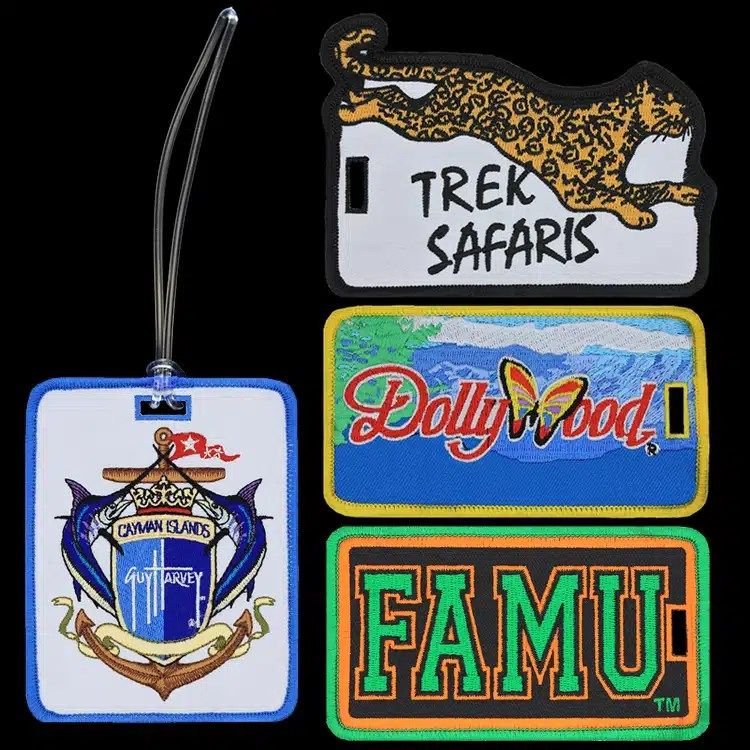
- Embroidered luggage tags for sail bags and duffels, useful when a regatta fleet's bags all look alike.
- Burgee lapel pins in hard or soft enamel, which hold the flag colours cleanly.
- Medals for regatta and series winners, often with the burgee on the face and the event name on a printed ribbon.
- Lanyards for regatta volunteers and race committee staff.
How to order for your club
Custom minimums start from 100 pieces and vary by product, confirmed on the quote. Many clubs order patches for two or three seasons at once and pair them with new member packets. Send the burgee artwork (AI, EPS or PDF is cleanest; a PNG or a photo works to start), the sizes, quantities and backing, and the date you need them. The quote comes back in 2 to 3 business days, the proof usually 1 to 3 business days after artwork, and production runs about 3 to 4 weeks after you approve the proof in writing. Reorders skip the setup, so restocking the club shop is simple.
When you are ready, send the burgee for a quote.