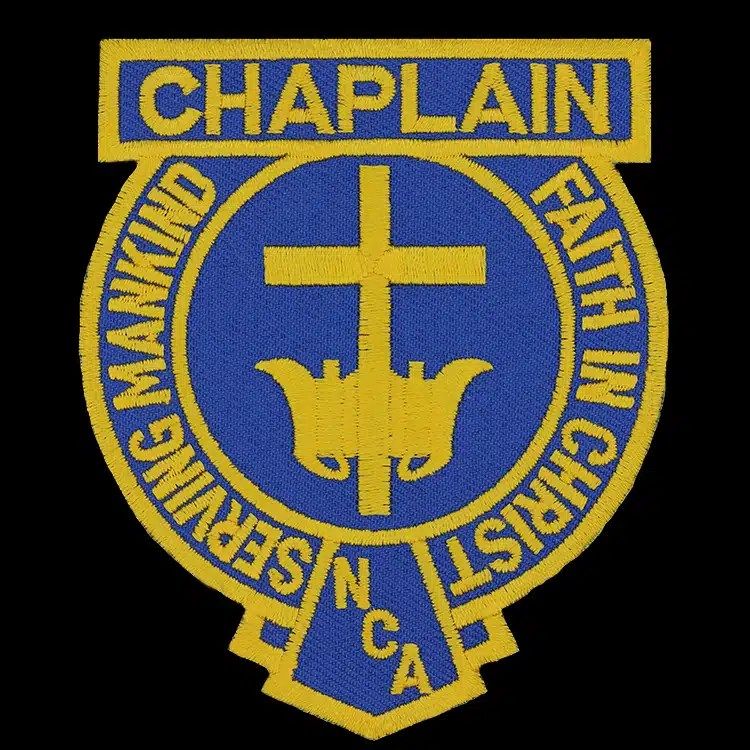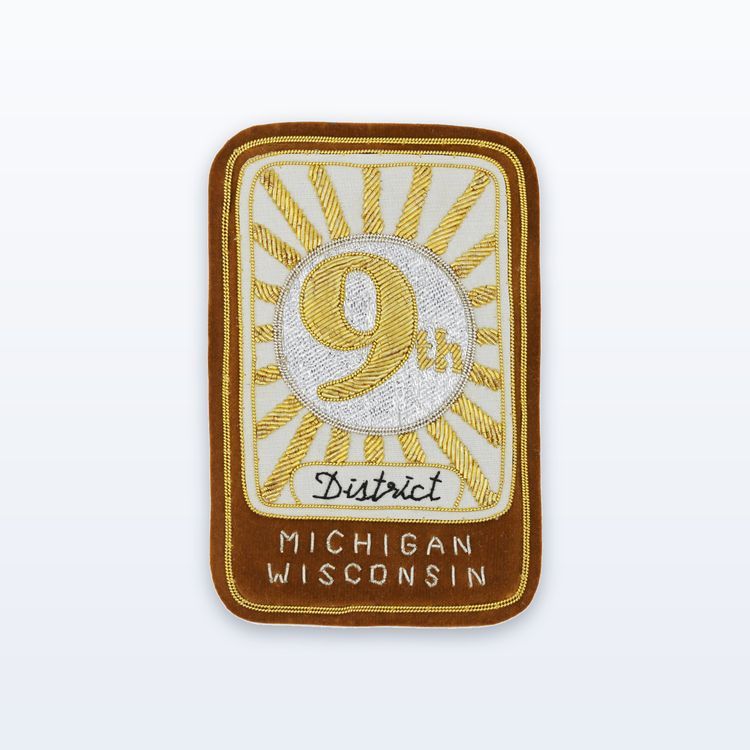
Bullion patches are hand embroidered with fine coiled metallic wire, usually gold or silver, over a padded design on a velvet or twill base. The wire catches the light and stands up in real relief, which gives them a formal, ceremonial look that machine embroidery cannot match. They are the traditional choice for blazer crests, dress uniform insignia, lodge regalia and club emblems that will be worn on special occasions rather than washed every week.
This guide covers how bullion patches are made, where they fit best, how to design for wire, and how to care for them so they keep their shine.
What bullion embroidery is
Bullion, sometimes called French bullion or bullion wire, is a very fine metallic wire wound into a tight spring-like coil. Embroiderers cut the coil into short lengths, thread them, and lay them side by side over a raised padding, usually felt or card, stitched onto the base fabric. Laid close together, the coils form a dense, glittering surface with a pronounced raised profile.
Different wire finishes create different textures. Smooth wire gives a bright, polished shine. Crinkled or faceted wire sparkles more and reads as a rich, granular surface. Many crests mix the two, using bright wire on lettering and borders and textured wire on fills, so the design has contrast even in a single metal colour.
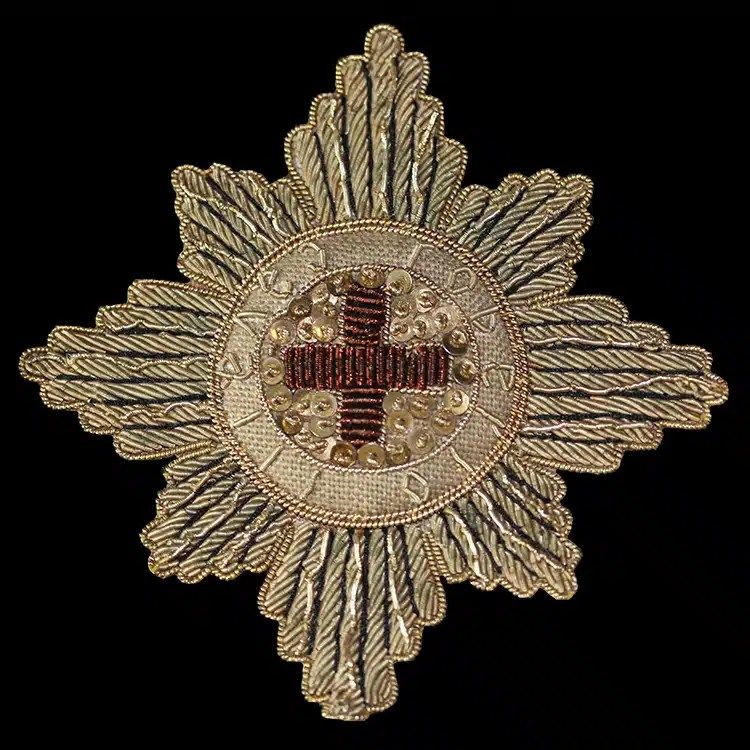
Bullion work can also include coloured silk or rayon thread, sequins and set stones for accents, which is common on ceremonial badges.
Where bullion patches fit
Because they are hand made and delicate compared with machine embroidery, bullion patches belong on garments that are worn for occasions and looked after.
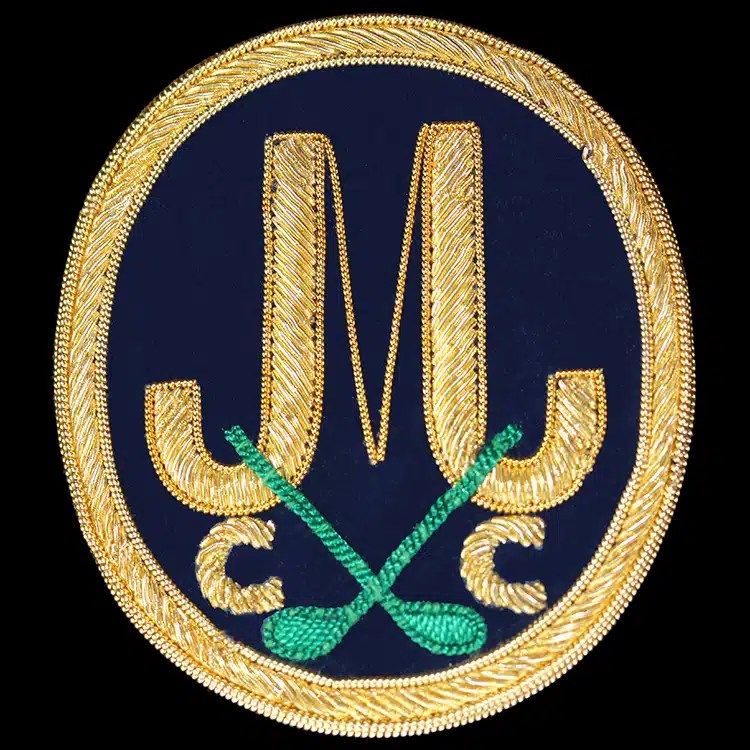
- Blazer crests. Schools, golf and country clubs, yacht clubs, alumni groups and teams use a bullion crest on the breast pocket of a blazer. It is the classic use.
- Dress uniforms. Ceremonial insignia, cap badges and shoulder emblems for honor guards, bands and formal units.
- Lodges and fraternal orders. Regalia, aprons, collars and banners often feature bullion symbols.
- Awards and recognition. A framed bullion crest makes a lasting retirement or service gift.
- Church and ministry vestments. Bullion crosses and emblems suit formal liturgical wear.
For a school or college program, a common approach is a bullion crest for the formal blazer and an embroidered version of the same crest for jackets, bags and athletic wear.
Bullion vs machine embroidered patches
| Factor | Hand embroidered bullion | Machine embroidered |
|---|---|---|
| Method | Metallic wire laid by hand over padding | Thread stitched by machine |
| Look | Deep relief, metallic shine | Flatter texture, thread sheen |
| Fine detail | Bold, simplified forms | More detail at small sizes |
| Unit to unit | Small hand made variations | Very consistent |
| Washing | Not machine washable | Handles regular laundering |
| Best for | Blazers, ceremony, regalia, gifts | Everyday uniforms and gear |
Many programs use both: bullion where the occasion is formal, machine embroidery where the garment is worn and washed every week.
Designing a crest for bullion
Wire is thicker and stiffer than thread, and each coil is laid by hand, so bullion designs work best when they are bold and structured.
Simplify the artwork
Heraldic shapes suit bullion well: shields, crowns, wreaths, laurels, crossed objects, stars, anchors and scrolls. Very fine lines and small lettering are harder. Mottos often work best on a scroll at a generous size, or stitched in coloured thread rather than wire.
Plan the metals and colours
Decide which parts are gold wire, which are silver, and which are coloured thread. Two metals on one crest give strong contrast, for example a silver numeral on a gold sunburst. Coloured thread fills add accents for shields and flags.
Pick the base
Velvet gives a deep, rich ground that makes the wire glow, and it is traditional on blazer crests. Twill is flatter and works for a cleaner look. Navy, black, maroon and dark green are classic grounds because they make gold and silver stand out.
Sizes and placement
Blazer crests are usually sized to fit the breast pocket, with a margin so the crest does not touch the pocket seams. As a general guide, that tends to mean a crest of around 3 in (76 mm) wide, but pockets vary, so measure the actual blazer before you set the size. Cap badges and collar insignia are much smaller, which limits how much detail the wire can carry, so keep those designs especially simple.
For dress uniforms and ceremonial wear, follow your organization's own placement rules. Military, police and lodge regalia often have set positions for each emblem, and those standards take priority over taste. If you are matching an existing crest, send a photo with a ruler next to it so we can see the true size.
Framed pieces and banners can go much larger, which gives the embroiderer more room for detail and contrast between wire textures.
Attaching and caring for bullion patches
Bullion patches are sewn on. The padded, wired surface does not bond well with heat, and an iron would damage the metal. Stitch through the base fabric around the edge, outside the wire, with a matching thread. A tailor or dry cleaner can attach a blazer crest neatly if you prefer.
Care is mostly about avoiding water, heat and abrasion:
- Do not machine wash a garment with a bullion patch. Ask your dry cleaner about the safest approach, or remove the crest before cleaning.
- Do not iron over the wire. If the garment needs pressing, press around the patch or from the reverse with a cloth.
- Store the garment on a hanger with space around it, so the wire is not crushed.
- Keep it dry. Moisture speeds up tarnishing on metallic wire.
- Brush lightly with a soft brush to remove dust, and avoid metal polish, which can harm the thread.
Like all metallic thread, bullion can dull over many years. Careful storage slows that down a great deal.
Ordering bullion patches
Send your crest artwork, the finished size, the base colour, which parts are gold, silver or coloured thread, and your quantity. Custom minimums start from 100 pieces and vary by product, so the exact number for bullion is confirmed on your quote. A photo of an existing crest is enough to start if you are matching an old design.
Quotes typically return in 2 to 3 business days. Because bullion is hand worked, ask about timing up front if you have a ceremony date, and we will tell you whether standard production of about 3 to 4 weeks after proof approval fits. Read how ordering works, then send us your crest for a quote.