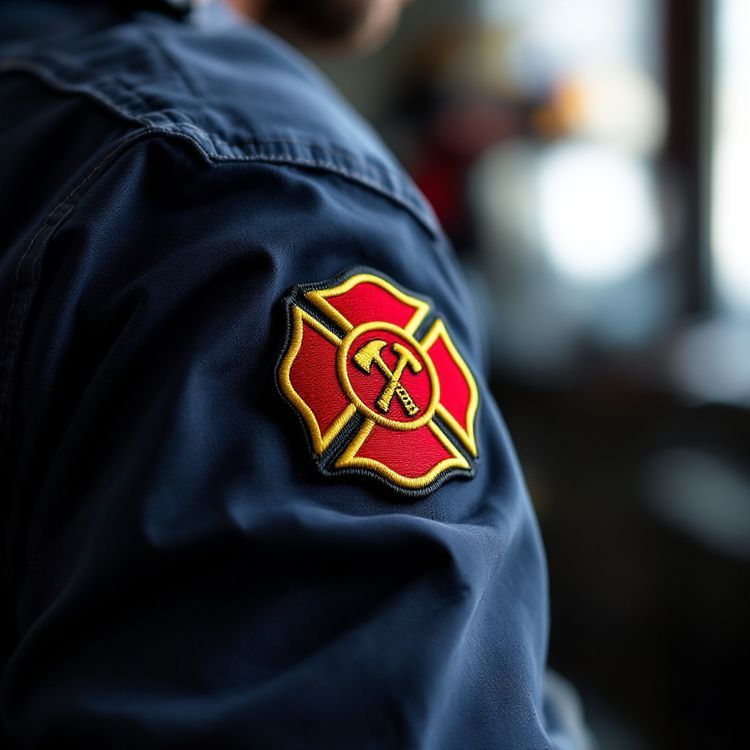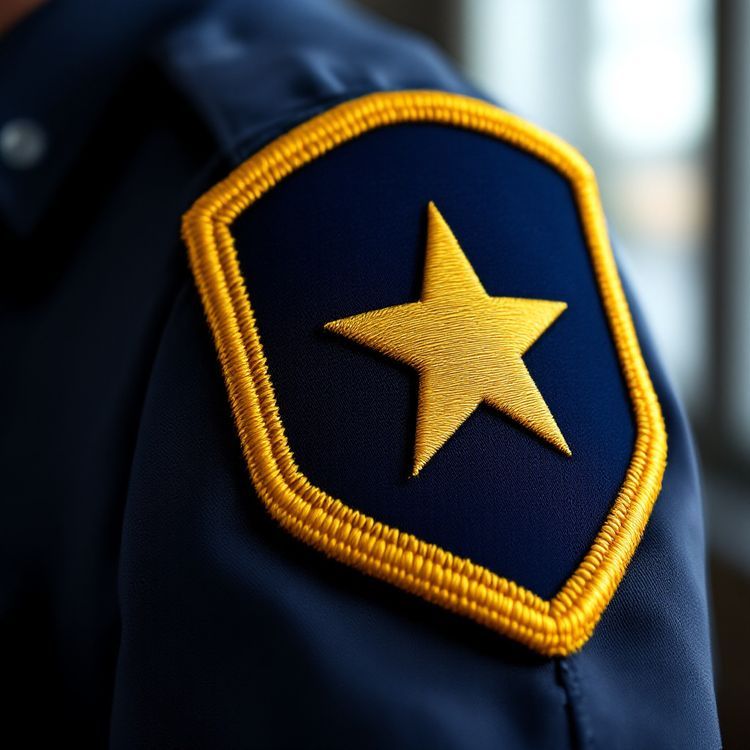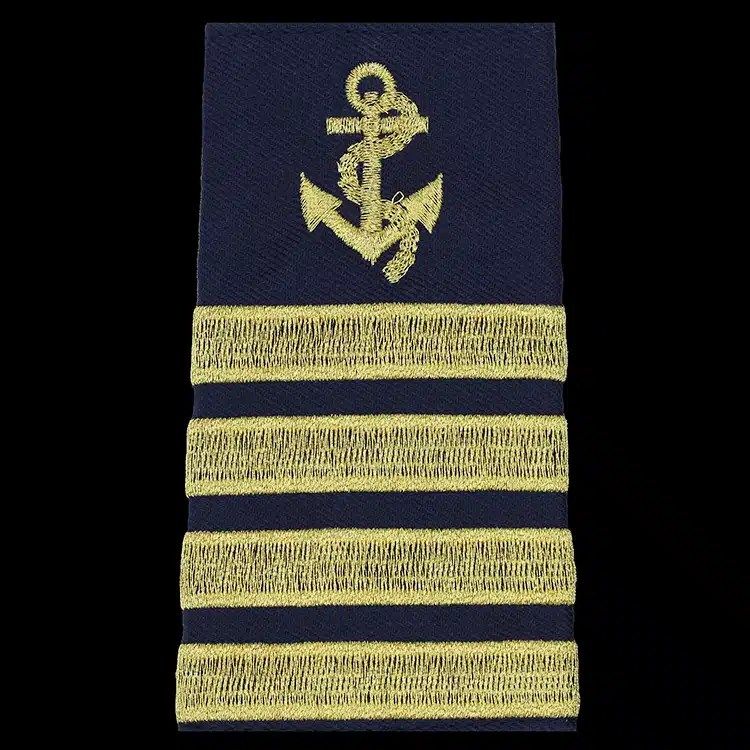
Epaulet covers are fabric sleeves embroidered with rank insignia that slide over the shoulder loops (the epaulets) on a uniform shirt or jacket. They let one uniform show any rank, since you change the cover rather than the shirt. Fire departments, EMS services, police and sheriff's offices, security companies, maritime crews and cadet programs all use them. To order, you need the loop dimensions, the insignia for each rank and the quantity per rank.
We make custom epaulet covers with no setup or digitizing fees, so even a set with many ranks stays simple to order. This guide covers how they work, how to measure, and how to plan the set.
What epaulets and epaulet covers are
An epaulet is the strap on the shoulder of a uniform shirt or jacket, buttoned at the collar end. On a dress uniform it may be a stiff shoulder board. An epaulet cover, also called a slip-on, soft shoulder board or shoulder mark, is a tube of fabric that slides over that strap. The rank insignia is embroidered on the face, so it sits right where people look for it.
Covers have a few practical advantages over sewn-on rank or pinned collar brass:
- One shirt serves any rank; a promotion means a new pair of covers, not new uniforms.
- Covers come off before laundering, which keeps metallic thread looking its best.
- Rank shows from the front, back and side, unlike collar insignia.
- No holes in the fabric, unlike pin-on brass.
Who uses epaulet covers, and what goes on them
Each service has its own conventions, and they vary between departments, so always follow your own uniform policy.
Fire and EMS
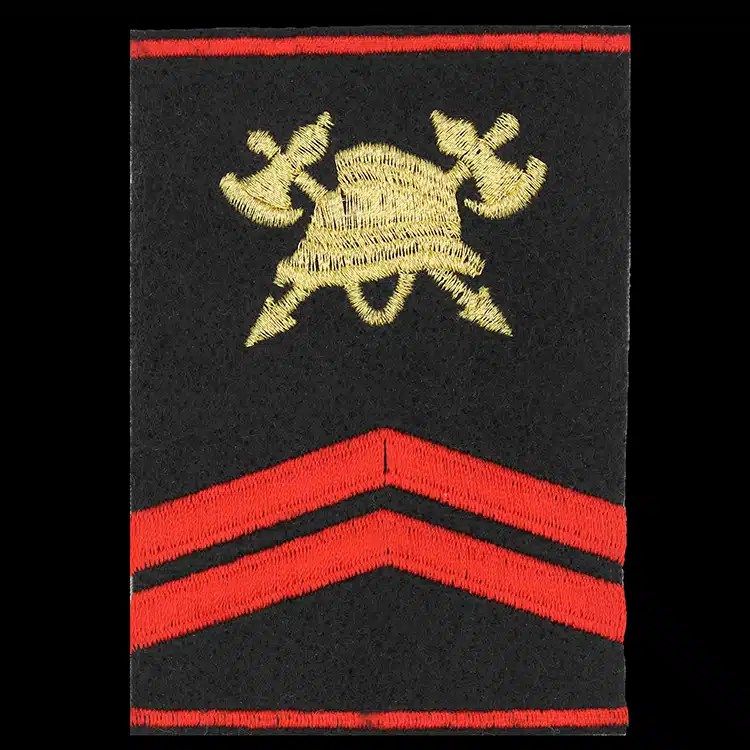
Fire officers have traditionally shown rank with speaking trumpets, often called bugles: the number of bugles and whether they are crossed indicate the rank. EMS services may use chevrons, bars, stars of life or the service's own emblem. Many covers also carry a small department crest or initials at the button end.
Police, sheriff and security
Law enforcement covers often show chevrons for sergeants and corporals, bars for lieutenants and captains, and stars for command staff. Security companies frequently use chevrons, bars or a simple supervisor marking with the company initials.
Maritime and cadet programs
Merchant marine and yacht crews commonly use gold stripes, with an anchor, star or diamond to show deck or engine department, and the number of stripes for seniority. Cadet and youth programs use their own schemes set by the organization.
If you are designing rank for an organization that does not have a scheme yet, keep it simple and consistent: one symbol type, counted up by rank, in a colour that contrasts with the cover.
How to measure for epaulet covers
Covers have to fit snugly over the loop. Too loose and they slide around; too tight and they will not go on. Measure the epaulet on the actual garment your team wears.
- Width of the loop at its widest point, usually near the shoulder seam.
- Length from the shoulder seam to the button, or to the pointed end.
- The shape of the end: pointed, square or rounded.
- Whether shirts and jackets have different loop sizes. Outerwear loops are often larger.
As a general guide, many shirt epaulets are around 2 in (51 mm) wide and 4 1/2 in to 5 1/2 in (114 to 140 mm) long, but uniform brands differ, so do not rely on a typical size. Send the measurements with your quote request, or tell us the brand and style of uniform. Our patch size guide is not about epaulets specifically, but the habit is the same: measure the real item in inches and write it down.
Cover colour, thread and design
The cover fabric is usually matched to the uniform: navy, black, white or khaki are common. Rank insignia is often stitched in gold or silver metallic thread for officers and in a contrast colour for other ranks. Metallic thread gives the classic dress look; standard thread in gold or white stays bright and is easier to keep looking good through heavy wear.
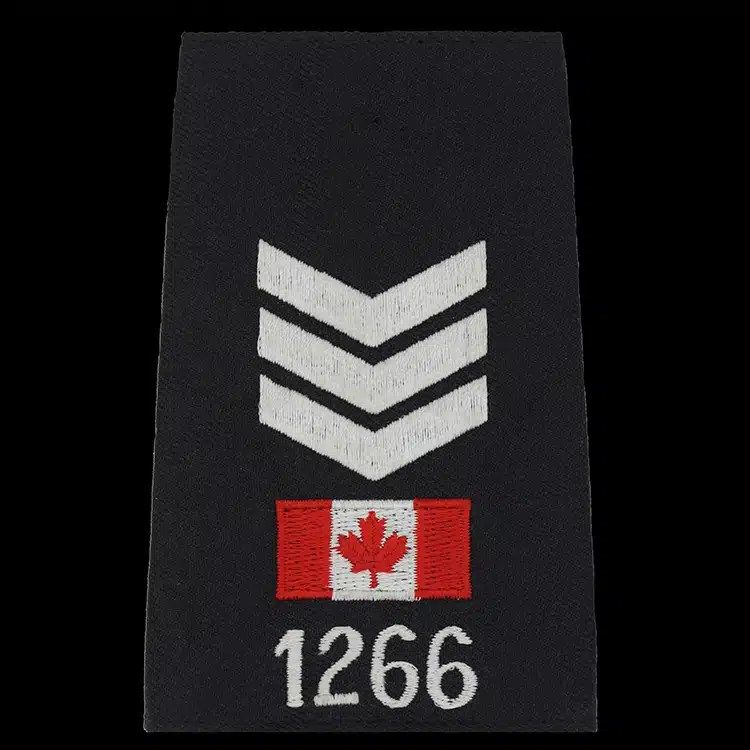
Keep insignia large enough to read from a few feet away. Chevrons and bugles need clear spacing so they do not merge, and small text such as a department name works only if it is short. The embroidery rules that apply to patches, covered in our guide to preparing artwork for embroidery, apply here as well.
Planning a set for every rank
Most departments order a complete set at once, so every rank matches. Build a simple table before you request a quote:
| Rank | Insignia | Thread colour | Pairs needed |
|---|---|---|---|
| Firefighter or officer | Department initials or crest only | White or gold | Count of members |
| Lieutenant | One bugle or one bar | Gold metallic | Count plus spares |
| Captain | Two bugles or two bars | Gold metallic | Count plus spares |
| Chief officers | Crossed bugles or stars | Gold metallic | Count plus spares |
Treat the table as a template: fill in your own department's ranks and insignia. Order a pair per person per garment type, plus a few spare pairs for promotions and new hires. Because epaulet covers carry no setup or digitizing fees with us, adding another rank later costs no setup, and a reorder is straightforward.
When the covers arrive, check the fit on a few garments before handing out the full set. Slide each cover over the loop, button the epaulet, and make sure the insignia sits straight and centered. Store spare pairs flat in a drawer or a bag, sorted by rank, so they are ready for the next promotion. Keep a note of the measurements and thread colours you ordered, which makes a matching reorder simple when new members join or a garment supplier changes.
How to order epaulet covers
See examples on our other custom products page, then send your request with the loop measurements, cover colour, insignia for each rank, thread colours and the pairs needed per rank. A photo of your current covers is enough to start if you are matching an existing set.
A quote usually comes back within 2 to 3 business days, with a proof about 1 to 3 business days after artwork. Production is about 3 to 4 weeks after you approve the proof in writing, with rush around 10 business days when the factory can hold it, confirmed on your quote. If you are updating the department's fire department patches at the same time, quoting both together keeps colours consistent.