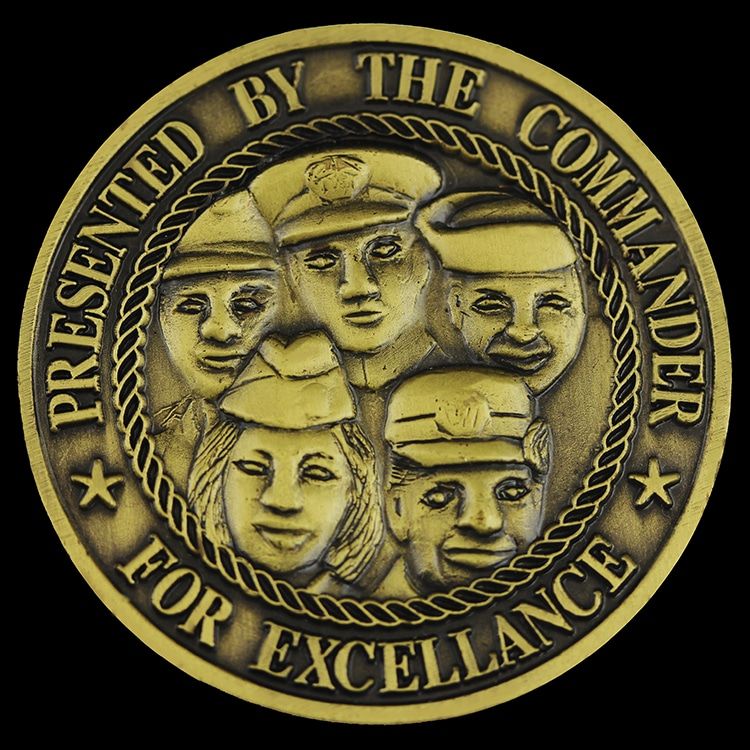
A retirement challenge coin is a custom coin made for a farewell: the organization's crest on one face, and the retiree's name, years of service and a short line of thanks on the other. Plan it about two months before the send-off. Quotes come back in 2 to 3 business days, the proof in 1 to 3 business days after artwork, and production runs about 3 to 4 weeks after you approve the proof, plus shipping (all typical, confirmed on your quote). Because custom coins usually start from 100 pieces, most groups design one coin that serves a whole retirement program or the whole party, not a single piece.
This guide covers what to put on a retirement coin, how to make the minimum work for you, which size and finish to choose, and how to present it so it means something on the day.
Why a coin works as a farewell gift
Retirement gifts tend to fall into two groups: things that get used up and things that get put in a drawer. A coin avoids both. It is small enough to carry, heavy enough to feel like an object of weight, and personal enough to sit in a display case for decades. In departments, units and companies that already use coins for recognition, a retirement coin also closes the circle: the last coin of a career, handed over by the people who worked alongside the retiree.
A coin also travels well beyond the retiree. Coworkers who attend the send-off often want one as a keepsake of the person and the era they shared, which is one more reason the 100 piece minimum is rarely a problem.
One retiree, a class of retirees, or a standing program
Decide early who the coin is for, because it changes the design.
A coin for one person's send-off
The retiree's name and dates go on the back, and coins are handed to the guest of honor plus everyone at the party. This suits a long-serving chief, a founder or a senior officer whose retirement is a large event. Plan for the retiree to receive several coins, since they often want to hand some out themselves.
A coin for the year's retirees
Many organizations design one coin per year, for example "Retired 2027" with the crest, and present it to everyone who retires that year. One order covers a dozen farewells, and each coin still marks a specific moment.
A standing retirement coin
A design with no date or name, kept in stock and presented at every retirement. It is the simplest program to run, and reorders skip the setup because the mold stays on file. The trade-off is that it is less personal, so pair it with a card, a framed letter or a name plate on the display.
What to put on each face
A challenge coin has two faces and an edge, and the strongest retirement coins give each face one job. As a rule of thumb, keep the front about the organization and the back about the person.
| Element | Where it usually goes | Tip |
|---|---|---|
| Organization crest or logo | Front, center | Simplify fine lines so they read at coin size |
| Retiree name and rank or title | Back, around the rim or center | Check the spelling with the retiree's family or HR |
| Years of service | Back, below the name | Use a range such as 1994 to 2026, or a total such as 32 years |
| Motto or thank-you line | Back or the rim of the front | Keep it to a few words |
| Badge or unit number | Either face, small | Use only numbers the retiree is happy to share |
| Personal symbol | Back, as artwork | A hobby, a station, a ship or a vehicle they were known for |
Resist the urge to fit an entire career onto two faces. Lettering needs room to stay crisp in metal, and a back crowded with every assignment ends up harder to read than one strong name and date line. Our challenge coin design guide goes deeper on layout, relief and enamel colours.
Size, construction and finish
Retirement coins usually run a little larger than everyday unit coins because they are presentation pieces. As a general guide, about 1 3/4 in (44 mm) suits a coin meant to be carried, and 2 in (51 mm) or larger suits one meant to be displayed. Our guide to challenge coin sizes compares the common diameters.
The two constructions behave differently:
- Die struck coins are pressed between two hardened dies. They give crisp lettering and fine line work, which suits a name and a long list of dates.
- Die cast coins are poured into a mold, so they can carry deeper sculpted relief, cutouts and several height levels. They suit a portrait-like emblem, a station building or a vehicle.
For the finish, antique plating such as antique bronze or antique brass gives a heritage look that suits a long career, while polished gold or silver with enamel colour reads as celebratory. Plating, enamel colours and edge treatment are confirmed at the proof stage.
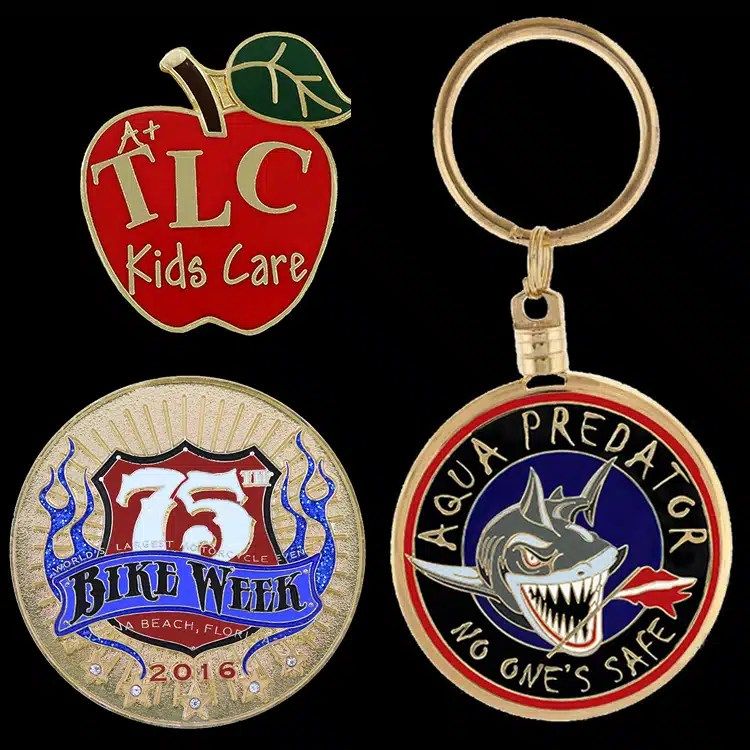
Building a farewell gift around the coin
A coin on its own is a fine gift. A few additions make it feel finished:
- A display: a stand, a case or a shadow box with the coin, a photo and a name plate. Our post on displaying challenge coins covers the options.
- A matching lapel pin made from the same crest, so the retiree has something to wear at future reunions. See our custom lapel pins.
- A short letter signed by the team, tucked into the case or the card.
- Extra coins for the retiree to hand out to family and the people who mattered most in their career.
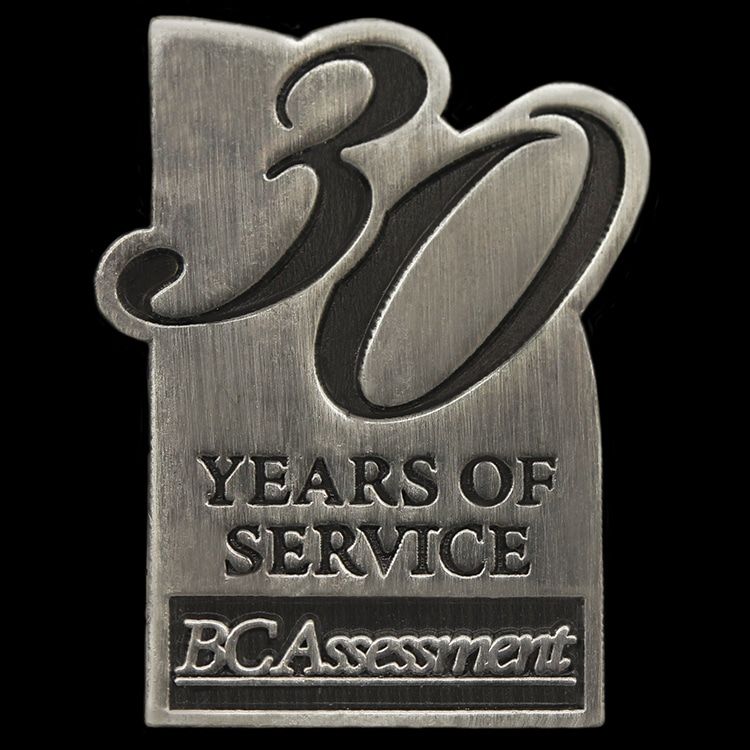
If you already run a service award program, the retirement coin can sit at the top of it. Our guide to service award pins shows how milestone pieces build toward a final award.
A timeline that works back from the party
Retirement dates are known months ahead, yet the coin is often ordered last. Work backward from the send-off:
- About eight weeks out: gather the crest, the retiree's details and a rough sketch, then request a quote.
- About seven weeks out: review the proof with one or two people who know the retiree well. Check every name, rank and date.
- Approve the proof in writing. Nothing runs until you do.
- About three to four weeks of production, then UPS shipping from Holly Hill, Florida.
- Leave a week of buffer before the event for delays and for building the display.
If the date is close, ask about rush. Around 10 business days is sometimes possible when the factory can hold it, confirmed on your quote.
Presenting the coin on the day
Coins are traditionally passed hand to hand in a handshake, a custom many departments and units still follow at retirements. The senior person present usually makes the presentation, says a few words about the career, and hands over the coin. Guests can then receive their coins at the door or with the program.
If your organization has its own coin customs, such as a challenge at the bar or a rule about carrying the coin, the retirement is a good moment to explain them to family members who may not know. Our article on challenge coin etiquette covers the common traditions.
When you are ready, send the crest, the retiree's details and your party date and we will come back with a quote for custom challenge coins built around that date.