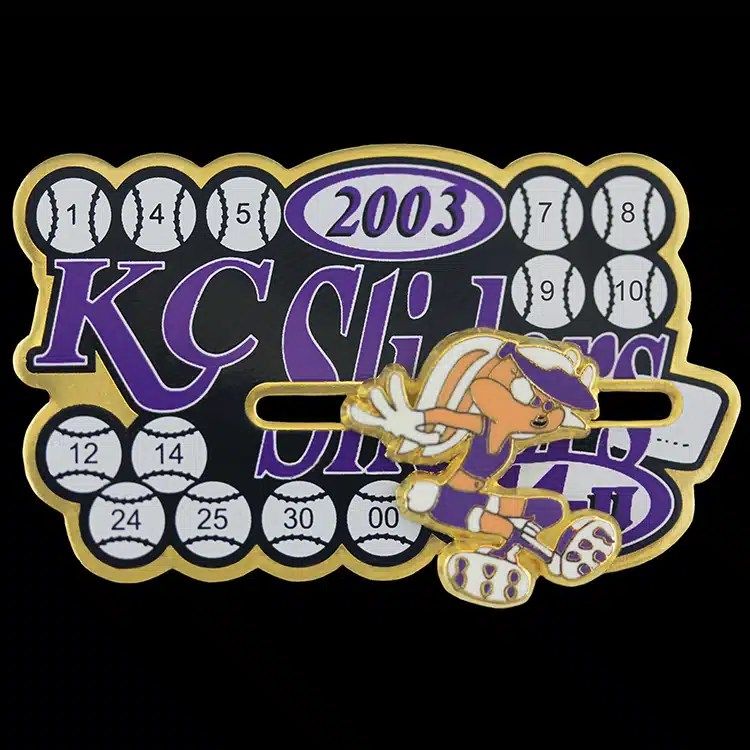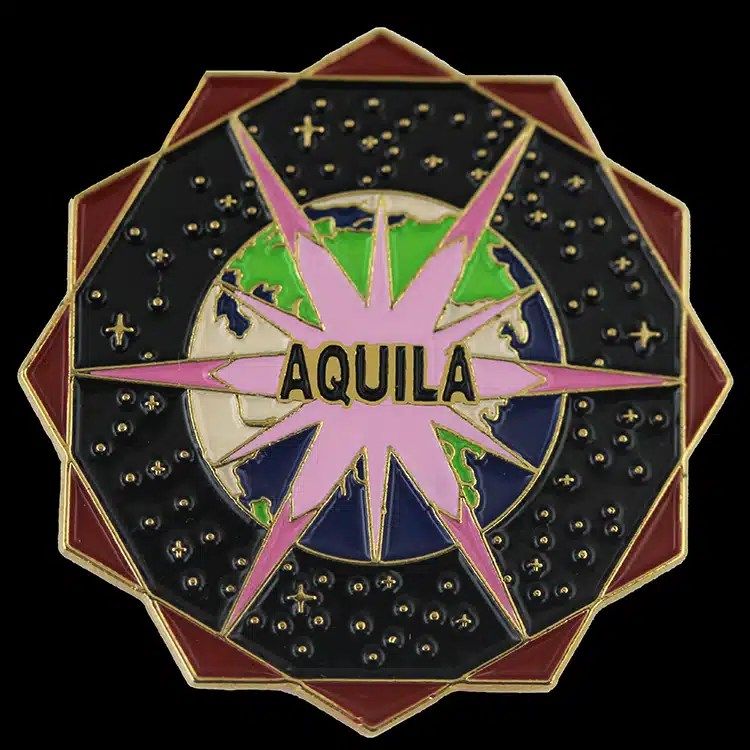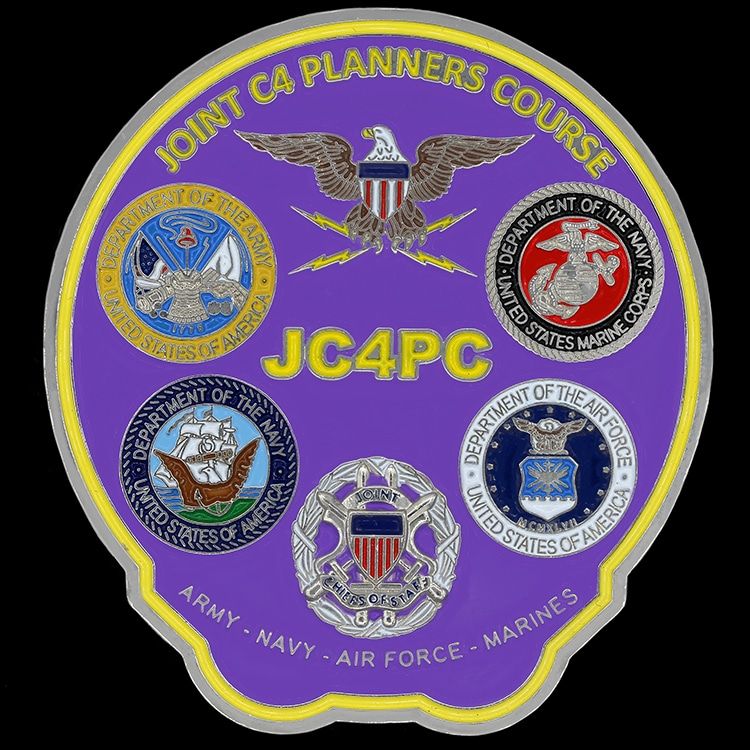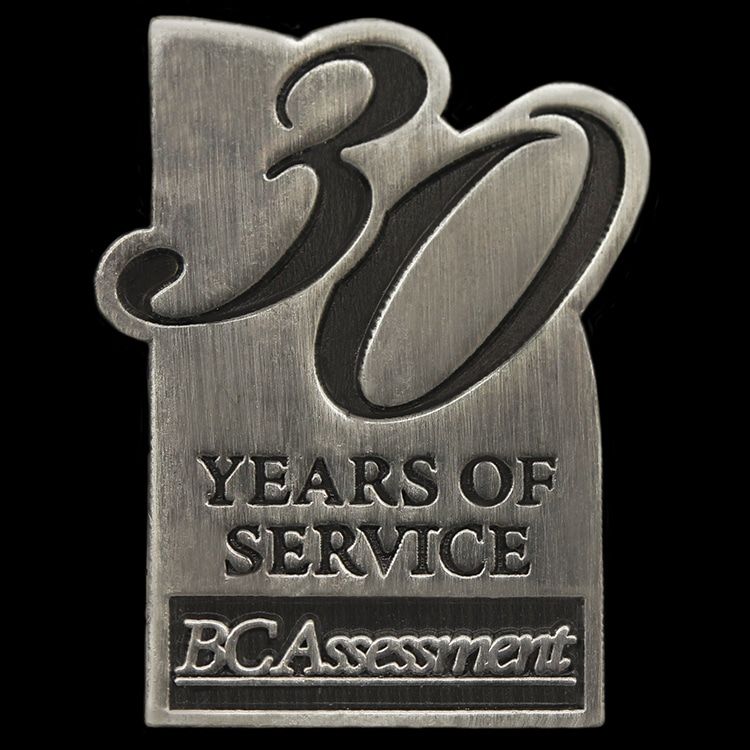
Service award pins are small custom lapel pins given to employees at set milestones, usually 1, 5, 10, 15, 20 and 25 years. The cleanest way to run a program is one shared design with the milestone shown by a numeral, a plating step or an enamel colour, made as a die struck or hard enamel pin around 3/4 in (19 mm) with a secure clutch back. Decide the tiers first, then the look, then how many of each to keep in stock.
This guide is for HR teams, office managers and anyone setting up or refreshing a years-of-service pin program. It covers how to structure the milestones, which pin construction suits recognition, how to show each step, and what to send us so the quote comes back accurate.
Set the milestones before the design
The design depends on how many steps the program has, so start there. Most programs follow a pattern like one of these:
- Five year steps: 5, 10, 15, 20, 25 and 30 years. Simple to manage and common in larger organizations.
- Early recognition plus five year steps: 1, 3, 5, 10, 15, 20 and 25 years. Recognizes people early, when turnover is highest.
- Round numbers only: 10, 20 and 25 years, for smaller teams or programs that pair the pin with a bigger award.
Count the tiers, then look at your headcount by hire date. That tells you how many people reach each milestone in a typical year, which drives how many of each pin you order. A 1 year pin may go to dozens of people a year, while a 25 year pin may go to two or three.
Write down what else happens at each milestone. If the 10 year step also comes with a certificate, a plaque or a corporate challenge coin, the pin can stay small and simple. If the pin is the whole award, it can carry a little more weight and finish.
Choosing a pin construction for recognition
Recognition pins are worn for years and seen up close, so most programs choose one of the metal constructions on our custom lapel pins page rather than a printed pin.
| Construction | Look | Suits service awards when |
|---|---|---|
| Die struck, no enamel | Plated metal only, raised and recessed detail | You want a classic, formal pin and the numeral carries the meaning |
| Hard enamel (cloisonne) | Smooth, glass like enamel flush with the metal | The pin uses brand colours and must resist chipping over years of wear |
| Die struck soft enamel | Enamel set below raised metal lines, textured | You want colour at a lower cost than hard enamel |
| Photo etched | Fine lettering filled with soft enamel under epoxy | The logo has small text or fine detail |
| Offset printed | Full colour print under a clear dome | The logo relies on a gradient or photo |
For a pin that will be worn on a jacket lapel or a lanyard for a decade, die struck and hard enamel are the usual choices. Our post on soft vs hard enamel pins explains the enamel trade-off in more detail.

Four ways to show each milestone
A good program looks like a family: anyone can tell the pins belong together, and anyone can tell a 20 year pin from a 5 year pin across a room. These are the common ways to build that step.
A numeral on a shared design
The base emblem stays the same and the year number changes. It is the clearest system and the easiest to explain. Keep the numeral large and bold so it reads at pin size, and place it in the same spot on every tier. Each different numeral is a different design, so each one needs its own die. The quote shows that clearly.
A plating step
The same pin is run in different metal finishes, for example silver for early milestones and gold for later ones, with antique or polished finishes adding more variety. Plating is available in gold, silver, nickel and copper, and can be antiqued, sandblasted or polished. On its own, plating is subtle, so most programs combine it with a numeral.
An enamel colour step
The outline stays the same while the enamel colour changes by tier, for example blue, then green, then red. Colour is easy to see on a lapel, but agree the colour order in writing so future reorders follow the same sequence.
A dangle or add-on
One base pin is worn every year, and a small dangling bar or charm marks the milestone. Danglers are a specialty construction, so describe what you have in mind on the quote request and we confirm what the factory can do.
Size, finish and the back
Service pins are meant to be worn, not displayed, so keep them modest. As a general guide, recognition pins often land around 5/8 to 1 in (16 to 25 mm). Smaller pins sit discreetly on a lapel or a collar; larger ones give room for a logo, a numeral and a short line of text. If the pin carries lettering such as "Years of Service", go toward the larger end so the letters stay readable.
The back matters more than people expect, because a lost pin is a lost award. A butterfly clutch is the standard. A rubber clutch is more comfortable and less likely to scratch. A deluxe locking clutch holds tighter for pins worn on uniforms or lanyards. A magnetic back avoids pinholes on fine fabrics. Our guide to lapel pin backs compares each one.
How many of each tier to order
Custom pin minimums start from 100 pieces and are set per job, confirmed on your quote. That is easy to reach for a 1 or 5 year pin, and more than you need in a single year for a 25 year pin. Pins do not wear out on a shelf, so most programs treat the order as a multi-year supply.
- Pull hire dates and count how many people reach each milestone in each of the next few years.
- Order the busy tiers for one to two years of awards, plus spares for replacements.
- Order the senior tiers for several years at once, since those milestones come up rarely.
- Ask for quotes at two or three quantities per tier so you can see the price breaks.
- Store the pins with the tier and the reorder details on the box.
Reorders skip setup, which matters for a program that runs for years. Keep the proof and the order details on file so the next run matches the first.
Presenting the pin so it means something
A pin handed over in an envelope is quickly forgotten. A few habits make it part of the culture instead:
- Present it in person. A manager or senior leader handing the pin over at a team meeting matters more than the pin itself.
- Say what the years included. One or two specific contributions, mentioned out loud, turn a calendar milestone into recognition.
- Make the pins visible. If leaders wear their own service pins, others follow.
- Ask about packaging. A small box or a backing card makes the pin feel like an award. Packaging affects cost and schedule, so mention it on the quote.
Plan the timing too. Production typically runs about 3 to 4 weeks after you approve the proof, so order well ahead of the annual awards event rather than the week before.
What to send for a service pin quote
- Your logo, ideally as AI, EPS or PDF. A PNG or a photo of an existing pin is enough to start.
- The milestone tiers and how each one should differ.
- Pin size, construction, plating and enamel colours.
- The back you want on each pin.
- Quantity per tier, with one or two comparison quantities.
- Packaging, if wanted, and your in-hands date.
Send it through our quote request form. Every pin is priced from the factory price, the quote comes back within 2 to 3 business days, and nothing runs until you approve the proof in writing. If your program also includes coins, our challenge coin design guide covers the coin side.