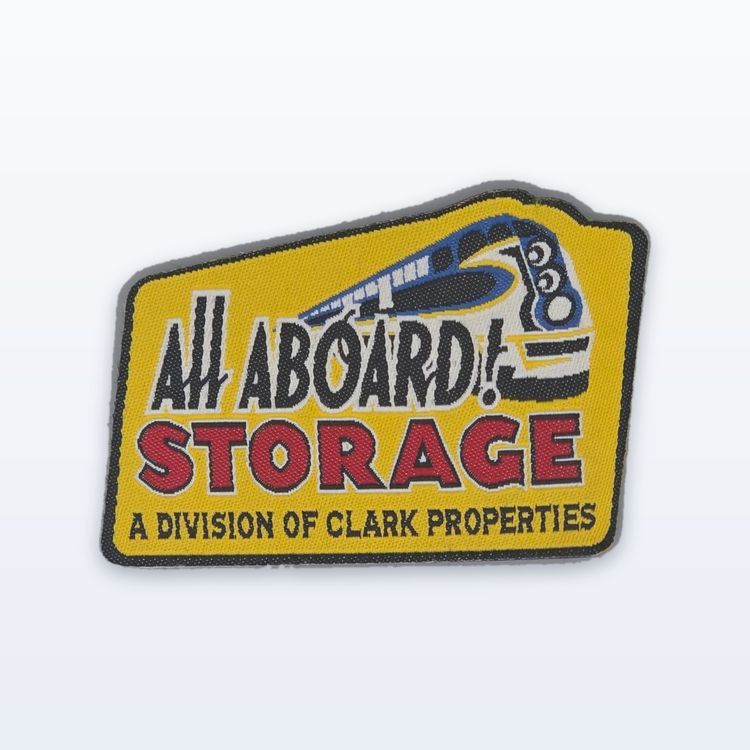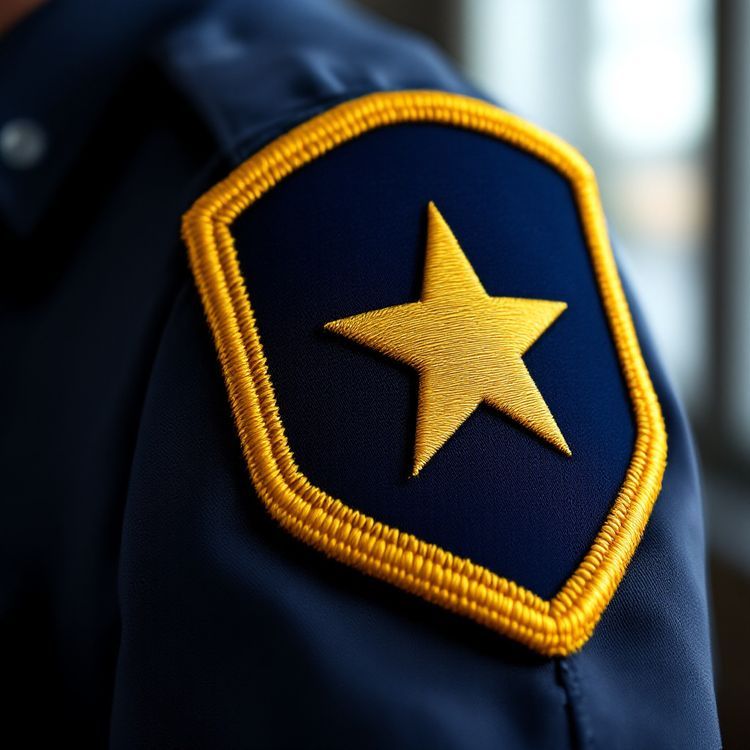
Patches are made separately and then sewn, ironed or attached with hook-and-loop to the garment. Direct embroidery stitches the logo straight into each shirt, jacket or cap. Patches usually win for uniforms: they look the same on every garment type, they can move to a new shirt when the old one wears out, and a misplaced patch can be fixed without ruining the garment. Direct embroidery suits light, flexible shirts where you want a flat logo with no edge, on garments bought and decorated in one step.
This guide compares the two on look, durability, consistency, flexibility and logistics, so you can pick the right method for your team, department or brand.
How each method works
Direct embroidery is done on the finished garment. Each shirt is hooped on an embroidery machine and the logo is stitched straight into the fabric. The garment itself is the base, so the shop needs every shirt, jacket and cap in hand before it can start.
A patch is made on its own, usually on twill, then finished with a border and a backing. You receive a box of identical patches and attach them to whatever garments you choose, whenever you need to. Patchworks USA makes custom patches, so this guide looks at the choice from the patch side, but both methods have their place.
Patches vs direct embroidery at a glance
| Factor | Patches | Direct embroidery |
|---|---|---|
| Where it is made | Separately, then attached | Stitched into each garment |
| Look | Raised badge with a finished edge | Flat logo with no edge |
| Consistency across garments | Identical on every garment type | Can vary with fabric and garment |
| Reuse | Can move to a new garment | Stays with the garment |
| Mistakes | Remove and replace the patch | The garment is usually lost |
| Inventory | Stock patches, buy garments as needed | Stock decorated garments in each size |
| Fine detail | Woven patches hold very small text | Limited by thread and garment fabric |
| Best for | Uniforms, outerwear, caps, mixed garments | Polos, light shirts, one-step orders |
Where patches win
Consistency on every garment
Direct embroidery is affected by the fabric underneath. The same logo stitched on a stretchy polo, a heavy canvas jacket and a fleece can look slightly different, and stretchy or thick fabrics are harder to stitch cleanly. A patch is always stitched on the same stable twill, so it looks identical whether it goes on a shirt sleeve, a winter coat or a bag.
Garments wear out, patches carry over
Uniform shirts get torn, stained and replaced. With patches, you buy a plain shirt and sew on a patch from stock. With direct embroidery, every replacement shirt has to go back to the embroiderer. Patches can also be removed from a retired garment and reused where policy allows.
Simpler inventory
Departments and companies often keep a box of patches and buy garments in each size only when needed. That avoids holding a stock of pre-decorated shirts in every size, many of which may never be issued.
Mistakes are recoverable
A crooked or misplaced patch can be unpicked and re-sewn. A crooked direct embroidery logo usually means a ruined garment.
Detail and construction options
Patches give you choices that direct embroidery does not: a woven patch for very fine text, chenille for varsity jackets, a merrowed border for a classic badge look, or hook-and-loop for swappable IDs.
Where direct embroidery wins
Direct embroidery has real strengths, and it is the better choice in some cases.
- Light, flexible shirts: on a thin polo or performance tee, a flat stitched logo moves with the fabric and has no edge to feel.
- A subtle look: a small chest logo with no border can look more understated than a badge.
- One-step orders: if you are buying a single batch of garments that will never be replaced, decorating them in one step is straightforward.
The trade-off is that everything is tied to the garment. Every reorder, size and replacement goes back through the embroiderer.
Common uniform scenarios
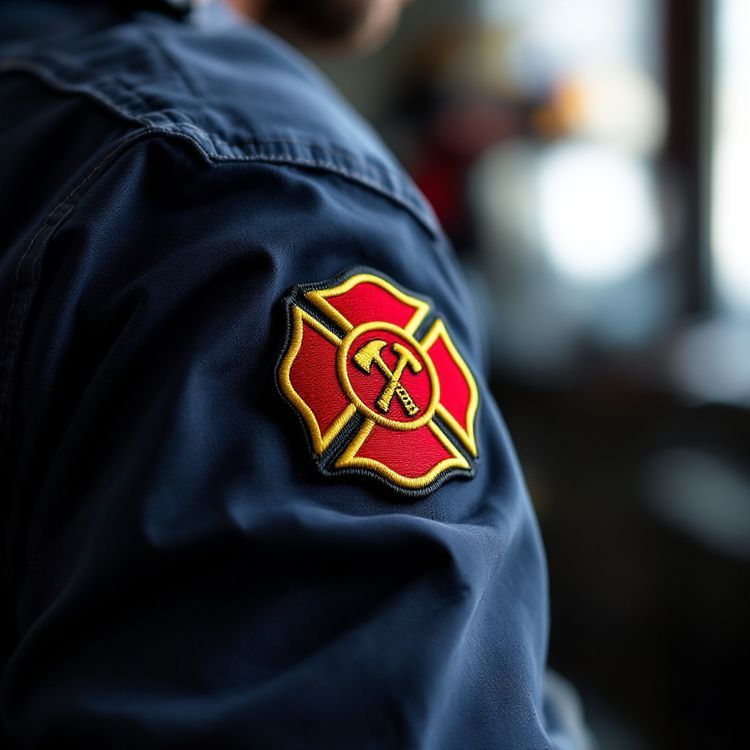
- Police, fire and EMS: shoulder patches are the standard, sewn on so they survive daily wear and washing. See our police and sheriff patch guide.
- Trades and service companies: logo and name patches on work shirts and jackets let new hires get kitted out quickly.
- Sports teams and clubs: crests and letters on jackets and bags, often chenille or tackle twill.
- Security and corrections: patches on shirts, jackets and vests, often with hook-and-loop on tactical gear.
- Corporate and hospitality: a mix of patches on outerwear and caps with direct embroidery on polos.
Our guide to patches for business uniforms walks through planning a rollout for a whole team.
Size and placement on the garment
Patches and direct embroidery are usually sized a little differently. A direct embroidered chest logo is often kept small and subtle, around 3 to 4 in (76 to 102 mm) wide, because it sits flat in the fabric. A shoulder patch on a uniform is commonly larger, around 3.5 to 4.5 in (89 to 114 mm) tall, so the emblem reads at a glance from across a room.
Placement conventions matter more than the method. Shoulder patches are typically centered on the sleeve a short distance below the shoulder seam, chest patches sit over the left chest, and name patches go over the right chest or above a pocket. Whichever method you choose, write the placement down for your team, with a measurement from a seam, so every garment comes out the same. Our patch size guide lists common sizes by position.
If your organization has a written uniform policy, check it first. Many departments specify the patch size, the sleeve and the distance from the seam, and that decides the patch dimensions for you.
Attaching patches to uniforms
How you attach the patch decides how long it lasts. For garments that go through regular or industrial washing, sew-on is the most secure option, and many uniform services or tailors will sew patches for you. Iron-on (heat seal) works well for lighter use and quick application, and it can be sewn around the edge for extra hold. Hook-and-loop suits tactical vests and gear where patches change.
If you will sew patches yourself, our guide to sewing on a patch covers hand and machine methods.
Get a quote for uniform patches
Send your artwork with the size, quantity, construction and backing, and tell us which garments the patches will go on. Quotes come back in 2 to 3 business days, and production runs about 3 to 4 weeks after proof approval (typical, confirmed on your quote). The digitizing stays on file, so when you need more patches for new hires, reorders skip setup and match the first run.