
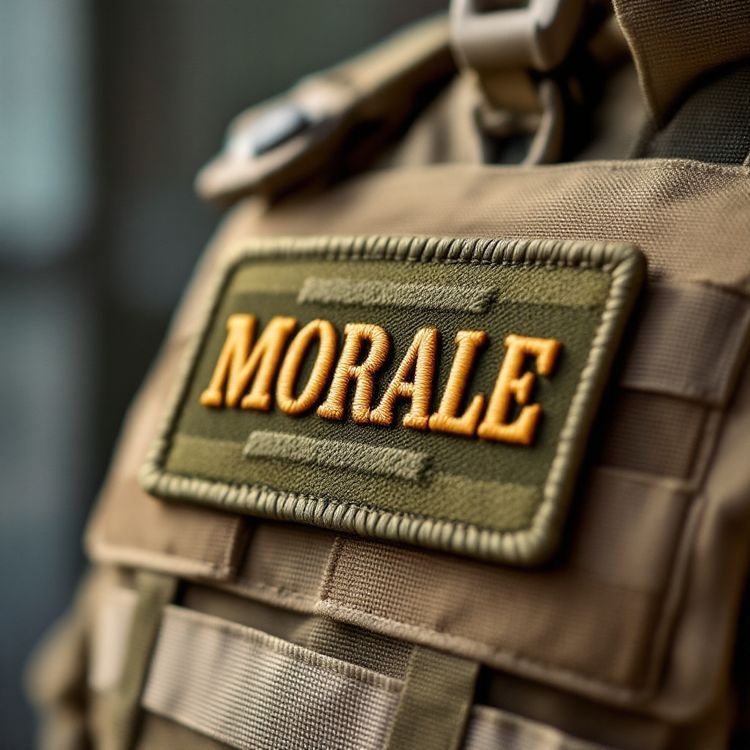
MOLLE patches are almost always hook-and-loop patches. MOLLE webbing itself is a grid of nylon straps for mounting pouches, so a patch does not grip it directly. Instead, the patch has a hook backing and goes on a loop panel: either a loop field sewn into the gear (common on plate carriers, packs and pouches) or a separate patch panel that weaves into the MOLLE webbing. So when you order, specify hook-and-loop backing and a size that fits the loop areas on your gear.
Below: how the webbing and loop fields work, common sizes, colours that suit tactical kit, and what to include in a team or unit order.
How MOLLE and PALS webbing work
MOLLE (Modular Lightweight Load-carrying Equipment) refers to the system, and PALS (Pouch Attachment Ladder System) to the webbing grid on the gear. The grid is rows of 1 in (25 mm) wide nylon webbing, typically spaced about 1 in (25 mm) apart vertically and bar tacked to the gear at intervals of about 1.5 in (38 mm). Pouches have matching straps that weave through the rows of the gear and the pouch alternately.
That is a strong system for pouches, but it offers nothing for a patch's hook backing to grab. Patches go on gear in one of three ways:
- Built-in loop field. Many plate carriers, packs and pouches have a loop panel sewn on, often across the front, on top of a pocket or on the shoulder area. This is the simplest option.
- MOLLE patch panel. A small rigid or semi-rigid panel with loop on the front and MOLLE straps on the back, which you weave into the webbing wherever you want a patch.
- Loop fabric sewn to gear. On gear without loop areas, a strip of loop can be sewn on, though this means stitching into the gear itself.
Sizes that fit tactical gear
Loop areas on gear set the practical size limit. Some common starting points:
| Patch | Common size | Where it goes |
|---|---|---|
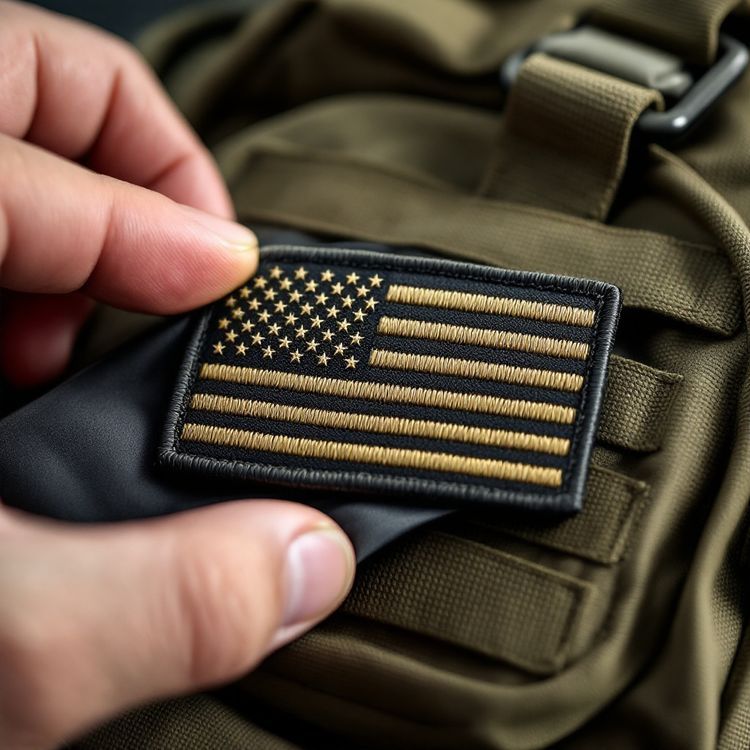
| Flag patch | About 2 in x 3 in (51 x 76 mm) or 2 in x 3.5 in (51 x 89 mm) | Shoulder, front loop field, pack top |
| Name tape | About 1 in (25 mm) tall, length to suit | Plate carrier front, pocket flap |
| Morale or unit patch | About 3 in (76 mm) on the longest side | Front loop field, pack, pouch |
| Small ID or blood type patch | About 1 in x 3 in (25 x 76 mm) or smaller | Shoulder, chest rig, helmet |
| Large back panel patch | Up to the size of the loop field | Rear panel of a carrier or pack |
Measure the loop area before you set a size. A patch that overhangs a loop field has edges with nothing to grip, and those edges catch and peel. Our post on name tapes and tactical name patches covers lettering and sizes for name strips.
Colours and subdued designs
Tactical gear comes in a narrow range of colours: black, coyote and tan shades, olive and ranger greens, gray, and camouflage patterns. Patches meant to blend in are usually subdued: two or three thread colours close to the gear colour, with contrast just high enough to read at a short distance. Patches meant to identify a team or be seen are full colour.
- Pick a base twill or thread colour that matches the gear, so the patch looks part of the kit.
- Use a slightly lighter or darker thread for lettering so it reads without standing out.
- Match the border colour to the gear for a low profile edge, or to the design for a framed look.
- Send a photo of the gear with your artwork so colours can be matched against it.
Our patch colour guide explains contrast choices in more detail.
Construction and edge for tactical use
Gear rubs against vehicles, walls, packs and other people, so durability matters more than on a shirt. Embroidered patches with a high stitch coverage are a common choice: thick, tough and good at holding a bold, simple design. Woven patches are thinner and lower profile, and hold small text such as names and call signs well. A merrowed border protects the edge on simple shapes, and a heat cut edge follows custom outlines closely.
PVC patches are also popular in tactical circles because they are rubbery and shed water. We do not make PVC patches, but an embroidered or woven patch with hook-and-loop backing covers most of the same uses for unit, team and morale designs.
Keeping hook-and-loop patches secure
Tactical patches fail mostly at the fastener. A few habits keep them on:
- Clean the hook side regularly with a stiff brush, a fine comb or a strip of tape to pull out lint, grass and hair.
- Press the patch firmly onto the loop with the flat of your hand from the center out, not just at the edges.
- Keep the patch fully inside the loop field. Edges hanging over webbing or plain fabric catch on straps and peel.
- Take patches off before washing gear, and store them face to face on a spare piece of loop so the hooks stay clean.
- Replace worn loop panels. If a fresh patch will not stay on, the loop side may be the part that is worn out.
Official insignia and unit rules
If the patches are for a military unit, law enforcement team or agency, check the rules that apply before you design. Military services set what may be worn on uniforms and issued gear in their own regulations, and many agencies have a written policy on patches on duty kit. Do not copy official insignia without authorization from the relevant authority. Morale and team patches for private wear are a separate matter, and our morale patch ideas and unit patch planning guide cover them.
Ordering patches for a team or unit
Hook-and-loop patches are normally supplied with the hook side sewn to the patch. Check that everyone's gear has a loop field or a patch panel before the patches arrive; loop strips and MOLLE patch panels are widely sold by gear suppliers. Include in your request:
- Artwork (AI, EPS or PDF is cleanest; PNG is accepted; a photo of an existing patch is enough to start).
- Size, based on the smallest loop area you will use.
- Construction, colours and gear colour.
- Quantity, and whether name tapes or other variations are needed for each person.
- Your in-hands date.
Send it all to request a quote. Quotes typically come back in 2 to 3 business days, and production takes about 3 to 4 weeks after proof approval, confirmed on your quote. Nothing runs until you approve the proof in writing.
