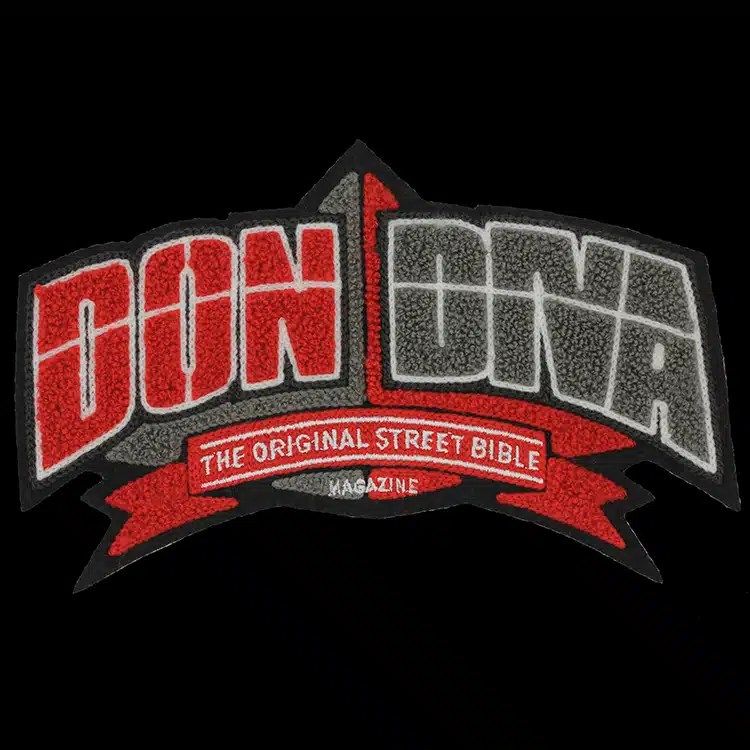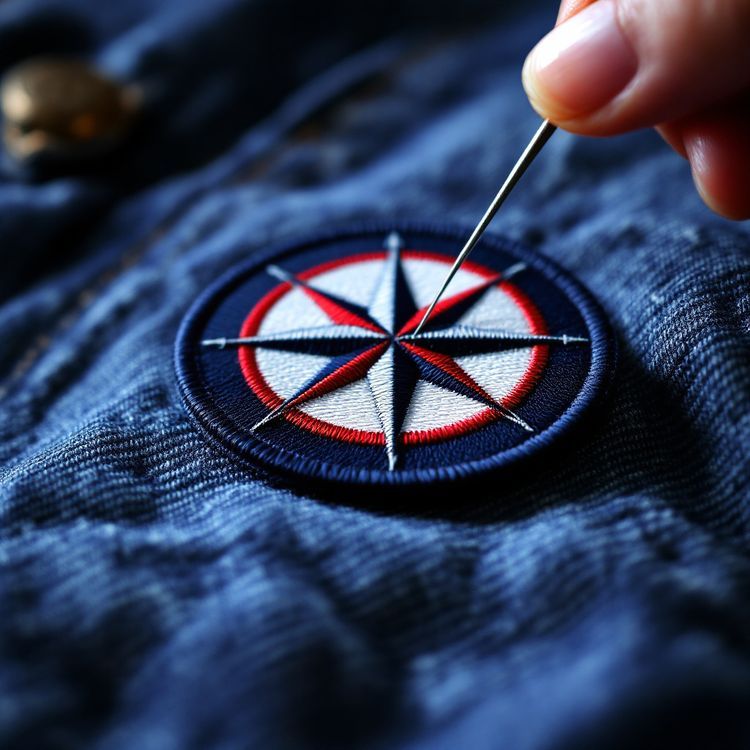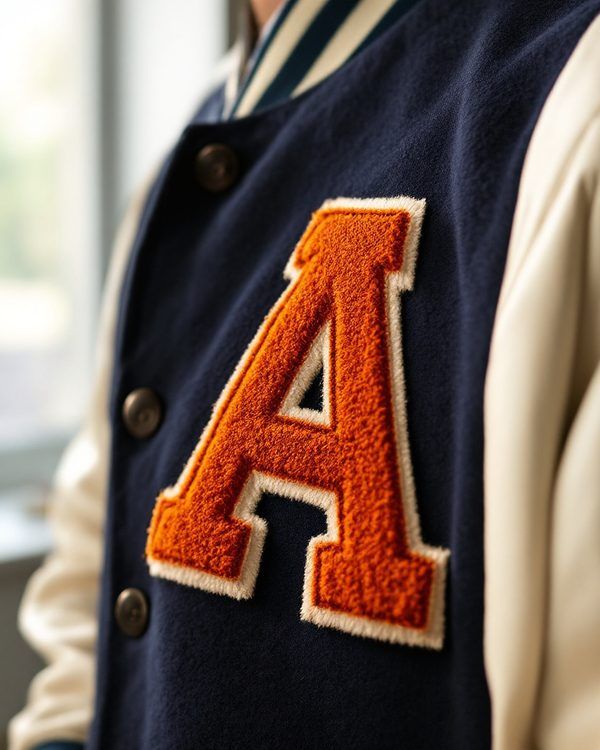
BJJ patches are almost always embroidered patches with a sew-on backing, sized for four spots on the gi: the back across the shoulders, the sleeves, the lapel or chest, and the pant legs. Sew them on rather than ironing them. A gi is washed hot and often, gets gripped and pulled every class, and heat seal glue alone will not hold up to that. Karate, judo and taekwondo schools follow the same logic, usually with the school crest on the left chest.
This guide covers placement and sizes, the competition rules to check first, which construction suits heavy gi cotton, and how to plan a patch set for an academy, from the main back patch to kids program and tournament patches.
Where patches go on a gi, and what size
A gi has a handful of flat, open areas that work for patches. The back panel between the shoulder blades is the big one and usually carries the academy name or crest. The upper sleeves take smaller logo or affiliation patches. The front of the jacket below the collar, and the thighs of the pants, take medium patches. Sizes below are a rule of thumb for an adult gi; scale down about 20 to 30 percent for kids.
| Placement | Typical use | Rough size |
|---|---|---|
| Upper back, across the shoulders | Academy name or main crest | 8 to 11 in (203 to 279 mm) wide |
| Upper sleeve or shoulder | Logo, affiliation or flag | 3 to 4 in (76 to 102 mm) |
| Front of jacket, below the lapel | Small logo or team name | 3 to 5 in (76 to 127 mm) |
| Left chest (karate, taekwondo) | School crest or style emblem | 3 to 4 in (76 to 102 mm) |
| Pant thigh | Logo, sponsor or vertical name | 3 to 6 in (76 to 152 mm) tall |
Before you fix a back patch size, measure a small and a large gi in your most common brands. The flat area across the shoulders varies more than you would expect, and a patch that suits an A3 can hang over the seams on an A0. Our patch size guide explains how to measure a placement and pick one size for a whole roster.
Check competition rules before you place patches
If your students compete, read the uniform rules of the organizations they compete under before you finalize placement. Grappling federations such as the IBJJF publish diagrams of the areas where patches are allowed and rules on how they must be attached, and an athlete can be told to change gis at check-in if a patch sits in the wrong place. Judo and taekwondo bodies have their own uniform rules, and some events limit sponsor patches.
Rules change, so treat any diagram you saw a few years ago as out of date. Download the current rule book from the federation itself, check the patch areas, the collar and the lapels, and design your set to fit inside those areas. It is much easier to plan a sleeve patch at the right size than to unpick one the night before a tournament.
Which patch construction suits a gi
Most academies choose embroidered patches on a twill base. Embroidery has the raised, textured look people associate with martial arts, it stands up to grip fighting, and it pairs well with the heavy pearl weave or gold weave cotton of a BJJ jacket. Full coverage embroidery (where thread covers the whole face) gives the most durable surface.
Woven patches are the better pick when your crest has fine lettering, a detailed animal or kanji with thin strokes. Woven is flatter and thinner, so it bends with the fabric and suits the pants and sleeves well. Satin tackle twill, where cut fabric shapes are stitched down, works for large back lettering because it covers a big area while staying lighter than solid embroidery.
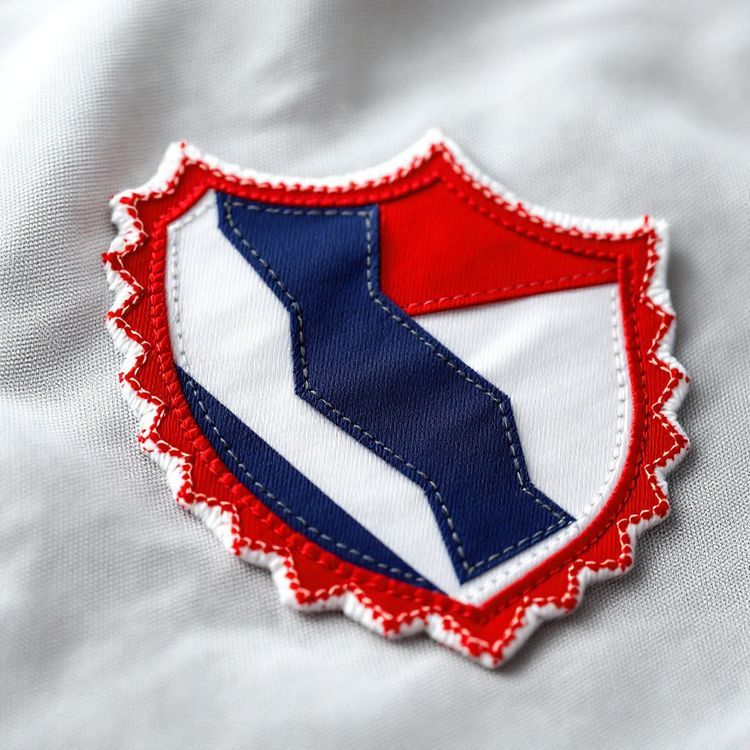
For the edge, a merrowed border suits circles, shields and rectangles and resists fraying in the wash. A heat cut edge follows a custom outline, such as a lion head or a mountain, and looks cleaner on irregular shapes. Our guide to custom patch shapes shows which outlines take which edge.
Attaching gi patches so they last
Order gi patches with a plain sew-on backing. Iron-on (heat seal) backing can hold a patch in place while you sew it, but on its own it tends to lift after repeated hot washes and grip fighting. Most gi makers also warn that a hot iron can mark or shrink the cotton.
- Wash and dry the gi once before you sew anything. Cotton gis shrink, and a patch sewn on before shrinkage can pucker.
- Pin or baste the patch in place with the gi laid flat, then try it on to check position.
- Sew close to the border with a strong polyester thread, by hand or with a heavy needle on a machine.
- On the jacket back, sew through the outer layer only where you can, so the stitches do not show inside.
- On the pants, open the side seam or turn the leg inside out so you only stitch one layer.
- Wash the gi inside out in cold or warm water and hang it to dry.
For step by step stitching, see how to sew on a patch by hand or by machine. Some academies offer students a sewing service at the front desk, which keeps placement consistent across the mat.
Planning a patch set for your academy
A patch program does more than brand a gi. It gives students something to earn, gives affiliates a shared identity, and turns into a steady line of pro shop sales. Most schools build their set in layers.
The core patches
Start with the academy back patch and one or two smaller logo patches for the sleeve and pants. These are what every student buys with a first gi, so they are worth ordering in the largest quantity. If you run several locations or have affiliate schools, a shared main patch with a small location name tab keeps the family look while letting each school show its own name.
Earned and limited patches
Once the core set is in place, add patches people earn: a competition team patch, an instructor or coach patch, a patch for completing a fundamentals program, or a limited run for an anniversary or open mat event. Kids programs often use a series of small round patches for behavior, attendance or stripe milestones, in the same spirit as scout merit patches. Keep these smaller and simpler so a 100 piece minimum still makes sense for a smaller group.
Other styles
Karate and taekwondo schools usually wear one crest on the left chest and sometimes a flag on the sleeve. Judo gis are often plainer, with a back patch or name strip only where the club or event allows it. Ask your association whether it has an official emblem you are permitted to use, and get written permission before you add a federation logo to your own patch.
Beyond the gi: medals, pins and bag tags
The same artwork can carry across the rest of your school. In-house tournaments and promotion days often use custom medals with the academy crest. Lapel pins and challenge coins make good gifts for black belt promotions or long serving instructors. Embroidered luggage tags clipped to gym bags help students find their bag in a full changing room, and they sell well in a pro shop.
Ordering patches for your school
Send your logo, ideally as an AI, EPS or PDF file (a PNG or a photo of an existing patch is enough to start), with the sizes, quantities per design, backing and the date you need them. You can try your crest in the free Patch Studio first to compare embroidered and woven at your chosen size. Then request a quote: we return pricing in 2 to 3 business days, send a proof for written approval, and production typically runs 3 to 4 weeks after you approve. Plan around tournament dates and new student intakes, and reorders later skip the setup.