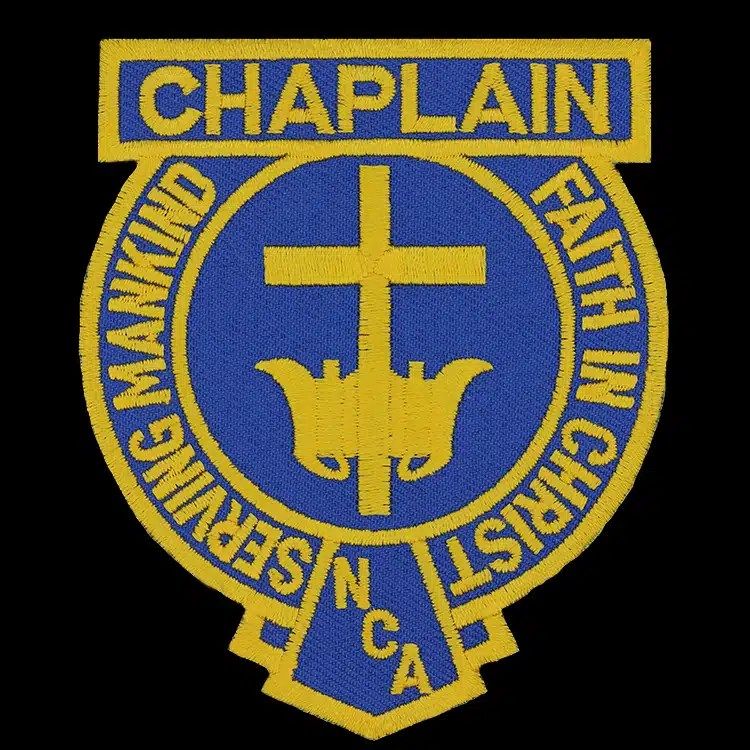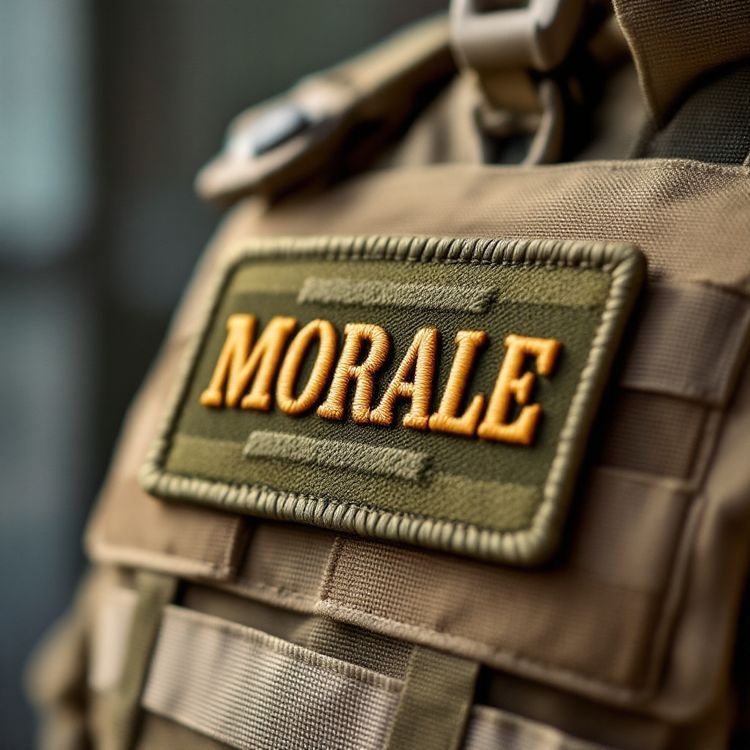
Most custom JROTC patches are unit and team patches rather than official uniform insignia: a drill team, raider team, color guard, rifle team or cyber team patch, a unit patch for PT gear and jackets, and event patches for competitions and camps. They are usually embroidered, about 3 to 4 in (76 to 102 mm) across, with the school name, the program (Army, Navy, Air Force or Marine Corps JROTC) and the unit's mascot or motto. Anything worn on the issued uniform should be cleared with your senior instructor first, because uniform wear follows the program's cadet regulations.
This guide is for senior and assistant instructors, booster clubs and cadet staff in high school JROTC units, and for college ROTC detachments and battalions. It covers what to design, who needs to approve it, sizes and backings, and how to order around the school calendar.
Official insignia vs unit and team patches
Each JROTC program has its own cadet uniform regulations, and the official items on the issued uniform, such as the program shoulder insignia, rank, ribbons and badges, come through the program's supply channels and follow those rules. Custom patches usually sit alongside that system, not inside it.
- Usually custom: team patches for PT shirts, team jackets and backpacks; unit patches for spirit wear; competition, camp and leadership course patches; booster club and alumni patches.
- Check first: any patch meant for the issued uniform, such as a school-specific unit patch, a team tab or a cord, since wear is set by the regulations and the instructors.
- Do not copy: official badges and qualification insignia, which cadets earn through the program.
The names and emblems of the military services are protected trademarks, and each service runs a trademark licensing program. A design built from the school name, the mascot and your own lettering is the simplest route. If you want an official service emblem on the patch, your instructors can advise on what the program permits.
Team patch ideas
Competitive teams are where most JROTC patch orders start. Cadets wear them with pride and they build team identity across years.
- Drill team: crossed rifles, a sabre, or a cadet in silhouette, with ARMED or UNARMED for split teams.
- Raider team: a rope, a compass or a mountain, with the team name and school.
- Color guard: the flag and staffs. Follow the US Flag Code conventions for showing the flag.
- Rifle team: a target or crossed rifles.
- Academic and cyber teams: a book, lamp or circuit motif, with the competition name.
Keep the art bold. As a general guide, embroidered lettering needs a cap height of about 1/4 in (6 mm), and lines thinner than about 1 mm do not stitch cleanly. A school crest with fine detail may read better as a woven patch. Our guide on how to design a patch covers shape and colour count.
Sizes and backings
| Item | Typical patch | Approximate size | Backing |
|---|---|---|---|
| Team jacket chest | Team or unit patch | 3 to 4 in (76 to 102 mm) | Sew-on |
| Team jacket back | Large unit or school patch | About 8 to 10 in (203 to 254 mm) | Sew-on |
| PT shirt or hoodie | Unit patch | About 3 in (76 mm) | Iron-on |
| Backpack or range bag | Team patch or name tape | About 3 in (76 mm) | Hook-and-loop |
| Cap front | Unit or team patch | About 2 to 2.5 in (51 to 64 mm) | Sew-on |
Iron-on (heat seal) suits cotton shirts and hoodies and is easy to apply at a unit event. For team jackets, sewing is more secure. Hook-and-loop is popular for backpacks and raider gear, so a cadet can move a patch from one bag to another. See our guide to patch backing types for the details.
College ROTC detachments and battalions
College ROTC programs (Army ROTC, Navy and Marine Corps NROTC, Air Force and Space Force AFROTC) order many of the same items as high school units, with a few differences:
- Battalion, detachment and wing patches for PT gear, jackets and bags, often pairing the university name with the program.
- Field training and summer course patches for a cohort.
- Commissioning patches and coins for graduating cadets and midshipmen.
- Ranger challenge and competition team patches.
The university's name and logo are usually trademarks too. Check with the university's licensing or brand office before using them on a patch you plan to sell or hand out widely. Our guide to school and college patches covers that side in more depth.
Recognition items beyond patches
Units often pair patches with other items for awards nights, military balls and end of year ceremonies:
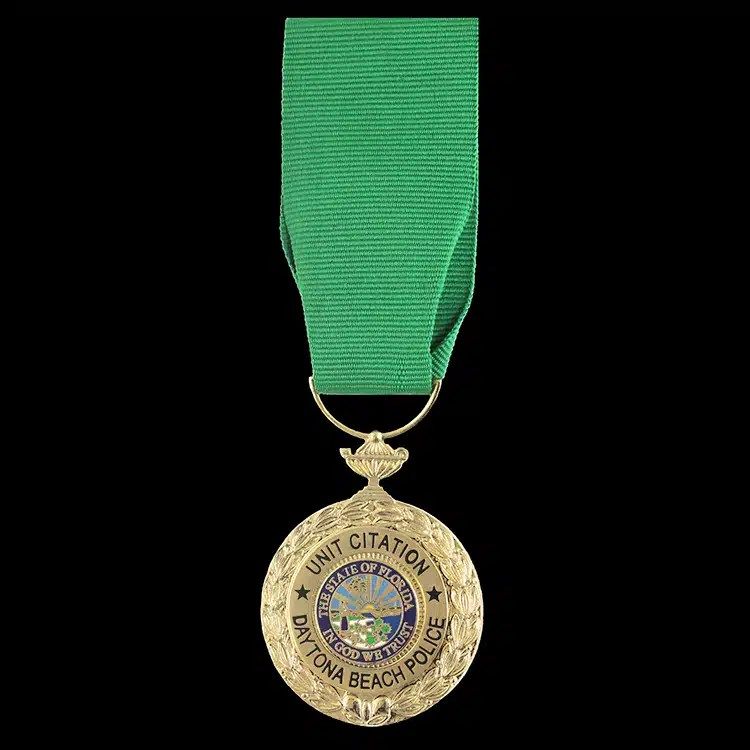
- Medals: for drill meets and unit competitions, on printed neck ribbons.
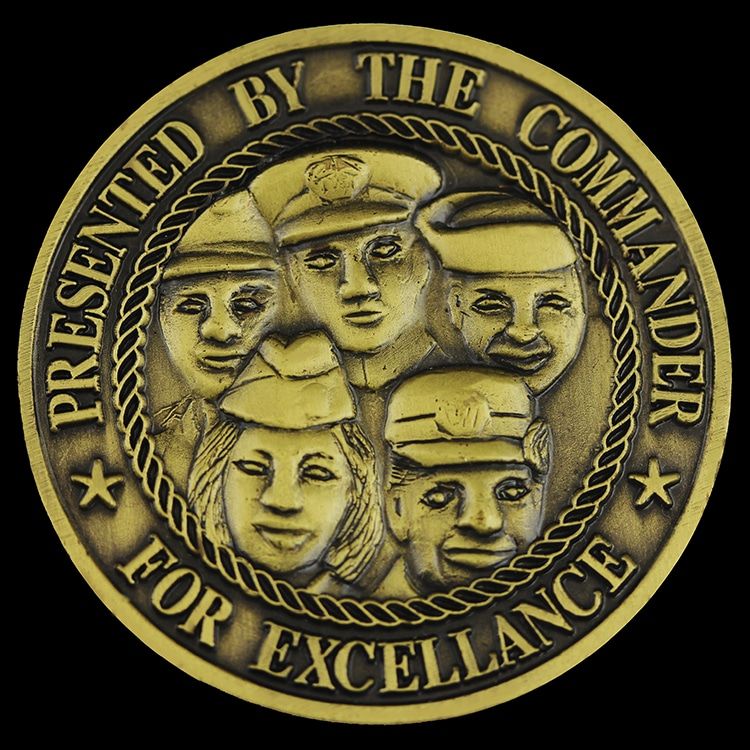
- Challenge coins: for commissioning, staff appointments or a senior instructor's recognition of a cadet.
- Lapel pins: for booster club members, parents and alumni.
- Lanyards: for meet staff and visiting teams.
Funding and quantities
Many unit patches are paid for by a booster club or by cadets themselves, so it helps to plan quantities carefully. Custom runs start from 100 pieces, varying by product, with the minimum confirmed on your quote. A unit with 60 cadets can still order sensibly by including spares for next year's cadets, patches for alumni and parents, and a few for trading at competitions, which is a long tradition at drill meets.
Reorders skip setup, and the digitizing stays on file, so you can order a second batch in a later school year and get a matching patch. Our guide on reordering patches explains how.
Timing around the school year
- Agree the design with the senior instructor and cadet staff.
- Get written approval for any patch worn on the uniform.
- Count cadets, spares, alumni and trading patches.
- Send artwork in AI, EPS or PDF, or a sketch or photo to start.
- Give a firm in-hands date, such as a meet, a ball or the first day of school.
A quote typically comes back in 2 to 3 business days, a proof usually 1 to 3 business days after artwork, and production takes about 3 to 4 weeks after you approve the proof in writing. A rush of around 10 business days is sometimes possible when the factory can hold it. All timing is confirmed on the quote, so for a fall competition, start in summer. Request a quote with your design and counts.