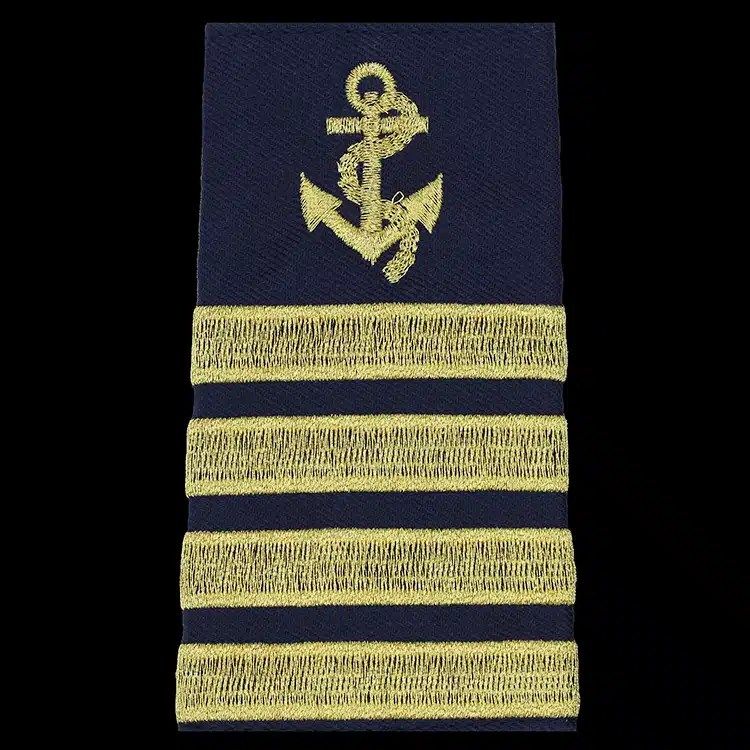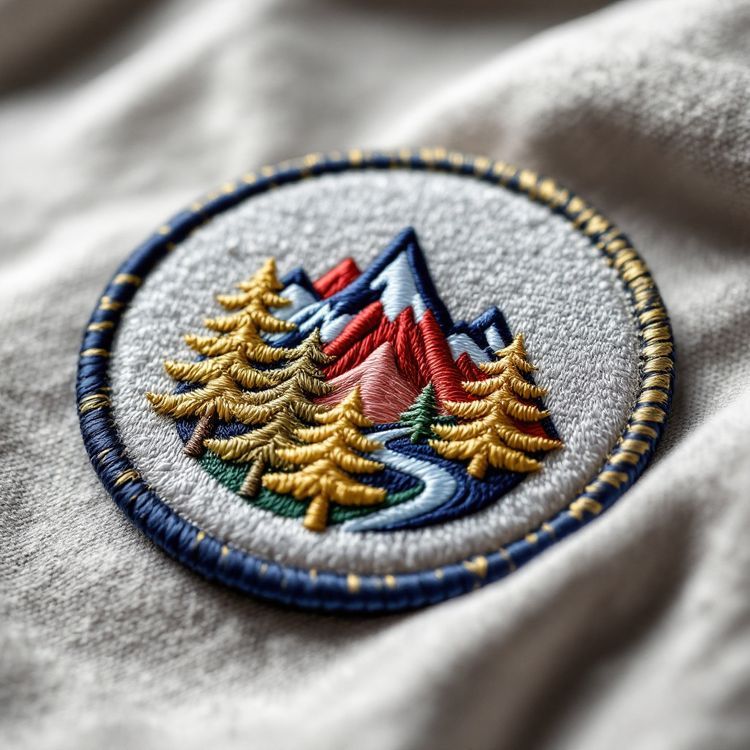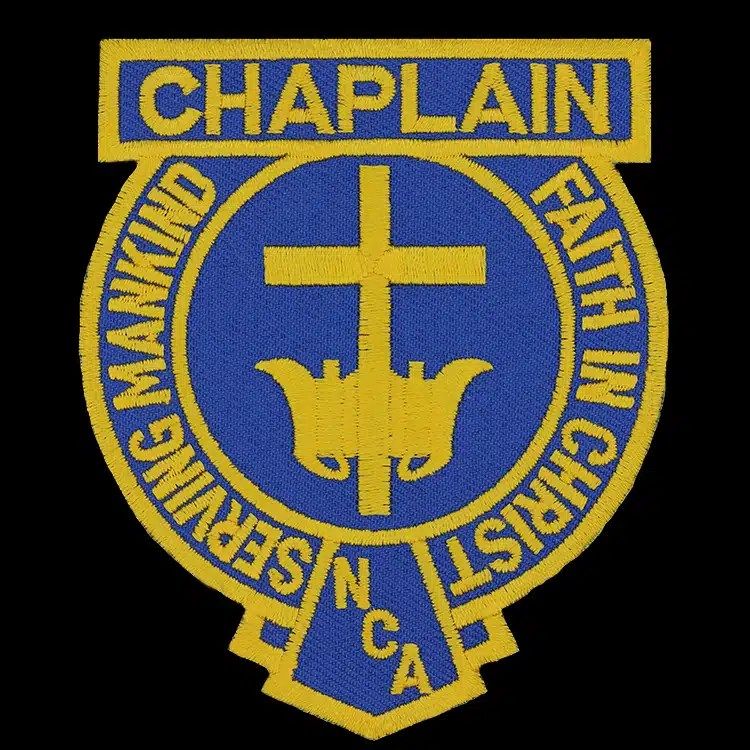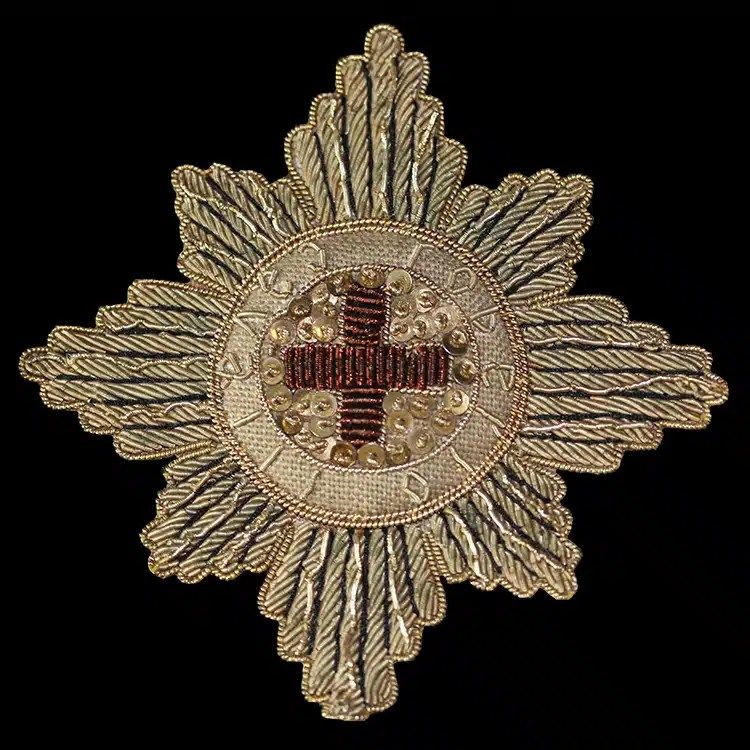
Hand embroidered patches, usually called bullion patches, are worked by hand with coiled metallic wire and thread, so they have a raised, dimensional, formal look. Machine embroidered patches are sewn by an embroidery machine from a stitch file, so every piece is consistent, detailed and durable enough for daily wear. Choose hand embroidered bullion for blazer crests, ceremonial badges and dress uniforms. Choose machine embroidery for uniforms, teams, merch and anything that gets washed or worn hard.
This guide explains how each method works, how they compare on look, detail, consistency and durability, and how to decide which one your patch needs.
How hand embroidered bullion is made
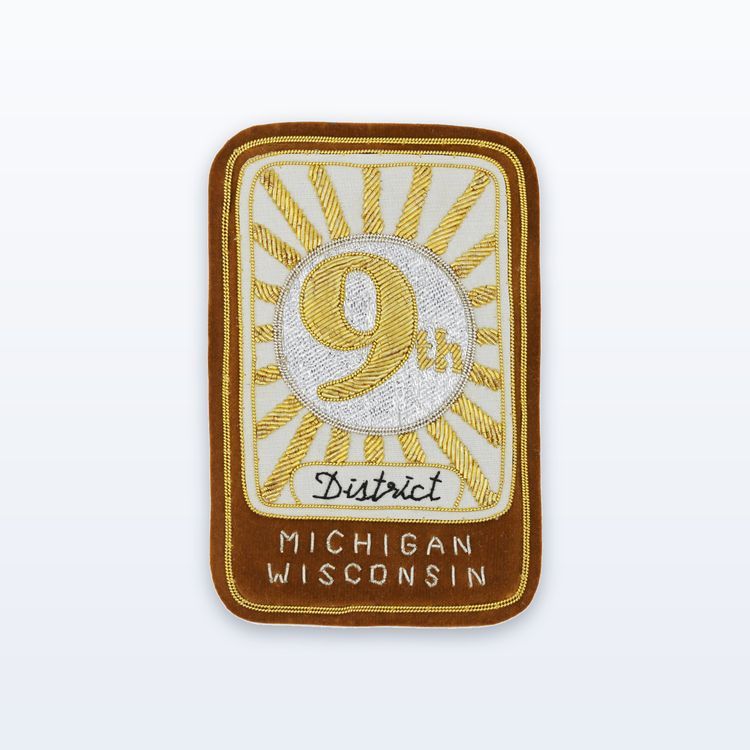
A bullion patch starts with a backing fabric, often velvet or a fine woven cloth, with the design marked out on it. A skilled embroiderer builds the design by hand, using fine coils of metallic wire (the bullion) laid side by side and stitched down, often over padding that lifts the shape off the surface. Thread, sequins and sometimes small stones are added for colour and accent.
Because each piece is worked by hand, bullion has a richness that machine stitching cannot copy. The coiled wire catches light from every angle, and the padded areas stand up in real relief. The look is traditional and ceremonial, the kind of badge seen on blazer pockets, regimental crests, lodge regalia and formal caps.
You can see examples on the hand embroidered bullion section of our patches page.
How machine embroidered patches are made
A machine embroidered patch starts with digitizing: your artwork is converted into a stitch file that tells the machine where every stitch goes, in which colour and in which order. Industrial multi-head machines then sew the design onto twill or felt, many patches at a time, before the patches are cut and finished with a merrowed or heat cut edge and the backing you choose.
Machine embroidery uses polyester or rayon thread, and metallic thread where a design calls for shine. The result is a patch with raised, textured thread and a slight sheen, and the hundredth patch looks the same as the first. Our guide to embroidery coverage explains how much of the surface is stitched at each level.
Hand vs machine at a glance
| Factor | Hand embroidered bullion | Machine embroidered |
|---|---|---|
| How it is made | By hand, wire coils and thread over padding | By machine from a stitch file |
| Look | Raised, dimensional, metallic, formal | Textured thread, clean and graphic |
| Consistency | Small variation between pieces is normal | Each piece matches closely |
| Detail | Best with bold motifs and simple lettering | Lettering down to about 1/4 in cap height |
| Colours | Gold and silver wire with thread accents | Wide range of thread colours |
| Durability | Best for dress wear, dry cleaning | Handles daily wear and washing |
| Typical use | Blazers, crests, ceremony, regalia | Uniforms, teams, workwear, merch |
Look, detail and consistency
The look
Bullion is about depth and metal. Light moves across the coils as the wearer moves, and the padded areas cast small shadows. Machine embroidery is flatter by comparison, with a clean, even surface and crisp colour blocks. It is the look most people picture when they think of a patch.
Detail
Each method has its own limits. Machine embroidery can hold fairly small lettering, about 1/4 in (6 mm) cap height as a general guide, along with many colours and precise outlines. Bullion favours bold shapes: crests, wreaths, stars, crowns, numerals and short mottos. Very small text and intricate multi-colour artwork are usually simplified for hand work, or the patch is made larger.
Consistency
Machine patches are close to identical across a run. Hand embroidered pieces vary slightly from one to the next, because each one is made by a person. On a set of blazer crests that variation is part of the character. On a uniform patch that must line up perfectly across a department, machine embroidery is the safer choice.
Durability and care
Machine embroidered patches are built for wear. They handle regular washing, abrasion on bags and gear, and years on a uniform, especially when sewn on. That is why they are the standard for police, fire, EMS, sports teams and company uniforms.
Bullion is made for dress wear. It is usually sewn onto blazers, dress jackets, caps and banners that are worn for occasions rather than every day, and the garments are typically dry cleaned. Washing a bullion patch in a machine can crush the coils and tarnish or distort the wire. Treat it like the formal piece it is.
Attachment follows the same logic. Bullion patches are sewn on. Machine embroidered patches can be sew-on, iron-on (heat seal), hook-and-loop or rigid plastic backed. Our guide to patch backings covers each option.
Which one should you choose?
- Choose bullion for blazer pocket crests for schools, clubs, golf clubs and associations.
- Choose bullion for ceremonial and dress uniform badges, lodge regalia and commemorative pieces.
- Choose machine embroidery for duty uniforms, workwear and team apparel.
- Choose machine embroidery when the design has many colours, small text or a precise brand logo.
- Choose machine embroidery when every patch must match exactly across a large run.
- Not sure? Describe how and where the patch will be worn, and we can quote both.
Some organizations use both: a bullion crest for the dress blazer and a machine embroidered version of the same emblem for everyday uniforms. Designing the emblem with bold shapes from the start makes it easier to produce well in both methods.
Planning a hand embroidered crest
If you are leaning toward bullion, a little planning helps the finished crest look its best.
- Keep the design bold. Large shapes, a clear central motif and a short motto work best. Fine lines and long text are simplified.
- Choose the metals. Decide which parts are gold wire, which are silver, and where coloured thread adds accents.
- Pick the backing. Navy, black, maroon and green velvet or woven backings are traditional, and the colour should suit the blazer.
- Size it for the pocket. A blazer pocket crest is commonly around 3 to 3.5 in (76 to 89 mm) tall, but measure the pocket on the actual garment.
Request a quote for either method
When you send your artwork, tell us whether you want hand embroidered bullion, machine embroidery, or both priced side by side. Include the size, quantity, colours and how the patch will be attached. Quotes come back in 2 to 3 business days, custom minimums from 100 pieces vary by product and are confirmed on the quote, and nothing is made until you approve the proof in writing.