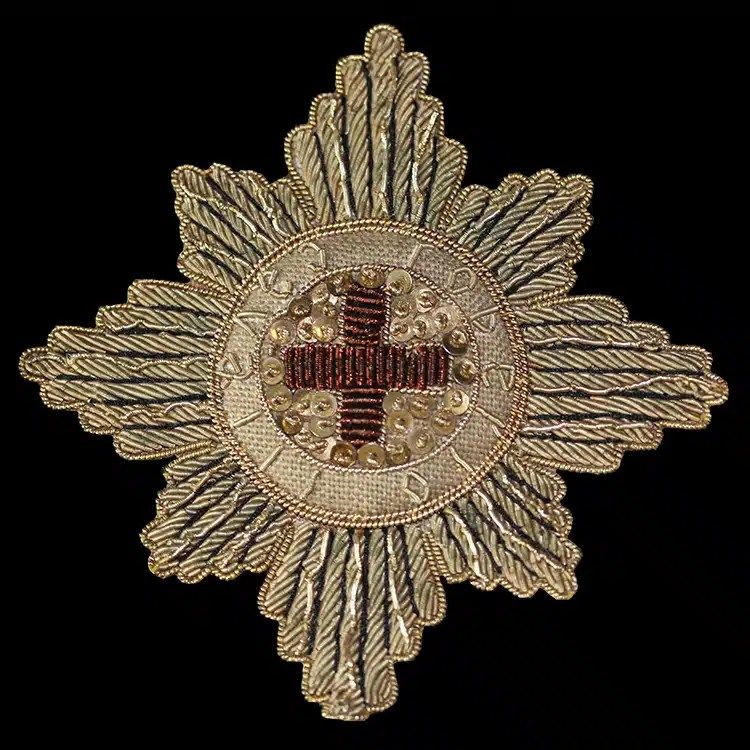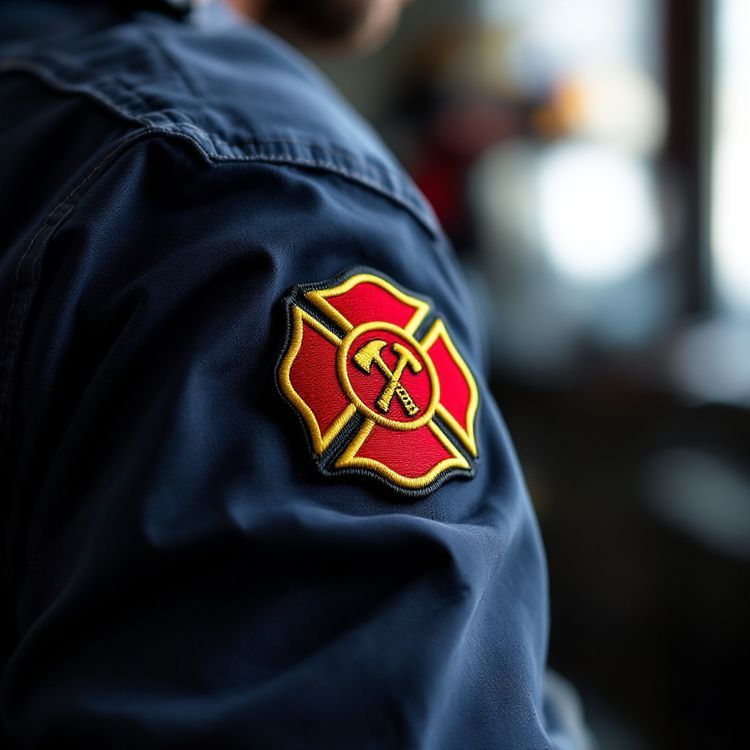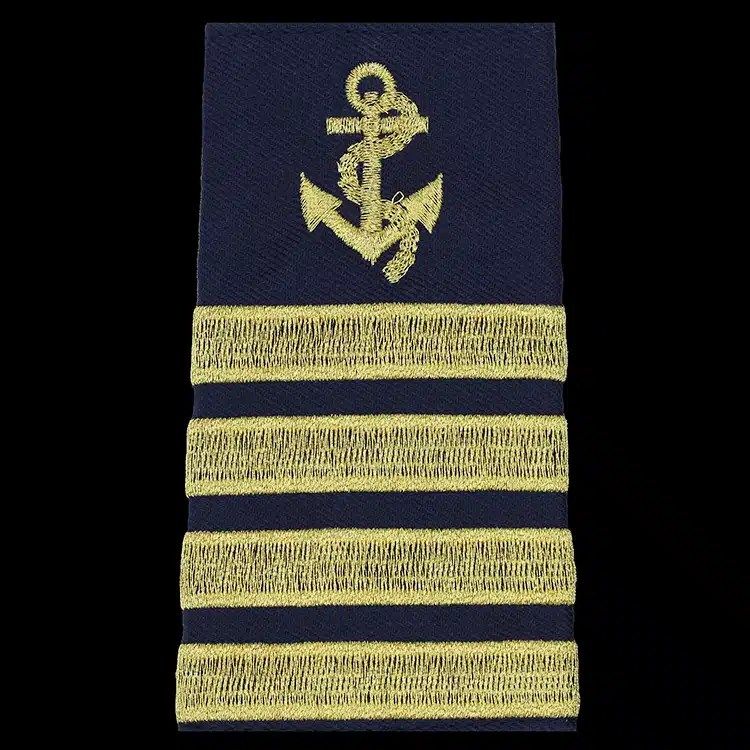
Metallic thread patches use gold, silver or other metallic thread to add real shine that standard thread cannot copy. Metallic thread stitches best in bold elements: borders, outlines, lettering of a good size, rank stripes and simple emblems. It is stiffer and less forgiving than standard polyester or rayon thread, so it struggles with tiny text, fine detail and large solid fills. Used as an accent, it gives a patch a formal, premium look.
This guide covers what metallic thread is, where it works, where it does not, how it compares with gold-coloured thread and hand embroidered bullion, and what to include on a quote request.
What metallic thread is
Machine embroidery metallic thread is usually a thin metallized film wrapped around a core thread. The film gives it a mirror-like shine that catches light far more than standard thread does. It comes in gold, silver and a range of other metallic shades, and in different tones of each, from a bright yellow gold to an antique or old gold.
Because of that wrapped construction, metallic thread is less flexible than standard embroidery thread. It needs slower machine speeds and careful digitizing, and it can fray or break if it is pushed into very small, tight stitches. That is why it shows up most often in bolder parts of a design.
Metallic thread is different from bullion. A hand embroidered bullion patch is worked by hand with metallic wire coils that stand up from the surface, a technique used for formal crests and ceremonial badges. Metallic thread is run on an embroidery machine like any other thread.
Where metallic thread works well
The best uses play to its strengths: bold shapes, satin stitches that show off the shine, and contrast against a dark background.
- Borders: a gold or silver merrowed border or stitched outline frames a patch and catches the eye.
- Outlines and keylines: a metallic outline around a crest or shield adds formality without overwhelming the design.
- Lettering at a good size: department names, titles and mottos in bold letters stitch cleanly and read well.
- Rank and insignia: stripes, chevrons, anchors, stars and bars. This is where metallic thread is most traditional.
- Simple emblems: a single star, badge, wing or cross in gold on a navy or black background.
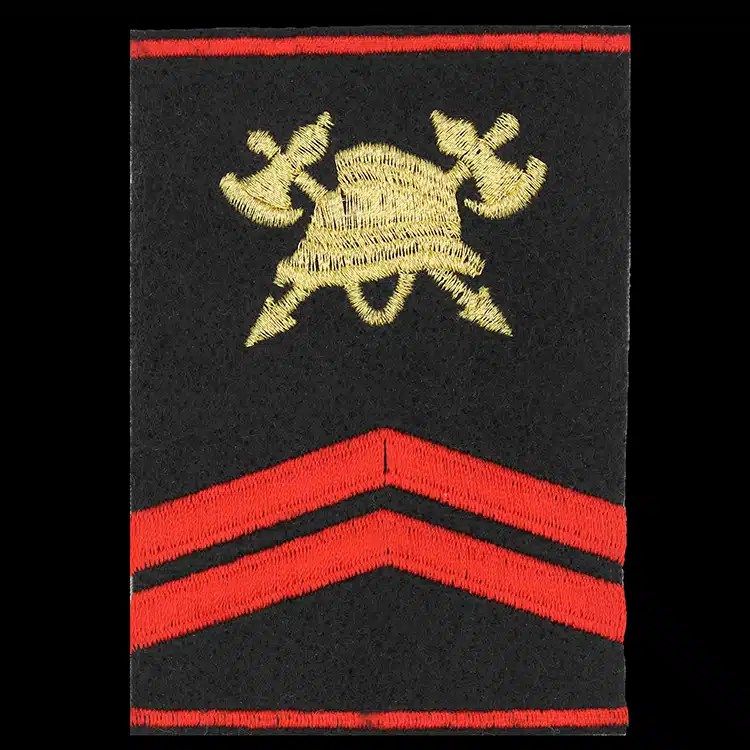
Dark backgrounds suit metallic thread best. Navy, black, dark green and maroon make gold and silver stand out. On white or light fabrics, metallic thread can look washed out because there is less contrast to show off the shine.
Where metallic thread struggles
Metallic thread has limits that are worth knowing before you design around it.
Small text and fine detail
Standard embroidered lettering already needs a cap height of about 1/4 in (6 mm) as a general minimum. Metallic lettering usually needs a little more, because the thread is stiffer and does not settle into tight curves as neatly. Tiny serifs, thin strokes and small counters are the first things to suffer.
Large solid fills
Filling a large area with metallic thread makes a patch stiff, heavy and harder to produce, and the shine can look uneven across a big flat area. Many designs use standard gold-coloured thread for large fills and save the metallic thread for outlines and highlights.
Heavy wear and friction
Metallic thread is more delicate than polyester. On a patch that rubs against straps, seat belts or gear, the metallic areas can show wear sooner. For hard working uniforms, keeping metallic thread to the border and a few accents is a practical balance.
Metallic thread vs gold-coloured thread
Many patches that look gold in photos are stitched in a standard yellow or old gold polyester thread. It is worth deciding which you want, because they look and behave differently.
| Factor | Metallic gold thread | Gold-coloured polyester | Bullion wire |
|---|---|---|---|
| Look | Mirror-like shine | Soft sheen, flat colour | Rich, dimensional metal |
| Detail | Bold elements only | Standard embroidery detail | Crests and simple motifs |
| Feel | Stiffer | Soft and flexible | Raised and heavy |
| Durability | More delicate under friction | Very durable | Best for dress wear |
| Made by | Machine | Machine | Hand |
| Best for | Borders, rank, formal accents | Everyday uniforms and merch | Blazers, ceremony, dress uniforms |
For a formal crest on a blazer or a dress uniform, bullion is the traditional choice. Our hand vs machine embroidery guide covers when bullion is worth it.
Common uses for metallic thread patches
- Police, fire and EMS: gold or silver borders and lettering often mark a rank or a dress version of a patch. Our fire department patch guide covers how departments use them.
- Epaulet covers and rank insignia: anchors, stripes, chevrons and bars in metallic thread are traditional on shoulder boards. See epaulet covers and other products.
- Anniversary and commemorative patches: a gold border sets a special edition apart from the everyday patch.
- Clubs, lodges and schools: crests and mottos with metallic accents.
- Brand merch: a single metallic element in a logo for a premium or limited run.
Designing a patch with metallic thread
Plan the metallic areas on purpose rather than turning every gold element metallic. A few guidelines help.
- Mark exactly which parts of the artwork should be metallic, for example a separate colour named "metallic gold" in the file.
- Keep metallic lettering larger than you would for standard thread, and use a bold font.
- Put metallic thread against a dark, solid background for the most contrast.
- Use one metallic colour per patch in most cases. Gold and silver together can look busy unless the design is large.
- Say which gold tone you want: bright gold, old gold or antique gold. A photo of a reference helps.
Judging metallic thread on a proof
A digital proof shows metallic areas as a flat gold or silver colour, because a screen cannot reproduce the way metal reflects light. That is normal. Use the proof to check where the metallic thread goes, how thick the borders and letters are, and whether any fine detail has been simplified. Do not judge the shine from it.
Photos of finished metallic patches can mislead in the other direction. Under a flash or in bright sun, metallic thread can look almost white. In soft indoor light, it reads as a deeper gold or silver. If you are matching an existing metallic patch, send the patch itself or a photo of it in daylight, and say which tone it is closest to.
Request a quote for a metallic patch
When you send your artwork, mark the metallic areas and say whether the rest of the design uses standard thread. Include the size, quantity, border, backing and in-hands date. Quotes come back in 2 to 3 business days, and the proof shows which areas are metallic so you can confirm before anything is made. Production runs about 3 to 4 weeks after proof approval (typical, confirmed on your quote).