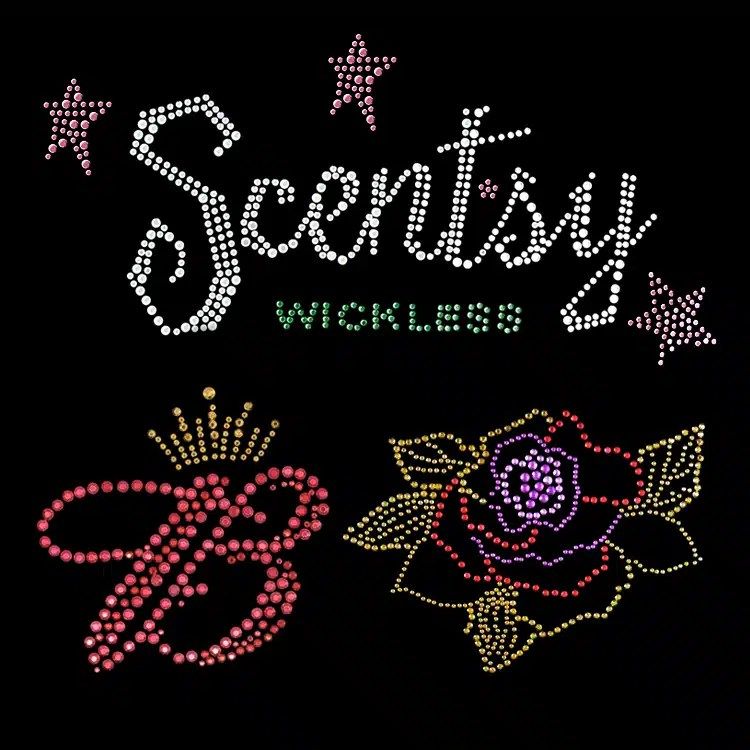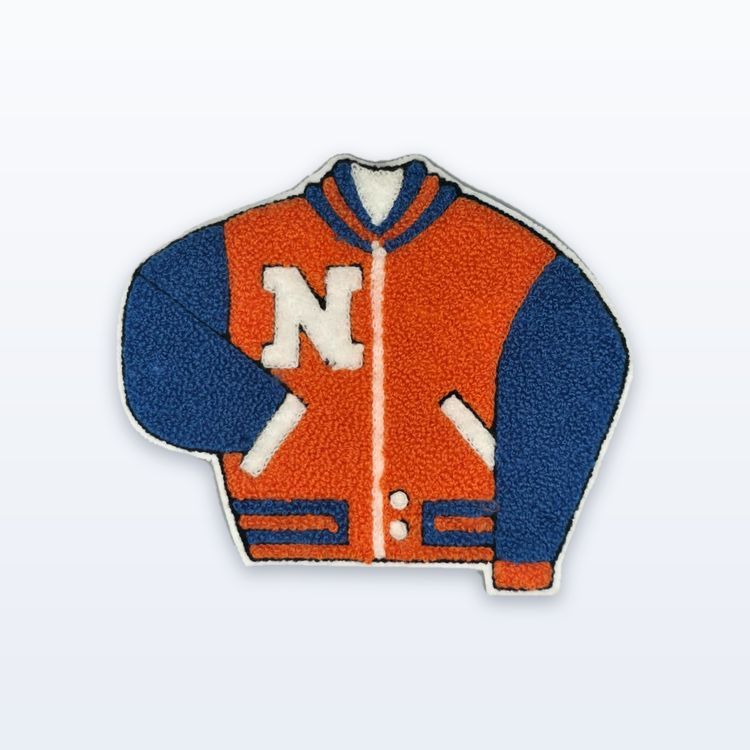
Dance team patches usually come as a set: a chenille or embroidered team name for the back of the jacket, a smaller logo or monogram for the chest, a name and position patch for the sleeve or front, and year or competition patches added over the season. Chenille gives the soft, letterman look; embroidery handles detailed logos and small names; and a rhinestone heat transfer adds the sparkle many teams want on warm-ups and bags.
Below is how to lay out a team jacket, which construction suits each piece, how to attach patches to satin and nylon without damage, and when to order so everything arrives before the first performance.
A simple layout for a dance team jacket
Most dance team jackets follow a familiar pattern, which makes ordering easier because every dancer gets the same placements.
- Back: the team name in large script or block lettering, often with the school or studio name above or below it.
- Left chest: a team logo, monogram or mascot, about 3 to 4 in (76 to 102 mm).
- Right chest or front: the dancer name in script, or a name and position such as Captain or Lieutenant.
- Sleeve: the graduation year, a style word such as Jazz, Pom or Hip Hop, or competition patches added as they are earned.
The back lettering is usually the largest single piece and the one parents notice first. If your jackets come in a wide size range, check the shoulder width on the smallest jacket before you fix the back size. Our guide to placing patches on jackets covers measuring and spacing in more detail.
Chenille, embroidery, twill or rhinestones
Each construction suits a different job on a dance jacket. Many teams mix two or three on one garment.
| Construction | Look | Best dance team use |
|---|---|---|
| Chenille | Soft, raised, looped yarn | Back script, large initials, mascot |
| Embroidered | Raised thread, crisp edges | Chest logo, names, year and style patches |
| Satin tackle twill | Smooth fabric shapes, stitched edge | Large block team names on warm-ups |
| Woven | Flat, fine detail | Small studio logos, detailed crests |
| Rhinestone transfer | Sparkle, heat applied | Warm-ups, tees, bags, practice wear |
Chenille for the classic look
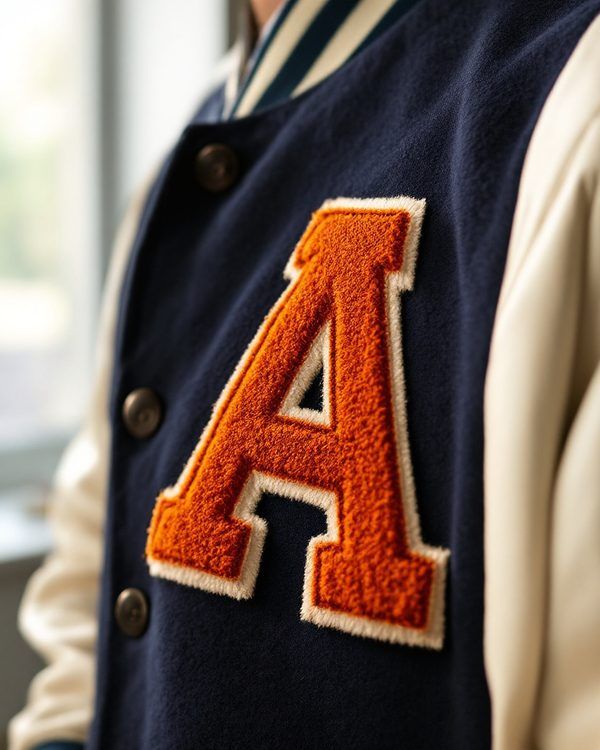
Chenille patches are made of looped yarn on a felt base, usually with embroidered outlines and small text added on top. They read from across a gym and feel soft, which is why they are standard on letter jackets. Chenille cannot hold fine detail, so keep script lettering bold and give each letter enough thickness. Our post on chenille patches for letterman jackets explains felt colours, layering and sizes.
Embroidery for names and logos
Embroidered patches carry the details chenille cannot: dancer names, small year numerals, studio logos with thin lines and mascots with several colours. A script name in embroidery should be at least about 1/4 in (6 mm) tall at the smallest letters to stay readable. Metallic gold or silver thread is a popular accent for officers and captains.
When a rhinestone transfer fits better
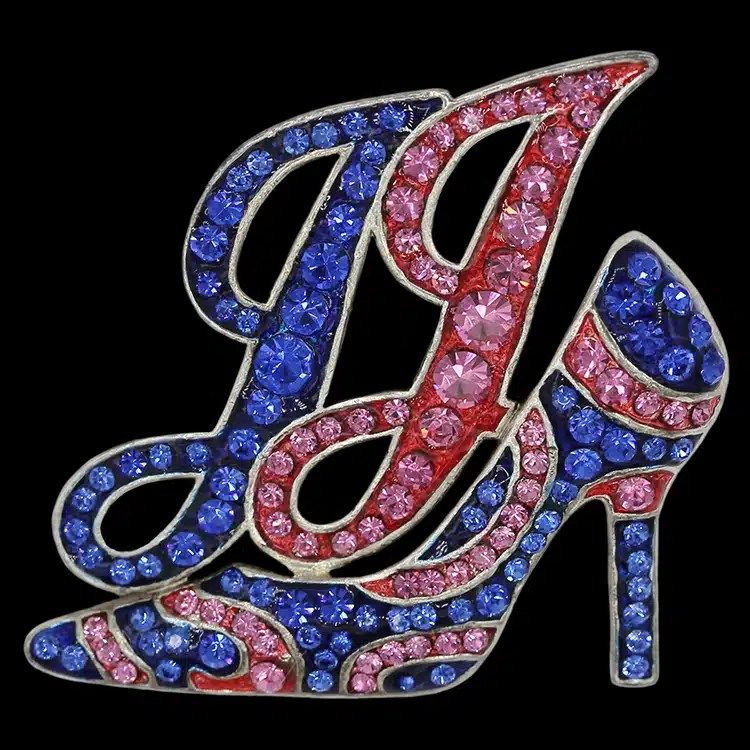
Dance teams often want sparkle, and thread does not sparkle the way stones do. A StudStone rhinestone heat transfer is a design set in rhinestones on a carrier sheet, pressed onto the garment with a heat press. It suits team names on warm-up jackets, tees, tank tops, hoodies and duffel bags, and it is a natural fit for studio logos, monograms and simple icons like a heel, a star or a bow.
Transfers work best on cotton, polyester and blends that can take the heat of a press. Very thin or heat-sensitive fabrics and stretchy competition costumes may not, so test one garment before you press a whole order. Wash pressed garments inside out on gentle and skip the dryer.
Attaching patches to satin, nylon and fleece
Dance jackets are often satin or nylon, and both can scorch or melt under an iron. That makes sew-on backing the safest choice for jackets. Iron-on (heat seal) backing is fine for cotton tees, sweatshirts and canvas bags, and it can hold a patch in position while you sew, but test the heat on a hidden spot first. See ironing patches onto polyester and nylon for the details.
Many teams have a local seamstress or embroidery shop sew the full set in one batch. That keeps the placement identical from jacket to jacket, which matters in team photos. If dancers sew their own, give them a one page sheet with measurements from the collar seam and the center back.
Officer, competition and milestone patches
Patches added over the season give the jacket its story. Common ones include officer patches (Captain, Co-Captain, Lieutenant, Senior), competition patches with the event name and year, placement patches for a top finish, and style patches for each routine category. Studios sometimes add a patch for each year a dancer stays with the company.
Keep season patches a consistent size and shape so they line up neatly on a sleeve, for example all 3 in (76 mm) circles or all small shields. Use one design per competition, and change only the year or the placing, so the digitizing stays on file and a reorder skips the setup. How cheer squads handle the same planning is covered in our cheer patches guide, if your program runs both.
Bags, parents and boosters
The same artwork stretches well beyond the jacket. Embroidered luggage tags in the team colours help dancers spot their bag in a crowded backstage area, and they make a tidy welcome gift for new members. Parent and booster groups often sell the team logo as an iron-on patch for hoodies and totes, or as a small soft enamel lapel pin, which raises money for competition travel without a big stock of sized apparel. Recital and showcase awards can use the same crest on a medal. Planning these alongside the jackets means one set of artwork, one proof review and fewer surprises later in the season.
When to order for the season
Most teams set rosters in late spring or summer and want jackets by the first fall performance or the start of competition season. Work back from that date: allow 2 to 3 business days for the quote, about 1 to 3 business days for the proof once we have artwork, and around 3 to 4 weeks of production after you approve the proof, plus shipping time. A rush of around 10 business days is sometimes possible when the factory can hold it, but it is safer not to depend on it.
Collect names and spellings in writing before you order, and send everything together: logo files (AI, EPS or PDF are cleanest, a PNG or a photo of last year's patch is fine to start), sizes, quantities per design, backing and your in-hands date. Then request a quote, and nothing is produced until you approve the proof in writing.