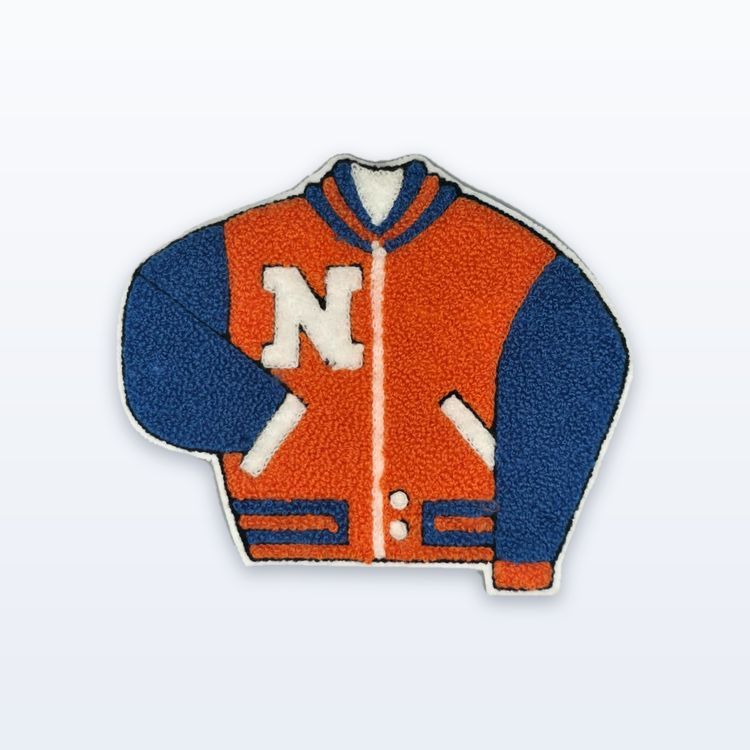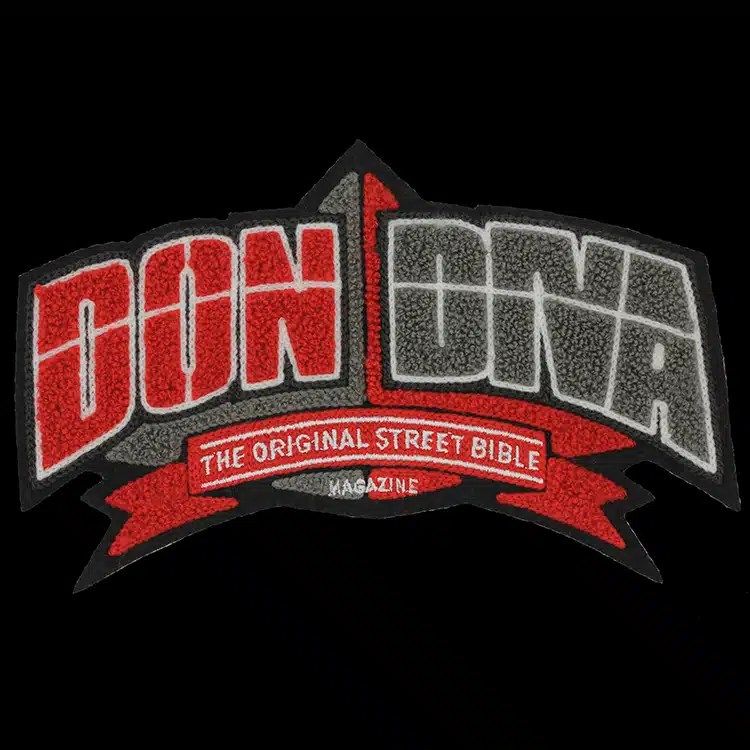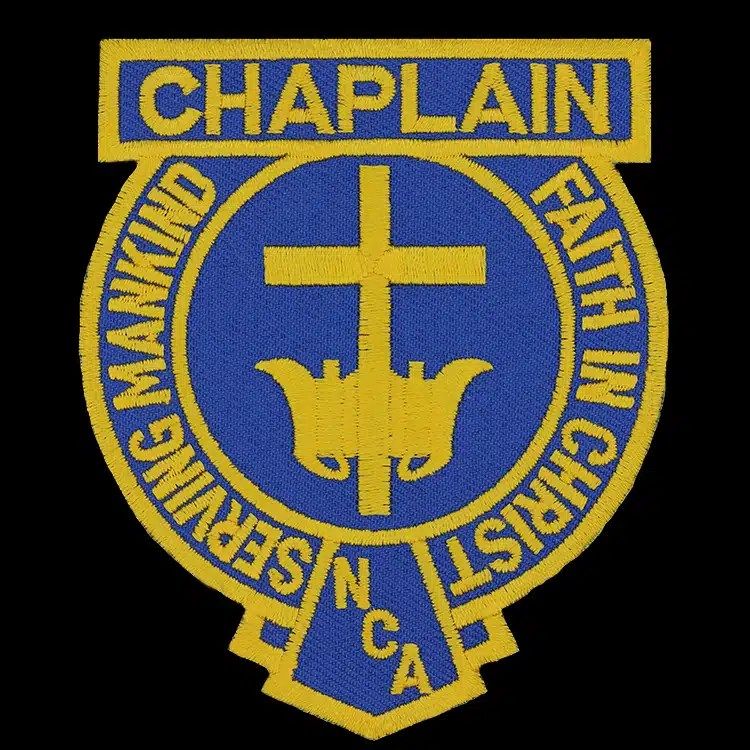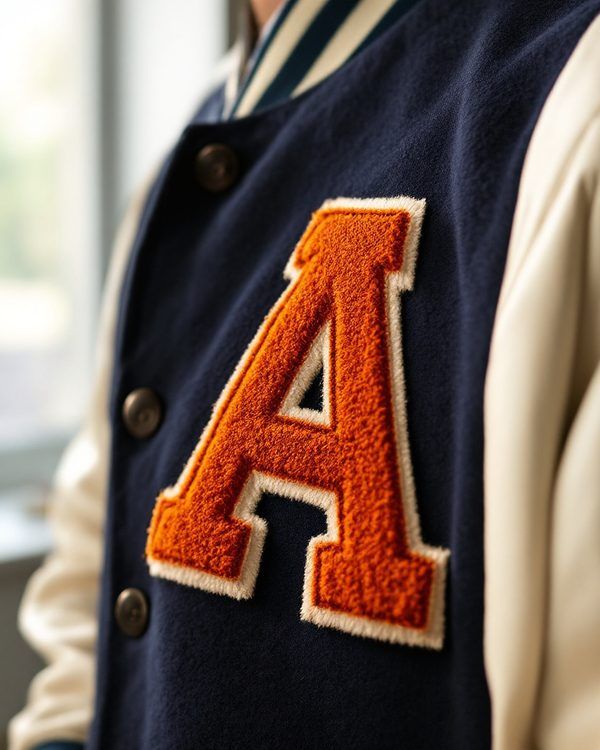
Most cheer patches fall into three groups: chenille letters and inserts for letterman jackets, embroidered mascot or shaped patches (megaphones, bows, pom-poms) for bags and warmups, and rhinestone heat transfers for the sparkle squads want on jackets and tees. For a school squad, start with the chenille letter and a cheer insert. For an all-star gym, start with an embroidered logo patch for bags and a rhinestone transfer of the team name.
Below is what each item is, the sizes that work, and how a coach or booster parent can put it all on one quote without chasing every family for sizes twice.
Chenille letters and cheer inserts
At most high schools, cheer athletes earn the same varsity letter as other sports, and they mark the sport with a small insert or pin. A chenille letter is looped yarn tufted on a felt base, with a felt border in a second school colour. A common size is about 6 to 8 in (152 to 203 mm) tall for the jacket chest.
The cheer insert can be a small chenille or embroidered megaphone patch that sits on or beside the letter, or a sport pin. Some schools also add a bar for each year lettered and a captain patch. If your school already has a standard letter, send a photo of it: that is enough to start, and the new letters can match it in shape and colour.
Our guide to chenille patches for letterman jackets covers layout, sleeve years and the full jacket in more depth.
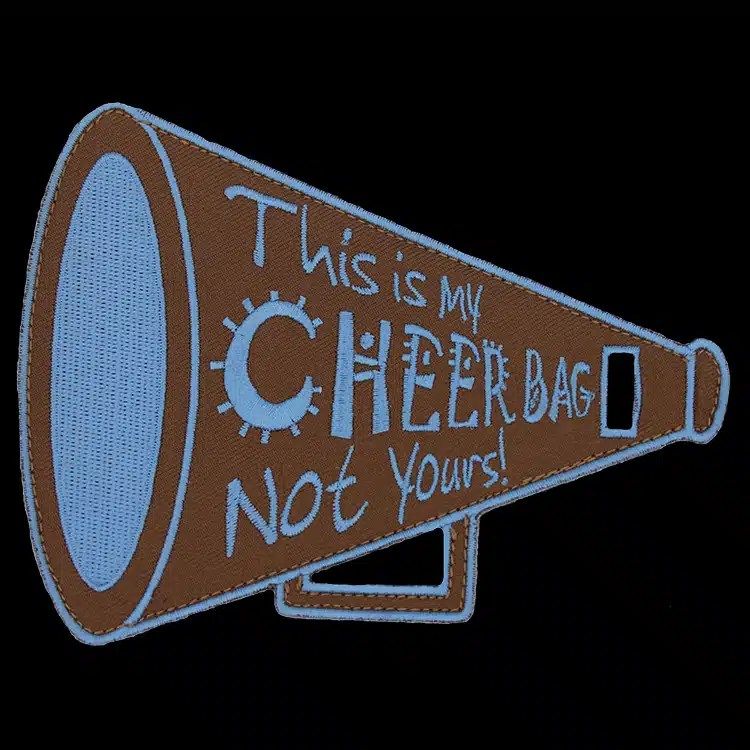
Mascot, megaphone and bow-shaped patches
For bags, backpacks, warmups and spirit wear, an embroidered patch is the usual choice. It holds a mascot, a squad name and a year, and it can be cut to almost any outline. Popular shapes for cheer are:
- A megaphone with the team name along the cone.
- A bow, either as the whole patch outline or as a bow sitting on top of a letter.
- Pom-poms or a mascot head with the school initial.
- A competition patch with the event name, the season and the division.
Shaped patches use a heat cut edge, sealed close to the outline, so points and curves stay crisp. Simple circles, ovals and shields can take a merrowed border instead. See merrowed vs heat cut borders for how to pick.
About actual hair bows
Cheer bows themselves are made by bow makers from ribbon. What we make is the decoration: a small embroidered patch sewn to the bow centre, or a rhinestone transfer pressed on. If you want a team logo on bows, plan a piece about 1.5 to 2 in (38 to 51 mm) wide and confirm with your bow maker how they attach it.
Rhinestone transfers for warmups and tees
Cheer is one of the few sports where sparkle is expected. StudStone rhinestone heat transfers are designs set in rhinestones on a carrier sheet, which you press onto the garment with heat. They suit team names in script, initials, stars and small mascots on jackets, hoodies, shirts and bags.
A few rules of thumb help the design work:
- Keep script names large enough that the stones can follow the strokes, usually about 8 in (203 mm) or wider across the back.
- Use one or two stone colours plus clear for the cleanest look.
- Avoid tiny text: stones are round dots, so very small letters lose their shape.
- Ask for a flat test garment first if the fabric is unusual, such as a heavy nylon jacket.
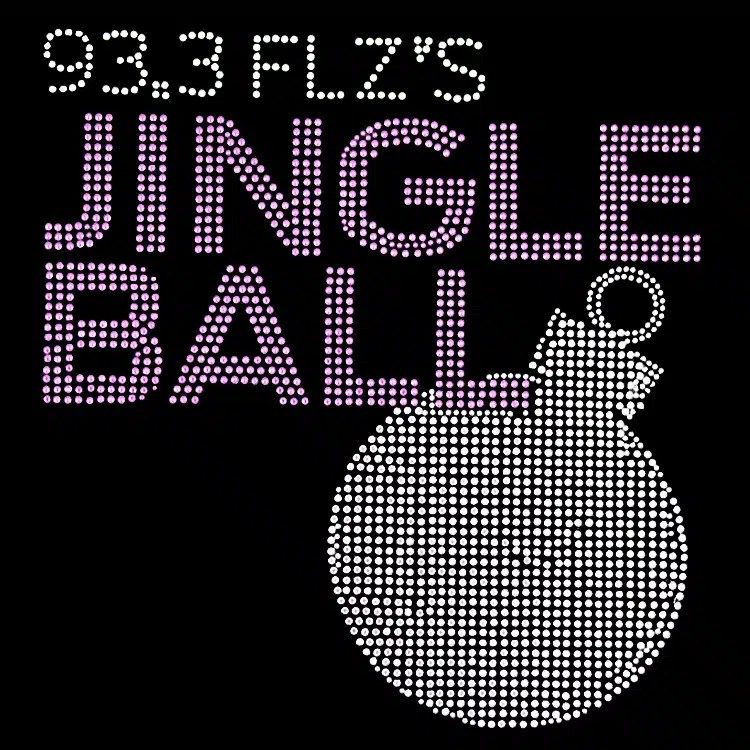
Tell us the garment and fabric when you ask for a quote, and we confirm stone sizes and the pressing time, heat and pressure for that fabric.
Which item suits which use
| Use | Best item | Typical size | Attachment |
|---|---|---|---|
| Letterman jacket chest | Chenille letter | About 6 to 8 in tall | Sew-on |
| Sport marker on the letter | Chenille or embroidered insert, or pin | About 2 to 3 in | Sew-on or pin back |
| Cheer bag or backpack | Embroidered shaped patch | About 3 to 4 in | Sew-on |
| Warmup jacket back | Rhinestone transfer | About 8 to 11 in wide | Heat press |
| Spirit tees and hoodies | Rhinestone transfer or iron-on patch | About 3 to 10 in | Heat press or iron-on |
| Bow centre | Small patch or transfer | About 1.5 to 2 in | Sewn or pressed |
Patches or transfers on the same garment
Some squads use both: an embroidered logo patch on the left chest of a warmup and a rhinestone name across the back. That works well, as long as the two use the same logo artwork and colours. Press the transfer first and sew the patch after, so the patch never goes under the heat press. If the warmup is a slick nylon, sewing is the safer way to attach the patch, since iron-on adhesive bonds best to cotton and cotton blends.
Competition patches and awards
If your gym or league hosts a competition, a patch is a good keepsake for every athlete: it is easy to mail, fits in a bag and goes on a backpack or a memory blanket. Put the event name, the year and the city on it, and keep the design bold enough to read at 3 to 3.5 in (76 to 89 mm).
For placements, many events pair the patch with custom medals on a ribbon in the event colours. Our guide to tournament medals covers sizes and ribbons.
Ordering for a squad or gym
Coaches and booster parents usually find it easiest to order everything at once and hand it out at the start of the season. Custom minimums start from 100 pieces and vary by product, so a small squad often combines its order with the rest of the program (JV, varsity and youth teams) or orders extra for future seasons.
- Collect the final roster and any name or captain patches first.
- Pick one logo file for everything, ideally AI, EPS or PDF.
- List each item with its size, colours, quantity and backing.
- Give the date of your first game, banquet or competition.
A quote typically comes back in 2 to 3 business days. After you send artwork, the proof usually follows in 1 to 3 business days, and nothing runs until you approve it in writing. Production is about 3 to 4 weeks after approval, with rush around 10 business days when the factory can hold it. All figures are typical and confirmed on your quote.
When you are ready, request a quote with your squad details, or upload your logo to the free Patch Studio to see it as a patch first.