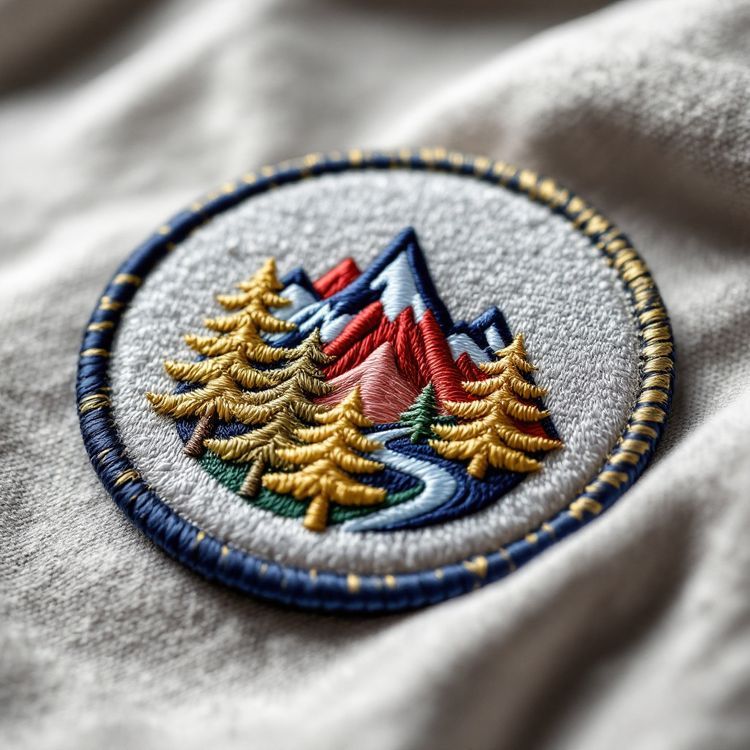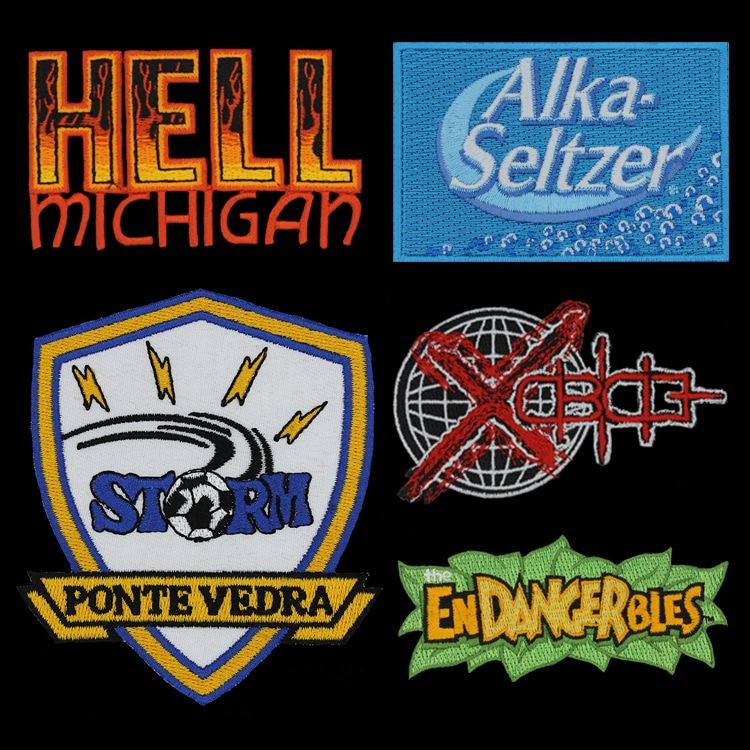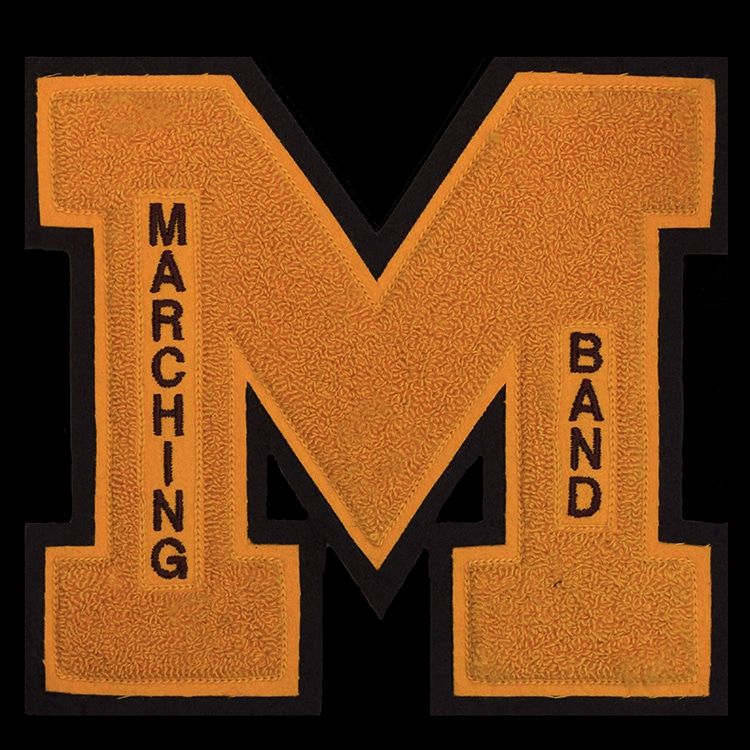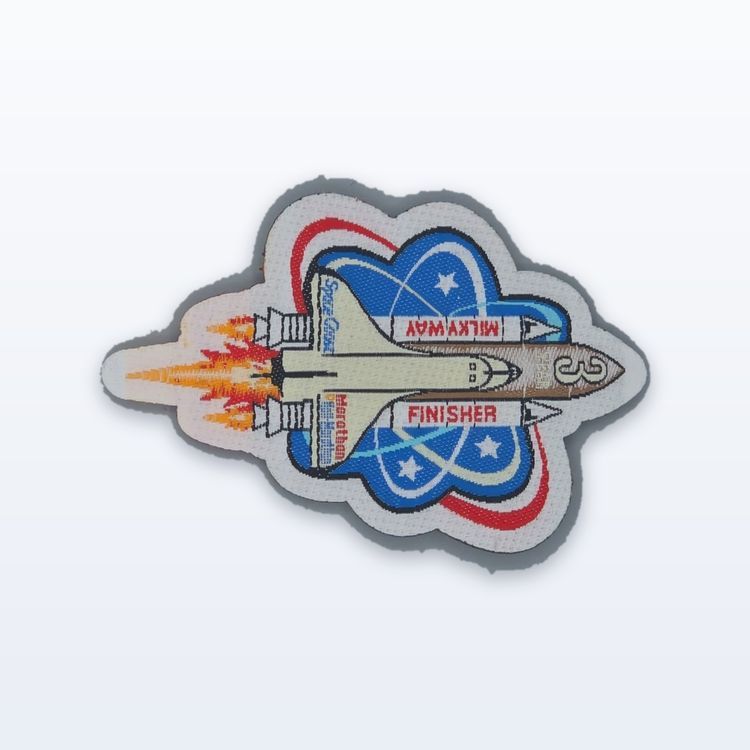
Custom woven patches are made on a loom from fine polyester thread, so the design is woven into one thin, flat piece of fabric rather than stitched on top. Choose woven when your artwork has small lettering, a long name, thin outlines or a detailed seal that embroidery would blur. They are also the better pick for lightweight shirts, sleeves and anywhere a thick patch would feel stiff.
Below we cover how woven patches are made, the kind of detail they handle, their limits, and the specs to put on your quote request.
How woven patches are made
A woven patch is made the same way as a quality clothing label. Fine threads run lengthwise through the loom, and coloured threads are woven across them to build the design row by row. Because the artwork forms inside the weave, there is no separate base fabric and no raised stitching on top.
The result is thinner, smoother and more flexible than an embroidered patch. The surface is tight, so small shapes sit cleanly side by side. After weaving, the patches are cut, the edges finished, and the backing applied.
What woven patches do well
The main reason to choose woven is detail. Woven thread is much finer than embroidery thread, which opens up artwork that would otherwise need simplifying.
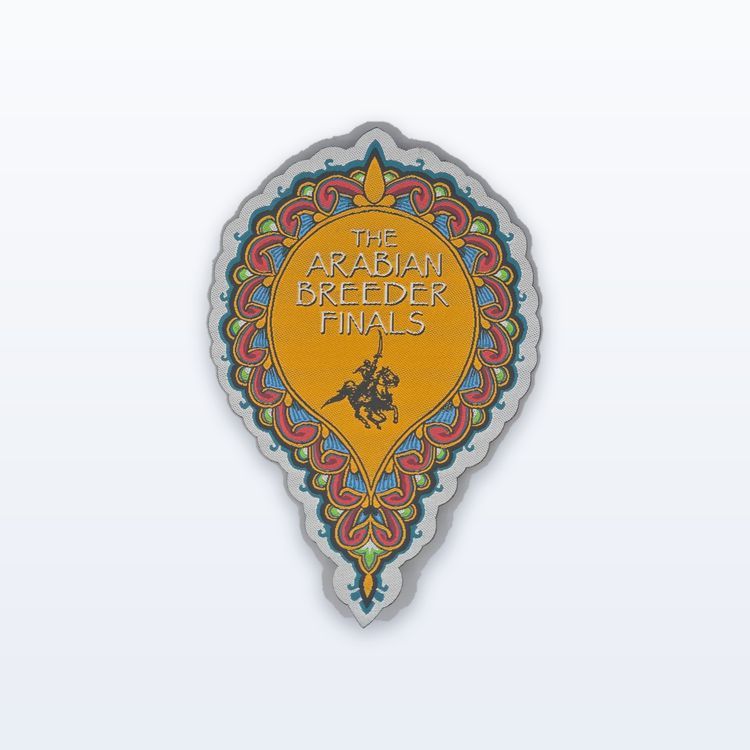
- Small text: lettering can stay readable well below the roughly 1/4 in (6 mm) floor that embroidery needs. As a general guide, woven text holds at around half that height, confirmed on your proof.
- Fine lines: hairline borders, thin outlines and scrollwork hold their shape.
- Busy seals: city and department seals, crests with mottos, and badges with several rings of text.
- Small patches: name patches, sleeve flashes and small brand tabs where every fraction of an inch counts.
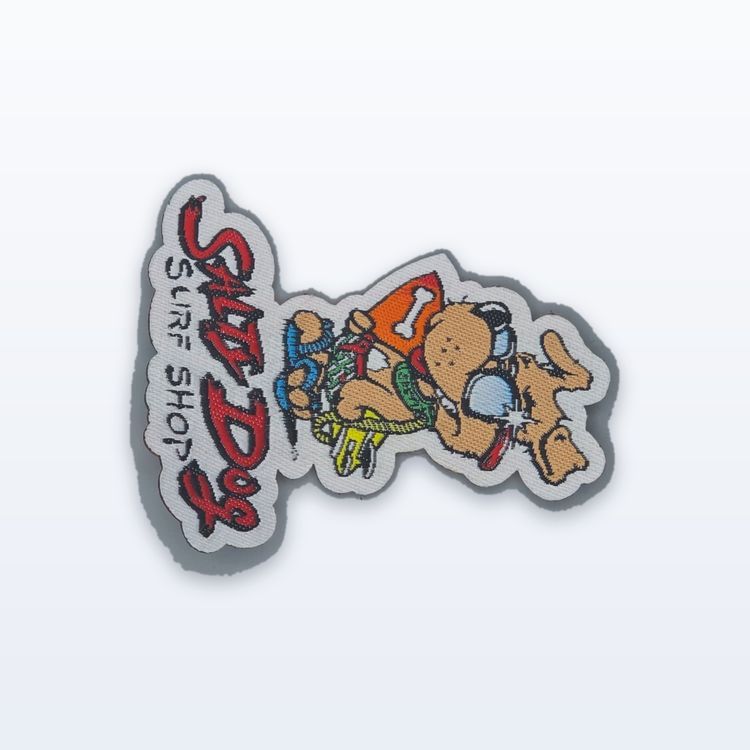
- Flat, graphic logos: modern marks that look best crisp rather than textured.
Where woven patches have limits
Woven is not the answer to every design. It helps to know the trade-offs before you choose.
No raised texture. Woven patches are flat. If you want the tactile, dimensional look of a classic badge, embroidery gives you that and woven does not.
Solid colours only. Like embroidery, woven uses solid thread colours. It blends them tightly, so small colour areas sit next to each other without bleeding, but it cannot reproduce a photograph or a smooth gradient. For that you need a printed photo patch.
Colour count. The loom carries a limited number of thread colours in one design. Most logos fit comfortably. A design with many colours may need a few merged, and the factory confirms this on the proof.
Feel. Woven reads as lighter and more modern. For a rugged work jacket or a heavy bag, some buyers prefer the heft of embroidery even when woven would hold the detail.
Woven vs embroidered at a glance
| Factor | Woven | Embroidered |
|---|---|---|
| Construction | Fine thread woven into one piece | Thread stitched onto twill or felt |
| Thickness | Thin and flexible | Thicker and stiffer |
| Smallest text | Noticeably smaller | About 1/4 in cap height |
| Surface | Flat and smooth | Raised and textured |
| Best garments | Shirts, polos, sleeves, light jackets | Caps, jackets, bags, uniforms |
For a fuller side-by-side, see our post on embroidered vs woven patches.
Designing artwork for a woven patch
Even with fine thread, a few design habits get the most out of the loom.
Keep strong contrast
Small text needs contrast to read. Light lettering on a dark ground, or the reverse, works far better than two mid tones together. This matters more on woven because the text is often smaller.
Use clean vector art
Vector files (AI, EPS or PDF) give the cleanest result, since every line and letter is defined precisely. PNG is accepted, and a photo of an existing patch is enough to start, but the factory will redraw the art, so check the proof carefully. Our guide to vector vs raster artwork explains the difference.
Choose the edge to suit the shape
A heat cut edge suits woven patches well because it follows the outline closely and keeps the flat, crisp look. Merrowed borders also work on circles, ovals, rectangles and shields when you want a classic finished rim.
Backings for woven patches
Woven patches take the same backings as other constructions: sew-on, iron-on (heat seal), hook-and-loop and rigid plastic. Because they are thin and flexible, they sit well on curved sleeves and soft fabrics with a sew-on or iron-on back. A rigid plastic backing can help a woven patch hold its shape when it will be displayed or attached to a structured cap.
For garments that will be washed often, sew-on is the most secure. If you want to iron the patch in place, our guide to custom iron-on patches explains which fabrics take heat seal well.
Common uses for woven patches
Woven patches turn up wherever detail and a flat finish matter more than texture.
- Public safety seals. Departments with a detailed city or county seal often switch to woven so the motto and small lettering stay readable on the sleeve.
- Clothing brands. Small woven tabs on a hem, pocket or cap side give a neat, retail look that matches the brand's inside labels.
- Name and rank patches. Long names fit at small sizes without the letters filling in.
- Scout and club awards. Badges with several rings of text or tiny icons read clearly.
- Events. Detailed event art with dates, sponsors and small graphics.
If you are converting an existing embroidered design, send the original artwork rather than a photo of the patch where you can. The embroidered version may already have been simplified to suit thread, and woven can often put some of that original detail back. Our post on custom name patches covers lettering on small patches in more detail.
Ordering woven patches
Send your artwork with the size, quantity, colours, edge, backing and in-hands date. Custom minimums start from 100 pieces and vary by product, confirmed on the quote. Quotes typically return in 2 to 3 business days, a proof usually follows 1 to 3 business days after artwork, and production runs about 3 to 4 weeks after you approve the proof.
You can preview your logo as a woven patch in the free Patch Studio before you order. When you are ready, send us the details for a quote, and nothing runs until you approve the proof in writing.