Fundraising patches work when three things line up: a design people actually want to wear, a quantity you can realistically sell, and a selling price that leaves a clear margin over your quoted cost per piece. Patches and lapel pins suit fundraising because they are small, durable, cheap to mail and easy to display on a table. Plan the design around your supporters, get a quote at two quantities, set the price from that, and time the order so stock arrives before your busiest selling moment.
This guide walks through each step for schools, booster clubs, scout troops, fire and police associations, churches and nonprofits.
Why patches and pins work for fundraising
Compared with T-shirts or mugs, patches and pins have practical advantages. There are no sizes to guess, so you never end up with a box of extra-large shirts nobody wants. They weigh almost nothing, so mailing one to an online supporter costs little. They last for years, and many people keep them as a reminder of the cause.
They also carry meaning. A department's anniversary patch, a memorial pin for a fallen member, a booster club's mascot patch or a charity ride patch is something supporters wear with pride. That makes them easier to sell than generic merchandise.
- No garment sizes, so no leftover sizes.
- Light and flat for mailing and table display.
- Long lasting, so the cause stays visible.
- Collectible, which encourages a new design each year.
Design something supporters want to wear
A fundraising patch is a product, not an announcement. The design should look good on a jacket or a backpack, not just state the name of your organization. Some ideas that tend to work well:
- Anniversary or milestone designs: a department's 100th year, a school's founding date, a troop's milestone.
- Annual editions: a new design each year, with the year on it, so supporters collect the set.
- Event patches: a charity ride, a 5K or a tournament, sold to participants and supporters.
- Memorial designs: handled with care and with the family's blessing.
- Mascot designs: a strong mascot drawing often outsells a crest.
Keep the design bold and readable at the size you choose. As a general guide, embroidered lettering needs about 1/4 in (6 mm) of height to stay clear. If your design has fine detail, a woven patch can hold more. Our guide to designing a custom patch covers shape, colours and detail limits, and you can try your idea in the free Patch Studio.
Patches, pins or both
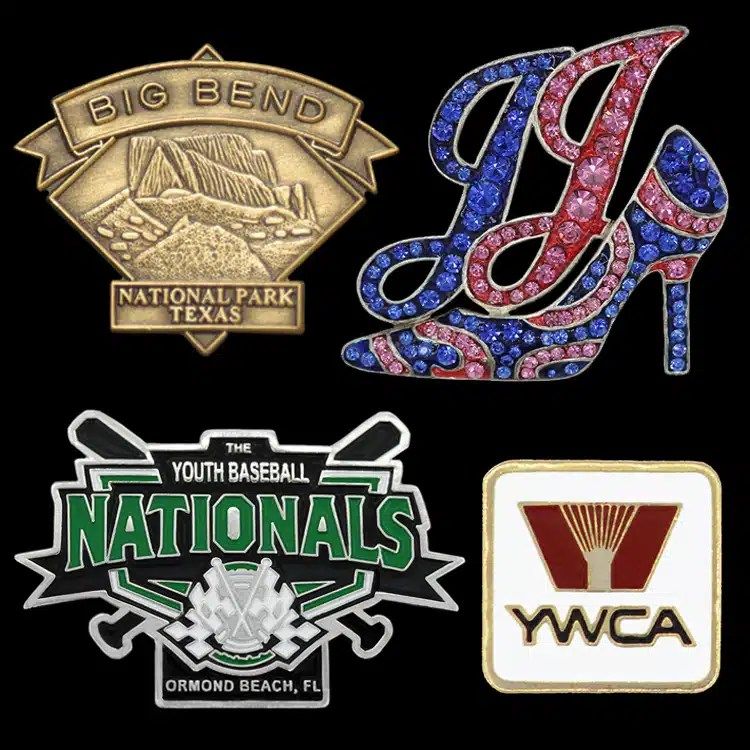
A custom patch suits supporters who wear jackets, vests, caps and packs. A lapel pin suits supporters who wear lanyards or blazers, and it is the classic trading item at youth sports events. Offering both at different price points lets supporters choose, and a bundle of one of each can lift the average sale. Our comparison of patches vs pins for merch goes into the differences in more detail.
Setting the quantity and the selling price
Start with how many you can genuinely sell. Count your members, families, past donors and event attendance. Then estimate what share will buy. It is better to sell out and reorder than to store hundreds of unsold patches. Our custom minimum starts from 100 pieces and varies by product, confirmed on the quote.
Ask for a quote at two quantities, for example your safe number and an optimistic one. The cost per piece usually falls as quantity rises, because setup is shared across more pieces. With both numbers in hand, you can work out the break-even point at your planned selling price.
| Question | Why it matters | How to answer it |
|---|---|---|
| How many can we sell? | Avoids leftover stock | Members, donors and past event numbers |
| What does each cost us? | Sets the floor for the price | Quoted cost at two quantities |
| What will supporters pay? | Sets the ceiling | What similar items sell for locally |
| How many to break even? | Shows the risk | Total order cost divided by selling price |
| When do we sell most? | Sets the order date | Event dates, season start, giving days |
Think about leftovers before you order. A design without a year can be sold again next season, given to new members, or used as a thank-you for volunteers and donors. A dated design is harder to move once the year has passed, so order closer to your safe number. Some groups also hold back a small stock for sponsors, which turns spare patches into a gift rather than a loss.
Decide, too, who handles the money and the stock. One person should keep a simple record of how many patches went out, how many were sold and how much was collected. That record makes the next fundraiser easier to plan and helps your treasurer.
Permissions and rules to check
Before you design, check who owns the marks you plan to use. School names, mascots and logos are often controlled by the school or district, and a booster club may need approval to sell items with them. Agency emblems and insignia may be restricted by your department's own policy. Professional team logos and licensed characters belong to their owners and should not be used without permission.
Also check the rules for your organization's sales. Nonprofits, schools and booster clubs may have rules on how money is collected and recorded, and sales tax rules vary by state. We cannot advise on those, so ask your treasurer, your district office or your state's revenue department for the rules that apply to you.
Selling at events and online
At an event, display patches on a board or pinned to a sample jacket so people can see them worn. Have change or a card reader ready, and keep stock in labeled bags by design. A simple sign with the cause and the price helps more than a long explanation.
Online, a clear photo of the patch on a garment sells better than a flat image. Patches and pins fit in a standard envelope with a stiff card, which keeps mailing simple. If you are offering several designs, a limited run of each encourages people to buy early.
Timing the order
Work backwards from your first sale date. Quotes come back in 2 to 3 business days, proofs usually 1 to 3 business days after artwork, and production runs about 3 to 4 weeks after you approve the proof in writing. Then allow for UPS delivery from Holly Hill, Florida. Rush production of around 10 business days is sometimes possible when the factory can hold it. For a full timeline, see how long custom patches take.
When you are ready, send your design and quantities for a quote, and mention your sale date so we can plan around it.