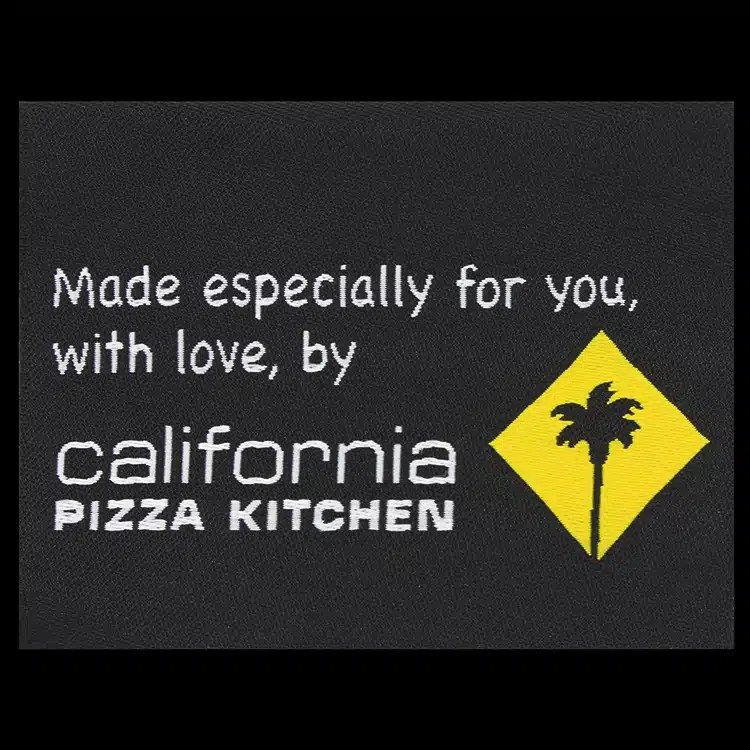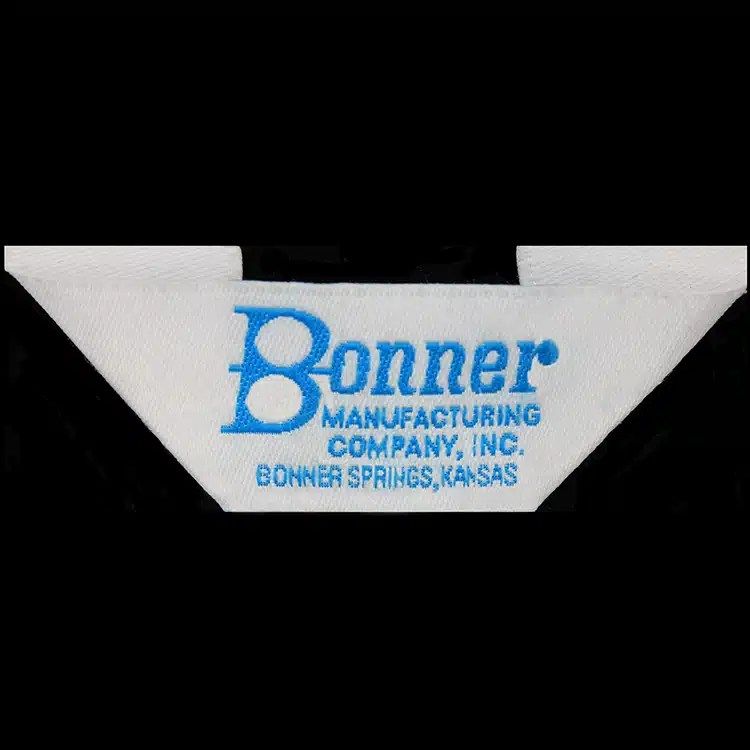
Label folds are the ways a woven label is cut and folded so it can be sewn into a garment. A straight cut label is flat and sewn on all four sides. An end fold label has both ends tucked under and is sewn flat, usually inside the back neck. A center fold, or loop fold, is folded in half so both faces show, with the raw ends caught in a seam. A mitre fold turns the ends under and up into a tab that sews into a side seam or hem. Pick the fold by where the label goes and how you will attach it; the artwork comes second.
Below we explain each fold, compare them side by side, show how folds change the size you order, and match folds to common garments and products.
Why the fold matters
A woven label starts as a long ribbon of repeated designs on a loom. Each label is cut from that ribbon, and its edges either get sealed or folded under so they do not fray. The fold decides three things: whether raw edges are hidden, which seam the label can be sewn into, and whether one face or both faces are visible. Get the fold right and the label sits neatly for the life of the garment. Get it wrong and it curls, scratches the neck or cannot be sewn where your factory planned.
The main label folds
Straight cut
No folds. The label is cut to size with sealed edges and sewn on all four sides, or applied by heat seal. It is the simplest and most flexible style: inside a neck, on a hem, on the outside of a bag or on a pocket. It also suits labels laser cut to the outline of a design.
End fold
Both short ends are folded under, so the label shows clean edges at each end. It is sewn flat along the two folded ends, or on all four sides, and is the classic back neck label. It can be sewn in or applied by heat seal.
Center fold (loop fold)
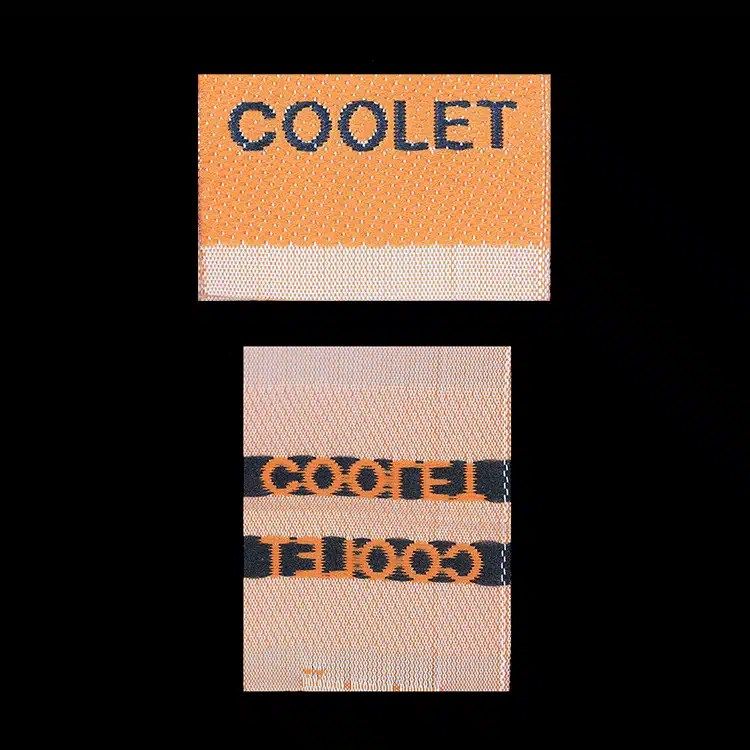
The label is folded in half across the middle, and the two raw ends are sewn into a seam, so it hangs as a loop with a front and a back. This lets you put the brand on one face and the size or a short message on the other. It is the standard choice for labels set into the back neck seam of a tee, and for loop labels on blankets and bags. Our product page lists this style as the Manhattan cut.
Manhattan fold
Label makers do not all use the name the same way. Some use it for the center fold described above; others use it for a label whose ends are folded under and then folded in half, which hides every raw edge and gives a thicker, finished loop. Because names vary between suppliers, describe what you want and go by the drawing on your proof.
Mitre fold
The ends are folded under and up at an angle, creating a tab that is sewn straight into a seam. A mitre fold label sticks out from a side seam or a hem like a small flag, which suits side seams on shirts, the hem of a sweatshirt or the seam of a cap or tote. It is sew-in only, because the fold itself is what holds it in the seam.
Label folds compared
| Fold | How it sits | Application | Typical placement |
|---|---|---|---|
| Straight cut | Flat, all edges sealed | Sew-in or heat seal | Neck, hem, pocket, outside of bags |
| End fold | Flat, ends tucked under | Sew-in or heat seal | Back neck, inside jackets |
| Center fold (loop) | Hangs as a loop, two faces | Sew-in | Back neck seam, blankets, bag seams |
| Manhattan | Loop with edges hidden | Sew-in | Premium neck labels |
| Mitre fold | Tab out of a seam | Sew-in | Side seams, hems, cap and tote seams |
How folds change the size you order
The size that matters to your customer is the visible size: the face of the label once it is in the garment. Folds and seams use up material that nobody sees. As a rule of thumb, an end fold uses roughly 1/4 to 3/8 in (6 to 10 mm) at each end, and a center fold label needs extra length for the part caught in the seam. Your designer should keep text and logos clear of those areas.
- Give us the finished, visible width and height you want.
- Name the fold and say whether the label is sewn in or heat sealed.
- Mark which area is hidden by the fold or seam on your artwork, or ask us to add it.
- For center folds, say what goes on each face.
- Check the folded size and the safe area on the proof before you approve it.
Choosing a fold by garment or product
- T-shirts and tops: a center fold in the back neck seam, or an end fold sewn flat below the seam. If comfort matters, a soft end fold sewn flat avoids a stiff edge against the neck.
- Hoodies and sweatshirts: end fold in the neck, plus a mitre fold or a small loop on the hem or side seam as a brand flag.
- Jackets: end fold or straight cut inside the back yoke, where there is room for a larger label.
- Caps and beanies: a small center fold or mitre fold in the back seam, or a straight cut sewn on the outside.
- Bags, totes and blankets: a straight cut on the outside, or a loop label in a seam.
- Heat seal for performance wear: a straight cut or end fold label applied by heat seal avoids stitches through thin technical fabric.
For the sewing itself, our guide to sewing labels into clothing walks through each fold step by step.
Brand labels, care labels and what the fold can carry
A center fold gives you two faces, which tempts brands to put care and fiber content on the back. That can work, but care and content labeling in the US has its own rules under the FTC's Care Labeling Rule and the Textile Fiber Products Identification Act, including how permanent the label must be and where some information goes. Check the FTC's published guidance for your product, and read our summary of clothing label requirements before you design a combined label.
Ordering folded woven labels
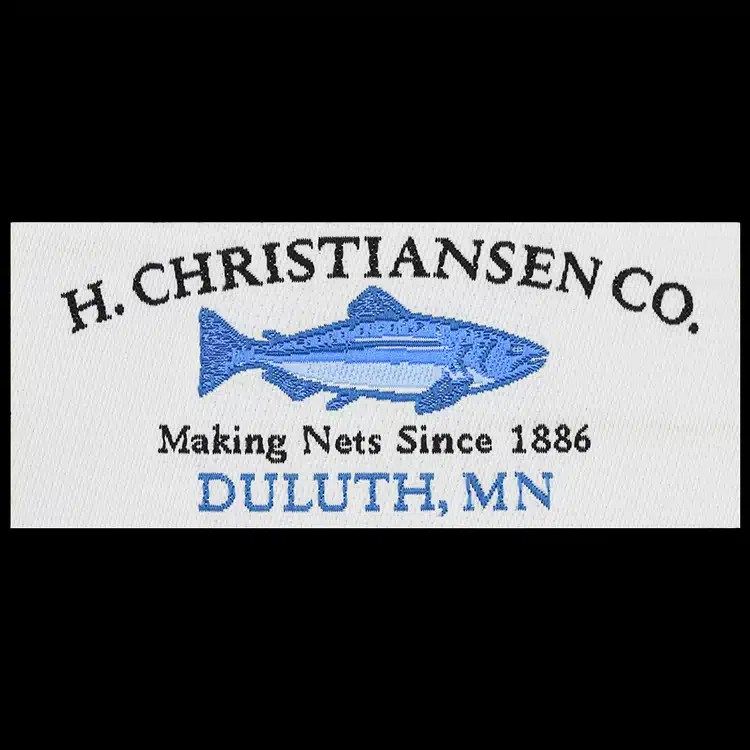
Send the finished size, quantity, number of thread colours, the fold and application, your artwork (AI, EPS or PDF is cleanest; a PNG or a photo of an existing label is enough to start) and your in-hands date. Woven labels start from 100 pieces and typically take about 3 to 4 weeks after you approve the proof, both confirmed on your quote, and there are no setup or digitizing fees. If you are still deciding between weaving and printing, see woven vs printed labels; for a full brand program, read our woven labels guide for clothing brands. Then see the cuts on our custom woven labels page and request a quote.