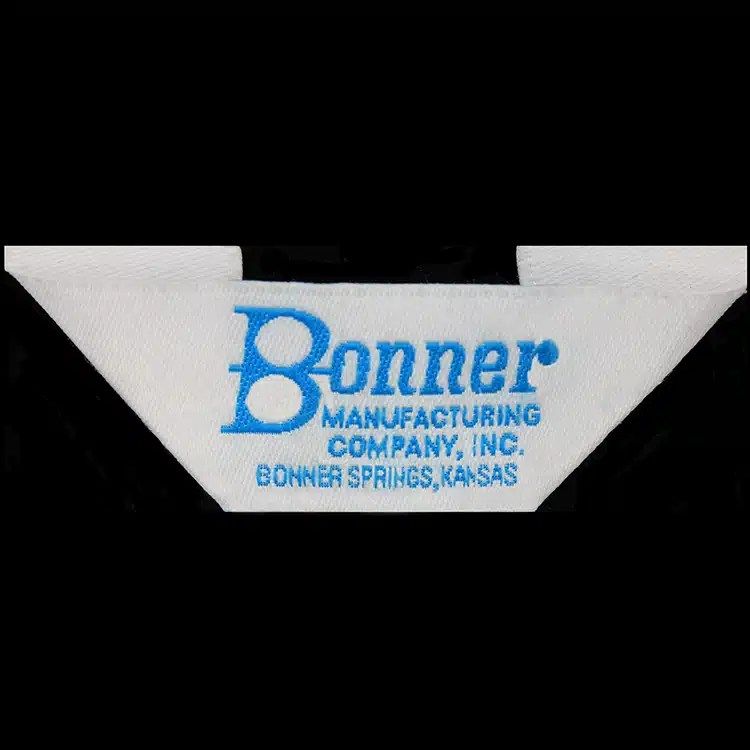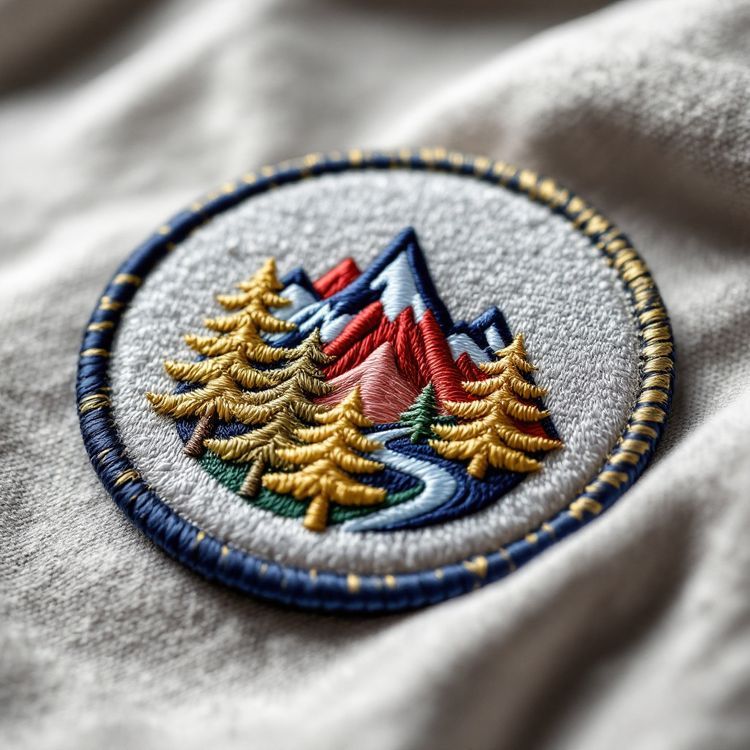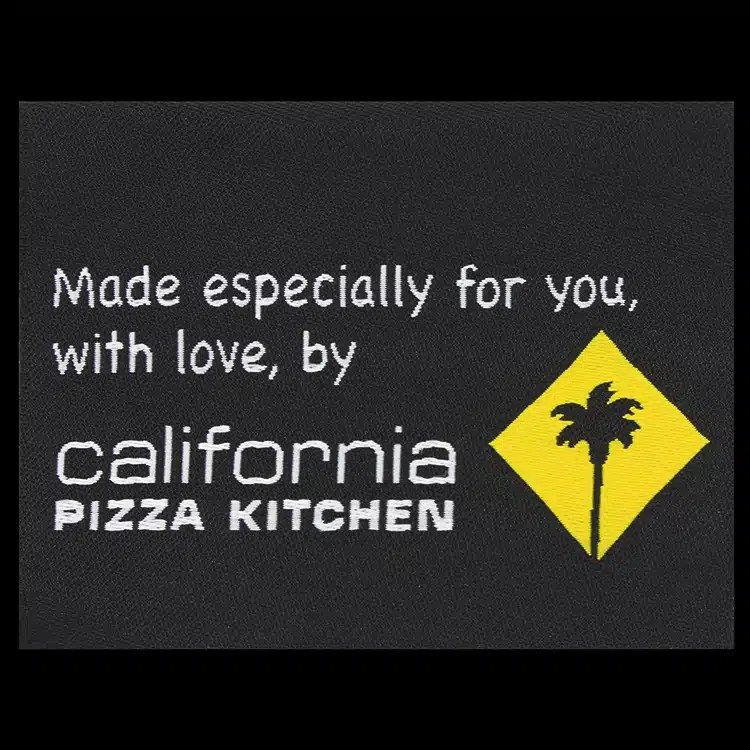
Woven labels have the design woven into the label from thread, so they are durable, textured and feel like part of the garment. Printed labels have ink printed onto a smooth ribbon such as satin, cotton or polyester, so they are thin, soft and hold small text and full colour artwork. For a brand label that represents your name, woven is the usual choice. For care and content information, with lots of small text, printed is common. Many brands use both: a woven label at the neck and a printed care label in the side seam.
This post compares the two on the points that matter for a clothing line, merch run or uniform program. We make woven labels; printed labels come from a different process, and we describe them here so you can compare.
How each label is made
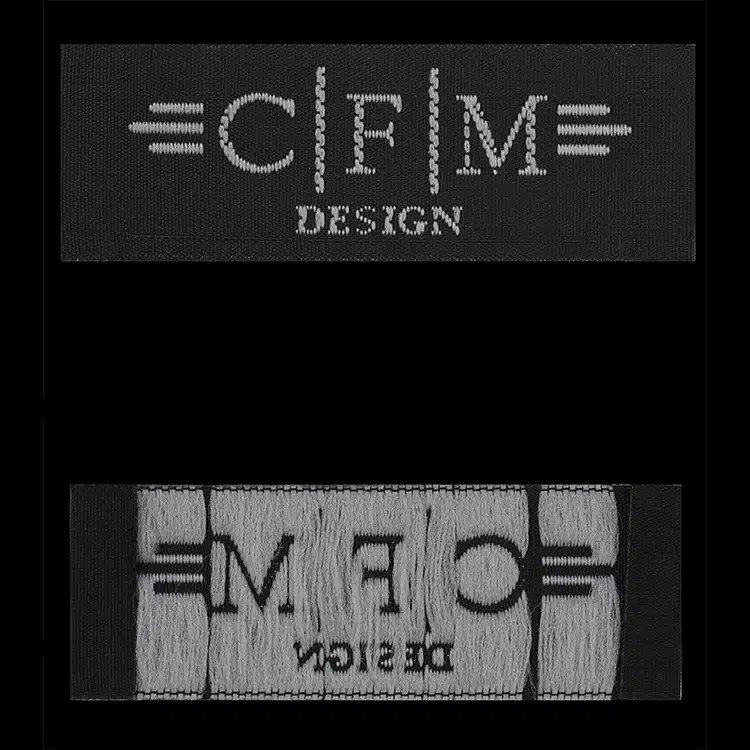
A woven label is made on a loom. Threads in each colour are woven together so the logo and lettering form inside the fabric of the label itself, the same way a woven patch is made. The result is a small, firm piece of fabric with the design built in.
A printed label starts as a plain ribbon tape. Your design is printed onto the surface with ink, by screen, transfer or digital printing, and the tape is cut to length. Some garments skip the label entirely and have the information printed straight onto the fabric, often called tagless printing.
That difference, built into the thread versus sitting on the surface, drives every comparison below.
Woven vs printed labels at a glance
| Factor | Woven label | Printed label |
|---|---|---|
| How the design is made | Woven in from thread | Ink printed on the surface |
| Look | Textured, slight sheen, premium | Flat, smooth, simple |
| Feel | Firmer, with more body | Thin and soft, especially satin |
| Durability | Design cannot wash off | Ink can fade or crack over many washes |
| Colour | Solid thread colours, a practical limit per label | Many colours, gradients and photos possible |
| Small text | Holds fine text well for its size | Holds very small text and long paragraphs |
| Typical use | Brand labels, logo tabs, merch | Care, content and size labels |
Look, feel and comfort
A woven label looks and feels like a finished, branded product. The texture and slight sheen of the thread read as quality, which is why most clothing brands, from small labels to large ones, put a woven label at the neck. It also gives the label body, so it holds its shape in the garment.
A printed label is thinner and softer. Satin ribbon in particular is smooth against the skin, which makes printed labels popular for baby clothes, base layers and garments worn close to the body. On the other hand, it looks plainer, and it can read as a care tag rather than a brand mark.
Comfort is mostly about the edges. A cut edge on any label can scratch; a folded cut such as end fold or Manhattan puts a soft fold against the skin. Our guide on how to sew labels into clothing covers each cut.
Durability through washing
This is where woven labels win clearly. Because the design is made from the thread itself, it cannot rub or wash off. A woven label usually looks much the same after years of laundering as on day one.
Printed labels depend on the ink. Good quality printing on satin or polyester holds up well, but over many hot washes the ink can fade, crack or rub away, especially on cheaper tapes. That matters most for information a customer needs to read for the life of the garment, which is why care labels are made to stay legible and why the FTC Care Labeling Rule expects care instructions to remain readable for the life of the product.
Detail and colour
Woven labels use a set of solid thread colours, and a practical colour count per label. Fine type stays sharp for its size, because woven thread is fine, but gradients and photographs are reduced to solid areas. A logo with two or three colours on a contrasting background is the sweet spot.
Printed labels can carry many colours, gradients and even photos, and they hold very small text. That is why care labels, which often carry several lines of instructions and symbols in more than one language, are usually printed.

Design tips for a woven brand label
A woven label is small, so the artwork has to be simple to read well. Use your wordmark or a single logo rather than a full lockup with a tagline. Keep the colour count low, two or three threads on a contrasting background, so fine type stays sharp. Leave a margin around the design, since the edges are folded, stitched or cut. If you are not sure what size to order, measure a label you like in a garment you own and start from there. AI, EPS or PDF artwork gives the cleanest weave, and a PNG or a photo of an existing label is enough to start.
When to use each, or both
- Choose woven for your brand label, a logo tab on a hem, a merch run that should feel premium, or uniforms that are washed constantly.
- Choose printed for care and content labels, size labels, and soft garments worn against the skin.
- Use both for a retail clothing line: woven brand label at the neck, printed care and content label in the side seam.
- Consider woven only for accessories such as bags and hats, where a single brand label is all that is needed and the label is part of the look.
Brands making garments with patches often match the label to the patch. A woven label and a woven patch share the same flat, detailed look and can be made from the same artwork.
Ordering woven labels
Our woven labels come in straight, end fold, Manhattan and mitre cuts, sewn in or heat sealed depending on the cut, with no setup or digitizing fees. See the options on our custom woven labels page, and read the woven labels guide for clothing brands for sizing and design. When you are ready, request a quote with the finished size, quantity, number of colours, cut and artwork. Woven labels start from 100 pieces, quoted from the factory price within 2 to 3 business days, and nothing runs until you approve the proof in writing.