In the US, most clothing sold to consumers must carry four pieces of information: the fiber content by percentage, the country of origin, the identity of the company responsible for the garment (its name or an RN number), and care instructions. The first three come from the Textile Fiber Products Identification Act, enforced by the Federal Trade Commission (FTC). The care instructions come from the FTC Care Labeling Rule. Your brand label, the one with your logo, is optional.
This guide walks through each requirement in plain terms, where each one has to sit on the garment, and how small brands usually split the information across a brand label and a care label. It is a general guide, not legal advice: the official source is the FTC, and its business guide Threading Your Way Through the Labeling Requirements Under the Textile and Wool Acts is the best place to check the details for your products.
Which rules apply to clothing
Two sets of federal rules cover most apparel. The Textile Fiber Products Identification Act (usually called the Textile Act) and the FTC rules under it cover what the garment is made of, where it was made and who is responsible for it. The Care Labeling Rule covers how the garment should be cleaned. Products containing wool also fall under the Wool Products Labeling Act, and fur garments fall under the Fur Products Labeling Act, which have their own wording requirements.
There are other rules that can touch a garment. Children's products have tracking label and safety requirements from the Consumer Product Safety Commission, and some states have their own rules for items such as stuffed or upholstered articles. If you sell children's clothing or anything filled, check those sources as well.
Fiber content
The label must list each fiber by its generic name and its percentage by weight, in order of predominance. That means "60% cotton, 40% polyester", not a trade name on its own and not "cotton blend". Trade names can appear alongside the generic name, as long as the generic name is there too.
As a rule, any fiber making up 5% or more of the weight is named. Fibers under 5% can be grouped as "other fiber" unless they have a clear functional purpose, such as spandex added for stretch, in which case they are named with their percentage. Trims, linings and decorative parts follow their own exemptions and disclosure rules, so a garment with a contrasting lining may need to state the shell and lining separately.
- Use generic fiber names recognized by the FTC, such as cotton, polyester, nylon, rayon, spandex and wool.
- List them from largest share to smallest.
- Make sure the percentages are accurate for the actual fabric, within the tolerance the rules allow.
- Disclose separate sections, such as lining or body and trim, when the rules call for it.
Country of origin
Every garment must say where it was made. For an imported garment that is usually "Made in" followed by the country where it was substantially transformed, for example "Made in Vietnam". The FTC treats a plain "Made in USA" claim seriously: the product must be all or virtually all made in the US. A garment sewn in the US from imported fabric is labeled along the lines of "Made in USA of imported fabric".
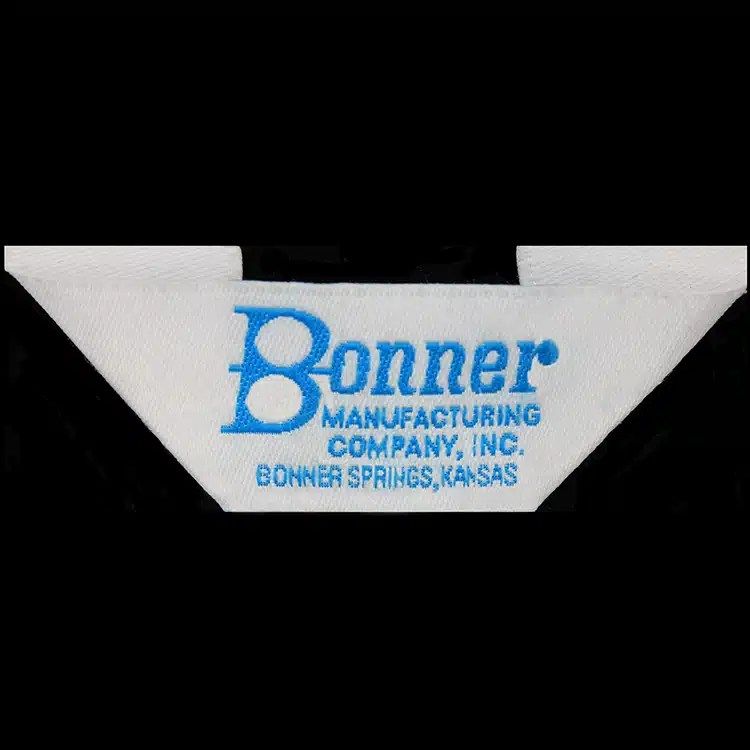
Placement matters here. For garments with a neck, the country of origin has to appear on the front of a label attached to the inside center of the neck, either midway between the shoulder seams or very close to another label that sits there. That is why so many brand labels at the back of the neck also carry the origin line. For garments without a neck, such as pants or skirts, the origin must be on a conspicuous label on the inside or outside.
Manufacturer identity and RN numbers
The label must identify the manufacturer or another company responsible for marketing or handling the garment. You can do that with the company's registered name, or with a Registered Identification Number (RN) issued by the FTC. An RN is free to apply for through the FTC, and many small brands use one because it is short and fits neatly on a small label.
The RN or name does not have to be your own if another company in the chain is the responsible party, but most brands that sell under their own name prefer to use their own. Keep your registration details current, since the RN points back to the company record held by the FTC.
Care instructions
The Care Labeling Rule requires textile wearing apparel to carry a permanent label with regular care instructions. The label must give at least one method of cleaning the garment safely, covering washing or dry cleaning, drying, ironing, bleaching and any warnings needed, such as "wash with like colours" or "do not iron print". The manufacturer or importer needs a reasonable basis for the instructions, which in practice means testing or reliable experience with the fabric.
The care label must stay attached and legible for the useful life of the garment, and a shopper should be able to find it easily at the point of sale. You can write the instructions in words, use the care symbols set out in the ASTM standard the Rule recognizes, or combine both. A few products and situations are exempt, and the Rule spells those out, so check it if you sell accessories or unusual items.
Requirements at a glance
| Item | Where it comes from | What it says | Where it goes |
|---|---|---|---|
| Fiber content | Textile Act and FTC rules | Generic fiber names with percentages by weight | On a label, either side, easy to find |
| Country of origin | Textile Act and FTC rules | Made in followed by the country | Front of the inside center neck label on garments with a neck |
| Company identity | Textile Act and FTC rules | Company name or RN number | On a label with the other required details |
| Care instructions | FTC Care Labeling Rule | At least one safe cleaning method plus warnings | Permanent label that lasts the life of the garment |
| Brand name or logo | Not required | Your mark, size or a message | Wherever suits the design |
Splitting it between a brand label and a care label
Most brands use two labels. The brand label sits at the back of the neck and carries the logo, often the size and frequently the country of origin, because that is the spot the origin rule points to. A separate care label, usually sewn into a side seam, carries the fiber content, care instructions and RN. The FTC allows the required information to be spread across labels as long as each piece is where it needs to be.
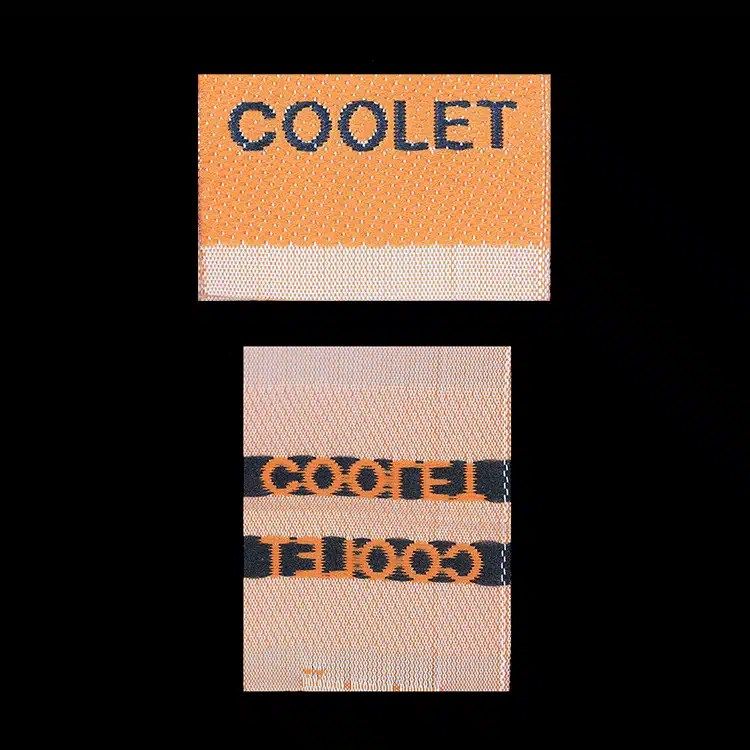
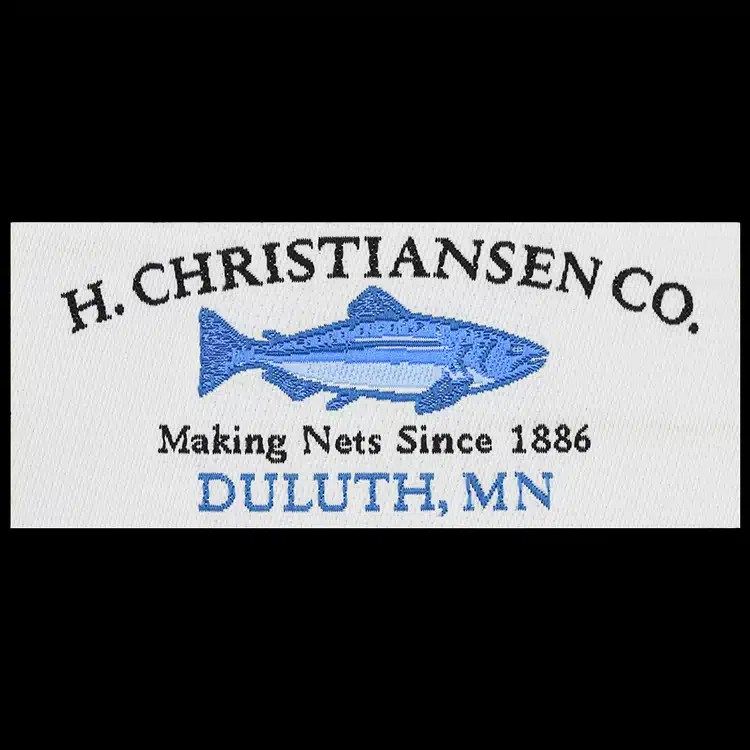
A custom woven label is the classic brand label because the text is woven in, not printed on, so it does not wash off. If you want the origin line on your neck label, plan the layout so it fits at a readable size. For the care side, many brands use a printed satin or cotton label, since long care text can be easier to fit in print. For the brand side, our woven label guide for clothing brands covers sizes, folds and colours.
Ordering labels with the right text
Before you send label artwork, settle the wording. Confirm fiber percentages with your fabric supplier, decide whether the origin goes on the brand label, and have your RN ready. Then lay out the label at its real size so you can see whether the small lines are readable. Woven labels hold fine text well, but very long care text may be easier to read on a printed care label.
- Write out every line exactly as it should appear, including punctuation and percentages.
- Decide which label carries each required item.
- Choose the fold or cut so the text you need sits on the visible face.
- Send AI, EPS or PDF artwork if you have it; a PNG or a photo of an existing label is enough to start.
When you are ready, send us the label details with size, fold, quantity and your artwork. The quote usually comes back within 2 to 3 business days, and a proof follows within about 1 to 3 business days of artwork. Nothing is woven until you approve that proof in writing, so it is your chance to check every word against the rules. If you are new to the process, how it works lays out each step.