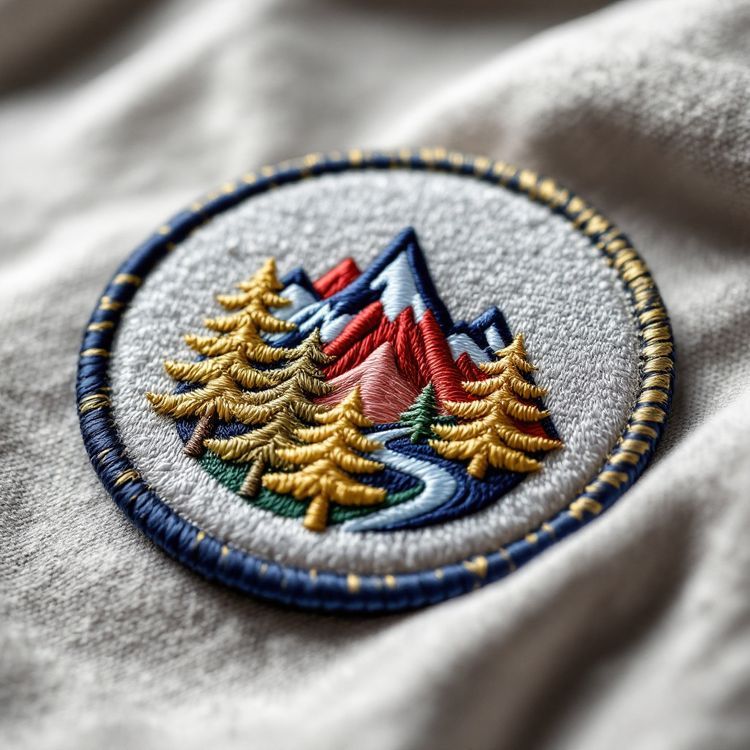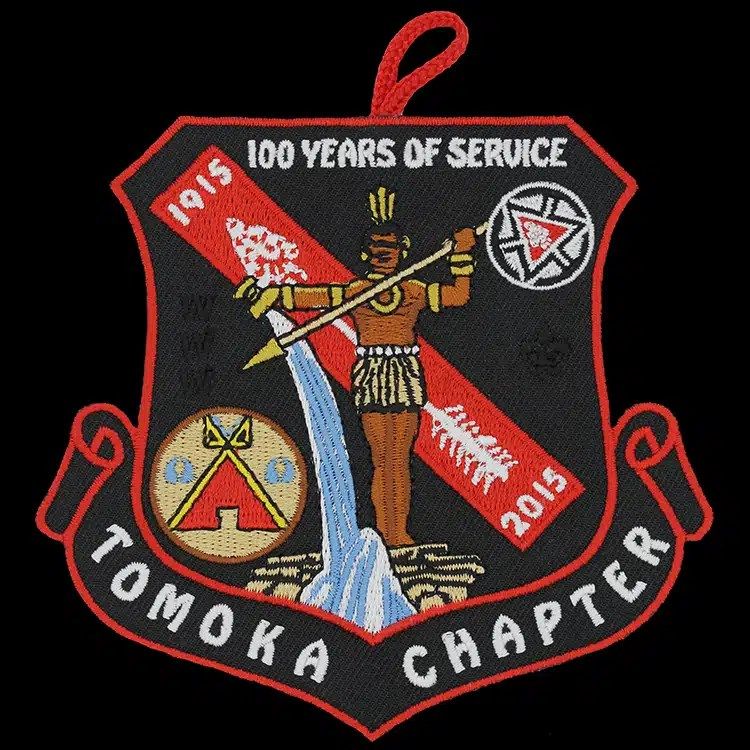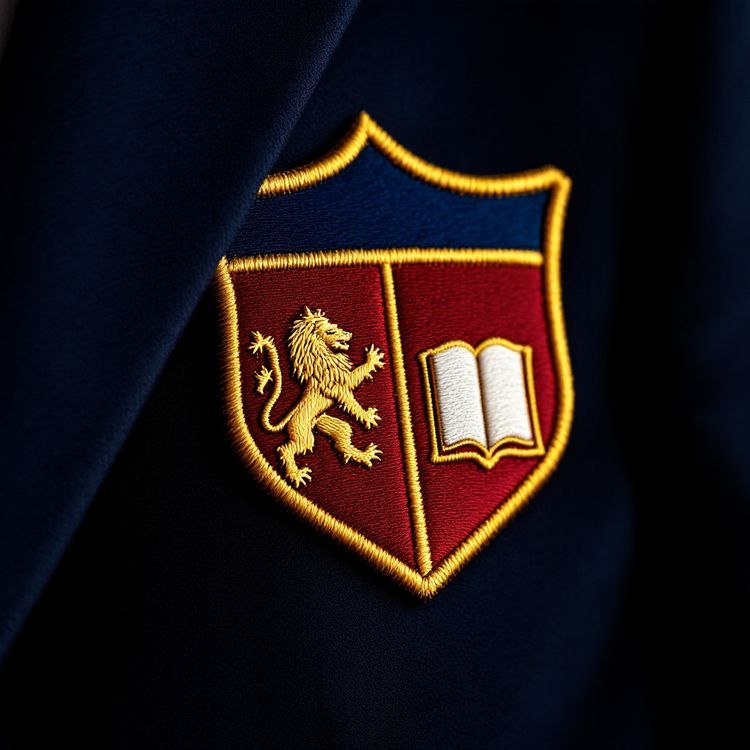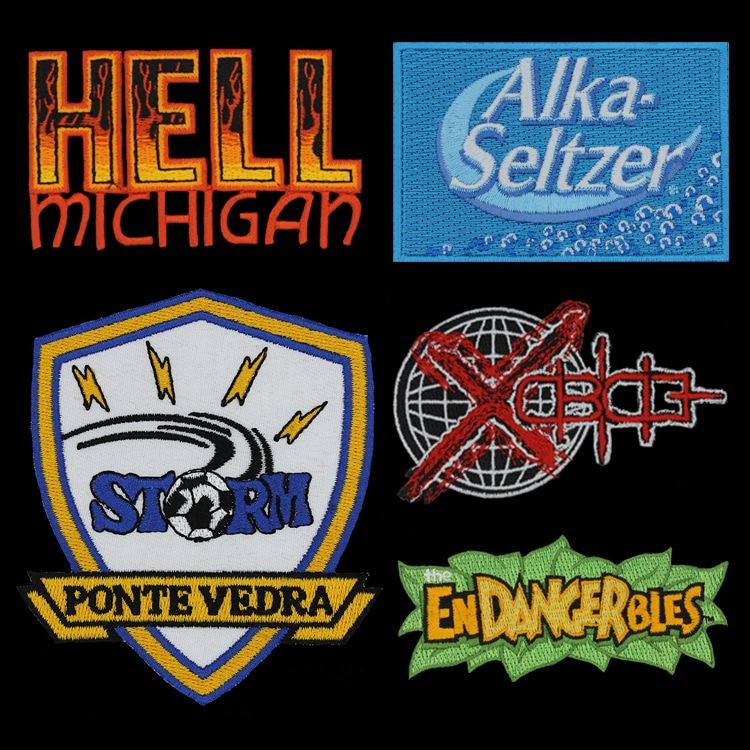
The difference between sublimated vs embroidered patches comes down to ink against thread. A sublimated patch is dye printed in full colour into the fabric, so it is flat and can show photos, gradients and fine shading. An embroidered patch is stitched in thread over a twill or felt base, so it is raised and textured but works in solid blocks of colour. If your artwork depends on shading, sublimated usually looks closer to the original. If it is bold and simple, embroidery gives the classic patch look.
Below we compare how each is made, how they look and feel, how long they last, and how to choose for your design.
How each patch is made
Embroidered
An embroidered patch starts as a piece of twill or felt. Your artwork is digitized into a stitch file, and a machine sews satin stitches and fill stitches over the base, one thread colour at a time. The thread sits on top of the fabric, which is why embroidery has height and texture.
Sublimated
A sublimated patch is printed. In dye sublimation, the artwork is printed with special inks and then transferred with heat and pressure, so the dye goes into the fibres of a polyester fabric rather than sitting on top as a layer. The surface stays smooth, and the design becomes part of the fabric. The patch is then cut and finished with an edge like any other.
That one difference, thread on top versus dye inside the fabric, drives everything else in this comparison.
Look, colour and detail
Embroidery has a tactile, dimensional look. Light catches the satin stitches, and each colour shows as a clear block of thread. That suits logos, crests, lettering and uniform emblems. The limits are detail and blending. As a general guide, embroidered lettering needs a cap height of about 1/4 in to stay readable, lines thinner than about 1 mm do not stitch cleanly, and thread cannot reproduce a smooth fade or a photograph.
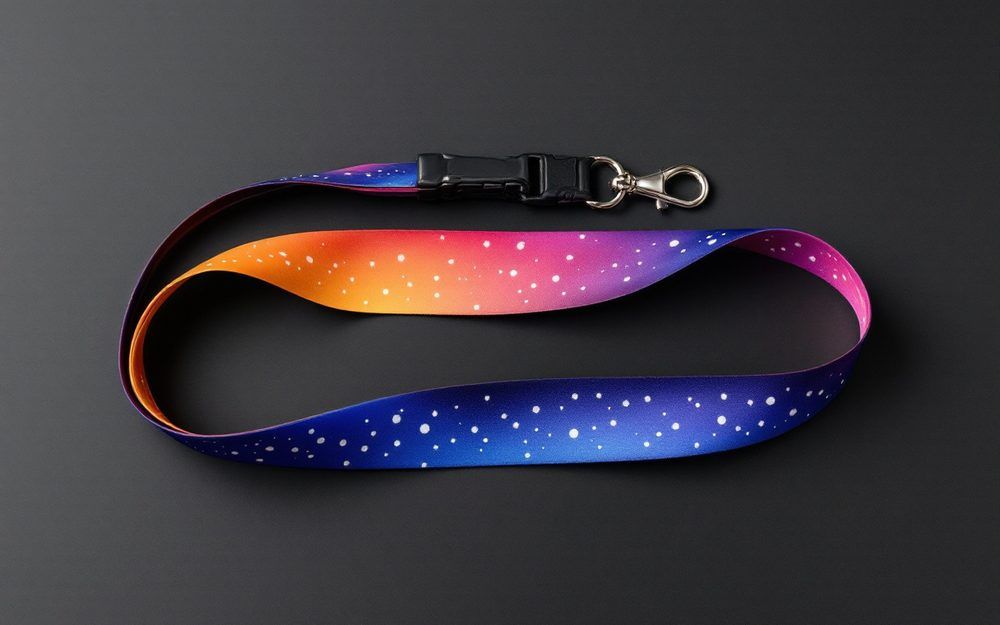
Sublimation has no such limits on colour. Gradients, photos, skies, soft shadows and full colour illustrations all print as they appear in the artwork, and small text holds well because it is printed rather than stitched. The trade-off is texture. A sublimated patch is flat, more like a printed image than a badge you can feel.
Colour count
On an embroidered patch, every thread colour is another change on the machine, so a design that reads well in five colours rarely gains much at nine. On a sublimated patch the artwork prints in full colour in one pass, so the number of colours is not the same constraint. If your logo only works with a gradient, that is a strong sign it belongs on a sublimated patch.
Feel, thickness and durability
Embroidered patches are thicker and stiffer, especially at high coverage, where most of the surface is stitched. That gives a structured, premium feel on jackets, bags and caps, and the raised thread stands up well to abrasion. Our guide to embroidery coverage shows how the level of stitching changes the feel.
Sublimated patches are thin and light. They sit flat on the garment and add very little bulk. Because the dye is inside the fibres rather than on top, the print does not crack or peel the way a surface print can. As with any dyed fabric, long exposure to strong sunlight can soften the colours over time.
Washing and care
Both constructions handle normal washing well when they are attached properly. For either, turning the garment inside out, washing on a cool or warm cycle and drying on low heat keeps the patch looking its best for longer. How long a patch stays on depends far more on the backing and how it was attached than on whether it is printed or stitched.
Sublimated vs embroidered patches at a glance
| Factor | Embroidered | Sublimated |
|---|---|---|
| How it is made | Thread stitched over twill or felt | Dye printed into the fabric |
| Surface | Raised, textured stitch | Flat, printed, full colour |
| Gradients and photos | Not possible in thread | Reproduced as in the artwork |
| Small text and fine lines | About 1/4 in cap height as a general minimum | Holds smaller text |
| Colours | Solid thread colours, counted on the quote | Full colour |
| Thickness | Thicker, stiffer | Thin, flexible |
| Edge | Merrowed or heat cut | Merrowed or heat cut |
| Best for | Logos, crests, uniforms, caps | Photos, gradients, fine art |
Edges and backings
Both constructions take the same finishing. Either can have a merrowed border, the raised wrapped stitch around simple shapes, or a heat cut edge that follows a custom outline. Either can be sew-on, iron-on, hook-and-loop or have a rigid plastic backing. The backing depends on where the patch is worn and how it is washed, not on whether it is printed or stitched. Sew-on suits uniforms washed often, iron-on suits quick application on cotton and canvas, and hook-and-loop suits patches that need to come off.
How to choose for your design
Start with your artwork, not the construction. Look at it at the size you need and ask what it depends on.
- Choose embroidered when the design is bold, with solid colours and short, large lettering, and you want texture.
- Choose embroidered for uniforms, caps, jackets and bags where the classic raised look is expected.
- Choose sublimated when the art relies on a photograph, a gradient, shading or many blended colours.
- Choose sublimated for event art, full colour illustrations and designs that lose their meaning in solid colours.
- If only one small part of the design uses a gradient, ask whether it can be redrawn in solid colours so you keep the option of thread.
- If the choice is between fine detail and texture, also look at woven, which holds small detail in thread. See embroidered vs woven patches.
Clean artwork helps either way. A vector file (AI, EPS or PDF) gives the cleanest stitch or print file, and PNG is accepted too. Our guide on vector vs raster artwork explains the difference.
Preview your design and request a quote
You can preview your logo as an embroidered patch in the free Patch Studio and see it on a jacket or a cap in 3D. Sublimated patches are not in the studio, so ask about that construction when you request your quote. Send your artwork with the size, quantity, backing and in-hands date through the quote form, and we will come back with a quote from the factory price within 2 to 3 business days. Nothing is made until you approve the proof in writing.