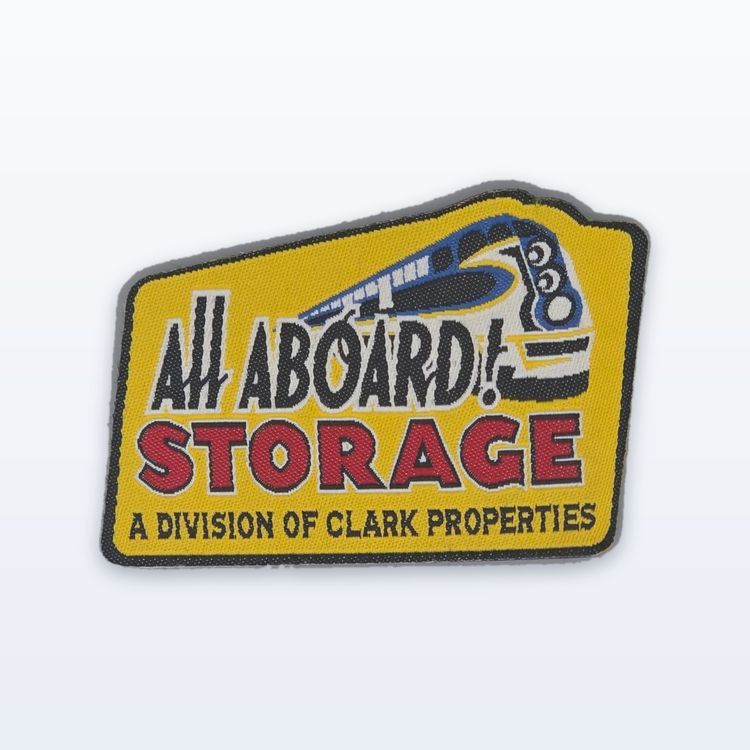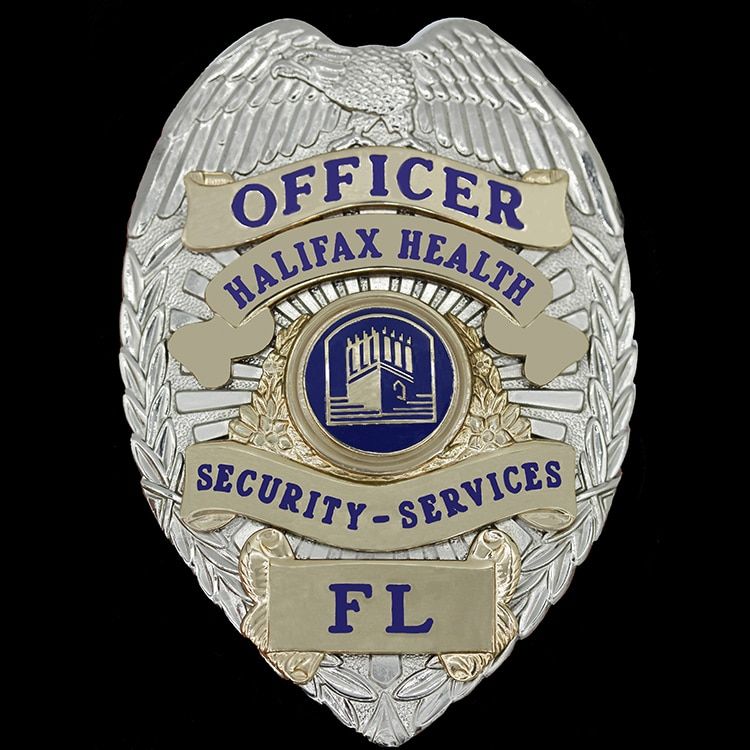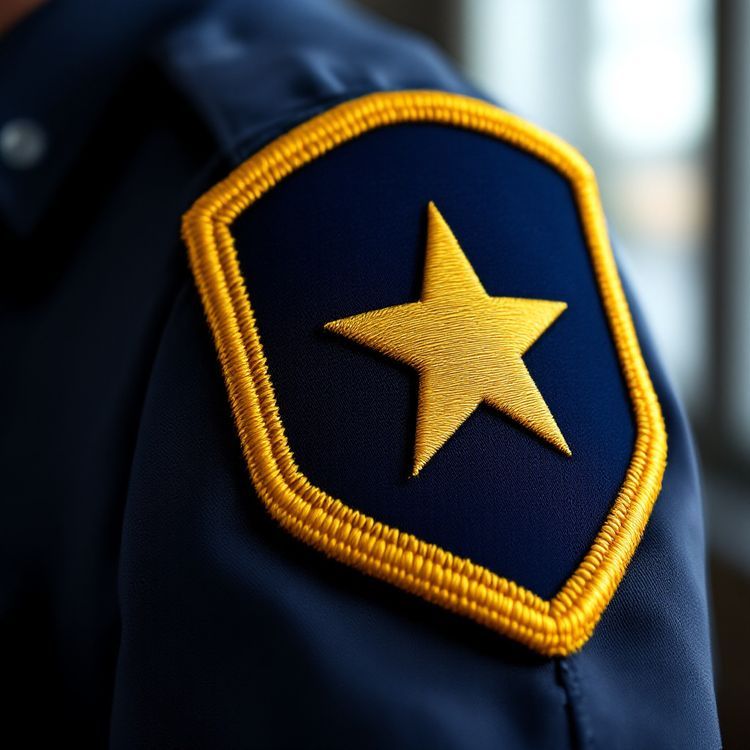
Good security guard patches say SECURITY in large, plain letters, carry your company name, and look clearly different from police insignia. The usual set is a shoulder patch on each sleeve, a chest patch or name tape, and often a large back or panel patch for jackets and vests. Check your state's private security rules before you finalize the design, because many states regulate how guard uniforms may look.
This guide covers what to put on the patch, the regulatory points to check, the sizes and placements most security companies use, and how to order a set that matches across shirts, outerwear and caps.
What a security patch needs to say
A security patch has a different job from most uniform patches. It has to tell a member of the public, at a distance and often in poor light, who this person is and who they work for. That means the word SECURITY should be the most readable element on the patch, not a small line under a crest.
- Role: SECURITY, SECURITY OFFICER or PROTECTIVE SERVICES, in bold block letters.
- Employer: your company name, or the property or campus name for in-house teams.
- Mark: your logo or a simple emblem, kept secondary to the wording.
- Optional: a division name (patrol, event staff, loss prevention) or a site name for contract posts.
Resist the urge to add a long motto or a detailed seal. At shoulder patch size, fine detail gets lost, and every extra element competes with the word that matters.
Rules to check before you design
Private security is licensed at the state level in most of the US, and many states set rules for guard uniforms and insignia. The details vary, but the rules commonly cover three things: that the word SECURITY (or similar) is displayed, that patches and badges cannot be confused with those of a police agency, and in some states that the licensing agency must approve or keep a record of the uniform and patch design.
Because these rules differ from state to state and change from time to time, treat this as a checklist of questions rather than an answer. Ask your state's private security licensing board, or the agency that issues your company license, for its current uniform requirements. If you operate in more than one state, check each one, and design to the strictest.
Designing a patch that reads at a distance
Shape and colour
Rectangles, arched rockers and simple shields are common for security. If local police use a navy shield with gold, consider a black or gray patch with white or silver lettering, or a contrasting colour that ties to your brand. High contrast between the lettering and the background matters more than the number of colours.
Lettering
Use a heavy sans serif or block typeface. As a general guide, embroidered letters need a cap height of about 1/4 in (6 mm) to stay crisp, and for the main word on a shoulder patch you will want considerably more than that. Avoid thin scripts and condensed fonts.
Construction
An embroidered patch is the standard for guard uniforms: it is durable, has a classic look and stands up to daily wear and laundering. If your logo includes small detail, a woven patch holds finer lines and smaller text while staying thin on lightweight shirts.
Uniform placement: where each patch goes
Most security companies follow the same layout as public safety uniforms, which keeps a professional look and makes the patch easy for the public to spot.
| Placement | Typical patch | Approximate size | Common backing |
|---|---|---|---|
| Left and right sleeve | Shoulder patch with company name and SECURITY | 3 to 4 in (76 to 102 mm) wide | Sew-on |
| Left chest | Small logo patch or SECURITY bar | 2.5 to 3.5 in (64 to 89 mm) wide | Sew-on or iron-on |
| Right chest | Name tape | About 4 to 5 in (102 to 127 mm) wide | Sew-on or hook-and-loop |
| Jacket or vest back | Large SECURITY panel | About 8 to 11 in (203 to 279 mm) wide | Sew-on or hook-and-loop |
| Cap front | SECURITY or logo patch | About 2 to 3 in (51 to 76 mm) wide | Sew-on |
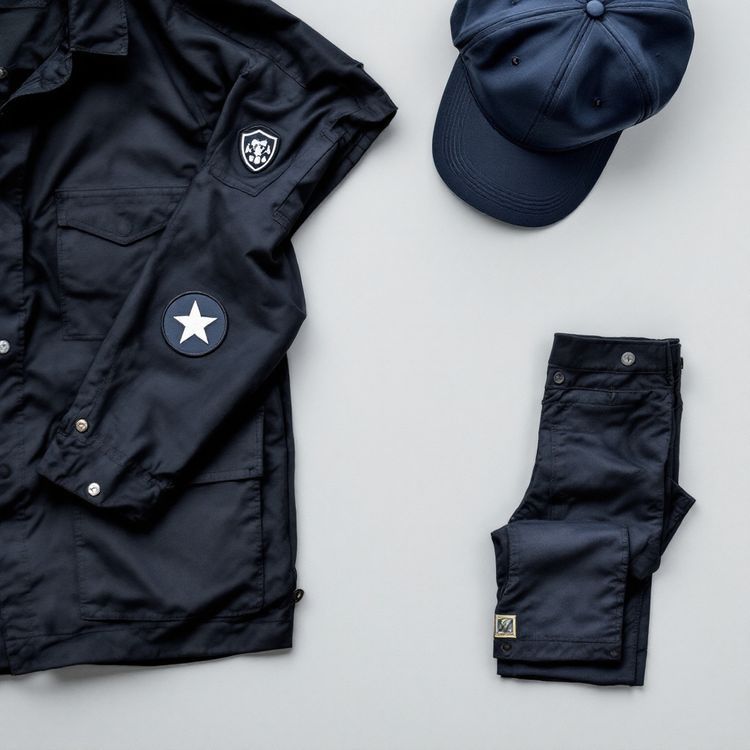
Sizes are a general guide; match them to your garments. Shoulder patches traditionally sit centered on the sleeve, about 1/2 in to 1 in (13 to 25 mm) below the shoulder seam. Our patch size guide goes deeper on each placement.
Backings for shirts, outerwear and vests
Sew-on is the most secure option for uniform shirts that go through industrial laundry. Iron-on (heat seal) works for quick application on cotton and poly blends, though for daily wear many teams heat seal first and then stitch around the edge. Hook-and-loop suits vests and jackets where the same garment may be reassigned between sites or roles, since you can swap a SECURITY panel for an EVENT STAFF panel in seconds. Our guide to patch backing types compares each one.
Badges, epaulets and the rest of the kit
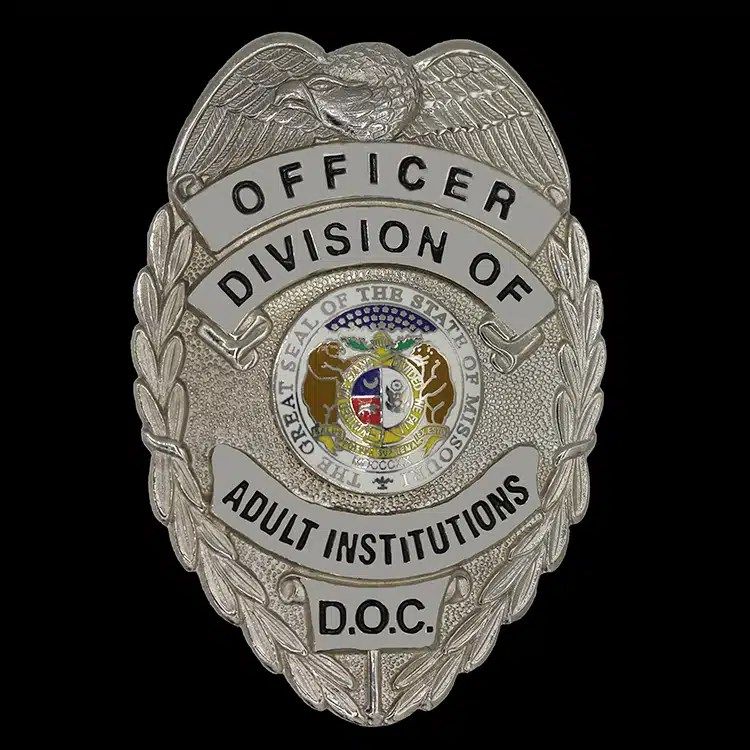
Patches are usually one part of a wider uniform. Many security companies add a metal badge for the chest, epaulet covers for supervisors, and lanyards for ID cards at events and on campuses. We make metal badges and epaulet covers alongside patches, and epaulet covers carry no setup or digitizing fees. Ordering them together makes it easier to keep colours and wording consistent.
Event staff and contract posts
Contract security firms often need more than one look: a standard patch for permanent posts, an EVENT STAFF or CROWD MANAGEMENT version for concerts and games, and sometimes a client-specific patch for a hospital or campus. Keeping the same shape and size across all of them, and changing only the wording or the colour, makes swaps easy and keeps your brand consistent.
Ordering a matching set
- Confirm your state's uniform and insignia requirements first.
- List every garment: shirts, jackets, vests, caps, and how many guards wear each.
- Decide sizes per placement and keep wording identical across the set.
- Pick backing per garment, not one backing for everything.
- Send AI, EPS or PDF artwork if you have it; a photo of your current patch is enough to start.
- Plan for new hires: reorders skip setup and the digitizing stays on file.
Custom runs start from 100 pieces, varying by product, and the exact minimum is confirmed on your quote. A quote typically comes back in 2 to 3 business days, and production takes about 3 to 4 weeks after you approve the proof in writing. If you are rolling patches out across several sites, our business uniform rollout guide helps with counts and timing. When you have the details, request a quote and include the garments each patch goes on.