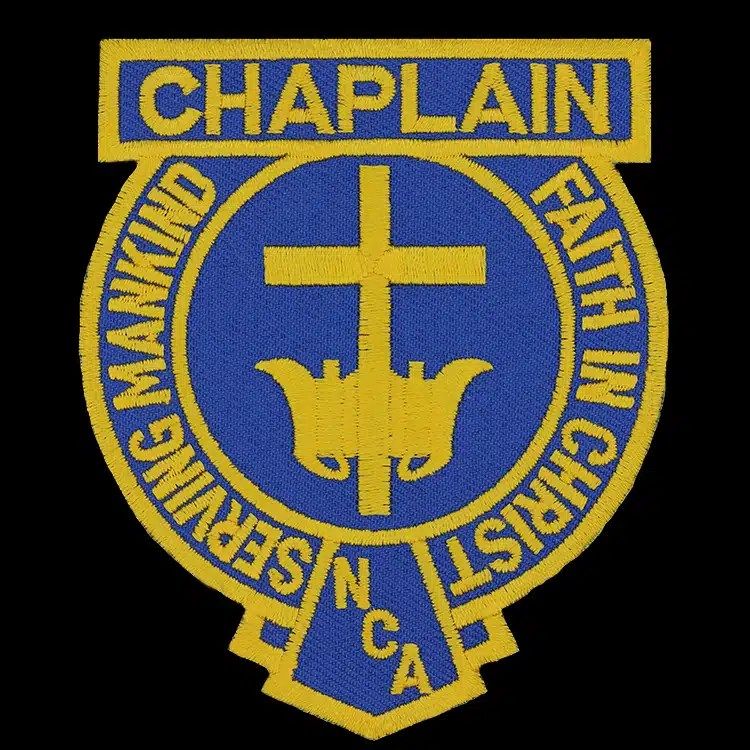
A nursing pin is the school's emblem in metal, presented to each graduate at the pinning ceremony and worn on the uniform afterwards. Most programs choose a hard enamel or die struck pin about 3/4 to 1 in (19 to 25 mm), gold or silver plated, carrying the school name, the program and a traditional symbol such as a lamp or a cross, with a secure clutch. Because the pin marks a once-in-a-career moment, order well ahead: roughly two to three months before the ceremony is comfortable.
This guide covers where the tradition comes from, the symbols programs use, construction and size, backs and add-ons, and how to plan an order around a graduation date.
The pinning ceremony tradition
The pinning ceremony is usually traced back to Florence Nightingale and the nurses trained at her school in London in the 1860s, who were recognized with a badge for their work. Over time, each nursing school came to have its own pin, and presenting it at graduation became a rite of passage that welcomes new nurses into the profession.
Today the pinning ceremony is often separate from the main commencement. Graduates may choose a mentor, a faculty member or a family member who is a nurse to pin them, and many programs include the recitation of a nursing pledge. The pin itself is usually designed by the school, kept the same for years, and ordered for each graduating class, so a well made design becomes part of the program's identity.
Symbols and elements to include
Nursing pins draw on a fairly consistent set of symbols. You do not need all of them, and a pin with one clear symbol usually looks better than a crowded one.
- The lamp: the most widely used nursing symbol, a reference to Nightingale's rounds at night.
- A cross: often a Maltese or a plain cross, a long standing symbol of care for the sick.
- The school seal or crest: ties the pin to the institution.
- The program name: such as School of Nursing, or the credential, such as RN, BSN or LPN.
- Laurel or oak leaves: a classic frame for a formal emblem.
- A motto: short, in a band or a ribbon.
If your school's seal is a registered or controlled mark, get approval from the office that manages it before you send the artwork. The caduceus, the staff with two snakes and wings, is often used as a general medical symbol, but many people regard the single snake staff of Asclepius as the correct medical emblem, and neither is specific to nursing. Most nursing programs lean on the lamp instead.
Choosing the construction
A nursing pin is worn for years and passed down in some families, so the construction should be durable and formal.
| Construction | Look | Why programs choose it |
|---|---|---|
| Cloisonne hard enamel | Smooth, glossy colour level with the metal | Formal, durable, resists chipping |
| Die struck without enamel | Plated metal relief, often antiqued | Classic, understated, one colour |
| Die struck with a small enamel accent | Mostly metal with one or two colours | Traditional look with a school colour |
| Photo etched | Fine detail with soft enamel under an epoxy dome | Detailed seals and small lettering |
Hard enamel is the most common choice for a school pin with colour, because the polished surface stands up to daily wear on a uniform. A die struck pin without enamel suits programs that want a timeless metal look. Our comparisons of soft and hard enamel and die struck vs enamel pins explain the trade-offs.
Plating and finish
Gold plating is traditional for nursing pins, with silver as a common alternative. Gold, silver, nickel and copper are all available, finished polished, antiqued or sandblasted. An antique finish brings out the relief on a metal-only pin; polished suits hard enamel. If you want a more valuable piece, ask about premium options on your quote rather than assuming a standard plating.

Size and detail
A nursing pin is worn on the uniform, usually on the left side of the chest or on a collar, so it should be modest. As a rule of thumb, about 3/4 to 1 in (19 to 25 mm) is typical. Your program's dress code may say where the pin is worn; follow it.
At that size, detail is limited. Keep text short and bold, as a general guide at least about 1/16 in (1.5 mm) tall, and simplify a detailed seal. If the full school name will not fit, use the program name on the pin and save the full name for the ceremony program. Our guide on how to design an enamel pin covers line widths and colour areas.
Backs, add-ons and presentation
A nursing pin should not fall off on a shift. A deluxe locking clutch is the safer choice over a standard butterfly clutch, and magnetic backs are an option where the uniform should not be pierced. Our guide to lapel pin backs compares them.
Some programs add a dangler, a small piece hanging below the pin with the graduation year or a credential. It lets the main pin design stay the same for every class while the year changes. Ask for it on the quote; specialty constructions are priced at the factory.
Planning the order around graduation
Graduation dates are fixed, and a missing pin cannot be improvised on the day. Typical figures, each confirmed on your quote:
- Quote within 2 to 3 business days of sending the details.
- Proof usually 1 to 3 business days after artwork.
- Production about 3 to 4 weeks after the proof is approved in writing.
- UPS shipping from Holly Hill, Florida.
School approvals often take longer than production, so start two to three months ahead and name one person to approve the proof. Custom minimums start from 100 pieces, vary by product and are confirmed on your quote. Small programs often order enough for two or more classes at once. Reorders of the same design skip setup because the die stays on file, which suits a pin ordered every year.
Request a quote
See the constructions we run on our custom lapel pins page. Then send the details: the artwork or your current pin, the size, quantity, construction, plating, back, any dangler and the ceremony date. AI, EPS or PDF is cleanest; a photo of the existing pin is enough to start. Nothing is made until you approve the proof in writing.