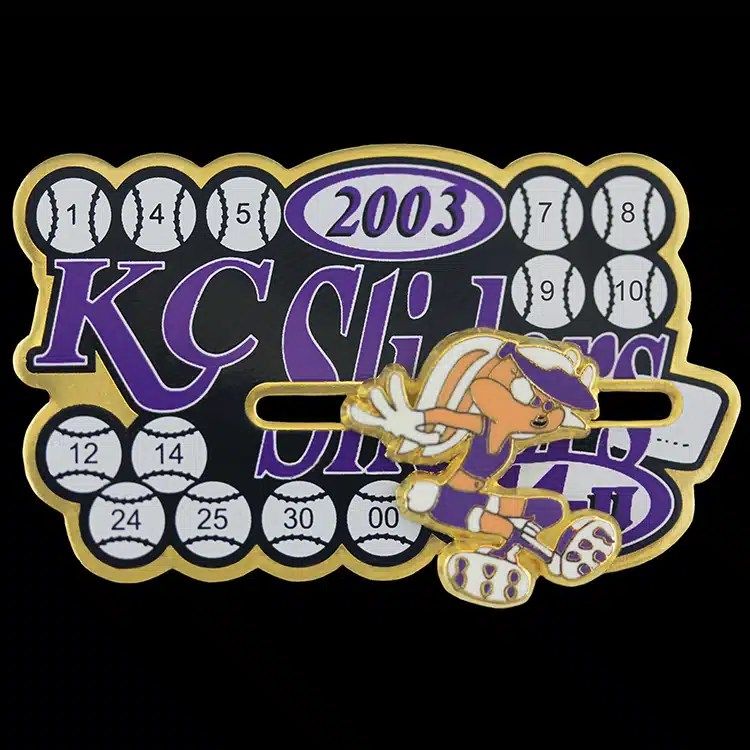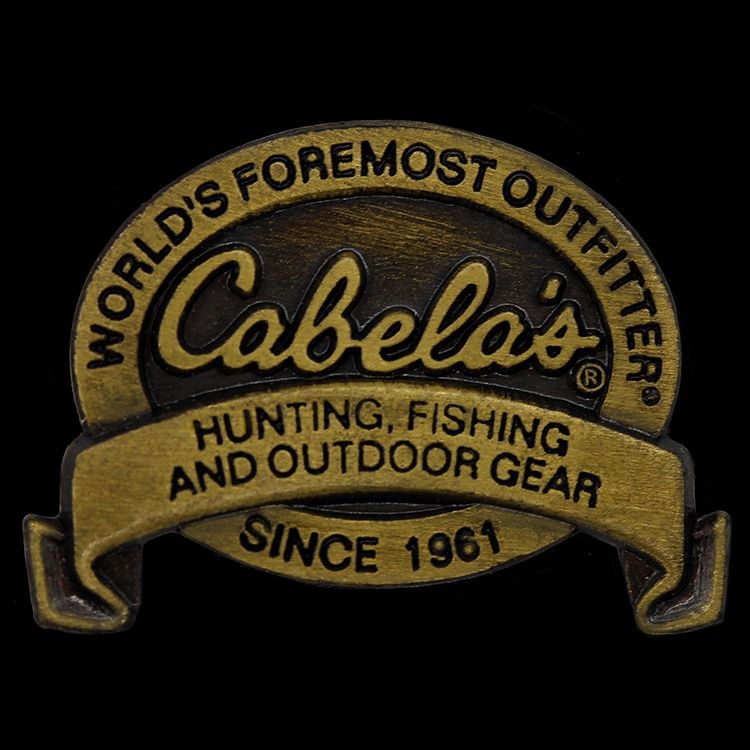
Die struck pins and enamel pins start the same way: a die cut from your artwork strikes the design into brass or steel. A die struck pin stops there, plated and finished, so the design shows only as raised and recessed metal. An enamel pin goes one step further and fills the recesses with colour. Choose die struck for a classic, formal, one-colour look; choose enamel when colour is part of the design.
The terms get mixed up because soft enamel pins are also called die struck soft enamel. In this guide, die struck means the metal-only pin without enamel. Below we cover how each is made, how they look, what detail they hold and where each one fits.
How each pin is made
For both, a die is cut from your artwork for every new design. The die stamps the design into a metal blank under pressure, creating raised areas and recessed areas. The pin is cut to its outline and a post is attached to the back.
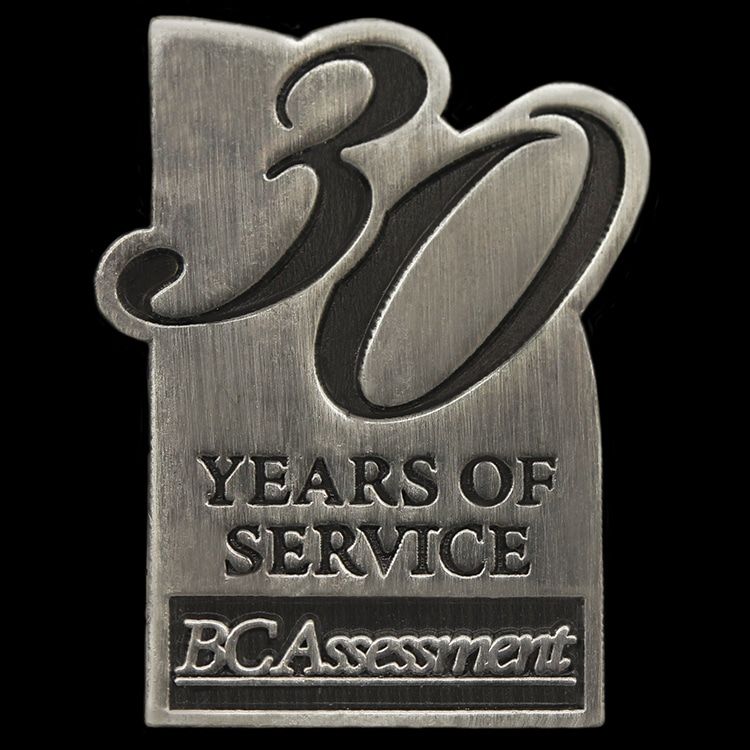
A die struck pin is then plated in gold, silver, nickel or copper and finished. The finish is what creates contrast. An antique finish darkens the recessed areas so the raised design stands out. A sandblasted finish gives the recessed areas a matte texture against polished raised lines. A fully polished finish relies on the relief alone.
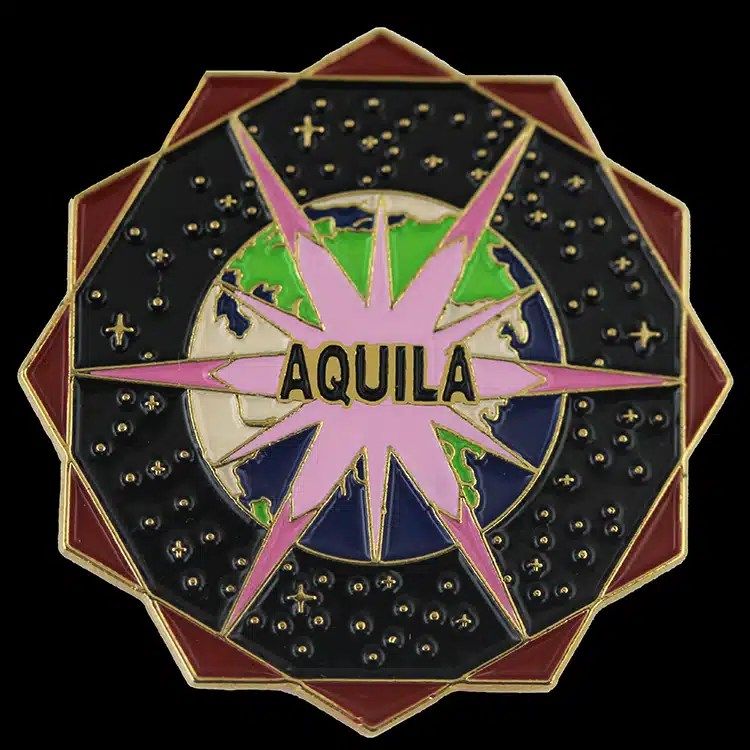
An enamel pin is plated and then filled with colour. On a soft enamel pin, the colour sits below the raised metal lines and you can feel the ridges. On a hard enamel pin, often called cloisonne, the colour is filled level and polished smooth. Our comparison of soft and hard enamel pins covers that choice.
Look and feel
A die struck pin looks like a small piece of metalwork. With no colour, the eye goes to the shape, the relief and the shine of the plating. That gives it a classic, understated look that suits formal clothing and long service. It is the look of many traditional service, anniversary, insignia and commemorative pins.
An enamel pin is graphic. Colour does most of the work, so it can carry a logo in brand colours, a mascot or an illustration. Soft enamel feels lively and dimensional; hard enamel looks polished and jewelry like.
A useful test: if your logo still works in one colour, as a stamp or an embossed mark, it will probably look good die struck. If it only makes sense in its brand colours, it needs enamel.
Die struck vs enamel at a glance
| Factor | Die struck (no enamel) | Soft enamel | Hard enamel |
|---|---|---|---|
| Colour | Plating colour only | Solid enamel colours in recesses | Solid enamel colours, polished flush |
| Surface | Sculpted metal relief | Textured, raised metal lines | Smooth and glossy |
| Look | Classic, formal, understated | Bold, graphic, dimensional | Polished, formal, jewelry like |
| Contrast comes from | Finish: antique, sandblasted or polished | Enamel colours against metal | Enamel colours against metal |
| Brand colours | Not shown | Matched to references | Matched to references |
| Common uses | Service, insignia, anniversary, commemorative | Events, brands, teams, merch | Awards, service, rank, premium brand pins |
Detail and durability
Detail
Both constructions use the same die, so the raised line and lettering limits are similar. As a general guide, raised metal lines need to be about 0.3 mm (0.012 in) or thicker, and lettering needs to be about 1/16 in (1.5 mm) tall or larger to strike cleanly, more for thin fonts.
Die struck pins have one advantage with detail: there is no enamel cell to fill, so you are not limited by how small a colour area can be. Fine texture, sculpted shading in the relief and small raised lettering can all work, provided the die can strike them. Enamel pins need each colour area large enough to hold enamel, so very small coloured shapes may be merged or dropped.
Durability
A die struck pin has no enamel to chip, so it ages well and develops a natural wear on the high points, especially with an antique finish. Hard enamel is also very durable because the enamel is polished flush. Soft enamel is durable for everyday wear, with the colour protected by the raised metal around it.
Cost and setup
A die is cut for every new design either way. On our pins, the mold charge for a die struck pin without enamel is the same as for die struck soft enamel, and the exact amount is confirmed on your quote. Reorders skip that setup because the die stays on file.
Beyond the die, cost depends on size, quantity, plating, finish and, for enamel pins, the number of colours. We do not publish a price list, because every job is priced from the factory price. If you are undecided, the simplest way to compare is to ask for the same design as die struck and as soft enamel on one quote.
Which one to choose
- Choose die struck for service, anniversary and retirement pins, insignia, commemorative pins and anywhere a formal, understated look is right.
- Choose die struck when the logo works as a one-colour mark, such as a crest, a monogram or a number.
- Choose soft enamel for events, brands, teams and merch where colour drives recognition.
- Choose hard enamel for awards and premium pins that need colour and a smooth, polished finish.
- Choose a printed pin when the art needs a gradient or a photograph.
Plating and finish matter most on a die struck pin, because they are the whole look. Antique gold and antique silver are the classic choices; antique brass and copper read warmer. Our custom lapel pin buying guide covers plating and finish choices for every construction, and our guide on how to design an enamel pin helps if colour wins.
Ordering either type
You can see examples of both on our lapel pins page. To quote, send your artwork (AI, EPS or PDF is cleanest; a PNG or a photo of an existing pin is fine to start), the size, quantity, plating, finish, pin back and in-hands date. Custom minimums start from 100 pieces and are confirmed on your quote. Request a quote and we will return it within 2 to 3 business days. Nothing is struck until you approve the proof in writing, and production typically takes about 3 to 4 weeks after that, confirmed on your quote.