A mechanic name patch is usually an embroidered oval about 3.5 x 2 in (89 x 51 mm) to 4 x 2.5 in (102 x 64 mm), with the first name in script, a contrasting merrowed border and a sew-on backing. It goes over one chest pocket of the work shirt, and the shop logo patch goes over the other. Order sew-on rather than iron-on, because uniform laundries wash hot and adhesive can let go.
Below: the sizes and shapes that work, how to choose a font and colours, where each patch goes, and how to order names for a whole shop without mistakes.
The classic oval name patch
The oval name patch has been on garage and service station shirts for generations, and it still reads instantly as a working professional. The usual build is an embroidered patch on twill, a single name stitched in script or block letters, and a merrowed border, the wrapped stitch around the edge. A thin inner ring in a second colour is a common detail.
Rectangles with rounded corners are the other traditional shape and give more room for longer names. A rectangle about 3.5 x 1.5 in (89 x 38 mm) fits most chest pockets. Our custom name patches guide covers name tapes and other formats if you want something different.
Sizes and shapes
| Patch | Shape | Typical size | Best for |
|---|---|---|---|
| Name patch | Oval | About 3.5 x 2 in to 4 x 2.5 in | Classic work shirts |
| Name patch | Rounded rectangle | About 3.5 x 1.5 in | Longer names, modern shirts |
| Shop logo | Oval, circle or shield | About 3.5 to 4 in wide | Chest pocket opposite the name |
| Shop logo, large | Rectangle or custom | About 8 to 11 in wide | Jacket or coverall back |
| Cap patch | Oval or rectangle | About 2.5 to 3 in wide | Shop caps |
Before you pick a size, measure the pocket on your actual shirts. The patch should sit above the pocket flap with a little space on each side, and some shirts have a pen slot that changes the room you have. Our patch size guide shows how to measure.
Fonts, colours and readability
Script is the traditional choice and looks great on short names. It gets harder to read as names get longer, and very thin connecting strokes do not stitch well. As a rule of thumb, keep embroidered lettering at least 1/4 in (6 mm) at its smallest point and avoid hairline strokes under about 1 mm.
- Use script for short first names: Joe, Rick, Tina, Al.
- Use block letters for longer names or when you want a modern look.
- Pick high contrast: red on white, white on navy, gold on black, or white on gray.
- Match the border to your shop's main colour so the name and logo patches look like a set.
- Use one font for everyone so the shop looks uniform.
Thread colour also needs to survive the shop. Very light colours such as white or pale gray show grease first, so many shops choose a white name on a navy, gray or black base, which stays readable for longer between washes. If your shirts are a light colour, a darker patch base with a light name usually ages better than the reverse.
Name patches are usually one or two thread colours, which keeps them crisp. Tell us your shop colours or Pantone references and we match thread as closely as possible. Our guide to preparing artwork for embroidery helps if your shop logo has fine detail.
Where the patches go
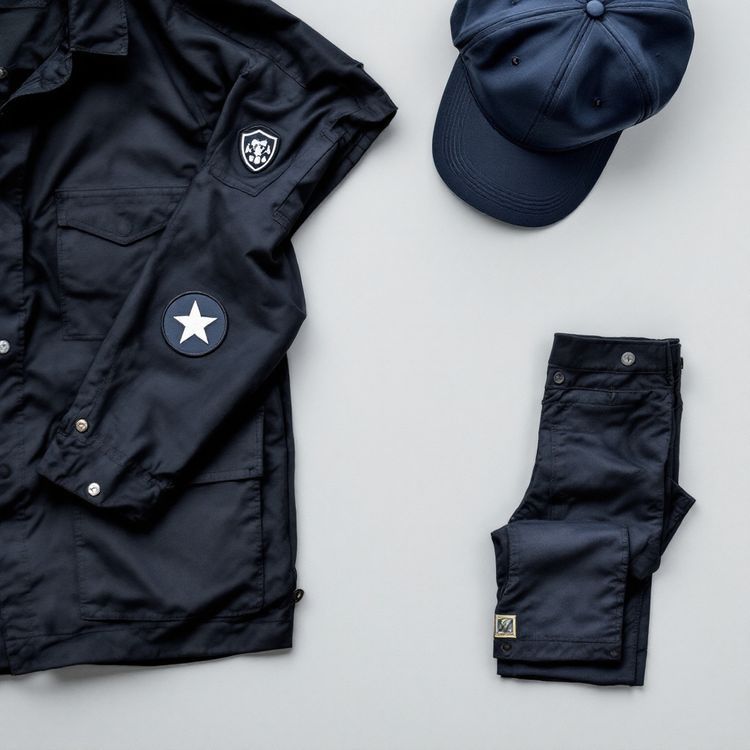
Traditionally, many shops put the name over the left chest pocket and the shop logo over the right, but plenty do the reverse. Choose one layout and use it on every shirt so the crew looks consistent. The patch should sit about 1/2 in (13 mm) above the pocket or flap, centred over it.
For coveralls and jackets, a large shop logo across the back turns every technician into a moving sign, which matters on a roadside call or a parts run. Sleeve patches are another option for brand logos you service or a second shop mark.
Certification and brand patches
Certification insignia, such as an ASE patch, come from the certifying organization. They are trademarks, so they are not something to reproduce in a custom order. The same goes for vehicle and parts brand logos: use them only if you have the brand's permission, for example as an authorized dealer or service center following the brand's guidelines.
Backing that survives uniform laundry
Shop shirts get grease, solvent and hot washing. Uniform rental services and industrial laundries use high water and dryer temperatures, and iron-on adhesive can soften and release in that cycle. Sew-on is the dependable choice. Most uniform services will sew patches on for you if you supply them, so ask your provider what backing they want. Many prefer sew-on with no adhesive.
If you launder shirts yourself and want an easy way to position patches, iron-on (heat seal) holds the patch in place while you stitch it, which gives you the convenience of iron-on and the strength of sewing. See patch backing types explained for a full comparison.
Shop merch beyond the uniform
Many shops use the same logo on giveaways customers keep. Key chains are a natural fit for an auto shop: hand one over with every set of keys after a service.
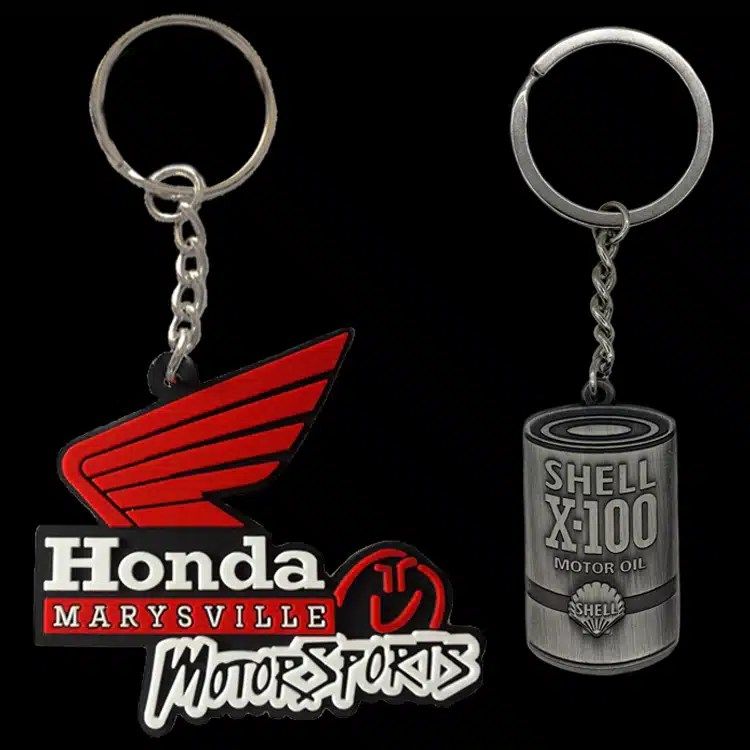
Caps with the shop patch and embroidered patches sold at the counter are popular too, especially with shops that have a loyal local following or a race program.
Ordering names for a whole shop
Name patches are ordered as one design with a list of names. Send a simple list with each name exactly as it should be stitched and how many of each, since technicians usually need one patch per shirt. Include the shop logo patch on the same request.
Custom minimums start from 100 pieces and vary by product, which a shop reaches quickly with five to eleven shirts per technician. You see a proof before anything runs, and nothing is made until you approve it in writing. A quote usually comes back in 2 to 3 business days, the proof about 1 to 3 business days after artwork, and production takes about 3 to 4 weeks after approval, all confirmed on your quote. For new hires later, reorders skip setup.
Ready to order? Send your name list and logo for a quote.