Construction company patches are usually an embroidered logo patch for the left chest or sleeve of work shirts and jackets, about 3 to 4 in (76 to 102 mm) wide, a smaller version for caps, and optional name patches for crew members. Order them sew-on with a merrowed or heat cut edge so they survive job-site wear and hot commercial laundering. If your crew wears high-visibility or flame-resistant clothing, check with the garment supplier before you add any patch.
This guide covers why patches suit trade companies, where they go, how to make your logo read on a busy site, and the safety-clothing questions to settle before you order.
Why trade companies use patches
A crew goes through work wear fast. Shirts get torn, jackets get replaced, and new hires join mid-season. With patches, you keep a stock of logos in the office and put them on whatever garment the crew already wears, from a supplier's work shirt to a canvas jacket or a hoodie. When a shirt wears out, the patch can often be taken off and moved to the replacement.
Patches also look like they belong on work wear. A thick embroidered patch with a solid border reads as an established company, and it holds up to abrasion better than a thin print on the same shirt. If you are comparing methods, our article on patches for business uniforms covers rolling patches out across a whole team.
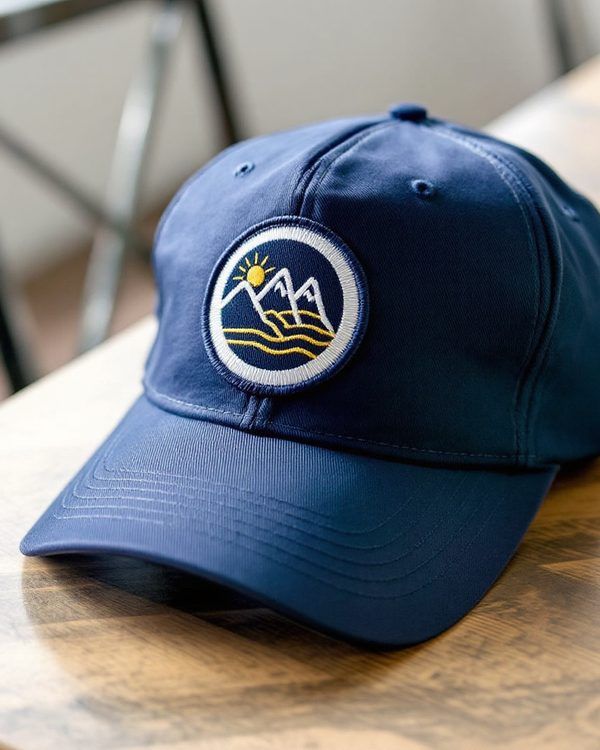
Where patches go and what size to order
| Garment | Placement | Typical patch size |
|---|---|---|
| Work shirt | Left chest above the pocket, or right chest | About 3 to 4 in wide |
| Work shirt | Upper sleeve | About 3 to 3.5 in |
| Canvas or insulated jacket | Left chest | About 3.5 to 4 in wide |
| Jacket back | Centred below the collar | About 8 to 10 in wide |
| Cap or beanie | Front | About 2.5 to 3 in wide |
| Name patch | Opposite chest from the logo | About 3.5 x 1 in to 4 x 2 in |
A common uniform layout is the company logo on the left chest and the employee name or trade (Foreman, Electrician, Site Safety) on the right. The back of a jacket is the most visible space on a job site, so a large back patch with the company name and phone number works as advertising from a distance. Our patch size guide shows how to measure each placement.
Making your logo read on a job site
Construction logos often include a company name, a tagline, a license number or a phone number. On a 3.5 in patch, that is a lot of text. As a rule of thumb, embroidered lettering needs a cap height of about 1/4 in (6 mm) to stay readable, and lines thinner than about 1 mm do not stitch cleanly.
- Keep the chest patch to the logo mark and company name. Put the phone number and website on the back patch, where there is room.
- Use high contrast: dark thread on a light base, or white and safety colours on navy, black or gray.
- Drop thin outlines and drop shadows that would turn to mush at small size.
- If you need fine text on a small patch, a woven patch holds smaller lettering than embroidery.
Working from a logo built for business cards? Our guide on preparing artwork for embroidery explains what to simplify. A photo of an existing truck decal or shirt is enough to start a quote.
Hi-vis and flame-resistant clothing: check first
Safety clothing has its own rules, and a patch can affect them.
High-visibility garments
Hi-vis vests, shirts and jackets are usually made to the ANSI/ISEA 107 standard, which sets minimum areas of fluorescent background material and retroreflective tape. A logo patch covers some of that area, and placing one over the reflective stripes reduces what the garment was tested with. Before adding patches, ask the garment maker or your safety officer where logos may go and how large they may be. Many hi-vis suppliers offer garments with a set logo area for this reason.
Flame-resistant (FR) garments
If your crew wears FR or arc-rated clothing, a standard patch is not flame resistant. Polyester thread and backing can melt and add a hazard to a garment that is supposed to protect the wearer. Industry guidance such as NFPA 2112 and NFPA 70E addresses trims and emblems on protective clothing. Talk to your FR garment supplier and safety officer before adding any patch, and follow their instructions on approved emblem materials and attachment.
Backings that survive work wear and laundering
Work uniforms go through heavy washing, often at a uniform rental service that uses hot water and industrial dryers. Iron-on adhesive can soften at those temperatures, so sew-on is the dependable choice for any garment that is laundered commercially. A sewn patch with a merrowed border holds up well on canvas and cotton twill.
If you prefer to apply patches yourself in the office, iron-on (heat seal) backing makes positioning easy, and a quick stitch around the edge afterward makes it last. For caps and hard-wearing jackets, sewing is still best. Our guide to patch backing types compares each option.
Beyond patches: what else crews use
Construction companies often pair patches with a few other branded items. Lanyards hold badges and keys on sites that require visible ID, and a breakaway release is worth considering around machinery. Challenge coins and service pins are used for safety milestones and anniversaries. Each is quoted separately, so ask for them on the same request if they are part of your program.
Ordering for a crew
Count the garments you have, add the next six to twelve months of new hires and replacements, and order patches for that stock. Custom minimums start from 100 pieces and vary by product, so most companies order a year of patches at once. Reorders skip setup and the stitch file stays on file, so the next batch matches.
A quote usually comes back in 2 to 3 business days, the proof about 1 to 3 business days after artwork, and production about 3 to 4 weeks after you approve the proof in writing. Rush is around 10 business days when the factory can hold it, all confirmed on your quote. When you are ready, send your logo for a quote with sizes, quantities and the garments the patches go on.