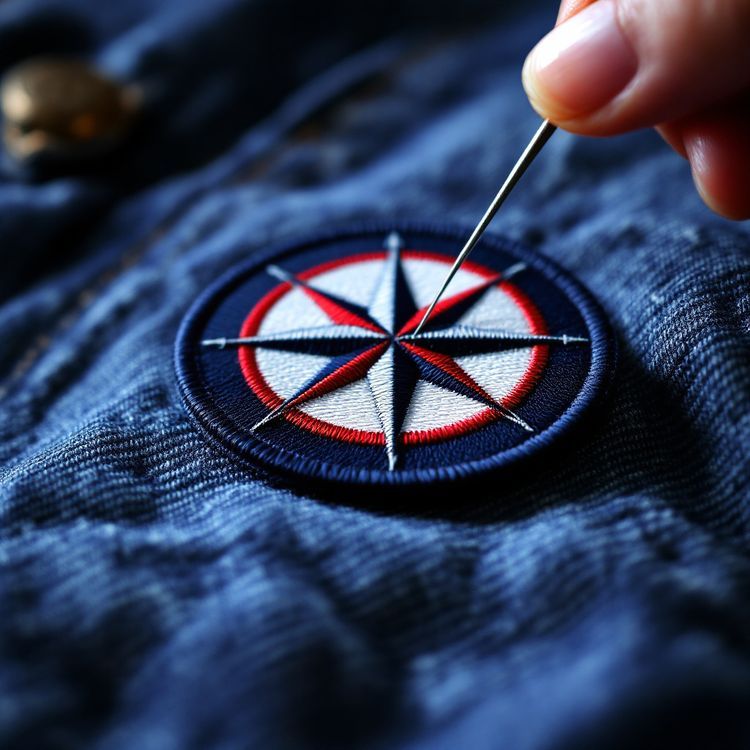
To put patches on a leather jacket, sew them on by hand with a leather needle and strong waxed or polyester thread, stitching through the leather just inside the patch border. Do not iron patches onto leather: the heat can scorch, shrink or stiffen the hide, and iron-on adhesive does not bond well to its surface. Because every needle hole in leather is permanent, plan the layout carefully, hold the patch in place without pins, and decide before you start whether you will sew through the lining or open it.
Below is the full method: tools, positioning, dealing with the lining, the stitch, and when a leather shop is the better choice.
Why you should not iron a patch onto leather
Iron-on patches need around the heat of a cotton setting to melt their adhesive. Leather at that temperature can darken, shrink, crack or turn shiny, and the damage does not come out. Even when the adhesive sticks, it sits on the surface of the hide rather than gripping a weave, so edges lift as the jacket flexes. Faux leather, which is usually a plastic coating on fabric, can melt or bubble.
If your patches already have an iron-on backing, you can still sew them on. The adhesive layer makes the patch slightly stiffer to stitch through, but it does no harm. For a patch made specifically for leather, order it with a sew-on backing.
What you need
- Leather needles (sometimes called glover's needles), which have a triangular point that cuts a small slit instead of tearing. Size 14 to 16 suits most jacket leather.
- Waxed polyester thread or heavy-duty polyester or nylon upholstery thread, in the colour of the patch border.
- A thimble and small pliers, because pushing a needle through hide is hard on fingers.
- An awl (optional), to pre-punch holes on thick or stiff leather.
- Binder clips, painter's tape or double-sided tape to hold the patch. Pins leave permanent holes.
- A white or silver marking pencil that wipes off leather.
Plan the placement first
On fabric, a mistake costs you some unpicking. On leather, it leaves a ring of holes. So spend most of your time here.
- Put the jacket on and decide placements in a mirror. On a motorcycle jacket the standard spots are the center back, the upper back, the left chest and the upper sleeves.
- Take it off, lay it flat, and position each patch with painter's tape or a small piece of double-sided tape on the back of the patch.
- Check it again on your body and in a photo. Leather jackets have seams, darts and zippers in places fabric jackets do not, so make sure no patch crosses one.
- Mark the corners lightly with the pencil.
For a club set with a center patch and rockers, our motorcycle club patch guide covers spacing and sizes. For general jacket placements, see patches for jackets.
Deal with the lining
Most leather jackets are lined. You have two choices:
- Sew through the lining. Simplest, but the stitches show inside and the lining can pucker if you pull too tight. Acceptable for small sleeve and chest patches.
- Open the lining. Many jackets have a lining that is sewn to the hem with a seam you can unpick for a few inches, or a zip access panel inside. Reach in, sew through the leather only, then close the lining again. This is the cleaner method for a large back patch.
Sewing the patch on, step by step
- Thread a long single strand and knot it, or use waxed thread doubled for a back patch.
- Start at a corner or a straight section, not a curve. Come up from the inside through the leather, just outside the patch edge.
- Go down through the patch border, about 1/16 to 1/8 in (2 to 3 mm) in from the edge. On a merrowed border, stitch through the wrapped edge itself so the thread hides in the border.
- Space stitches about 1/4 in (6 mm) apart. That is wider than you would use on fabric. Tight spacing on leather perforates it like a stamp sheet and can tear along the line.
- Pull snug, not tight. Overtightened stitches dimple the leather around the patch.
- Tie off inside with a double knot and add a dab of clear fabric glue or seam sealer to the knot.
On thick or stiff leather, pre-punch each hole with the awl along your marked line, then sew through the holes. Our general guide on how to sew on a patch shows the stitch in more detail.
Attachment methods on leather, compared
| Method | On real leather | On faux leather | Notes |
|---|---|---|---|
| Hand sewing | Best choice | Yes, space stitches widely | Holes are permanent; plan placement first |
| Machine sewing | Yes, on a leather-capable machine | Yes | Most home machines struggle; a leather shop can do it |
| Iron-on | No | No | Heat damages the surface and the bond is weak |
| Leather glue or contact cement | To hold position only | Test first | Can stain; not a long-term attachment on its own |
| Hook-and-loop | Only after sewing on a loop panel | Same | Useful for swappable patches |
When to take it to a leather shop
A large back patch on a heavy motorcycle jacket is a lot of hand stitching through tough hide. Leather repair shops, shoe repair shops and many motorcycle shops sew patches on with heavy machines and do it cleanly. It is worth it for a full club set, an expensive jacket, or very thick leather. Bring the patches and a photo of where you want them.
Ask the shop how they will handle the lining, whether they will open it or stitch through it, and what thread colour they will use. A good leather shop will also tell you if a patch is too large for the panel or crosses a seam that makes a clean stitch line impossible. If you are fitting a whole club, ask whether they can mark one jacket as the template and repeat the placement on each one, so every member’s patches sit at the same height.
Choosing patches for a leather jacket
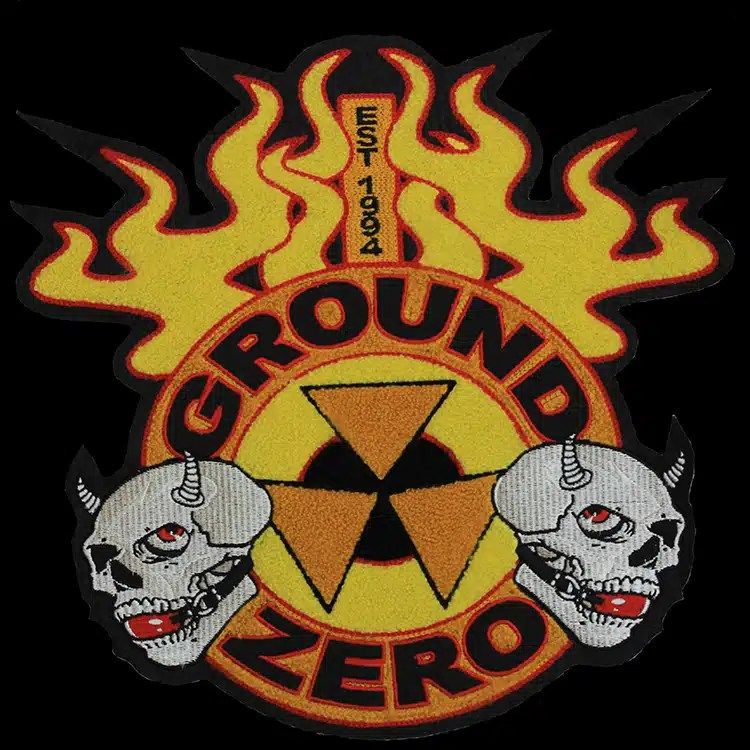
Embroidered patches are the traditional choice and suit the weight of leather. Chenille works for bold back pieces. A merrowed border makes sewing easier on simple shapes; heat cut edges suit detailed outlines but need careful stitching close to the edge. Order sew-on backing. We do not make leather patches themselves, but our motorcycle and club patches are made to be sewn onto leather jackets and vests.
Upload your design to the free Patch Studio to see it on a jacket, then send it for a quote with the sizes and quantities. Quotes come back within about 2 to 3 business days.