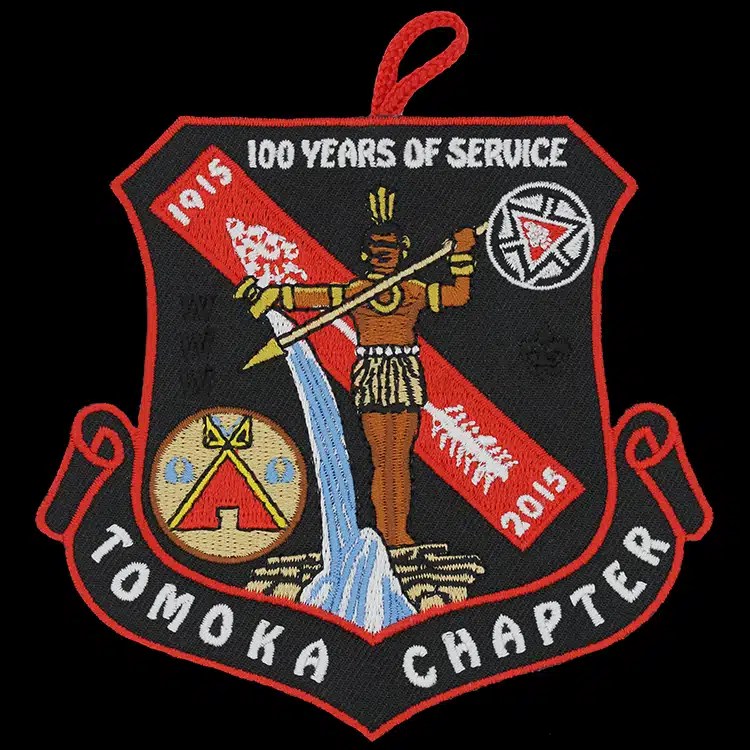
To order custom patches, decide the construction, size, quantity, colours, backing, border and in-hands date, then send your artwork and those details with a quote request. We price the job at 2 or 3 factories and send back one quote within 2 to 3 business days. You approve a proof in writing, production typically runs about 3 to 4 weeks after approval, and the finished patches ship UPS from Holly Hill, Florida.
Here is each step in more detail, with a timeline to work back from and the mistakes that most often slow an order down. Our how it works page shows the same process in five steps.
Step 1: Decide the spec
Every quote is built on the same handful of decisions. You do not need every answer locked in, but the closer you are, the more accurate the number.
Construction
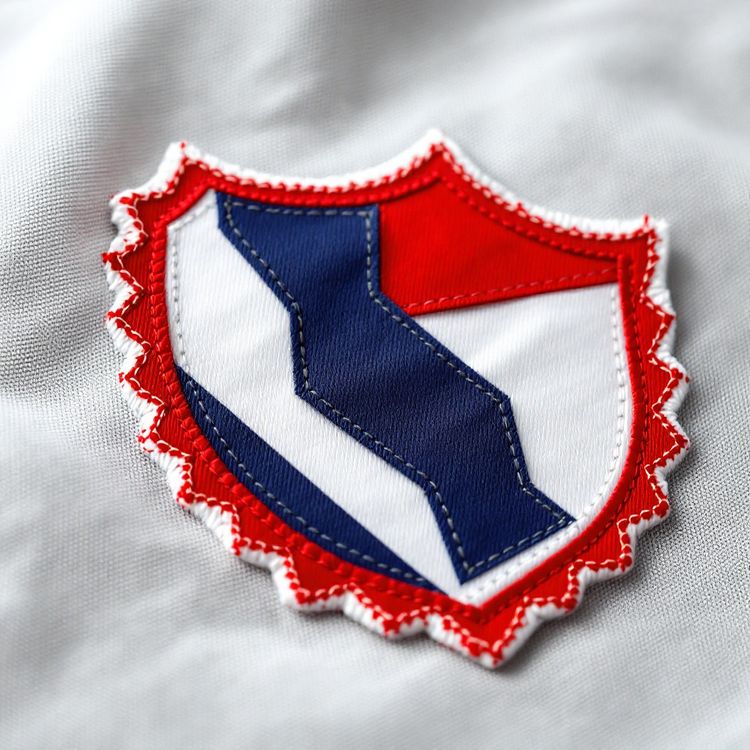
Embroidered patches give raised texture and suit most logos. Woven patches hold small text and thin lines. Chenille suits varsity letters, sublimated handles photos and gradients, and bullion suits blazer crests. Compare them in our patch types section.
Size
Measure where the patch will go. Common starting points are 3 to 3.5 in for a left chest, 3 to 4.5 in for a shoulder and 8 to 12 in for a jacket back. In the trade, size is usually quoted as width plus height divided by two. Our patch size guide covers every placement.
Quantity
Count wearers, then add spares for new starters, damage and replacements. Custom runs start from 100 pieces for most products, confirmed on the quote.
Colours, backing and border
List the thread colours, with Pantone references if you have them. Choose sew-on for uniforms that are washed often, iron-on for cotton and canvas, hook-and-loop for gear, or plastic backing for a flat, stiff patch. A merrowed border suits simple shapes, and a heat cut edge follows detailed outlines.
In-hands date
Give the date the patches must be in your hands, not the event date. Everything else is scheduled backward from it.
Step 2: Gather your artwork
Vector artwork in AI, EPS or PDF gives the cleanest result. A PNG is accepted, and a clear photo of an existing patch is enough to start a quote. We redraw the artwork for thread, and the proof shows the result before anything is made.
Before you send it, check that text is large enough to stitch and that fine lines will hold at the size you want. Our post on preparing artwork for embroidery walks through what to simplify.
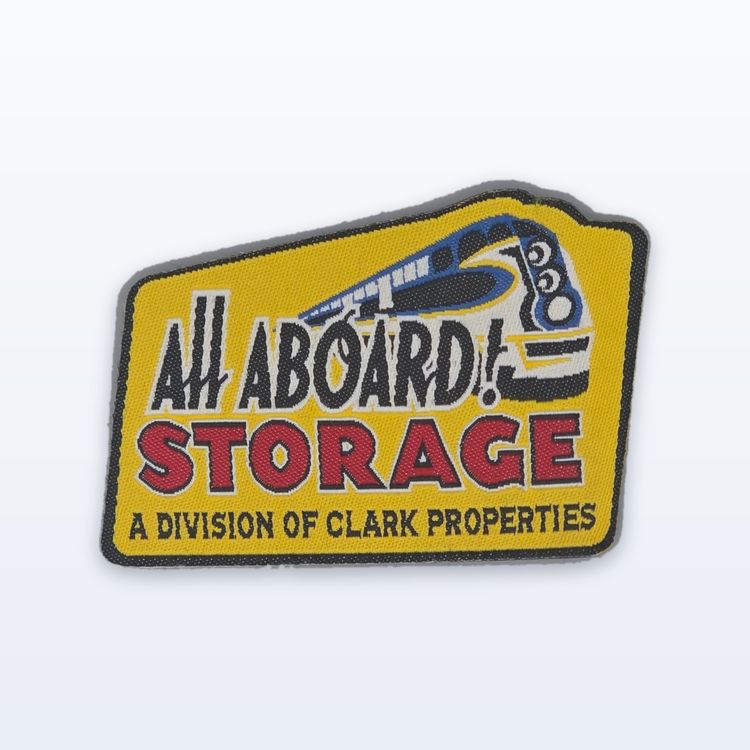
Step 3: Make a mockup (optional)
Our free Patch Studio lets you upload a logo, pick a shape, size, construction, backing and edge, and see the patch in 3D, flat, on a black jacket or on a cap. There is an optional AI stitch check that comments on how the logo will stitch at your chosen size. Download the mockup and attach it to your quote request.
The mockup helps you and us agree on what you have in mind. It is a rendering, not a guarantee, and the proof is the version that counts.
Step 4: Request a quote
Send the spec, artwork and in-hands date through our quote request form. Ask for pricing at two or three quantities on the same quote, for example 100, 200 and 500. Larger runs generally lower the per-piece cost because setup is spread over more pieces, and seeing the breaks side by side helps you decide.
Brad sends the job to 2 or 3 factories that make that construction and sends back one quote built on the factory price, usually within 2 to 3 business days. We do not publish prices, because size, coverage, colours and backing change the number for every job. If you want to understand those drivers first, read what drives custom patch cost.
What a complete quote request looks like
A complete request answers the questions we would otherwise send back. For example: an embroidered patch, 3.5 in wide, round, 75% coverage on navy twill, four thread colours with Pantone references, merrowed gold border, sew-on backing, quoted at 100, 200 and 500, artwork attached as a PDF, needed in hand by a set date. A request like that gets an accurate number on the first pass.
If you are unsure about one item, such as the coverage or the border, say so. Brad can quote two options side by side so you can compare them before you commit.
Step 5: Approve the proof in writing
Once you accept the quote, we prepare a proof, usually 1 to 3 business days after we have the artwork. The proof shows how the patch will look at your size, in your thread colours.
Check it carefully. Read every word, check spelling of names and places, compare colours with your references and confirm the size. The proof stage is the time to ask for changes. Nothing is made until you approve it in writing.
After approval, the job goes into production. Changes at that point may mean a new proof, a revised quote and a later ship date, so treat approval as the final sign-off.
Step 6: Production, shipping and the timeline
Production typically runs about 3 to 4 weeks after proof approval. That is typical, confirmed on your quote, and not a guarantee. Finished patches ship UPS from Holly Hill, Florida.
Work backward from your in-hands date using this table:
| Stage | Typical time | What you do |
|---|---|---|
| Quote | 2 to 3 business days | Send spec, artwork and in-hands date |
| Proof | 1 to 3 business days after artwork | Review and request any changes |
| Your approval | Depends on you | Approve in writing |
| Production | About 3 to 4 weeks after approval | Nothing; confirm delivery address |
| Shipping | UPS transit to your address | Receive and check the order |
Adding those stages together, starting five to six weeks before your date gives a comfortable margin. Rush production of around 10 business days is sometimes possible when the factory can hold it, but it is never promised, so do not build an event around it.
Reorders and mistakes to avoid
Reordering is simpler. The digitizing stays on file, so a reorder skips the setup and you only need to confirm quantity, any changes and the in-hands date. Keep your quote or order details handy so the spec matches the first run.
The mistakes we see most often:
- Giving the event date instead of the in-hands date.
- Choosing a size before checking that the smallest text will stitch.
- Ordering exactly one patch per person, with no spares for new starters or replacements.
- Picking iron-on for garments that are washed hot or made from nylon or performance fabric.
- Approving the proof without reading every name, number and date.
- Changing the design after approval instead of at the proof stage.
- Asking for a single quantity when two or three would show the price breaks.
When the spec, artwork and in-hands date are ready, send them through the quote form or call us on (800) 741-0643, Monday to Friday, 8:30 to 5:30 Eastern.