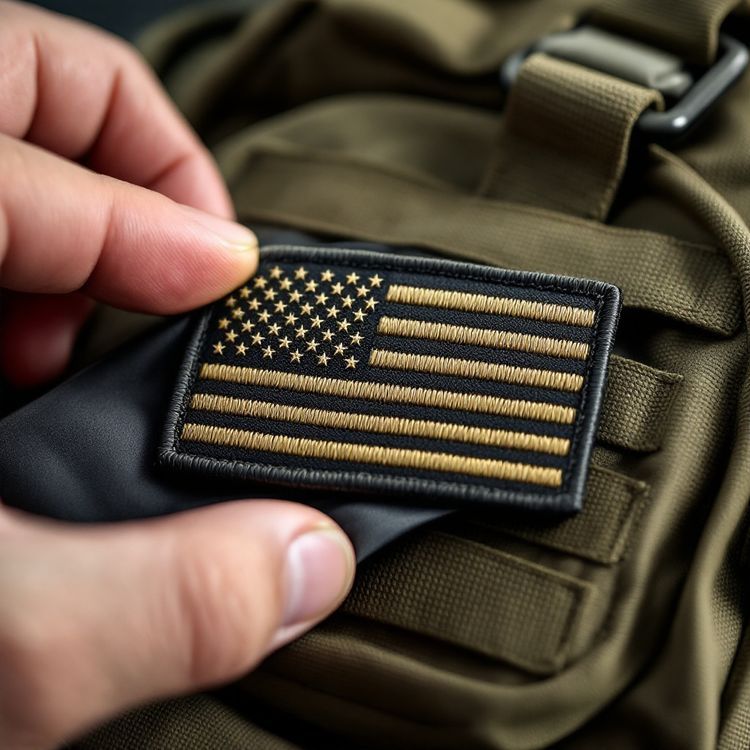
A well made embroidered or woven patch that is sewn on usually lasts as long as the garment it is attached to, and often longer: it is common to see patches moved from a worn out jacket to a new one. What shortens a patch's life is usually not the thread but the attachment, the way it is washed, and abrasion. Iron-on adhesive can loosen with hot washing, hook-and-loop loses grip as it clogs, and chenille and bullion need gentler care than standard embroidery. Choose the construction and backing for how the patch will be used, and it will hold up for years.
Below we compare how each patch construction and each backing ages, what wears patches out, and how to plan patches for gear that sees hard use.
What actually wears a patch out
Patches fail in a handful of predictable ways:
- Abrasion. Rubbing against straps, desks, car seats or other gear wears the high points of the stitching and the edge first.
- Hot washing and drying. Heat and tumbling soften iron-on adhesive, shrink some base fabrics slightly and work stitches loose.
- Snagging. Long satin stitches in lettering and borders can catch on hook-and-loop, jewelry or tools.
- Sunlight. Long outdoor exposure gradually fades dyes in both thread and printed patches.
- Attachment failure. A patch that peels, or that is attached to fabric weaker than itself, fails at the join rather than in the design.
Most of these are controlled by choosing the right backing and washing gently, which is why the same patch can look new after years on a dress jacket and tired after one season on a work bag.
Durability by patch construction
We make six types of patches, and each one ages differently.
| Construction | Strengths | Weak points | Care |
|---|---|---|---|
| Embroidered | Thick, abrasion resistant, washes well | Long satin stitches can snag | Machine wash gently, inside out |
| Woven | Flat, no long stitches, detail stays crisp | Thin edge can fray under heavy rubbing | Machine wash gently |
| Chenille | Soft, thick, eye catching | Loop pile can fuzz and flatten | Gentle handling, often dry cleaned with the garment |
| Satin tackle twill | Fabric layers built for team uniforms | Edges can lift if stitching is damaged | Wash inside out, cool |
| Hand embroidered bullion | Rich metallic look on dress items | Wire can tarnish or crush | Not for regular washing, spot clean or dry clean |
| Sublimated | Full colour print, smooth surface | Print can fade with long sun exposure | Machine wash gently, avoid bleach |
Embroidered and woven
Embroidered patches are the workhorse. Polyester thread stitched densely over twill holds its colour and resists wear, and a merrowed border protects the edge. Higher coverage adds thickness, which helps on gear that rubs. Woven patches have no long loose stitches, so they resist snagging and keep fine detail sharp through many washes. Their thinner edge is the part to watch on high abrasion spots.
Chenille and twill
Chenille is a looped yarn, so it is softer and more delicate than embroidery. Over time the pile can flatten or fuzz with rubbing, which is part of the look of a well worn letter jacket. Satin tackle twill is built for sports uniforms and survives repeated washing well when the stitched edge stays intact.
Bullion and sublimated
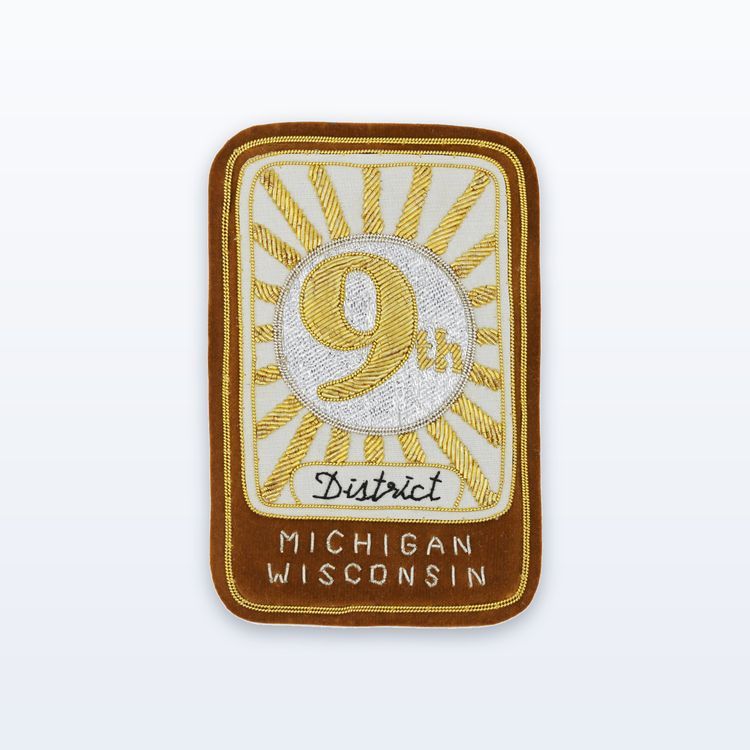
Hand embroidered bullion uses metallic wire and is meant for blazers, ceremonial dress and display pieces. Kept dry and away from crushing, it lasts a very long time, but it should not go through a washing machine. Sublimated patches are dye printed into polyester, which is generally colourfast in normal washing. Long direct sun, as on a boat cover or a car dash, will fade any printed or dyed surface eventually.
How each backing ages
The backing often decides how long a patch stays in place. Our guide to patch backings compares them in depth.
- Sew-on: the longest lasting attachment. A patch stitched around its edge stays on as long as the thread and garment hold.
- Iron-on (heat seal): holds well on suitable fabrics when pressed properly, but repeated hot washes and dryer cycles can soften it. Adding stitches around the edge makes it as permanent as sew-on.
- Hook-and-loop: the hook side gradually collects lint and lint reduces its grip. Cleaning the hooks with a stiff brush restores much of it. The loop panel on the gear also wears with use.
- Rigid plastic: keeps a patch flat and shaped for sewing onto caps and structured items. It is not a fixing method on its own, and the patch still needs to be stitched.
How to make patches last longer
- Turn patched garments inside out before washing.
- Wash on a gentle cycle in cool or warm water, not hot.
- Hang dry or tumble on low heat.
- Close hook-and-loop fasteners and remove hook-backed patches before washing, so they do not grab other items.
- Repair loose border loops as soon as you see them.
- Keep bullion and display patches out of the wash and out of direct sun.
Our full routine is in how to wash clothes with patches, and if one is already lifting or fraying, see how to fix a fraying patch.
Signs a patch is near the end of its life
Patches rarely fail all at once. Look for these signs on uniforms and team gear, so you can repair or replace before a patch looks shabby or falls off:
- Loose loops in the border. A merrowed edge that has started to open will keep unravelling with each wash.
- Shiny or flattened high points. The tops of satin stitches wear first on abrasion spots such as sleeves and bag fronts.
- Lifting corners. On iron-on patches, corners and points let go before straight edges.
- Fading against new stock. A patch that looked fine alone may look washed out next to a new hire's uniform.
- Fuzzy hook backing. A hook panel packed with lint no longer holds firmly on its loop.
For a department or business, a quick check each year, when uniforms are reissued or replaced, catches most of these. Swapping out a few worn patches keeps the whole roster looking the same.
Planning patches for hard use
If patches are going on work bags, tactical gear, outerwear or uniforms that are washed weekly, plan for durability from the start. Choose embroidered over chenille for rough use, pick a merrowed border on simple shapes for edge protection, keep long satin stitches short where the design allows, and order sew-on or hook-and-loop rather than relying on adhesive. If you are not sure, tell us how the patches will be used when you request a quote and we will suggest a construction and backing. Quotes typically come back in 2 to 3 business days, and nothing runs until you approve the proof in writing.